Kirjojen hintavertailu – 12 903 735 kirjaa ja 27 kauppaa

Kirjailija

Jonathan Hill

Kirjat ja teokset yhdessä paikassa: 47 kirjaa, julkaisuja vuosilta 2003–2025, suosituimpiin kuuluu Immaterial Architecture. Vertaile teosten hintoja ja tarkista saatavuus suomalaisista kirjakaupoista.

47 kirjaa

Kirjojen julkaisuvuodet: 2003–2025.

The Architecture of Ruins

The Architecture of Ruins

Jonathan Hill

Routledge
2019
nidottu
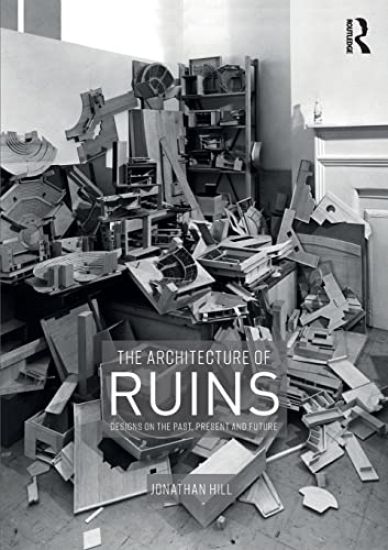
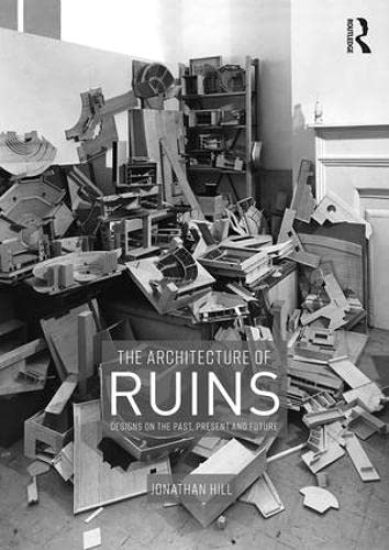
The Architecture of Ruins: Designs on the Past, Present and Future identifies an alternative and significant history of architecture from the sixteenth century to the twenty-first century, in which a building is designed, occupied and imagined as a ruin. This design practice conceives a monument and a ruin as creative, interdependent and simultaneous themes within a single building dialectic, addressing temporal and environmental questions in poetic, psychological and practical terms, and stimulating questions of personal and national identity, nature and culture, weather and climate, permanence and impermanence and life and death. Conceiving a building as a dialogue between a monument and a ruin intensifies the already blurred relations between the unfinished and the ruined and envisages the past, the present and the future in a single architecture. Structured around a collection of biographies, this book conceives a monument and a ruin as metaphors for a life and means to negotiate between a self and a society. Emphasising the interconnections between designers and the particular ways in which later architects learned from earlier ones, the chapters investigate an evolving, interdisciplinary design practice to show the relevance of historical understanding to design. Like a history, a design is a reinterpretation of the past that is meaningful to the present. Equally, a design is equivalent to a fiction, convincing users to suspend disbelief. We expect a history or a novel to be written in words, but they can also be delineated in drawing, cast in concrete or seeded in soil. The architect is a ‘physical novelist’ as well as a ‘physical historian’. Like building sites, ruins are full of potential. In revealing not only what is lost, but also what is incomplete, a ruin suggests the future as well as the past. As a stimulus to the imagination, a ruin’s incomplete and broken forms expand architecture’s allegorical and metaphorical capacity, indicating that a building can remain unfinished, literally and in the imagination, focusing attention on the creativity of users as well as architects. Emphasising the symbiotic relations between nature and culture, a building designed, occupied and imagined as a ruin acknowledges the coproduction of multiple authors, whether human, non-human or atmospheric, and is an appropriate model for architecture in an era of increasing climate change.
The Architecture of Ruins

The Architecture of Ruins

Jonathan Hill

Routledge
2019
sidottu
The Architecture of Ruins: Designs on the Past, Present and Future identifies an alternative and significant history of architecture from the sixteenth century to the twenty-first century, in which a building is designed, occupied and imagined as a ruin. This design practice conceives a monument and a ruin as creative, interdependent and simultaneous themes within a single building dialectic, addressing temporal and environmental questions in poetic, psychological and practical terms, and stimulating questions of personal and national identity, nature and culture, weather and climate, permanence and impermanence and life and death. Conceiving a building as a dialogue between a monument and a ruin intensifies the already blurred relations between the unfinished and the ruined and envisages the past, the present and the future in a single architecture. Structured around a collection of biographies, this book conceives a monument and a ruin as metaphors for a life and means to negotiate between a self and a society. Emphasising the interconnections between designers and the particular ways in which later architects learned from earlier ones, the chapters investigate an evolving, interdisciplinary design practice to show the relevance of historical understanding to design. Like a history, a design is a reinterpretation of the past that is meaningful to the present. Equally, a design is equivalent to a fiction, convincing users to suspend disbelief. We expect a history or a novel to be written in words, but they can also be delineated in drawing, cast in concrete or seeded in soil. The architect is a ‘physical novelist’ as well as a ‘physical historian’. Like building sites, ruins are full of potential. In revealing not only what is lost, but also what is incomplete, a ruin suggests the future as well as the past. As a stimulus to the imagination, a ruin’s incomplete and broken forms expand architecture’s allegorical and metaphorical capacity, indicating that a building can remain unfinished, literally and in the imagination, focusing attention on the creativity of users as well as architects. Emphasising the symbiotic relations between nature and culture, a building designed, occupied and imagined as a ruin acknowledges the coproduction of multiple authors, whether human, non-human or atmospheric, and is an appropriate model for architecture in an era of increasing climate change.
Marketing in the Dark

Marketing in the Dark

Jonathan Hill

Partridge Publishing Singapore
2018
pokkari
The communication techniques used by people and organisations have changed beyond recognition in barely two decades. For many, it is difficult to imagine a world without the internet, social media and smartphones. As a result, marketers have been presented with a profusion of technology to target customers. This research study looks at the markedly different communications landscape in developing nations, where multinationals cannot assume the availability of modern-day marketing communications tools, basic infrastructure, or that consumers are literate. Marketing in the Dark examines the methods used to reach consumers in the world's "media dark regions" with an emphasis on Unilever's Project Shakti in India.
Clarkson & Hill's Conflict of Laws

Clarkson & Hill's Conflict of Laws

Jonathan Hill; Máire Ní Shúilleabháin

Oxford University Press
2016
nidottu
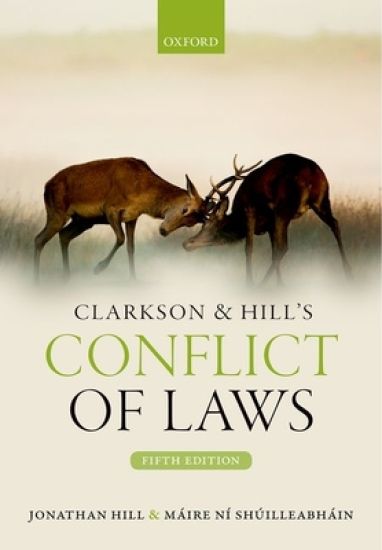
The fifth edition of Clarkson & Hill's Conflict of Laws provides a clear and up-to-date account of the private international law topics covered at undergraduate level. Theoretical issues and fundamental principles are introduced in the first chapter and expanded upon in later chapters. Basic principles of the conflict of laws are presented in an approachable style, offering clarity on complex points and terminology without over-simplification. The fifth edition reflects the field's changing focus from case law to domestic and European legislation, incorporating the Brussels I Regulation and Brussels II Revised Regulation, as well as the more recent Rome Regulations and Brussels I Recast. Embracing this reorientation of the field and increased emphasis on the recognition and enforcement of judgments, the authors provide detailed commentary on the most important commercial topics as well as the most relevant topics in family law. Written in a succinct and engaging style, Clarkson & Hill's Conflict of Laws continues to provide clear analysis of the key areas of debate across jurisdictions.
A Landscape of Architecture, History and Fiction
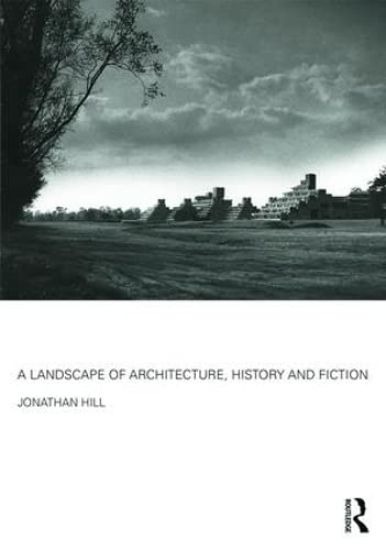
Architecture can be analogous to a history, a fiction, and a landscape. We expect a history or a novel to be written in words, but they can also be cast in concrete or seeded in soil. The catalyst to this tradition was the simultaneous and interdependent emergence in the eighteenth century of new art forms: the picturesque landscape, the analytical history, and the English novel. Each of them instigated a creative and questioning response to empiricism’s detailed investigation of subjective experience and the natural world, and together they stimulated a design practice and lyrical environmentalism that profoundly influenced subsequent centuries. Associating the changing natural world with journeys in self-understanding, and the design process with a visual and spatial autobiography, this book describes journeys between London and the North Sea in successive centuries, analysing an enduring and evolving tradition from the picturesque and romanticism to modernism. Creative architects have often looked to the past to understand the present and imagine the future. Twenty-first-century architects need to appreciate the shock of the old as well as the shock of the new.
The Lost Basics of Parenting

The Lost Basics of Parenting

Jonathan Hill

Lulu.com
2015
nidottu
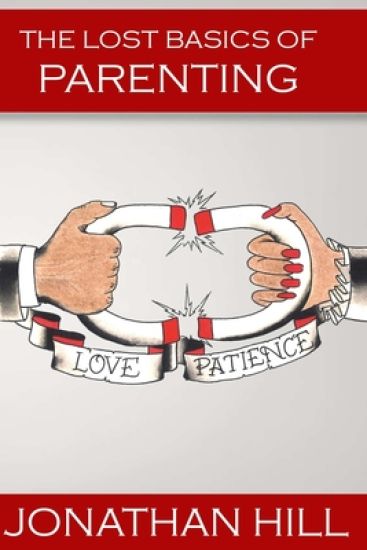
I hope that from this book, families who implement its basic instruction can learn to become more tightly knit units and less fragmented solo and wandering pockets of individuals, before leaving this earth. I hope that people who have been parenting in the dark will allow true love to become their own repetitive ignition upon understanding the benefits that this book can allow them to create from a positive parenting experience. I hope that the children that have been victims of parents who have misunderstood correct parenting will be forgiving towards their parents now, and in the future, and not to become so damaged that upon being parents themselves, that they replicate the wrong that was done to them in application to their own children. I truly hope that truth can become accepted in the way that it should be applied, with a true, rich and meaningful coexistence between all that has been created in this universe, for the benefit of all that will reciprocate its essence!!!
Young Catholic America

Young Catholic America

Christian Smith; Kyle Longest; Jonathan Hill; Kari Christoffersen

Oxford University Press Inc
2014
sidottu
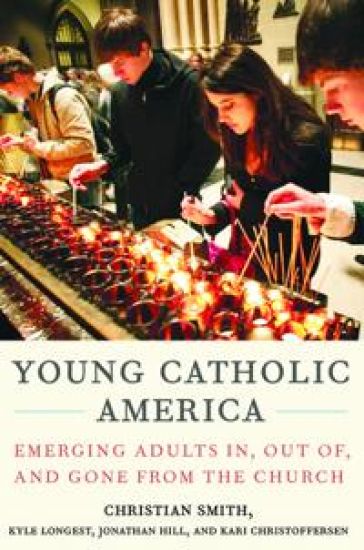
Studies of young American Catholics over the last three decades suggest a growing crisis in the Catholic Church: compared to their elders, young Catholics are looking to the Church less as they form their identities, and fewer of them can even explain what it means to be Catholic and why that matters. Young Catholic America, the latest book based on the groundbreaking National Study of Youth and Religion, explores a crucial stage in the life of Catholics. Drawing on in-depth surveys and interviews of Catholics and ex-Catholics ages eighteen to twenty-threea demographic commonly known as early emerging adulthoodleading sociologist Christian Smith and his colleagues offer a wealth of insight into the wide variety of religious practices and beliefs among young Catholics today, the early influences and life-altering events that lead them to embrace the Church or abandon it, and how being Catholic affects them as they become full-fledged adults. Beyond its rich collection of statistical data, the book includes vivid case studies of individuals spanning a full decade, as well as insight into the twentieth-century events that helped to shape the Church and its members in America. An innovative contribution to what we know about religion in the United States and the evolving Catholic Church, Young Catholic America is the definitive source for anyone seeking to understand what it means to be young and Catholic in America today.
Christianity: The First 400 years

Christianity: The First 400 years

Jonathan Hill

Lion Books
2013
pokkari
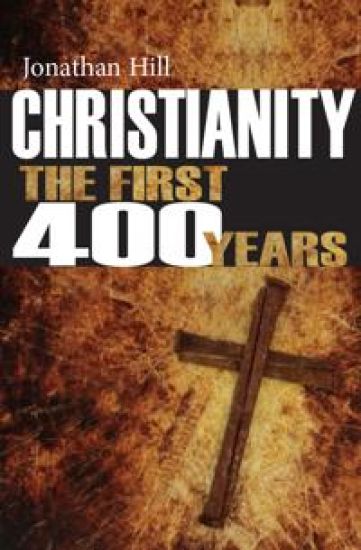
The first 400 years after the death of Christ saw huge developments and changes in the emerging faith. Christianity spread from Jerusalem to much of the known world; it became the official religion of the British empire; its key texts were written and its core ideas and beliefs were shaped and formalized. Much of this happened under huge pressure, from both within and without. Jonathan Hill charts the fascinating history of this crucial period in the development of Christianity. He shows how and why certain ideas triumphed over others; introduces the key figures, both within the faith and among its opponents, and their intellectual struggles; covers the main battles, often bitterly fought, both of ideas and of weapons; describes the lives of ordinary Christians and their worship and how each influenced the other. Occasionally murky, often thrilling and always compelling, the story Hill tells recounts the ways in which a new religion - centred on a single man executed in the Roman Middle East - first struggled, and then spread, to become the dominant belief system of the world.
Weather Architecture

Weather Architecture

Jonathan Hill

Routledge
2012
sidottu
Weather Architecture further extends Jonathan Hill’s investigation of authorship by recognising the creativity of the weather. At a time when environmental awareness is of growing relevance, the overriding aim is to understand a history of architecture as a history of weather and thus to consider the weather as an architectural author that affects design, construction and use in a creative dialogue with other authors such as the architect and user. Environmental discussions in architecture tend to focus on the practical or the poetic but here they are considered together. Rather than investigate architecture’s relations to the weather in isolation, they are integrated into a wider discussion of cultural and social influences on architecture. The analysis of weather’s effects on the design and experience of specific buildings and gardens is interwoven with a historical survey of changing attitudes to the weather in the arts, sciences and society, leading to a critical re-evaluation of contemporary responses to climate change.
Weather Architecture

Weather Architecture

Jonathan Hill

Routledge
2012
nidottu
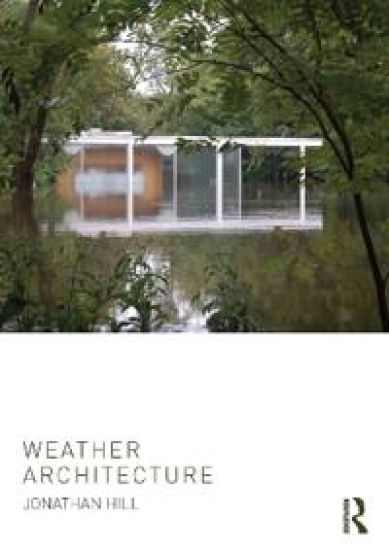
Weather Architecture further extends Jonathan Hill’s investigation of authorship by recognising the creativity of the weather. At a time when environmental awareness is of growing relevance, the overriding aim is to understand a history of architecture as a history of weather and thus to consider the weather as an architectural author that affects design, construction and use in a creative dialogue with other authors such as the architect and user. Environmental discussions in architecture tend to focus on the practical or the poetic but here they are considered together. Rather than investigate architecture’s relations to the weather in isolation, they are integrated into a wider discussion of cultural and social influences on architecture. The analysis of weather’s effects on the design and experience of specific buildings and gardens is interwoven with a historical survey of changing attitudes to the weather in the arts, sciences and society, leading to a critical re-evaluation of contemporary responses to climate change.
International Commercial Disputes

International Commercial Disputes

Adeline Chong; Jonathan Hill

Hart Publishing
2010
nidottu
This is the fourth edition of this highly regarded work on the law of international commercial litigation as practised in the English courts. As such it is primarily concerned with how commercial disputes which have connections with more than one country are dealt with by the English courts. Much of the law which provides the framework for the resolution of such disputes is derived from international instruments, including recent Conventions and Regulations which have significantly re-shaped the law in the European Union. The scope and impact of these European instruments is fully explained and assessed in this new edition. The work is organised in four parts. The first part considers the jurisdiction of the English courts and the recognition and enforcement in England of judgments granted by the courts of other countries. This part of the work, which involves analysis of both the Brussels I Regulation and the so-called traditional rules, includes chapters dealing with jurisdiction in personam and in rem, anti-suit injunctions and provisional measures. The work's second part focuses on the rules which determine whether English law or the law of another country is applicable to a given situation. The part includes a discussion of choice of law in contract and tort, with particular attention being devoted to the recent Rome I and Rome II Regulations. The third part of the work includes three new chapters on international aspects of insolvency (in particular, under the EC Insolvency Regulation) and the final part focuses on an analysis of legal aspects of international commercial arbitration. In particular, this part examines: the powers of the English courts to support or supervise an arbitration; the effect of an arbitration agreement on the jurisdiction of the English courts; the law which governs an arbitration agreement and the parties' dispute; and, the recognition and enforcement of foreign arbitration awards.
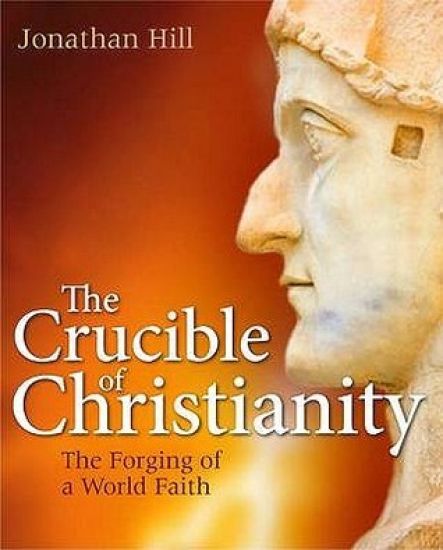
The Crucible of Christianity

The Crucible of Christianity

Jonathan Hill

Lion Books
2010
sidottu
Today Christianity is the largest religion in the world, its influence felt in every corner of the globe. But where did this religion come from? How did it take shape and formulate its beliefs? This enthralling book takes us back to the beginnings, setting us in the world of the Roman Empire and assessing the dominant philosophies of the time. How was the New Testament written and determined? How, after the first century AD, did Christianity set out on the road to an intellectually coherent account of its faith? How did it relate to the other main religion that grew up at the same time - Gnosticism. In The Crucible of Christianity, we see the battle lines drawn and understand how notions of orthodoxy and heresy emerged. We meet the key thinkers who forged Christianity out of the crucible of dispute and conflict.
The New Lion Handbook

The New Lion Handbook

Jonathan Hill

Lion Books
2009
nidottu
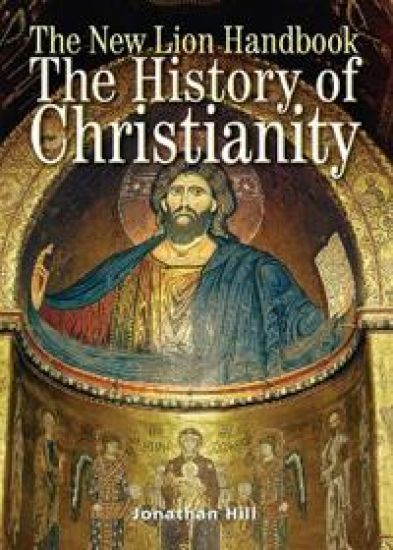
Jonathan Hill's comprehensive survey covers the entire geographical sweep of Christianity as well as its 2,000 years. The main narrative is supplemented by articles on key topics by 40 international experts from the UK, US, Italy, France, Africa, Belgium, Canada, the Netherlands, Japan and Singapore. Beautifully illustrated throughout, this new flexiback edition makes it available to an even wider audience. Areas covered include: Christian beginnings; the Church Fathers; expansion to Africa and the Middle East; the Byzantine Empire; the Dark Ages; the High Middle Ages; the Reformation; Russia and the east; the new age of exploration to Africa, South and North America, India and the Far East from the 15th to 17th centuries; the Enlightenment; the age of Colonialism; the modern world.
Cross-Border Consumer Contracts

Cross-Border Consumer Contracts

Jonathan Hill

Oxford University Press
2008
sidottu
Until relatively recently, almost all contracts were domestic: both the consumer and the supplier were from the same country and the situation involved no substantial foreign elements. Technological changes (in terms of international travel, means of communication and information technology) have meant that it is a more frequent occurrence for consumer contracts to involve a cross-border dimension. This book explores the legal regimes which seek to deal with disputes which arise out of such cross-border consumer contracts. In terms of private international law, English law traditionally treated consumer contracts no differently from commercial contracts. However, at European level, jurisdictional and choice of law issues arising out of certain consumer contracts are subject to specific rules. The first part of the book focuses on these European developments and seeks to explain why the private litigation model for the resolution of disputes arising out of cross-border consumer contracts has failed to deal adequately with the problems generated by such contracts. Subsequent to these failures, alternative mechanisms for resolving contractual disputes have a particular significance in the consumer context. The second part of the book focuses on an evaluation of these alternative dispute resolution mechanisms, including online dispute resolution.
Old Radio Sets

Old Radio Sets

Jonathan Hill

Shire Publications
2008
nidottu
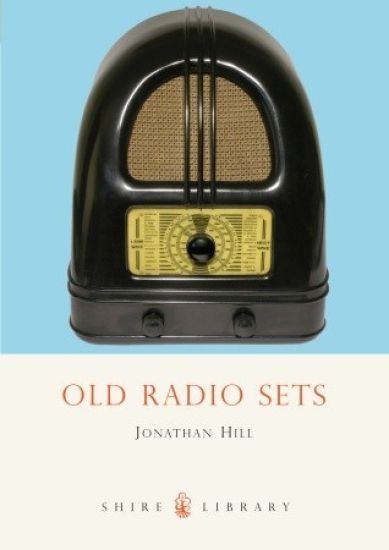
The radio has been part of home entertainment for over 75 years and generations of listeners have enjoyed their favourite music or programmes, or sat enthralled as an historic event unfolded through the radio's loudspeakers. This book explores the development of the radio from the late Victorian era until the late 1960s, including photographs of rare and unusual styles. A surprising number of early radios have survived to this day, some of which were made before broadcasting was introduced in the early 1920s, and the author discusses these old sets as well as the different and improving models over the years.
The Big Questions

The Big Questions

Jonathan Hill

Lion Books
2007
nidottu
Jonathan Hill explores how Christian thinkers, as well as selected philosophers and other religious leaders, have addressed key issues over the centuries. Considering the arguments for and against each position, he encourages readers to think the issues through for themselves in this enjoyable, discursive book. Questions include: - How can we believe in God when there is so much suffering? - Does science mean the end of religion? - Does life after death really exist? - Is freedom just an illusion? - Is there such a thing as evil? - Have we any good reason to believe in God? - What is the ultimate goal of life? - What does it mean to lead a good life?