Kirjojen hintavertailu – 12 903 733 kirjaa ja 27 kauppaa

Kirjailija

Jonathan K. Nelson

Kirjat ja teokset yhdessä paikassa: 4 kirjaa, julkaisuja vuosilta 2014–2024, suosituimpiin kuuluu Filippino Lippi. Vertaile teosten hintoja ja tarkista saatavuus suomalaisista kirjakaupoista.

4 kirjaa

Kirjojen julkaisuvuodet: 2014–2024.

Risks in Renaissance Art

Risks in Renaissance Art

Jonathan K. Nelson; Richard J. Zeckhauser

Cambridge University Press
2024
sidottu
This Element represents the first systematic study of the risks borne by those who produced, commissioned, and purchased art, across Renaissance Europe. It employs a new methodology, built around concepts from risk analysis and decision theory. The Element classifies scores of documented examples of losses into 'production risks', which arise from the conception of a work of art until its final placement, and 'reception risks', when a patron, a buyer, or viewer finds a work displeasing, inappropriate, or offensive. Significant risks must be tamed before players undertake transactions. The Element discusses risk-taming mechanisms operating society-wide: extensive communication flows, social capital, and trust, and the measures individual participants took to reduce the likelihood and consequences of losses. Those mechanisms were employed in both the patronage-based system and the modern open markets, which predominated respectively in Southern and Northern Europe.
Risks in Renaissance Art

Risks in Renaissance Art

Jonathan K. Nelson; Richard J. Zeckhauser

Cambridge University Press
2024
pokkari
This Element represents the first systematic study of the risks borne by those who produced, commissioned, and purchased art, across Renaissance Europe. It employs a new methodology, built around concepts from risk analysis and decision theory. The Element classifies scores of documented examples of losses into 'production risks', which arise from the conception of a work of art until its final placement, and 'reception risks', when a patron, a buyer, or viewer finds a work displeasing, inappropriate, or offensive. Significant risks must be tamed before players undertake transactions. The Element discusses risk-taming mechanisms operating society-wide: extensive communication flows, social capital, and trust, and the measures individual participants took to reduce the likelihood and consequences of losses. Those mechanisms were employed in both the patronage-based system and the modern open markets, which predominated respectively in Southern and Northern Europe.
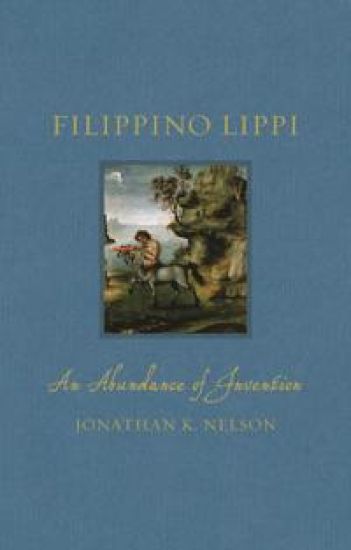
Filippino Lippi

Filippino Lippi

Jonathan K. Nelson

REAKTION BOOKS
2022
sidottu
The first monograph in a generation, and the first study in English in over eighty years, this book presents a new understanding of the Renaissance master-artist Filippino Lippi. Celebrated as ‘ingenious’ by Vasari in 1550, Filippino was highly praised and influential, then fell out of favour and was forgotten for centuries. He was rediscovered by the poet Swinburne, who in 1868 celebrated the painter’s ‘inventive enjoyment and indefatigable fancy’. In a similar spirit, this volume explores Filippino’s creativity in solving artistic problems. If a Roman cardinal requested a classically inspired work, or a Florentine humanist wanted to dazzle observers with his antiquarian interests, Filippino had the sensitivity to understand these diverse needs and express them with highly original solutions.
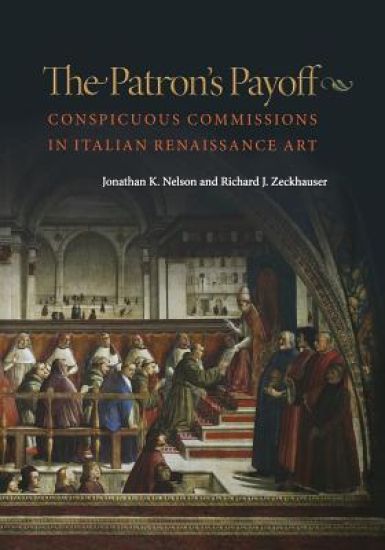
The Patron's Payoff

The Patron's Payoff

Jonathan K. Nelson; Richard J. Zeckhauser; Michael Spence

Princeton University Press
2014
pokkari
In The Patron's Payoff, Jonathan Nelson and Richard Zeckhauser apply the innovative methods of information economics to the study of art. Their findings, written in highly accessible prose, are surprising and important. Building on three economic concepts--signaling, signposting, and stretching--the book develops the first systematic methodology for assessing the meaning of art patronage and provides a broad and useful framework for understanding how works of art functioned in Renaissance Italy. The authors discuss how patrons used conspicuous commissions to establish and signal their wealth and status, and the book explores the impact that individual works had on society. The ways in which artists met their patrons' needs for self-promotion dramatically affected the nature and appearance of paintings, sculptures, and buildings. The Patron's Payoff presents a new conceptual structure that allows readers to explore the relationships among the main players in the commissioning game--patrons, artists, and audiences--and to understand how commissioned art transmits information. This book facilitates comparisons of art from different periods and shows the interplay of artists and patrons working to produce mutual benefits subject to an array of limiting factors. The authors engage several art historians to look at what economic models reveal about the material culture of Italy, ca. 1300?1600, and beyond. Their case studies address such topics as private chapels and their decorations, donor portraits, and private palaces. In addition to the authors, the contributors are Molly Bourne, Kelley Helmstutler Di Dio, Thomas J. Loughman, and Larry Silver.