Kirjojen hintavertailu – 12 873 135 kirjaa ja 26 kauppaa

Kirjailija

Jonathan Kennedy

Kirjat ja teokset yhdessä paikassa: 7 kirjaa, julkaisuja vuosilta 2011–2024, suosituimpiin kuuluu Pathogenesis: A History of the World in Eight Plagues. Vertaile teosten hintoja ja tarkista saatavuus suomalaisista kirjakaupoista.

7 kirjaa

Kirjojen julkaisuvuodet: 2011–2024.

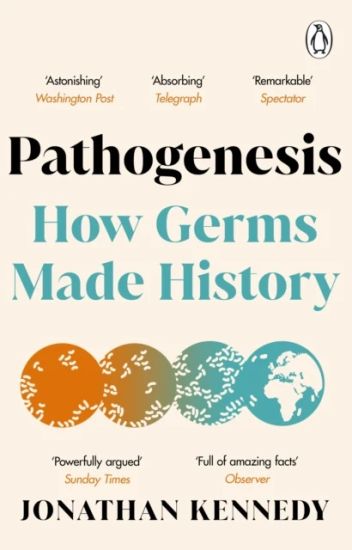
Pathogenesis

Pathogenesis

Jonathan Kennedy

TRANSWORLD PUBLISHERS LTD
2024
pokkari

Halvin toimitettuna 17,00 €

A BBC RADIO 4 BOOK OF THE WEEK'Powerfully argued... Fascinating and pacy' Sunday Times, Book of the Week'Superbly written... sure to please readers of Yuval Noah Harari or Rutger Bregman' The Times'Full of amazing facts' ObserverIn this revelatory book, Dr Jonathan Kennedy argues that germs have shaped humanity at every stage, from the first success of Homo sapiens over the equally intelligent Neanderthals to the fall of Rome and the rise of Islam. How did an Indonesian volcano help cause the Black Death, setting Europe on the road to capitalism? How could 168 men extract the largest ransom in history from an opposing army of eighty thousand? And why did the Industrial Revolution lead to the birth of the modern welfare state? The latest science reveals that infectious diseases are not just something that happens to us, but a fundamental part of who we are. Indeed, the only reason humans don't lay eggs is that a virus long ago inserted itself into our DNA, and there are as many bacteria in your body as there are human cells. We have been thinking about the survival of the fittest all wrong: evolution is not simply about human strength and intelligence, but about how we live and thrive in a world dominated by microbes. By exploring the startling intimacy of our relationship with infectious diseases, Kennedy shows how they have been responsible for some of the seismic revolutions of the past 50,000 years. Provocative and brimming with insight, Pathogenesis transforms our understanding of the human story. Challenges some of the greatest cliches about colonialism... A revelation' SATHNAM SANGHERA'Thrilling and eye-opening' LEWIS DARTNELL'Science and history at its best' MARK HONIGSBAUM'Unpicks everything we thought we knew... Mind blowing' CAL FLYNA TIMES SCIENCE BOOK OF THE YEAR 2023A SUNDAY TIMES SCIENCE BOOK OF THE YEAR 2023

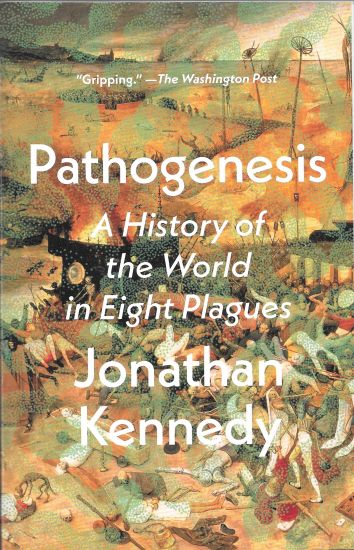
Pathogenesis: A History of the World in Eight Plagues
A sweeping examination of how germs have played a starring role in the most significant transformations in history, from the rise of Homo sapiens to the creation of world religions and the birth of capitalism. According to the accepted narrative of progress, humans have thrived thanks to their brains and brawn, to actions undertaken individually and collectively that have changed the arc of history. In this revelatory book, sociologist and public health professor Jonathan Kennedy argues that the peddlers of the exceptionalism myth massively overestimate the role that reason plays in social change. Instead, it is the humble microbe that wins wars and topples empires. Drawing on the latest research in genetics, economics, sociology, and anthropology, Pathogenesis explores eight outbreaks of infectious disease that made the modern world. Take the rise of Christianity. When a wave of deadly pandemics swept through the Roman Empire in the third century, there were only a small number of Christian communities--but they did a much better job tending to the sick. Their more communal approach saved thousands of lives, and helped turn this tiny, obscure sect into one of the world's great religions. Bacteria and viruses were also responsible for the demise of the Neanderthals, the growth of Islam, the transition from feudalism to capitalism, the devastation wrought by European colonialism, and the rise of the United States from an imperial backwater to a global superpower. By centering disease in his wide-ranging, spectacularly illustrated history of humankind, Kennedy challenges our most fundamental assumptions about our collective past--and urges us to view our current moment as another disease-driven inflection point that could change the course of history. Provocative and brimming with insight, Pathogenesis transforms our understanding of the human story.
Pathogenesis: A History of the World in Eight Plagues

Pathogenesis: A History of the World in Eight Plagues

Jonathan Kennedy

Crown Publishing Group (NY)
2024
nidottu

Halvin toimitettuna 21,80 €

NATIONAL BESTSELLER - A "gripping" (The Washington Post) account of how the major transformations in history--from the rise of Homo sapiens to the birth of capitalism--have been shaped not by humans but by germs "Superbly written . . . Kennedy seamlessly weaves together scientific and historical research, and his confident authorial voice is sure to please readers of Yuval Noah Harari or Rutger Bregman."--The Times (U. K.) According to the accepted narrative of progress, humans have thrived thanks to their brains and brawn, collectively bending the arc of history. But in this revelatory book, Professor Jonathan Kennedy argues that the myth of human exceptionalism overstates the role that we play in social and political change. Instead, it is the humble microbe that wins wars and topples empires. Drawing on the latest research in fields ranging from genetics and anthropology to archaeology and economics, Pathogenesis takes us through sixty thousand years of history, exploring eight major outbreaks of infectious disease that have made the modern world. Bacteria and viruses were protagonists in the demise of the Neanderthals, the growth of Islam, the transition from feudalism to capitalism, the devastation wrought by European colonialism, and the evolution of the United States from an imperial backwater to a global superpower. Even Christianity rose to prominence in the wake of a series of deadly pandemics that swept through the Roman Empire in the second and third centuries: Caring for the sick turned what was a tiny sect into one of the world's major religions. By placing disease at the center of his wide-ranging history of humankind, Kennedy challenges some of the most fundamental assumptions about our collective past--and urges us to view this moment as another disease-driven inflection point that will change the course of history. Provocative and brimming with insight, Pathogenesis transforms our understanding of the human story.
Patogenese

Patogenese

Jonathan Kennedy

Manuskript forlag
2024
sidottu
Opp gjennom historien har mikrober spilt en like stor rolle i historien som geværer, generaler og «store menn». Mikrober har ikke bare avgjort kriger og skapt eller avsluttet imperier, men også i fredstid formet vår verden, ofte gjennom dødelige pandemier. Denne boken viser hvordan smittsomme sykdommer har formet hvert steg av vår historie, fra homo sapiens' første suksesser via de like smarte neandertalere til Romerrikets fall og islams storhetstid, fra spanjolenes erobring av Sør-Amerika til den industrielle revolusjon. Hvordan førte Svartedauden til kapitalismens fødsel? Og hvorfor ledet den industrielle revolusjon til velferdsstatens fremvekst? I Patogenese viser Jonathan Kennedy hvordan virus og bakterier har vært ansvarlig for noen av de største revolusjonene i menneskehetens historie, og hvordan krisene de forårsaker gir gylne muligheter for å endre kurs.
Pathogenesis: A History of the World in Eight Plagues
A sweeping examination of how germs have played a starring role in the most significant transformations in history, from the rise of Homo sapiens to the creation of world religions and the birth of capitalism. According to the accepted narrative of progress, humans have thrived thanks to their brains and brawn, to actions undertaken individually and collectively that have changed the arc of history. In this revelatory book, sociologist and public health professor Jonathan Kennedy argues that the peddlers of the exceptionalism myth massively overestimate the role that reason plays in social change. Instead, it is the humble microbe that wins wars and topples empires. Drawing on the latest research in genetics, economics, sociology, and anthropology, Pathogenesis explores eight outbreaks of infectious disease that made the modern world. Take the rise of Christianity. When a wave of deadly pandemics swept through the Roman Empire in the third century, there were only a small number of Christian communities--but they did a much better job tending to the sick. Their more communal approach saved thousands of lives, and helped turn this tiny, obscure sect into one of the world's great religions. Bacteria and viruses were also responsible for the demise of the Neanderthals, the growth of Islam, the transition from feudalism to capitalism, the devastation wrought by European colonialism, and the rise of the United States from an imperial backwater to a global superpower. By centering disease in his wide-ranging, spectacularly illustrated history of humankind, Kennedy challenges our most fundamental assumptions about our collective past--and urges us to view our current moment as another disease-driven inflection point that could change the course of history. Provocative and brimming with insight, Pathogenesis transforms our understanding of the human story.
Neurology For Mrcp: The Essential Guide To Neurology For Mrcp Part 1, Part 2 And Paces

Neurology For Mrcp: The Essential Guide To Neurology For Mrcp Part 1, Part 2 And Paces

Jonathan Kennedy; Jonathan D Rohrer

Imperial College Press
2011
nidottu
This book is the essential revision guide for neurology in the Membership of the Royal College of Physicians (MRCP). Neurology has been rated as the most difficult subject in MRCP examinations and there has been no concise and easy-to-use revision guide to help candidates through the exams until now. Neurology for MRCP is written by two experienced neurologists who have taught both the written (Part 1 and Part 2) and clinical (PACES) sections of the exam. This pioneering new book will also be useful for medical students sitting for their final examinations and for doctors who are preparing for the PLAB examination.