

Kirjailija
Jonathan Marshall
Kirjat ja teokset yhdessä paikassa: 20 kirjaa, julkaisuja vuosilta 1998–2026, suosituimpiin kuuluu My Dragon's Not Laughing. Vertaile teosten hintoja ja tarkista saatavuus suomalaisista kirjakaupoista.
20 kirjaa
Kirjojen julkaisuvuodet: 1998–2026.
Tervetuloa Pohjoismaiden suurimpaan verkkokirjakauppaan! Adlibris kannattaa sananvapautta, ja haluamme edistää kirjallisuuden ja tiedon saatavuutta.
Tervetuloa Pohjoismaiden suurimpaan verkkokirjakauppaan! Adlibris kannattaa sananvapautta, ja haluamme edistää kirjallisuuden ja tiedon saatavuutta.

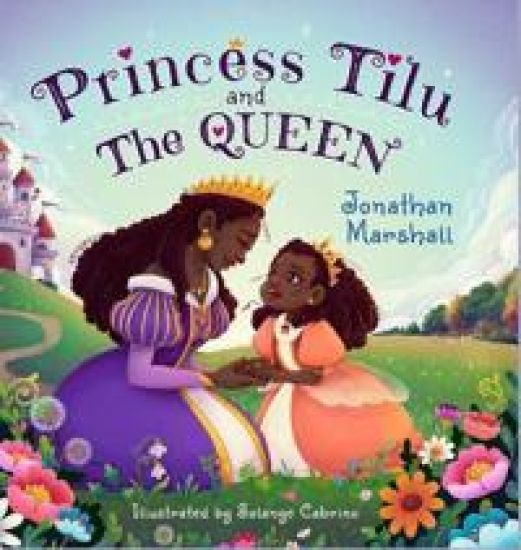
In the heart of the forest, young Benji the bear finds himself dealing with a profound loss-his dear Grandma Bear has crossed the rainbow bridge. All that remains of her warm presence are their cherished memories and her special strawberry jam, a taste that once held the sweetness of their shared moments. "I Miss You Beary Much" is a touching tale of love, loss, and the enduring power of cherished memories, reminding young readers that even in the face of sadness, the love shared with those we cherish remains as sweet as the most delicious strawberry jam.


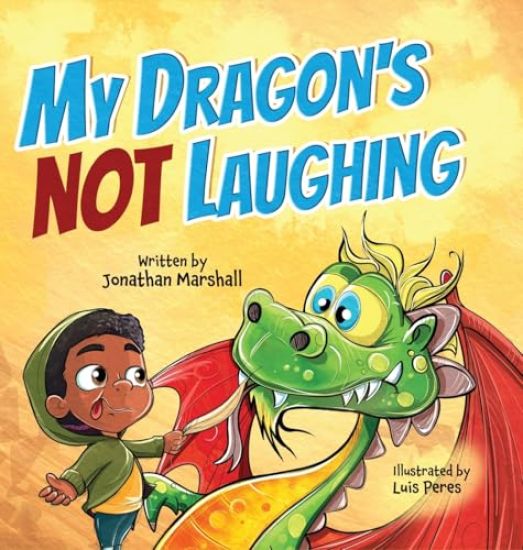
My dad can do so many cool things and I want to be just like him. If I try the things that he does and do them the exact same way, I bet I could get the same results. Let's try and see what can happen

Little bear wonders what the adult bears do all day. What do you think Papa Bear told him? They work of course. Join little bear as he finds out the many different jobs that bears do.

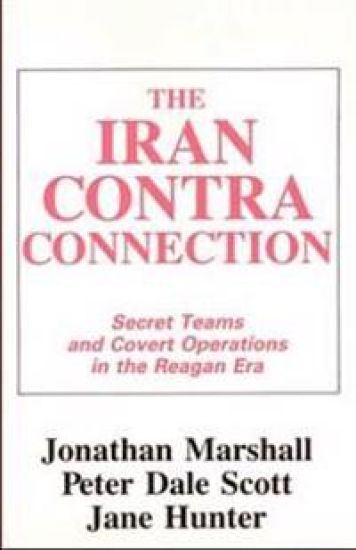
Iran Contra–Connection – Secret Teams and Covert Operations in the Reagan Era
Jonathan Marshall; Peter Scott; Jane Hunter
Black Rose Books
2022
sidottu

This is an imaginative story of a little boy who loves the zoo as well as his Kazoo. What do you think would happen if you combined the two? I bet there would be a great adventure, but you will need to read to find out.

I'll Be Right There is a children's book that tells of a conversation between a father and son. This is an awesome book not just for fathers and sons, but for anyone parenting little ones when they get scared at night. It is a great reminder to tell your little ones you will be there to support them in their time of need.


Dark Quadrant traces the systematic corruption of businesspeople and politicians from 1945 to 1974 and draws links to our current political crisis. Documenting the collaboration of Presidents Truman, Johnson, and Nixon with powerful mobsters. President Trump represents, in many ways, a twisted culmination of the forces described in this book.
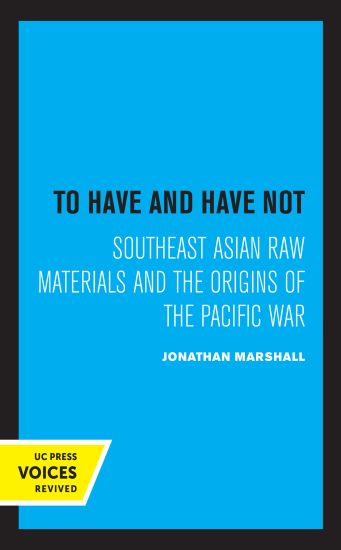
Jonathan Marshall makes a provocative statement: it was not ideological or national security considerations that led the United States into war with Japan in 1941. Instead, he argues, it was a struggle for access to Southeast Asia's vast storehouse of commodities—rubber, oil, and tin—that drew the United States into the conflict. Boldly departing from conventional wisdom, Marshall reexamines the political landscape of the time and recreates the mounting tension and fear that gripped U. S. officials in the months before the war. Unusual in its extensive use of previously ignored documents and studies, this work records the dilemmas of the Roosevelt administration: it initially hoped to avoid conflict with Japan and, after many diplomatic overtures, it came to see war as inevitable. Marshall also explores the ways that international conflicts often stem from rivalries over land, food, energy, and industry. His insights into "resource war," the competition for essential commodities, will shed new light on U. S. involvement in other conflicts—notably in Vietnam and the Persian Gulf. This title is part of UC Press's Voices Revived program, which commemorates University of California Press’s mission to seek out and cultivate the brightest minds and give them voice, reach, and impact. Drawing on a backlist dating to 1893, Voices Revived makes high-quality, peer-reviewed scholarship accessible once again using print-on-demand technology. This title was originally published in 1995.
Jonathan Marshall makes a provocative statement: it was not ideological or national security considerations that led the United States into war with Japan in 1941. Instead, he argues, it was a struggle for access to Southeast Asia's vast storehouse of commodities—rubber, oil, and tin—that drew the United States into the conflict. Boldly departing from conventional wisdom, Marshall reexamines the political landscape of the time and recreates the mounting tension and fear that gripped U. S. officials in the months before the war. Unusual in its extensive use of previously ignored documents and studies, this work records the dilemmas of the Roosevelt administration: it initially hoped to avoid conflict with Japan and, after many diplomatic overtures, it came to see war as inevitable. Marshall also explores the ways that international conflicts often stem from rivalries over land, food, energy, and industry. His insights into "resource war," the competition for essential commodities, will shed new light on U. S. involvement in other conflicts—notably in Vietnam and the Persian Gulf. This title is part of UC Press's Voices Revived program, which commemorates University of California Press’s mission to seek out and cultivate the brightest minds and give them voice, reach, and impact. Drawing on a backlist dating to 1893, Voices Revived makes high-quality, peer-reviewed scholarship accessible once again using print-on-demand technology. This title was originally published in 1995.
Long before Mexico, Colombia, and Afghanistan became notorious for their contributions to the global drug traffic, Lebanon was a special target of U. S. drug agents for harboring the world's greatest single transit port in the international traffic in narcotics. In the words of one American official, "certain of the largest traffickers are so influential politically, and certain highly placed officials so deeply involved in the narcotic traffic, that one might well state that the Lebanese Government is in the narcotics business." Using previously secret government records, The Lebanese Connection uncovers for the first time the story of how Lebanon's economy and political system were corrupted by drug profits—and how, by financing its many ruthless militia, Lebanon's drug trade contributed to the country's greatest catastrophe, its fifteen-year civil war from 1975 to 1990. In so doing, this book sheds new light on the dangerous role of vast criminal enterprises in the collapse of states and the creation of war economies that thrive in the midst of civil conflicts. Taking a regional approach to the drug issue, Jonathan Marshall assesses the culpability of Syria, Israel, and of Palestinian factions and other groups that used Lebanon as their battleground. On the international level, he documents Lebanon's contribution to the hard drug problem of major consuming countries, from the days of the "French Connection" through the "Pizza Connection," as well as Lebanon's unrivaled place in the global hashish market.
Scholars use patrons and benefactors in the interpretation of Jesus and the Gospels, but this practice needs re-evaluation. Many New Testament studies build from outdated classical scholarship and only superficial interaction with archaeological research. Recent classical studies have improved modern understanding of these ancient categories tremendously. Archaeological advances shed new light on first-century Palestine. Jonathan Marshall evaluates the categories of patrons and benefactors in light of the findings of new classical studies and archaeological work. He offers a much needed clarification between socio-historical "patron-client" relationships and Roman patrocinium. He also elucidates differences between patrocinium and benefaction. An in-depth investigation of cities, villages, and leadership in first-century Palestine reveals the minimal attestation of benefaction and, still less, patrocinium in the area and among the people. The dearth or, in some cases, complete lack of honorary inscriptions is one obvious pointer in this direction. An analysis of three passages in Luke (6:17-38; 14:1-24; 22:14-34) follows. The analysis demonstrates that Luke does not adopt the specific terminology of patrocinium. Use of the benefactor category is present but limited while debt to Jewish cultural influences predominates. One discovers that Luke's presentation of Jesus, in these three passages, matches well the historical realia of Jesus' day.

This sociolinguistic study offers a new theoretical framework for understanding the diffusion of language change within a community. Advanced statistical analysis methods are used in rigorously testing the supposed norm-enforcement effect of social networks. Revisions to the social network model are proposed, allowing the effects of various social factors operating simultaneously on the individual to be considered in evaluating the process of resistance to language change.
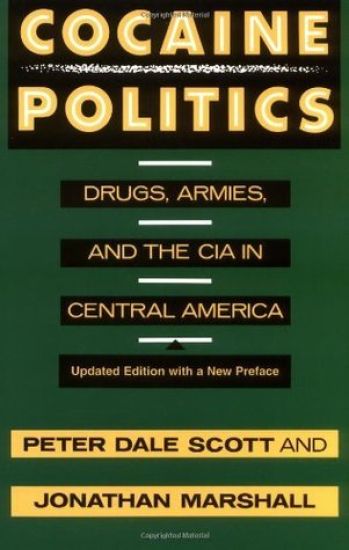
Cocaine Politics
Peter Dale Scott; Jonathan Marshall
University of California Press
1998
pokkari
Halvin toimitettuna 37,30 €
When the San Jose Mercury News ran a controversial series of stories in 1996 on the relationship between the CIA, the Contras, and crack, they reignited the issue of the intelligence agency's connections to drug trafficking, initially brought to light during the Vietnam War and then again by the Iran-Contra affair. Broad in scope and extensively documented, "Cocaine Politics" shows that under the cover of national security and covert operations, the U. S. government has repeatedly collaborated with and protected major international drug traffickers. A new preface discusses developments of the last six years, including the Mercury News stories and the public reaction they provoked.