Kirjojen hintavertailu – 12 859 829 kirjaa ja 27 kauppaa

Kirjailija

Jonathan Mellon

Kirjat ja teokset yhdessä paikassa: 3 kirjaa, julkaisuja vuosilta 2019–2027, suosituimpiin kuuluu Electoral Shocks. Vertaile teosten hintoja ja tarkista saatavuus suomalaisista kirjakaupoista.

3 kirjaa

Kirjojen julkaisuvuodet: 2019–2027.

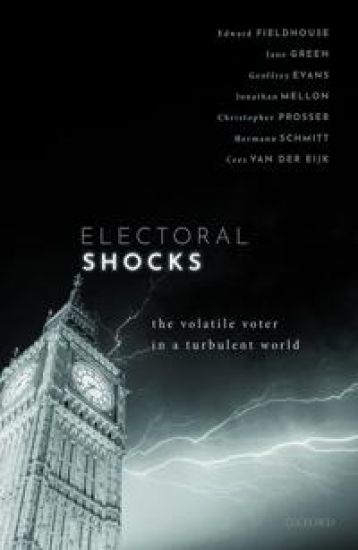
Electoral Shocks

Electoral Shocks

Edward Fieldhouse; Jane Green; Geoffrey Evans; Jonathan Mellon; Christopher Prosser; Hermann Schmitt; Cees van der Eijk

Oxford University Press
2019
nidottu
This is an open access title available under the terms of a CC BY-NC-ND 4.0 International licence. It is free to read at Oxford Scholarship Online and offered as a free PDF download from OUP and selected open access locations. Electoral Shocks: The Volatile Voter in a Turbulent World offers a novel perspective on British elections, focusing on the role of electoral shocks in the context of increasing electoral volatility. It demonstrates and explains the long-term trend in volatility, how shocks have contributed to the level of electoral volatility, and also which parties have benefited from the ensuing volatility. It follows in the tradition of British Election Study books, providing a comprehensive account of specific election outcomes- the General Elections of 2015 and 2017-and a more general and novel approach to understanding electoral change. The authors examine five electoral shocks that affected the elections of 2015 and 2017: the rise in immigration after 2004, particularly from Eastern Europe; the Global Financial Crisis prior to 2010; the coalition government of the Conservatives and the Liberal Democrats between 2010 and 2015; the Scottish Independence Referendum in 2014; and the European Union Referendum in 2016. The focus on electoral shocks offers an overarching explanation for the volatility in British elections, alongside the long-term trends that have led to this point. It offers a way to understand the rise and fall of the UK Independence Party (UKIP), Labour's disappointing 2015 performance and its later unexpected gains, the collapse in support for the Liberal Democrats, the dramatic gains of the Scottish National Party (SNP) in 2015, and the continuing period of tumultuous politics that has followed the EU referendum and the General Election of 2017. It provides a new way of understanding electoral choice in Britain, and also beyond, and a better understanding of the outcomes of recent elections.

Electoral Realignment

Electoral Realignment

Fieldhouse Edward; Jane Green; Christopher Prosser; Evans Geoffrey; Bailey Jack; Jonathan Mellon

Oxford University Press
2027
Sidottu
Electoral Realignment: How Brexit Reshaped British Voting Behaviour provides a novel account of electoral change, focusing on how electoral shocks in general—and Brexit in particular—have reshaped the relationship between social and demographic characteristics and voting behaviour in Britain. Drawing on a wide array of data, Edward Fieldhouse, Jane Green, Christopher Prosser, Geoffrey Evans, Jack Bailey, and Jonathan Mellon examine how the vote to leave the European Union in 2016 led to fundamental change in 'party supply'—most notably a shift in the position of the Conservative Party on Europe—in turn accelerating the ongoing realignment of British politics around social and cultural issues. Through 'sorting' voters by their Brexit preferences, age and education have become the most important demographic predictors of vote choice, with realignment reaching its height during the 2019 General Election. Electoral Realignment examines the argument that the key to understanding realignments, is through political reactions to electoral shocks and through the combination of changing voter demands and the strategic responses of political parties. This book covers topics such as changing values, Brexit and competence shocks, and draws attention to the idea that the electoral shocks that rocked British politics after 2020 were primarily about competence rather than being ideological in nature. Drawing on data from British Election Studies covering over sixty years, Fieldhouse et al explore how the decade from 2015 to 2025 witnessed a shift in the relationship between party preferences and social class, education, geography, age, and political values, providing readers with an in-depth understanding of electoral realignment in Britain in a long-term context. This is an open access title available under the terms of a CC BY-NC-ND 4.0 International licence. It is free to read on the Oxford Academic platform and offered as a free PDF download from OUP and selected open access locations.
Electoral Shocks

Electoral Shocks

Edward Fieldhouse; Jane Green; Geoffrey Evans; Jonathan Mellon; Christopher Prosser; Hermann Schmitt; Cees van der Eijk

Oxford University Press
2019
sidottu
This is an open access title available under the terms of a CC BY-NC-ND 4.0 International licence. It is free to read at Oxford Scholarship Online and offered as a free PDF download from OUP and selected open access locations. Electoral Shocks: The Volatile Voter in a Turbulent World offers a novel perspective on British elections, focusing on the role of electoral shocks in the context of increasing electoral volatility. It demonstrates and explains the long-term trend in volatility, how shocks have contributed to the level of electoral volatility, and also which parties have benefited from the ensuing volatility. It follows in the tradition of British Election Study books, providing a comprehensive account of specific election outcomes- the General Elections of 2015 and 2017-and a more general and novel approach to understanding electoral change. The authors examine five electoral shocks that affected the elections of 2015 and 2017: the rise in immigration after 2004, particularly from Eastern Europe; the Global Financial Crisis prior to 2010; the coalition government of the Conservatives and the Liberal Democrats between 2010 and 2015; the Scottish Independence Referendum in 2014; and the European Union Referendum in 2016. The focus on electoral shocks offers an overarching explanation for the volatility in British elections, alongside the long-term trends that have led to this point. It offers a way to understand the rise and fall of the UK Independence Party (UKIP), Labour's disappointing 2015 performance and its later unexpected gains, the collapse in support for the Liberal Democrats, the dramatic gains of the Scottish National Party (SNP) in 2015, and the continuing period of tumultuous politics that has followed the EU referendum and the General Election of 2017. It provides a new way of understanding electoral choice in Britain, and also beyond, and a better understanding of the outcomes of recent elections.