Kirjojen hintavertailu – 12 859 828 kirjaa ja 27 kauppaa

Kirjailija

Jonathan Michie

Kirjat ja teokset yhdessä paikassa: 10 kirjaa, julkaisuja vuosilta 2000–2017, suosituimpiin kuuluu Personal Knowledge Management, Leadership Styles, and Organisational Performance. Vertaile teosten hintoja ja tarkista saatavuus suomalaisista kirjakaupoista.

10 kirjaa

Kirjojen julkaisuvuodet: 2000–2017.

Advanced Introduction to Globalisation

Advanced Introduction to Globalisation

Jonathan Michie

Edward Elgar Publishing Ltd
2017
sidottu
Elgar Advanced Introductions are stimulating and thoughtful introductions to major fields in the social sciences and law, expertly written by the world's leading scholars. Designed to be accessible yet rigorous, they offer concise and lucid surveys of the substantive and policy issues associated with discrete subject areas. Globalisation impacts almost all aspects of life. It is often said that change is accelerating, and that the nation state is increasingly anachronistic. This book challenges that consensus, arguing that globalisation is neither an historic nor technological inevitability; rather, globalisation and technological change are as old as capitalism itself. Jonathan Michie makes the case for a new, more realistic approach to economics. He argues that the reduced power of national governments is a result of the free-market reforms of globalisation created in the 1980s era of Thatcher and Reagan, which led to the 2008 global financial crisis and recession. The free-market 'capitalism unleashed' form of globalisation is neither inevitable nor desirable - it is possible to develop a new global green deal for economic progress, being socially and environmentally sustainable. Michie demonstrates that capital has become unproductive with increased speculation and tax evasion, and that taxing wealth is necessary to create a new era of globally sustainable development. Key features include: in-depth coverage of globalisation written in a concise and accessible styledisputes the consensus that globalisation is an historic or technological inevitabilityfocus on current issues such as unproductive capital, a result of increased speculation, tax evasion and avoidanceadvocates policy proposals for global regulation, taxation and corporate diversityargues the need for a new global green deal for social and environmental sustainability and makes a clear case for an improved and more realistic approach to economics. The Advanced Introduction to Globalisation will be a challenging yet engaging read for policy makers, academics and advanced students of economics, management and business, politics and environmental studies. This book sets out an alternative worldview which will interest anyone concerned with our future global prospects.

Advanced Introduction to Globalisation

Advanced Introduction to Globalisation

Jonathan Michie

Edward Elgar Publishing Ltd
2017
nidottu
Elgar Advanced Introductions are stimulating and thoughtful introductions to major fields in the social sciences and law, expertly written by the world's leading scholars. Designed to be accessible yet rigorous, they offer concise and lucid surveys of the substantive and policy issues associated with discrete subject areas. Globalisation impacts almost all aspects of life. It is often said that change is accelerating, and that the nation state is increasingly anachronistic. This book challenges that consensus, arguing that globalisation is neither an historic nor technological inevitability; rather, globalisation and technological change are as old as capitalism itself. Jonathan Michie makes the case for a new, more realistic approach to economics. He argues that the reduced power of national governments is a result of the free-market reforms of globalisation created in the 1980s era of Thatcher and Reagan, which led to the 2008 global financial crisis and recession. The free-market 'capitalism unleashed' form of globalisation is neither inevitable nor desirable - it is possible to develop a new global green deal for economic progress, being socially and environmentally sustainable. Michie demonstrates that capital has become unproductive with increased speculation and tax evasion, and that taxing wealth is necessary to create a new era of globally sustainable development. Key features include: in-depth coverage of globalisation written in a concise and accessible styledisputes the consensus that globalisation is an historic or technological inevitabilityfocus on current issues such as unproductive capital, a result of increased speculation, tax evasion and avoidanceadvocates policy proposals for global regulation, taxation and corporate diversityargues the need for a new global green deal for social and environmental sustainability and makes a clear case for an improved and more realistic approach to economics. The Advanced Introduction to Globalisation will be a challenging yet engaging read for policy makers, academics and advanced students of economics, management and business, politics and environmental studies. This book sets out an alternative worldview which will interest anyone concerned with our future global prospects.

Personal Knowledge Management, Leadership Styles, and Organisational Performance

Personal Knowledge Management, Leadership Styles, and Organisational Performance

Vissanu Zumitzavan; Jonathan Michie

Springer Verlag, Singapore
2015
nidottu
This book presents unique management perspectives from Thailand’s Healthcare Industry. It focuses on the areas of Personal Knowledge Management, Leadership Styles and Organisational Performance. The book highlights the various business challenges that organisations face in the context of globalisation, which itself has produced new opportunities and difficulties alike. In addition, it also elaborates on how even large organisations with strong histories can no longer compete unless they are willing to adapt to changing conditions. Demonstrating how transferring and encouraging knowledge within an organisation can generate approaches that promote its continuing success, the book mainly focuses on the perspective of the Resource Based View, a broadly recognised method for maintaining the competitive advantages of an organisation. It also stresses the importance of making the most use of organisational resources. The book offers a valuable reference work, not only for practitioners and academic researchers in the fields of Business & Management but also for students taking Leadership Management, Organisational Learning and Organisational Performance Appraisal courses, serving as a sourcebook for the principles of successful management.
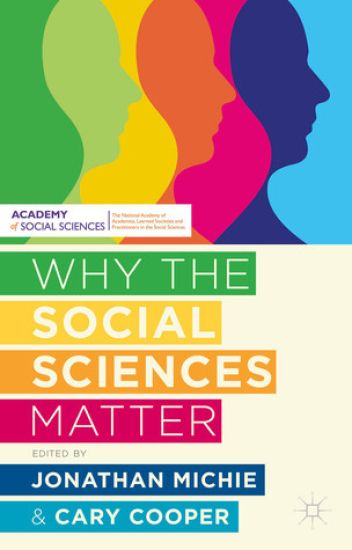
Why the Social Sciences Matter

Why the Social Sciences Matter

Jonathan Michie; Cary Cooper

Palgrave Macmillan
2015
sidottu
Published with the support of the Academy for Social Sciences, this volume provides an illuminating look at topics of concern to everyone at the beginning of the twenty-first century. Leading social scientists tackle complex questions such as immigration, unemployment, climate change, war, banks in trouble, and an ageing population.
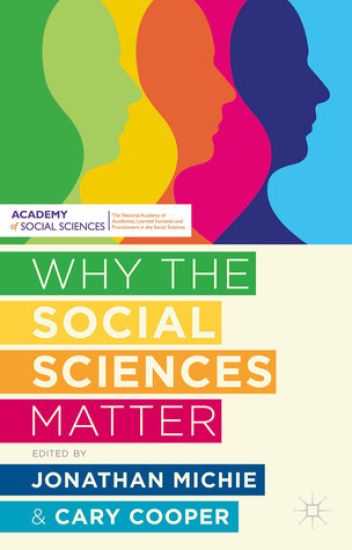
Why the Social Sciences Matter

Why the Social Sciences Matter

Jonathan Michie; Cary Cooper

Palgrave Macmillan
2015
nidottu
Published with the support of the Academy for Social Sciences, this volume provides an illuminating look at topics of concern to everyone at the beginning of the twenty-first century. Leading social scientists tackle complex questions such as immigration, unemployment, climate change, war, banks in trouble, and an ageing population.
Political Economy of the Environment

Political Economy of the Environment

Simon Dietz; Jonathan Michie; Christine Oughton

Routledge
2014
nidottu
This book is the culmination of several years work by a group of academics, policy-makers and other professionals looking to understand how alternative economic thinking – and indeed thinking from quite different social-scientific disciplines – could enhance the mainstream economic approach to environmental and natural-resource problems. Of the editors, Dietz comes from the mainstream economics tradition, while Michie and Oughton draw explicitly on institutional and evolutionary economics. The various authors represent a range of disciplinary backgrounds and approaches. This book draws on the strengths of each and all of these approaches to analyse environmental issues and what can be done to tackle these through corporate and public policy. This book makes the case for an inter-disciplinary approach. Two themes which emerge repeatedly throughout the book are the need for an interdisciplinary theory of technological change, and the need for a similarly interdisciplinary approach to the study of human behaviour and how it influences both production and consumption choices. The two themes are of course related. Resolving environmental questions requires an understanding of their nature, of their causes and, to the extent that they are anthropogenic, of how to change human behaviour. These fundamental issues are the focus of the four chapters that form Part 1 of this volume. The remainder of the volume develops them in more detail..
Wages in the Business Cycle

Wages in the Business Cycle

Jonathan Michie

Bloomsbury Academic
2013
sidottu
During prolonged economic recessions when the normal cyclical expansion of output fails to materialize, the topic of the ‘cyclical behaviour of wages’ has emerged as an area of debate. In 1985, the British Treasury claimed that academic studies into the cyclical behaviour of wages demonstrated that a cut in wages would increase employment. Wages in the Business Cycle contests this argument by presenting the results of original, empirical work which illustrates the absence of any systematic empirical regularity to wage movements over the business cycle. Jonathan Michie argues that the re-emergence of this debate must be seen within the context of the theory of the ‘labour demand function’, representing an attempt to challenge the Keynesian theoretical assumptions implicit in the bulk of applied macro economic work up to the late 1970s.
Political Economy of the Environment

Political Economy of the Environment

Simon Dietz; Jonathan Michie; Christine Oughton

Routledge
2011
sidottu
This book is the culmination of several years work by a group of academics, policy-makers and other professionals looking to understand how alternative economic thinking – and indeed thinking from quite different social-scientific disciplines – could enhance the mainstream economic approach to environmental and natural-resource problems. Of the editors, Dietz comes from the mainstream economics tradition, while Michie and Oughton draw explicitly on institutional and evolutionary economics. The various authors represent a range of disciplinary backgrounds and approaches. This book draws on the strengths of each and all of these approaches to analyse environmental issues and what can be done to tackle these through corporate and public policy. This book makes the case for an inter-disciplinary approach. Two themes which emerge repeatedly throughout the book are the need for an interdisciplinary theory of technological change, and the need for a similarly interdisciplinary approach to the study of human behaviour and how it influences both production and consumption choices. The two themes are of course related. Resolving environmental questions requires an understanding of their nature, of their causes and, to the extent that they are anthropogenic, of how to change human behaviour. These fundamental issues are the focus of the four chapters that form Part 1 of this volume. The remainder of the volume develops them in more detail..
Systems of Production

Systems of Production

Brendan Burchell; Simon Deakin; Jonathan Michie; Jill Rubery

Routledge
2002
sidottu
In recent years we have seen the predictions of our forebears that leisure time would increase as the years pass utterly confounded. It is a fact of life that in major cities across the world, transport systems are full to bursting with people on their way to and from work. As people have come to accept longer working hours as a way of life, a number of new issues have come into play. These include labour market regulation, contract work and outsourcing, wages and increased attempts at better organisation. The impressive array of expert contributors, including Mark Harvey, Jane Humphries and Frank Wilkinson, have compiled a comprehensive and interesting book.
The Political Economy of Competitiveness

The Political Economy of Competitiveness

Michael Kitson; Jonathan Michie

Routledge
2000
nidottu
The Political Economy of Competitiveness offers an original perspective on the relationship between economic theory and policy. It places the issues within an accessible political economy perspective. Rejecting the narrowness of mainstream economics the authors deploy an interdisciplinary approach to the problem of economic growth, placing it in its historical and political context. Issues covered include: * trade theory and policy * industrial decline and policy * markets, competition and innovation * globalisation, unemployment and government policy. The book provides a valuable guide to the major economic policy issues for both economists and business students.