Kirjojen hintavertailu – 12 903 735 kirjaa ja 27 kauppaa

Kirjailija

Jonathan Morduch

Kirjat ja teokset yhdessä paikassa: 12 kirjaa, julkaisuja vuosilta 2010–2025, suosituimpiin kuuluu Microeconomics. Vertaile teosten hintoja ja tarkista saatavuus suomalaisista kirjakaupoista.

12 kirjaa

Kirjojen julkaisuvuodet: 2010–2025.

Financial Inclusion

Financial Inclusion

Jonathan Morduch; Timothy Ogden

Oxford University Press Inc
2025
sidottu
Over 30 percent of the world's adults lack access to basic financial tools—more often women, members of minority groups, and poor families. The abilities to buy what you need, when you need it, to put money aside for the future, and to withstand bad luck without financial ruin seem like basic elements of life in a functioning economy. But life is not that simple for people who lack financial tools. In fact, the tighter the budget, the more you need and benefit from financial services. Financial inclusion—or, put another way, having the tools necessary to take control of one's finances and make progress towards one's goals—is essential to a just and fair society. In Financial Inclusion: What Everyone Needs to Know, prominent experts Jonathan Morduch and Timothy Ogden explain in straightforward language how the lack of financial inclusion reinforces broader inequities in our society. Using their extensive backgrounds in finance, technology, economic change, and inequality, Morduch and Ogden detail efforts to guarantee that all people, rich and poor, have access to quality financial services and the ability to make prudent financial choices. Framed by the simple concept of equal access, this book explains the mechanisms of one of the most contentious and misunderstood parts of modern economics by answering a few core questions: What is financial inclusion? Why does it matter? How does it work? When doesn't it work? What are the risks? How can more people be included?

Financial Inclusion

Financial Inclusion

Jonathan Morduch; Timothy Ogden

Oxford University Press Inc
2025
nidottu
Over 30 percent of the world's adults lack access to basic financial tools—more often women, members of minority groups, and poor families. The abilities to buy what you need, when you need it, to put money aside for the future, and to withstand bad luck without financial ruin seem like basic elements of life in a functioning economy. But life is not that simple for people who lack financial tools. In fact, the tighter the budget, the more you need and benefit from financial services. Financial inclusion—or, put another way, having the tools necessary to take control of one's finances and make progress towards one's goals—is essential to a just and fair society. In Financial Inclusion: What Everyone Needs to Know, prominent experts Jonathan Morduch and Timothy Ogden explain in straightforward language how the lack of financial inclusion reinforces broader inequities in our society. Using their extensive backgrounds in finance, technology, economic change, and inequality, Morduch and Ogden detail efforts to guarantee that all people, rich and poor, have access to quality financial services and the ability to make prudent financial choices. Framed by the simple concept of equal access, this book explains the mechanisms of one of the most contentious and misunderstood parts of modern economics by answering a few core questions: What is financial inclusion? Why does it matter? How does it work? When doesn't it work? What are the risks? How can more people be included?

Microeconomics: 2024 Release ISE

Microeconomics: 2024 Release ISE

Dean Karlan; Jonathan Morduch

McGraw-Hill Education
2024
nidottu
The 2024 Release of Microeconomics by Dean Karlan and Jonathan Morduch is a transformative update to empower students in reshaping their world. It features a fresh print release, updated eBook/SmartBook, and enriched digital content in Connect® to allow students a seamless transition from page to screen. Karlan and Morduch’s product is a champion for personal and public change, redefining economics as a tool not just for personal gain but for public and business policy betterment. It challenges students to reach conclusions on how they will improve the world, cultivating a mindset that thinks like economists. Microeconomics isn’t just a textbook; it’s an experience allowing students to learn how to use the power of economics to shape a world that's not just better but THEIRS. Erase boundaries between classroom and reality, with content grounded in updated empirical evidence, data, and research. Highlights include fresh insights from diverse voices to offer a broadened perspective, unique topics including game theory, behavioral econ, time/uncertainty, ADA-compliant figures redrawn to ensure accessibility for all learners and so much more.
Economics: 2024 Release ISE

Economics: 2024 Release ISE

Dean Karlan; Jonathan Morduch

McGraw-Hill Education
2024
nidottu
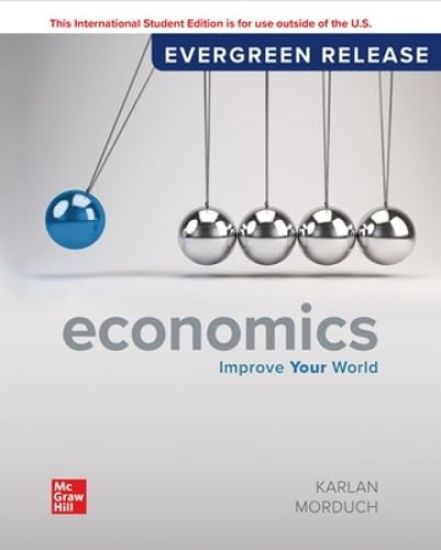
The 2024 Release of Economics by Dean Karlan and Jonathan Morduch is a transformative update to empower students in reshaping their world. It features a fresh print release, updated eBook/SmartBook, and enriched digital content in Connect® to allow students a seamless transition from page to screen. Karlan and Morduch’s product is a champion for personal and public change, redefining economics as a tool not just for personal gain but for public and business policy betterment. It challenges students to reach conclusions on how they will improve the world, cultivating a mindset that thinks like economists. Economics isn’t just a textbook; it’s an experience allowing students to learn how to use the power of economics to shape a world that's not just better but THEIRS. Erase boundaries between classroom and reality, with content grounded in updated empirical evidence, data, and research. Key highlights include fresh insights from diverse voices among economics researchers to offer a broadened perspective, overhauled Monetary Policy chapter, ADA-compliant figures redrawn to ensure accessibility for all learners and so much more.
Macroeconomics

Macroeconomics

Dean Karlan; Jonathan Morduch

McGraw-Hill Education
2020
nidottu
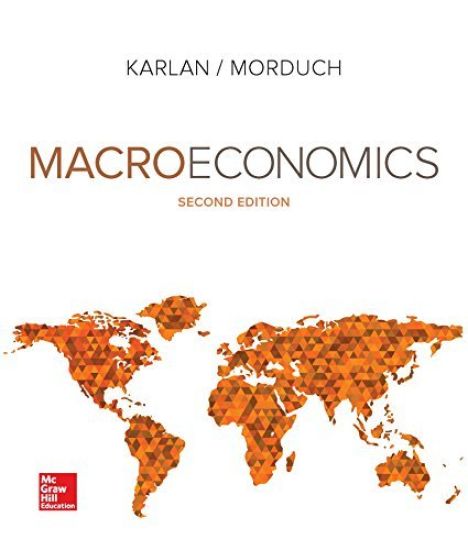
Built to focus on what matters to students in today’s high-tech, globalized world, Dean Karlan and Jonathan Morduch’s Macroeconomics represents a new generation of products, optimized for digital delivery and available with best-in-class adaptive study resources in McGraw-Hill Connect. The second edition delivers core economic concepts along with exciting new ideas in economic thought and strives to keep students engaged by confronting issues that are important in the world. This text combines a familiar curriculum with material from new research and applied areas such as finance, behavioral economics, and the political economy. Students and faculty will find content that breaks down barriers between what takes place in the classroom and what happens in our nation and broader world, with applications that are driven by empirical evidence, data, and research. Karlan and Morduch show students that economics is a tool to better one’s own life and promote better public and business policies in the world. At the same time, this second edition challenges students to reach their own conclusions about what “better” really means.
ISE Economics

ISE Economics

Dean Karlan; Jonathan Morduch

McGraw-Hill Education
2019
nidottu
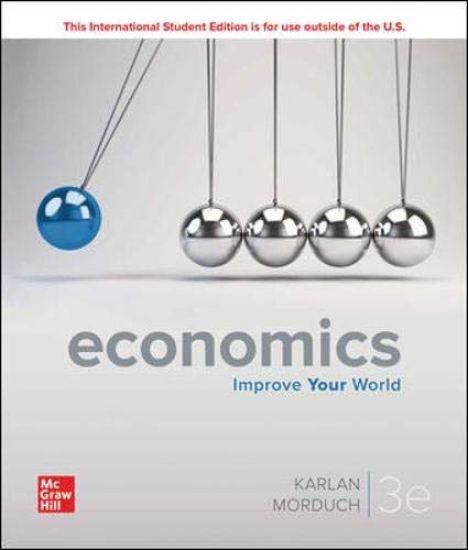
Improve YOUR world. Dean Karlan and Jonathan Morduch’s Economics 3e is built around the central concept that economics is a powerful and positive tool that students can use right now to improve their world. Economics uses examples and issues that resonate with students’ experience to draw them in and frame ideas to help develop their economic intuition. - Using a balanced approach, students are able to sharpen their own understanding of topics by focusing on the data and evidence behind the effects they see. Students are equipped to understand and respond to real-life situations thought their new economic lens and challenged to decided how they will improve their world.-The third edition delivers core economic concepts along with exciting new ideas in economic though and strives to keep students engaged by confronting issues that are important in the world-This text combines a familiar curriculum with material from new research and applied areas such as finance, behavioral economics, and the political economy. Students and faculty will find content that breaks down barriers between what takes place in the classroom and what happens in our nation and our world, with applications that are driven by empirical evidence, data, and research.- Karlan and Morduch show students that economics is a tool to improve one'sown life and promote better public and business policies in the world. At the same time, this third edition challenges students to reach their own conclusions about how they will improve their world.
The Financial Diaries

The Financial Diaries

Jonathan Morduch; Rachel Schneider

Princeton University Press
2019
pokkari
The ideal of the American Dream seems increasingly out of reach, even for many families who are trying to do everything right. To find out why, Jonathan Morduch and Rachel Schneider followed 235 low- and middle-income families as they navigated a year of ups and downs. Through the groundbreaking US Financial Diaries project, we meet real people, from a casino dealer to a street vendor to a tax preparer, who open up their lives and reveal a world of financial uncertainty. For these families, even limited financial success requires imaginative—and often costly—coping strategies: forming saving clubs, borrowing from relatives, strategizing about skipping bills, and devising ways to keep money just out of easy reach. In The Financial Diaries, Morduch and Schneider challenge popular assumptions about how Americans earn, spend, borrow, and save. This book uncovers deeper causes of distress and inequality, starkly illustrating how changes in America have placed too much risk on the wrong shoulders. The authors describe new tools and policies—from fin tech apps that help people manage money to laws that guarantee predictable hours—that will improve stability for those who need it most.
Microeconomics

Microeconomics

Dean Karlan; Jonathan Morduch

McGraw-Hill Education
2018
nidottu
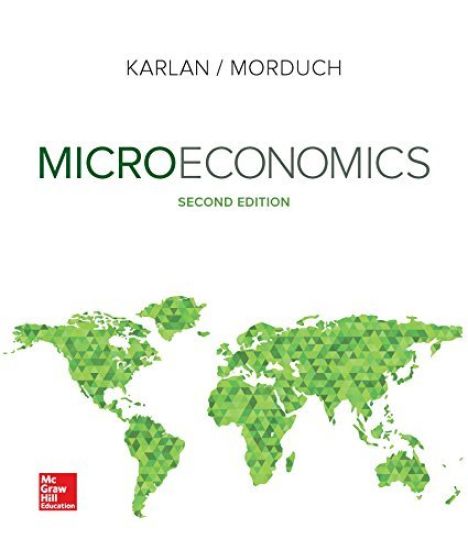
Built to focus on what matters to students in today’s high-tech, globalized world, Dean Karlan and Jonathan Morduch’s Microeconomics represents a new generation of products, optimized for digital delivery and available with best-in-class adaptive study resources in McGraw-Hill Connect. The second edition delivers core economic concepts along with exciting new ideas in economic thought and strives to keep students engaged by confronting issues that are important in the world. This text combines a familiar curriculum with material from new research and applied areas such as finance, behavioral economics, and the political economy. Students and faculty will find content that breaks down barriers between what takes place in the classroom and what happens in our nation and broader world, with applications that are driven by empirical evidence, data, and research. Karlan and Morduch show students that economics is a tool to better one’s own life and promote better public and business policies in the world. At the same time, this second edition challenges students to reach their own conclusions about what “better” really means.
The Financial Diaries

The Financial Diaries

Jonathan Morduch; Rachel Schneider

Princeton University Press
2017
sidottu
What the financial diaries of working-class families reveal about economic stresses, why they happen, and what policies might reduce them Deep within the American Dream lies the belief that hard work and steady saving will ensure a comfortable retirement and a better life for one's children. But in a nation experiencing unprecedented prosperity, even for many families who seem to be doing everything right, this ideal is still out of reach. In The Financial Diaries, Jonathan Morduch and Rachel Schneider draw on the groundbreaking U. S. Financial Diaries, which follow the lives of 235 low- and middle-income families as they navigate through a year. Through the Diaries, Morduch and Schneider challenge popular assumptions about how Americans earn, spend, borrow, and save--and they identify the true causes of distress and inequality for many working Americans. We meet real people, ranging from a casino dealer to a street vendor to a tax preparer, who open up their lives and illustrate a world of financial uncertainty in which even limited financial success requires imaginative--and often costly--coping strategies. Morduch and Schneider detail what families are doing to help themselves and describe new policies and technologies that will improve stability for those who need it most. Combining hard facts with personal stories, The Financial Diaries presents an unparalleled inside look at the economic stresses of today's families and offers powerful, fresh ideas for solving them.
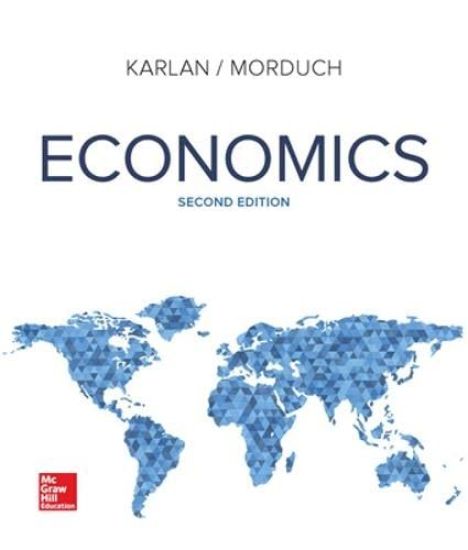
Economics

Economics

Dean Karlan; Jonathan Morduch

McGraw-Hill Education
2017
sidottu
Built to focus on what matters to students in today's high-tech, globalized world, Dean Karlan and Jonathan Morduch's Economics represents a new generation of products, optimized for digital delivery and available with best-in-class adaptive study resources in Mc-Graw Hill Connect. The second edition delivers core economic concepts along with exciting new ideas in economic though and strives to keep students engaged by confronting issues that are important in the world. This text combines a familiar curriculum with material from new research and applied areas such as finance, behavioral economics, and the political economy. Students and faculty will find content that breaks down barriers between what takes place in the classroom and what happens in our nation and broader world, with applications that are driven by empirical evidence, data, and research. Karlan and Morduch show students that economics is a tool to better one's own life and promote better public and business policies in the world. At the same time, this second edition challenges students to reach their own conclusions about what "better" really means.
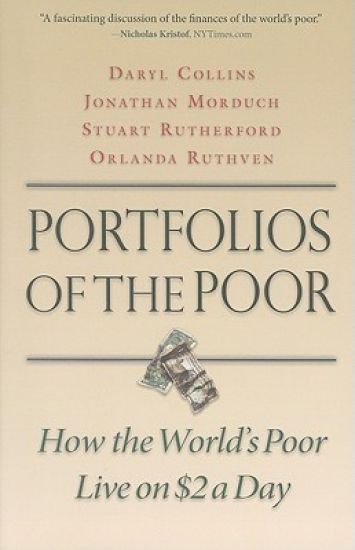
Portfolios of the Poor

Portfolios of the Poor

Daryl Collins; Jonathan Morduch; Stuart Rutherford; Orlanda Ruthven

Princeton University Press
2010
pokkari
Nearly forty percent of humanity lives on an average of two dollars a day or less. If you've never had to survive on an income so small, it is hard to imagine. How would you put food on the table, afford a home, and educate your children? How would you handle emergencies and old age? Every day, more than a billion people around the world must answer these questions. Portfolios of the Poor is the first book to systematically explain how the poor find solutions to their everyday financial problems. The authors conducted year-long interviews with impoverished villagers and slum dwellers in Bangladesh, India, and South Africa--records that track penny by penny how specific households manage their money. The stories of these families are often surprising and inspiring. Most poor households do not live hand to mouth, spending what they earn in a desperate bid to keep afloat. Instead, they employ financial tools, many linked to informal networks and family ties. They push money into savings for reserves, squeeze money out of creditors whenever possible, run sophisticated savings clubs, and use microfinancing wherever available. Their experiences reveal new methods to fight poverty and ways to envision the next generation of banks for the "bottom billion." Indispensable for those in development studies, economics, and microfinance, Portfolios of the Poor will appeal to anyone interested in knowing more about poverty and what can be done about it.
The Economics of Microfinance

The Economics of Microfinance

Beatriz Armendáriz; Jonathan Morduch

MIT Press
2010
pokkari
An accessible analysis of the global expansion of financial markets in poor communities, incorporating the latest thinking and evidence. The microfinance revolution has allowed more than 150 million poor people around the world to receive small loans without collateral, build up assets, and buy insurance. The idea that providing access to reliable and affordable financial services can have powerful economic and social effects has captured the imagination of policymakers, activists, bankers, and researchers around the world; the 2006 Nobel Peace Prize went to microfinance pioneer Muhammed Yunis and Grameen Bank of Bangladesh. This book offers an accessible and engaging analysis of the global expansion of financial markets in poor communities. It introduces readers to the key ideas driving microfinance, integrating theory with empirical data and addressing a range of issues, including savings and insurance, the role of women, impact measurement, and management incentives. This second edition has been updated throughout to reflect the latest data. A new chapter on commercialization describes the rapid growth in investment in microfinance institutions and the tensions inherent in the efforts to meet both social and financial objectives. The chapters on credit contracts, savings and insurance, and gender have been expanded substantially; a new section in the chapter on impact measurement describes the growing importance of randomized controlled trials; and the chapter on managing microfinance offers a new perspective on governance issues in transforming institutions. Appendixes and problem sets cover technical material.