
Kirjojen hintavertailu – 12 859 829 kirjaa ja 27 kauppaa

Kirjailija

Jonathan Murphy

Kirjat ja teokset yhdessä paikassa: 6 kirjaa, julkaisuja vuosilta 2007–2025, suosituimpiin kuuluu Getting Things Done. Vertaile teosten hintoja ja tarkista saatavuus suomalaisista kirjakaupoista.

6 kirjaa

Kirjojen julkaisuvuodet: 2007–2025.

The Story of God and Us

The Story of God and Us

Jonathan Murphy

Thomas Nelson Publishers
2025
nidottu
Pastor and author Jonathan Murphy provides readers with a framework—a master plot—to the story of all history. This deep exploration of Scripture reveals that God is in complete command of this universe and how He guides everyone's story: past, present, and future. Good stories make you laugh, cry, fear, dream, hope. They engage our hearts, entertain our minds, and enlighten our souls. God wrote a story—the best story ever!—full of drama, adventure, love, sacrifice, redemption, and has an ending that seems too good to be true. And the greatest thing about God's story is that we are all part of it. His story provides the meaning of life that brings fulfillment of our desires and purpose for our existence.? The Story of God and Us shows not only what God is doing from creation to eternity, but how everything makes sense as you read the Bible from the beginning of Genesis to the end of Revelation. World history is not made up of random people and events but of divine appointment and purpose. In this book, Jonathan Murphy leads readers to understand how: the meaning of life is essential to a fulfilling relationship and partnership with God; God accomplishes His plans in a pleasing and connecting way; a multidimensional view of Scripture can engage and delight even the most disinterested and distracted; and seeing the big picture can provide a fresh look at how our story clearly fits into God's. As Jonathan retells God's story through a fresh lens, Christians will better understand how much God loves them, how He desires us to live with Him and for Him, and why we should invite others into this amazing story every chance that we get!
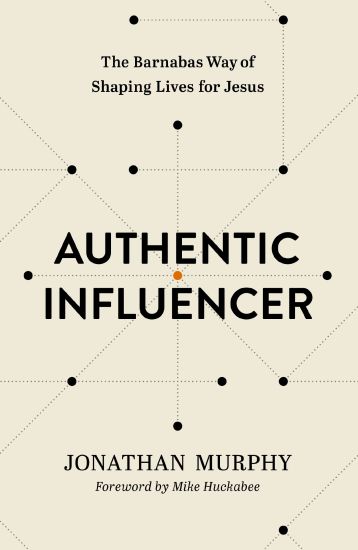
Authentic Influencer

Authentic Influencer

Jonathan Murphy; Mike Huckabee

Thomas Nelson Publishers
2023
nidottu
You may feel like an ordinary believer, but God has a knack of using ordinary people to accomplish His extraordinary purposes. Authentic Influencer encourages you to walk with Barnabas, learn from God, and shape the world for Jesus Christ— one life at a time. God's approach to influencing the world is through His people. People shape people. And yet, many of God's people spectate from the sidelines unsure of what to do. Authentic Influencer is rooted in principles emerging from the life of God's choice example in the Scriptures—a man called Barnabas—rather than recycled quotes from corporate leadership works. Every follower of Jesus can be inspired, instructed, and mobilized to influence the world from right where they are. In fact, it is everyday believers—not just "professional" Christians such as pastors, church leaders, authors, and others—who are specifically tasked by Jesus Himself to bring godly influence to the world. We are all His agents of change, be it shaping one person or a thousand. Authentic Influencer is a Christian leadership book that:Highlights 15 key principles that emerge from Barnabas that are relevant, practical, and customizable to every believerInspires you to shape those around you for ChristUrges you to practice investing in others through discipleshipChallenges you with inspiring stories and practical wisdom emerging from biblical truthsBy studying the life of Barnabas, we see how he influenced the world for Jesus Christ in practical and doable ways. Become encouraged to shape our world for Jesus— beginning with whoever happens to be close by.
Organization Theory & Design

Organization Theory & Design

Richard Daft; Jonathan Murphy; Hugh Willmott

Cengage Learning EMEA
2020
nidottu

Halvin toimitettuna 89,80 €

The fourth edition of Organization Theory & Design provides students with an understanding of the different approaches to designing and managing an organization. Illustrated with many enlightening global examples drawn, this book combines classic ideas and contemporary theories to reflect the challenges faced by managers. Developed for students in the UK, Europe, the Middle East and Africa, it provides an up-to-date, international perspective to Richard L. Daft’s landmark text.
The World Bank and Global Managerialism
In recent years, a great deal of scholarly and popular ink has been spilled on the subject of globalization. Relatively few scholars have addressed the political sociology of globalization, and specifically, the emergence of global class formations and a nascent global governance framework. This book is a contribution towards redressing this imbalance. The book traces the emergence of the World Bank as a key driver of globalization, and as a central source of an evolving form of elite-driven transnational governance which the author describes as ‘global managerialism’. The book argues that the Bank has expanded its sphere of activity far beyond provision of low-cost capital for development projects, and plays a central role in pursuing global economic and social policy homogenization. The World Bank and Global Managerialism features a new theoretical approach to globalization, developed through an analytical exposition of the key stages in the institution’s growth since its creation at the Bretton Woods conference of 1944. The author details the contemporary Bank’s central policy framework, which includes the intertwining of public and private initiatives and the extension of global governance into ever-wider policy and geographic spheres. He also argues that contemporary globalization marks the emergence of a transnational elite, straddling the corporate, government, and civil society sectors. The book provides two detailed case studies that demonstrate the practical analytical utility of the theory of global managerialism. The theoretical approach provides a robust but flexible framework for understanding contemporary global development. It is essential reading for courses in areas such as International Organizations, Global Political Economy, and Globalization and its Discontents, and is also relevant to students of development policy and international economic architecture, among others.
Getting Things Done

Getting Things Done

Virpi Malin; Jonathan Murphy; Marjo Siltaoja

Emerald Publishing Limited
2013
sidottu
This book explores the possibility of a progressive and transformative management which, while grounded in the analytic tradition and values of CMS, also confronts practical demands of meeting social needs. The format of the book is a discussion between and among CMS scholars with diverse viewpoints on CMS and critical engagement, and with different subject positions and domains of engagement. In the critical tradition, the book also gives voice to those who question a simple translation of theory into practice, as well as raising questions around the potential and limits to a progressively transformative management.
The World Bank and Global Managerialism
In recent years, a great deal of scholarly and popular ink has been spilled on the subject of globalization. Relatively few scholars have addressed the political sociology of globalization, and specifically, the emergence of global class formations and a nascent global governance framework. This book is a contribution towards redressing this imbalance. The book traces the emergence of the World Bank as a key driver of globalization, and as a central source of an evolving form of elite-driven transnational governance which the author describes as ‘global managerialism’. The book argues that the Bank has expanded its sphere of activity far beyond provision of low-cost capital for development projects, and plays a central role in pursuing global economic and social policy homogenization. The World Bank and Global Managerialism features a new theoretical approach to globalization, developed through an analytical exposition of the key stages in the institution’s growth since its creation at the Bretton Woods conference of 1944. The author details the contemporary Bank’s central policy framework, which includes the intertwining of public and private initiatives and the extension of global governance into ever-wider policy and geographic spheres. He also argues that contemporary globalization marks the emergence of a transnational elite, straddling the corporate, government, and civil society sectors. The book provides two detailed case studies that demonstrate the practical analytical utility of the theory of global managerialism. The theoretical approach provides a robust but flexible framework for understanding contemporary global development. It is essential reading for courses in areas such as International Organizations, Global Political Economy, and Globalization and its Discontents, and is also relevant to students of development policy and international economic architecture, among others.