
Kirjailija
Jonathan Price
Kirjat ja teokset yhdessä paikassa: 10 kirjaa, julkaisuja vuosilta 1999–2026, suosituimpiin kuuluu A Dance With The Breeze. Vertaile teosten hintoja ja tarkista saatavuus suomalaisista kirjakaupoista.
10 kirjaa
Kirjojen julkaisuvuodet: 1999–2026.
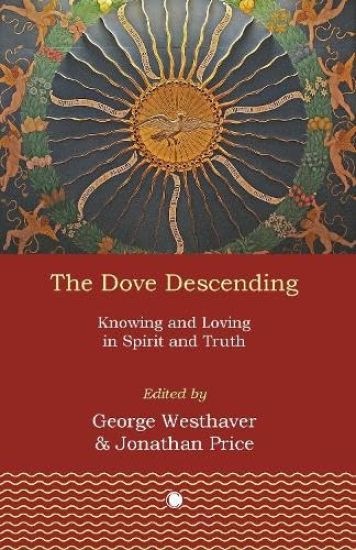
For The Dove Descending, a collection of eminent theologians, poets, priests and thinkers came together to consider the immersive, irreducible vision of the Holy Spirit and His presence in Christ, the Scriptures, the Church, the Saints, the Father, and the world. The collected articles from the Pusey House Conference 2022 draw from a rich history of theological and literary figures - from Augustine of Hippo to Hans Urs von Balthasar, from John Milton to T. S. Eliot - whilst continually centring vigorous and incisive scriptural analysis. Crystalising around the third article of the creed, the communion of the Holy Spirit, these articles explore the centrality of the sacraments, the necessity of yielding any possession of the spirit, and the recognition of Christ in the Holy Spirit, and, through Him, in the other. These papers, published here for the first time, are a crucial read for any academic, theologian or curious Christian, illuminating the complexity in envisioning the Spirit alongside the hope for the future His presence represents.


The fifth edition of Psychiatry introduces medical students and junior doctors to the fundamentals of psychiatric knowledge in a patient centred, digestible, and memorable way. Written by clinicians who deliver front-line patient care and boast years of teaching experience, practical information is informed by theory and research. Written with an underlying philosophy that positive rapport with patients is central to providing successful psychiatric care this is a trustworthy and lauded guide to diagnosis and management. Organised into 34 chapters on core topics, information is laid out in a concise, user-friendly format with case studies, and scientific research formatted into boxes for easy access, ensuring students can quickly locate key information for revision and examinations. Previous First Prize winner for Psychiatry at the British Medical Association Book Awards, this textbook is ideal for those requiring a grounding in the discipline of patient-centred and evidence-based care.
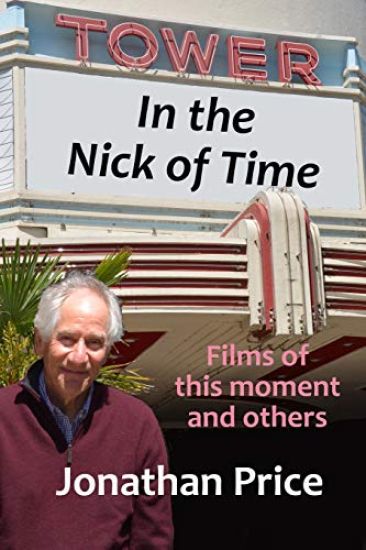
After a 40+ year career as professor teaching English and Film, Jonathan Price began publishing film reviews for a blog. This book collects these reviews and others written over the last six years, analyzing the value and effect and milieu of films as disparate as "Dunkirk," "Le Week-end," and "Life of Pi." A reader who is an occasional viewer may learn of intriguing, unusual, and little-known films like "The Rover" she may have missed, but may also discover, by reading, new beauties as well as blemishes in films with which she thinks she was familiar. She can learn about adultery as well as viager, the different film versions of "The Great Gatsby" . . . and a neglected film from many years past, "Return of the Secaucus 7"; the book defends a film such as "Maudie," adjudged by another critic as the worst of the year. The author makes a serious attempt to comment on various films genres, such as war films and dystopian epics. But he also discusses a variety of motifs of interest to the casual film viewer as well as the aficionado, such as what value there might be in comparing a film to the book from which it may have emerged. Though this collection is brief rather than exhaustive or comprehensive, it is meant to be provocative, intriguing, informative, and memorable. Have you seen and thought about these films? Go study, then go re-view the films in whatever format they may be available.
Attention, Web writers! This book will show you how to craft prose that grabs your guests' attention, changes their attitudes, and convinces them to act. You'll learn how to make your style fast, tight, and scannable. You'll cook up links that people love to click, menus that mean something, and pages of text that search engines rank high. You'll learn how to write great Web help, FAQs, responses to customers, marketing copy, press releases, news articles, e-mail newsletters, Webzine raves, or your own Web resume. Case studies show real-life examples you can follow. No matter what you write on the Web, you'll see how to personalize, build communities, and burst out of the conventional with your own honest style.
This book examines a writing activity that has recently fallen into disrepute. Outlining has a bad reputation among students, even though many teachers and textbooks still recommend the process. In part, the author argues, the medium is to blame. Paper and ink make the revision difficult. But if one uses an electronic outliner, the activity can be very helpful in developing a thoughtful and effective document, particularly one that spans many pages and deals with a complicated subject. Outlining Goes Electronic takes an historical approach, examining the way people developed the idea of outlining, from the classical period to the present. We see that the medium in which people worked strongly shaped their assumptions, ideas, and use of outlines. In developing a theoretical model of outlining as an activity, the author argues that a relatively new electronic tool—software that accelerates and performs the process of outlining—can give us a new perspective from which to engage previous classroom models of writing, recent writing theory, and current practice in the technical writing field.

This book examines a writing activity that has recently fallen into disrepute. Outlining has a bad reputation among students, even though many teachers and textbooks still recommend the process. In part, the author argues, the medium is to blame. Paper and ink make the revision difficult. But if one uses an electronic outliner, the activity can be very helpful in developing a thoughtful and effective document, particularly one that spans many pages and deals with a complicated subject. Outlining Goes Electronic takes an historical approach, examining the way people developed the idea of outlining, from the classical period to the present. We see that the medium in which people worked strongly shaped their assumptions, ideas, and use of outlines. In developing a theoretical model of outlining as an activity, the author argues that a relatively new electronic tool—software that accelerates and performs the process of outlining—can give us a new perspective from which to engage previous classroom models of writing, recent writing theory, and current practice in the technical writing field.