Kirjojen hintavertailu – 12 859 828 kirjaa ja 27 kauppaa

Kirjailija

Jonathan Stalling

Kirjat ja teokset yhdessä paikassa: 7 kirjaa, julkaisuja vuosilta 2008–2022, suosituimpiin kuuluu Contemporary Taiwanese Women Writers. Vertaile teosten hintoja ja tarkista saatavuus suomalaisista kirjakaupoista.

7 kirjaa

Kirjojen julkaisuvuodet: 2008–2022.

Yinggelishi

Yinggelishi

Jonathan Stalling

The University of Hong Kong. University Museum and Art Gallery
2022
sidottu
An introduction to Jonathan Stalling's interlanguage art. Jonathan Stalling's experimental approach bridging art, poetics, and linguistics imagines a world where individual value systems are no longer translated into the language of other mediums, but foster conscious "interlanguages," spaces where one learns a new language without having left one's home fully behind. Stalling's conceptual language art fuses classical Chinese poetics and linguistics with modern algorithms to create art installations and poetry that transform Chinese and English in new and surprising ways. With a visual gallery of Stalling's work, interview with the artist, critical introduction by the editor, and critical chapters written by comparative literature scholar Timothy Billings and Chinese linguist Liu Nian, the volume provides readers with a significant introduction to a wide range of Stalling's interlanguage work spanning the past two decades.

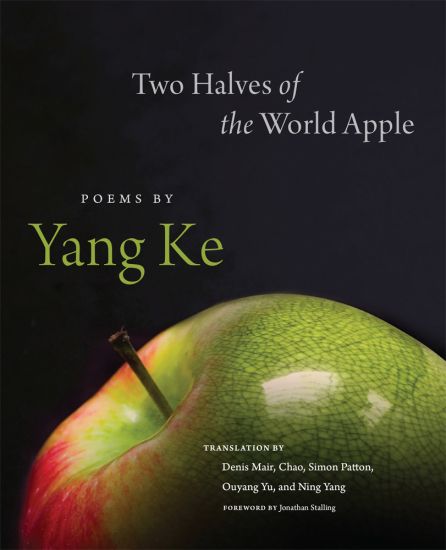
Two Halves of the World Apple

Two Halves of the World Apple

Yang Ke; Jonathan Stalling

University of Oklahoma Press
2017
nidottu
An important voice in the ""Third Generation"" of contemporary Chinese poets - younger poets whose work emerged beginning in the late 1980s - Yang Ke has influenced his country's literary culture for more than three decades. As the first English-language collection of his poems, Two Halves of the World Apple introduces readers to a prolific and accessible writer at the forefront of Chinese poetry today. Rendered in English translations that deftly capture Yang Ke's lyrical and idiomatic style, the 73 poems in this volume reflect the depth, breadth, and evolution of the poet's work. Yang Ke's poems, praised by literary critics for their use of clear, distinctive language and linguistic and poetic texture, pair arresting imagery with pointed social commentary. Moving across the landscape of classical and modern Chinese poetry, they engage with the natural, social, and moral complexities of the everyday modern world, from evocative portrayals of South China's Zhuang minority culture to stark, personal depictions of the consequences of globalization. In this imaginative outpouring, the East and the West become two halves of an apple - ""a ball struck by God's bat,"" spinning through the cosmos - ""yin and yang fish chasing each other's tails."" Thoughtfully annotated by lead translator Denis Mair and with a foreword by Jonathan Stalling, this collection of poems showcases the best work of one of the leading lights of China's contemporary literary scene.
Poetics of Emptiness

Poetics of Emptiness

Jonathan Stalling

Fordham University Press
2011
pokkari
The Poetics of Emptiness uncovers an important untold history by tracing the historically specific, intertextual pathways of a single, if polyvalent, philosophical term, emptiness, as it is transformed within twentieth-century American poetry and poetics. This conceptual migration is detailed in two sections. The first focuses on "transpacific Buddhist poetics," while the second maps the less well-known terrain of "transpacific Daoist poetics." In Chapters 1 and 2, the author explores Ernest Fenollosa's "The Chinese Written Character as a Medium for Poetry" as an expression of Fenollosa's distinctly Buddhist poetics informed by a two-decade-long encounter with a culturally hybrid form of Buddhism known as Shin Bukkyo ("New Buddhism"). Chapter 2 explores the classical Chinese poetics that undergirds the lost half of Fenellosa's essay. Chapter 3 concludes the first half of the book with an exploration of the didactic and soteriological function of "emptiness" in Gary Snyder's influential poetry and poetics. The second half begins with a critical exploration of the three-decades-long career of the poet/translator/critic Wai-lim Yip, whose "transpacific Daoist poetics" has been an important fixture in American poetic late modernism and has begun to gain wider notoriety in China. The last chapter engages the intertextual weave of poststructural thought and Daoist and shamanistic discourses in Theresa Hak Kyung Cha's important body of heterocultural productions. By formulating interpretive frames as hybrid as the texts being read, this book makes available one of the most important yet still largely unknown stories of American poetry and poetics.
The Chinese Written Character As a Medium for Poetry

The Chinese Written Character As a Medium for Poetry

Ernest Fenollosa; Ezra Pound; Jonathan Stalling; Lucas Klein

Fordham University Press
2011
pokkari
First published in 1919 by Ezra Pound, Ernest Fenollosa's essay on the Chinese written language has become one of the most often quoted statements in the history of American poetics. As edited by Pound, it presents a powerful conception of language that continues to shape our poetic and stylistic preferences: the idea that poems consist primarily of images; the idea that the sentence form with active verb mirrors relations of natural force. But previous editions of the essay represent Pound's understanding—it is fair to say, his appropriation—of the text. Fenollosa's manuscripts, in the Beinecke Library of Yale University, allow us to see this essay in a different light, as a document of early, sustained cultural interchange between North America and East Asia. Pound's editing of the essay obscured two important features, here restored to view: Fenollosa's encounter with Tendai Buddhism and Buddhist ontology, and his concern with the dimension of sound in Chinese poetry. This book is the definitive critical edition of Fenollosa's important work. After a substantial Introduction, the text as edited by Pound is presented, together with his notes and plates. At the heart of the edition is the first full publication of the essay as Fenollosa wrote it, accompanied by the many diagrams, characters, and notes Fenollosa (and Pound) scrawled on the verso pages. Pound's deletions, insertions, and alterations to Fenollosa's sometimes ornate prose are meticulously captured, enabling readers to follow the quasi-dialogue between Fenollosa and his posthumous editor. Earlier drafts and related talks reveal the developmentof Fenollosa's ideas about culture, poetry, and translation. Copious multilingual annotation is an important feature of the edition. This masterfully edited book will be an essential resource for scholars and poets and a starting point for a renewed discussion of the multiple sources of American modernist poetry.
Poetics of Emptiness

Poetics of Emptiness

Jonathan Stalling

Fordham University Press
2010
sidottu
The Poetics of Emptiness uncovers an important untold history by tracing the historically specific, intertextual pathways of a single, if polyvalent, philosophical term, emptiness, as it is transformed within twentieth-century American poetry and poetics. This conceptual migration is detailed in two sections. The first focuses on "transpacific Buddhist poetics," while the second maps the less well-known terrain of "transpacific Daoist poetics." In Chapters 1 and 2, the author explores Ernest Fenollosa's "The Chinese Written Character as a Medium for Poetry" as an expression of Fenollosa's distinctly Buddhist poetics informed by a two-decade-long encounter with a culturally hybrid form of Buddhism known as Shin Bukkyo ("New Buddhism"). Chapter 2 explores the classical Chinese poetics that undergirds the lost half of Fenellosa's essay. Chapter 3 concludes the first half of the book with an exploration of the didactic and soteriological function of "emptiness" in Gary Snyder's influential poetry and poetics. The second half begins with a critical exploration of the three-decades-long career of the poet/translator/critic Wai-lim Yip, whose "transpacific Daoist poetics" has been an important fixture in American poetic late modernism and has begun to gain wider notoriety in China. The last chapter engages the intertextual weave of poststructural thought and Daoist and shamanistic discourses in Theresa Hak Kyung Cha's important body of heterocultural productions. By formulating interpretive frames as hybrid as the texts being read, this book makes available one of the most important yet still largely unknown stories of American poetry and poetics.
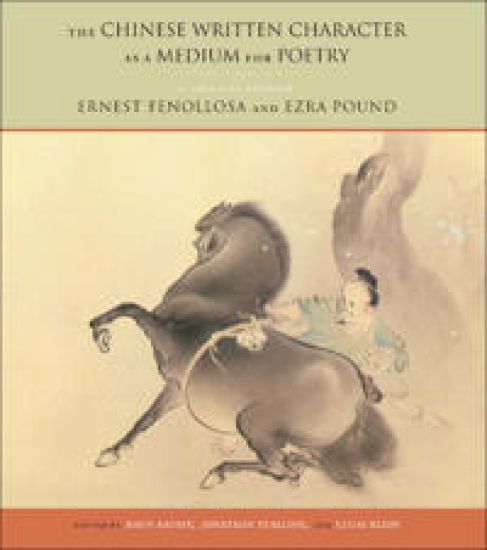
The Chinese Written Character As a Medium for Poetry

The Chinese Written Character As a Medium for Poetry

Ernest Fenollosa; Ezra Pound; Jonathan Stalling; Lucas Klein

Fordham University Press
2008
sidottu
First published in 1919 by Ezra Pound, Ernest Fenollosa's essay on the Chinese written language has become one of the most often quoted statements in the history of American poetics. As edited by Pound, it presents a powerful conception of language that continues to shape our poetic and stylistic preferences: the idea that poems consist primarily of images; the idea that the sentence form with active verb mirrors relations of natural force. But previous editions of the essay represent Pound's understanding—it is fair to say, his appropriation—of the text. Fenollosa's manuscripts, in the Beinecke Library of Yale University, allow us to see this essay in a different light, as a document of early, sustained cultural interchange between North America and East Asia. Pound's editing of the essay obscured two important features, here restored to view: Fenollosa's encounter with Tendai Buddhism and Buddhist ontology, and his concern with the dimension of sound in Chinese poetry. This book is the definitive critical edition of Fenollosa's important work. After a substantial Introduction, the text as edited by Pound is presented, together with his notes and plates. At the heart of the edition is the first full publication of the essay as Fenollosa wrote it, accompanied by the many diagrams, characters, and notes Fenollosa (and Pound) scrawled on the verso pages. Pound's deletions, insertions, and alterations to Fenollosa's sometimes ornate prose are meticulously captured, enabling readers to follow the quasi-dialogue between Fenollosa and his posthumous editor. Earlier drafts and related talks reveal the developmentof Fenollosa's ideas about culture, poetry, and translation. Copious multilingual annotation is an important feature of the edition. This masterfully edited book will be an essential resource for scholars and poets and a starting point for a renewed discussion of the multiple sources of American modernist poetry.