
Kirjailija
Jonathan Stone
Kirjat ja teokset yhdessä paikassa: 14 kirjaa, julkaisuja vuosilta 2009–2026, suosituimpiin kuuluu Children of the Apocalypse. Vertaile teosten hintoja ja tarkista saatavuus suomalaisista kirjakaupoista.
14 kirjaa
Kirjojen julkaisuvuodet: 2009–2026.

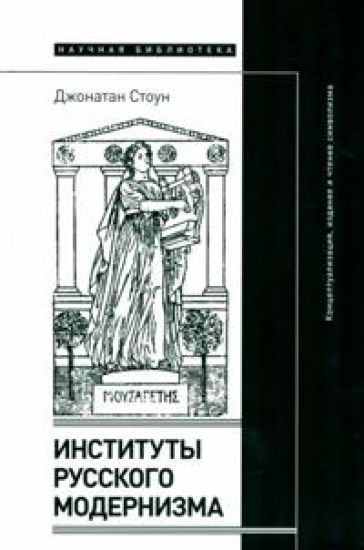
Instituty russkogo modernizma. Kontseptualizatsija, izdanie i chtenie simvolizma
Jonathan Stone
Novoe literaturnoe obozrenie
2022
sidottu
Simvolizm stal pervym i tsentralnym napravleniem russkogo modernizma, proizvedja nastojaschij perevorot v literature i khudozhestvennoj zhizni Rossii rubezha XIX-XX vekov. V gody gospodstva realisticheskoj prozy s ee ustanovkoj na vosproizvodstvo zhiznennoj pravdy bylo trudno predstavit sebe nechto bolee protivopolozhnoe takoj literature, chem simvolistskaja poezija. Kak zhe proizoshel etot perekhod? Pochemu veduschuju rol v protsesse stanovlenija modernizma v Rossii sygral Valerij Brjusov i ego proekty? Kak formirovalsja novyj tip chitatelja i kakoe znachenie dlja simvolistskogo "brenda" imeli oblozhki knig? Eti voprosy okazalis v fokuse vnimanija amerikanskogo literaturoveda Dzhonatana Stouna. Obraschajas k periferijnym, kazalos by, personazham i javlenijam (kak, naprimer, poezija Z. Fuks - odnoj iz literaturnykh masok Brjusova), avtor sopostavljaet ikh s analogichnymi fenomenami zapadnoevropejskogo modernizma i opisyvaet slozhnyj protsess institutsionalizatsii russkogo simvolizma. Dzhonatan Stoun - istorik literatury, prepodaet v Kolledzhe Franklina i Marshalla, avtor rabot ob Aleksandre Bloke, Valerii Brjusove i Mikhaile Bakhtine. Perevodchik: Stavrogina NinaVypusk 336

The scene is Otisville Prison, upstate New York. A crew of fraudsters, tax evaders, trigamists and forgers discuss matters of right and wrong in a Talmudic study and prayer group, or 'minyan', led by a rabbi who's a fellow convict. As the only prison in the federal system with a kosher deli, Otisville is the penitentiary of choice for white-collar Jewish offenders, many of whom secretly like the place. They've learned to game the system, so when the regime is toughened to punish a newly arrived celebrity convict who has upset the 45th president, they find devious ways to fight back. Shadowy forces up the ante by trying to 'Epstein' - ie assassinate - the newcomer, and visiting poetry professor Deborah Liston ends up in dire peril when she sees too much. She has helped the minyan look into their souls. Will they now step up to save her? Jonathan Stone brings the sensibility of Saul Bellow and Philip Roth to the post-truth era in a sharply comic novel that is also wise, profound and deeply moral.

When Maxwell, the interstellar ambassador of goodwill, first lands on the planet Magellum, he finds two species: Red Elks and Blue Bills. The Red Elks have bullied the Blue Bills for hundreds of years, and Maxwell decides to step in and help them discover ways to work and play together. He decides to teach them about a sporting event from his home world, Pangeria: the Magic Sphere Games. As the two groups practice the sport, they discover they can have fun together. And for the biggest game of all, beings from all across the galaxy gather to witness the event, with treats and cheers and a festive half-time show. But what happens when one of the Blues, Buzzy, doesn't show up in time to play? As everyone thinks about how to get the game going again and tries to figure out what happened to Buzzy, all the players learn an important lesson about treating others with respect. This children's story tells the tale of how a friendly orange spaceman introduces a new sport on the planet Magellum to help its people learn to get along
Decadence and Modernism in European and Russian Literature and Culture
Jonathan Stone
Springer Nature Switzerland AG
2020
nidottu
Decadence and Modernism in European and Russian Literature and Culture: Aesthetics and Anxiety in the 1890s rewrites the story of early modernist literature and culture by drawing out the tensions underlying its simultaneous engagement with Decadence and Symbolism, the unsustainable combination of this world and the other. With a broadly framed literary and cultural approach, Jonathan Stone examines a shift in perspective that explodes the notion of reality and showcases the uneasy relationship between the tangible and intangible aspects of the surrounding world. Modernism quenches a growing fascination with the ephemeral and that which cannot be seen while also doubling down on the significance of the material world and finding profound meaning in the physical and the corporeal. Decadence and Symbolism complement the broader historical trajectory of the fin de siècle by affirming the novelty of a modernist mindset and offering an alternative to the empirical and positivistic atmosphere of the nineteenth century. Stone seeks to recreate a significant historical and cultural moment in the development of modernity, a moment that embraces the concept of Decadence while repurposing its aesthetic and social import to help navigate the fundamental changes that accompanied the dawn of the twentieth century.

From bestselling author Jonathan Stone comes a pulse-pounding thriller for the digital age that will make you question everything that you have ever saved on your phone. What happens when you inadvertently swap phones with a professional hit man? You're next. Nineteen year-old Zack cannot believe his luck when he learns that a man next to him at a coffee shop accidentally picked up the wrong phone. He's even more surprised when he's able to open the phone and discovers that his new phone-pal is actually a professional killer. Trapped in a high-stakes cat-and-mouse game with a highly trained assassin was definitely not how Zack planned to spend his day. Knowing Zack has access to incriminating evidence makes Zack the killer's next target, and with access to Zack's phone, the hitman's job just got a whole lot easier.
Decadence and Modernism in European and Russian Literature and Culture
Jonathan Stone
Springer Nature Switzerland AG
2019
sidottu
Decadence and Modernism in European and Russian Literature and Culture: Aesthetics and Anxiety in the 1890s rewrites the story of early modernist literature and culture by drawing out the tensions underlying its simultaneous engagement with Decadence and Symbolism, the unsustainable combination of this world and the other. With a broadly framed literary and cultural approach, Jonathan Stone examines a shift in perspective that explodes the notion of reality and showcases the uneasy relationship between the tangible and intangible aspects of the surrounding world. Modernism quenches a growing fascination with the ephemeral and that which cannot be seen while also doubling down on the significance of the material world and finding profound meaning in the physical and the corporeal. Decadence and Symbolism complement the broader historical trajectory of the fin de siècle by affirming the novelty of a modernist mindset and offering an alternative to the empirical and positivistic atmosphere of the nineteenth century. Stone seeks to recreate a significant historical and cultural moment in the development of modernity, a moment that embraces the concept of Decadence while repurposing its aesthetic and social import to help navigate the fundamental changes that accompanied the dawn of the twentieth century.
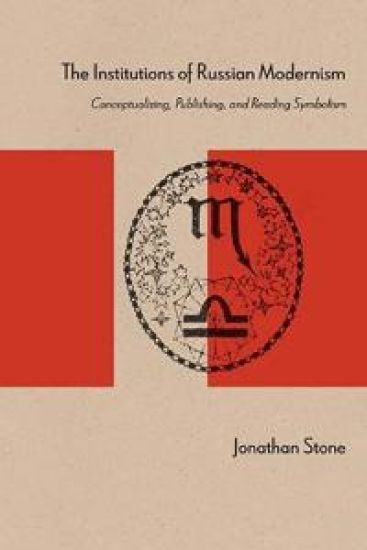
The Institutions of Russian Modernism illuminates the key role of Symbolism as the earliest form of modernism in Russia, emerging seemingly ex nihilo at the end of the nineteenth century. Combining book history, periodical studies, and reception theory, Jonathan Stone examines the poetry and theory of Russian Symbolism within the framework of the institutions that organized, published, and disseminated the works to Russian readers. Surveying a wealth of examples of books, journals, and almanacs, Stone traces how publishers of Symbolist works marketed the movement and fashioned a Symbolist reader. His persuasive argument that after its eclipse Symbolism's legacy remained embedded in the heart of Russian modernism will be of interest to scholars and general readers.
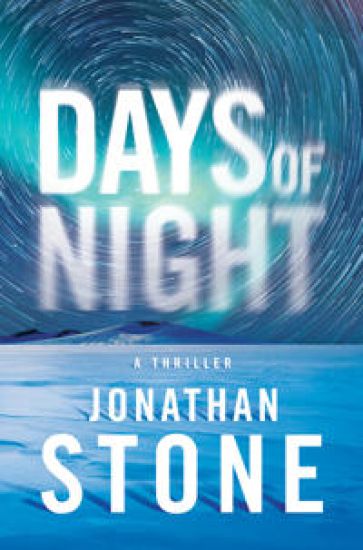
When retired police detective Joe Heller is called in to investigate what might be Antarctica’s first murder, he quickly discovers that winter at McMurdo Station comes with a unique set of challenges: darkness, isolation, and the eccentric behavior of the research facility’s 157 inhabitants. But a difficult investigation turns much tougher when all communication with the outside world is suddenly cut off. While Heller works diligently to reconstruct the scene of the crime, evidence mounts that a pathogenic event could be ravaging the rest of the planet. As night descends, fear mounts, and confusion reigns, the killer strikes again. If this is a global cataclysm, is someone now picking off the human race’s few remaining survivors? Is this the end of the world—or just the end of Joe Heller’s?

Forty years’ accumulation of art, antiques, and family photographs are more than just objects for Stanley Peke—they are proof of a life fully lived. A life he could have easily lost long ago. When a con man steals his houseful of possessions in a sophisticated moving-day scam, Peke wanders helplessly through his empty New England home, inevitably reminded of another helpless time: decades in Peke’s past, a cold and threadbare Stanislaw Shmuel Pecoskowitz eked out a desperate existence in the war-torn Polish countryside, subsisting on scraps and dodging Nazi soldiers. Now, the seventy-two-year-old Peke—who survived, came to America, and succeeded—must summon his original grit and determination to track down the thieves, retrieve his things, and restore the life he made for himself. Peke and his wife, Rose, trace the path of the thieves’ truck across America, to the wilds of Montana, and to an ultimate, chilling confrontation with not only the thieves but also with Peke’s brutal, unresolved past.
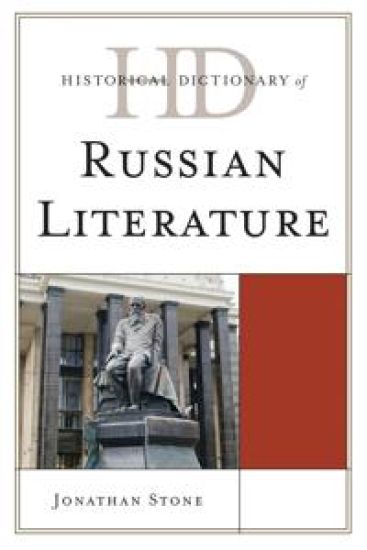
Russian literature is most celebrated for its Romantic and modernist poetry and 19th-century novels. While literary traditions of varying sorts have been part of Slavic and Russian culture for over a millennium, it is only since the 18th century that they came to resemble literature from the West. The Historical Dictionary of Russian Literature contains a chronology, an introductory essay, appendixes, and an extensive bibliography. The dictionary section has over 100 cross-referenced entries on significant people, themes, critical issues, and the most significant genres that have formed Russian Literature. This book is an excellent access point for students, researchers, and anyone wanting to know more about Russian literature.

In the mid-sixties, John Robson and Christina Enroth-Cugell, without realizing what they were doing, set off a virtual revolution in the study of the visual system. They were trying to apply the methods of linear systems analysis (which were already being used to describe the optics of the eye and the psychophysical performance of the human visual system) to the properties of retinal ganglion cells in the cat. Their idea was to stimulate the retina with patterns of stripes and to look at the way that the signals from the center and the antagonistic surround of the respective field of each ganglion cell (first described by Stephen Kuffier) interact to generate the cell's responses. Many of the ganglion cells behaved themselves very nicely and John and Christina got into the habit (they now say) of calling them I (interesting) cells. However. to their annoyance, the majority of neurons they recorded had nasty, nonlinear properties that couldn't be predicted on the basis of simple summ4tion of light within the center and the surround. These uncoop erative ganglion cells, which Enroth-Cugell and Robson at first called D (dull) cells, produced transient bursts of impulses every time the distribution of light falling on the receptive field was changed, even if the total light flux was unaltered.