Kirjojen hintavertailu – 12 903 724 kirjaa ja 27 kauppaa

Kirjailija

Jonathan Tersur Orasugh

Kirjat ja teokset yhdessä paikassa: 17 kirjaa, julkaisuja vuosilta 2018–2026, suosituimpiin kuuluu Nanoclays. Vertaile teosten hintoja ja tarkista saatavuus suomalaisista kirjakaupoista.

17 kirjaa

Kirjojen julkaisuvuodet: 2018–2026.

Graphene-Based Materials as Adsorbents for Wastewater Decontamination

Graphene-Based Materials as Adsorbents for Wastewater Decontamination

Suprakas Sinha Ray; Jonathan Tersur Orasugh; Lesego Tabea Temane; Sarah Constance Motshekga

Taylor & Francis
2026
Nidottu
This book aims to provide a fundamental grasp of graphene-based materials (GAMs) and their adsorption process. The effect of diverse process parameters, including pH, temperature, agitation, competing ions, etc., on the adsorption performance of GAMs as well as their recent and relevant applications in biomedical fields, are discussed. The current challenges and future outlook have been addressed as an independent chapter, and the recyclability of these adsorbent materials has also been covered. Features: Focuses on graphene-based materials as adsorbents to remove contaminants from wastewater. Includes detailed computational and statistical analyses and cost comparison points. Compares the performance of graphene-based materials as adsorbents in the context of various other reported adsorbents, including other 2D materials, such as WS2 and BN. Provides fundamental comprehension of the graphene-based materials’ adsorption process. Discusses the recyclable nature of graphene-based materials, as well as approaches used. This book has been aimed at graduate students and researchers in wastewater treatment, environmental, materials, and chemical engineering.
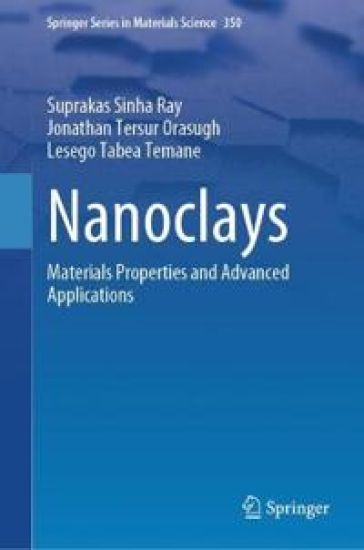
Nanoclays

Nanoclays

Suprakas Sinha Ray; Jonathan Tersur Orasugh; Lesego Tabea Temane

Springer International Publishing AG
2026
Nidottu
This book covers natural and synthetic nanoclays, focusing on the fundamentals of nanoclay-chemistry and applications in advanced technologies. For millennia, clay has been an indispensable part of human civilization, playing an especially fundamental role in modern society in the form of e.g. porcelain, ceramics, bricks, and tiles, as well as being an essential constituent for plastics, paints, paper, rubber, cosmetics, sensors, and medicinal products. The book introduces the reader to nanoclays, most commonly referred to as layered silicates, which take the form of layered or sheet-like structures with nanometer-scale dimensions. It describes the structure and materials properties of both natural and synthetic nanoclays, and covers their applications in diverse areas such as paint formulations, water purification, cosmetics, biomedical applications, and energy storage. Authored by experts with long-standing experience in industry and academic research, this book serves as a useful reference not only for students and academics interested in this exciting new field, but also industrial researchers and R&D managers wishing to bring nanoclay-based advanced products to market.
Smart Polymers

Smart Polymers

Dipankar Chattopadhyay; Adrija Ghosh; Jonathan Tersur Orasugh; Suprakas Sinha Ray

TAYLOR FRANCIS LTD
2025
sidottu
This book covers the analysis of drug bioavailability, site-targeted therapeutics, as well as visual analytics of release profile at the delivery site as possible uses for nanotheranostics therapies following the route of smart polymers. It discusses pH as well as temperature-sensitive polymers and their recent and relevant applications as biomaterials in drug delivery and tissue engineering including dual-stimuli smart polymers. FeaturesInforms about the main challenges and prospects of nanotheranostics and smart polymersCovers biomedical application of smart polymers in imaging and therapyIncludes a wide description of the different polymer structures, from hydrogel, core-shell to foams and nanofibersIntroduces different types of emerging smart polymeric systemsDiscusses available potential of nanotheranostics and smart polymers towards commercializationThis book is aimed at researchers and graduate students in nanodrug delivery, polymeric delivery, bioimaging, and smart polymers.
Graphene-Bearing Polymer Composites

Graphene-Bearing Polymer Composites

Suprakas Sinha Ray; Lesego Tabea Temane; Jonathan Tersur Orasugh

Springer International Publishing AG
2025
nidottu
This book explores recent developments in electrically conducting graphene-containing polymer composites for electromagnetic interference (EMI) shielding and flame-retardant applications. It emphasizes the exceptional performance of graphene and graphene-based materials in these composites. The comprehensive overview covers the fundamental principles of EMI shielding, flame retardancy, and polymer composite processing, addressing critical aspects related to the development of advanced graphene-containing materials. The book aims to fill the gap in reviews that specifically focus on EMI shielding and flame retardancy fundamentals, processing techniques, and application-specific developments. An important aspect discussed is the customization of electrical properties through blend morphology modification and selective localization of graphene-based nanofillers. This aspect has not been adequately covered in previous articles or books. By addressing this research gap,the book becomes an essential resource for researchers seeking a deeper understanding of molecular aspects and result interpretation. With a focus on processing advanced functional composite materials for EMI shielding and flame retardancy, the book promotes a molecular understanding of the subject matter. It is expected to pave the way for future advancements in advanced polymer composites. Researchers and scholars will find this book invaluable as it provides a holistic overview of fundamental concepts and insights into ongoing research intricacies.
Nanoclays

Nanoclays

Suprakas Sinha Ray; Jonathan Tersur Orasugh; Lesego Tabea Temane

Springer International Publishing AG
2025
sidottu
This book covers natural and synthetic nanoclays, focusing on the fundamentals of nanoclay-chemistry and applications in advanced technologies. For millennia, clay has been an indispensable part of human civilization, playing an especially fundamental role in modern society in the form of e.g. porcelain, ceramics, bricks, and tiles, as well as being an essential constituent for plastics, paints, paper, rubber, cosmetics, sensors, and medicinal products. The book introduces the reader to nanoclays, most commonly referred to as layered silicates, which take the form of layered or sheet-like structures with nanometer-scale dimensions. It describes the structure and materials properties of both natural and synthetic nanoclays, and covers their applications in diverse areas such as paint formulations, water purification, cosmetics, biomedical applications, and energy storage. Authored by experts with long-standing experience in industry and academic research, this book serves as a useful reference not only for students and academics interested in this exciting new field, but also industrial researchers and R&D managers wishing to bring nanoclay-based advanced products to market.
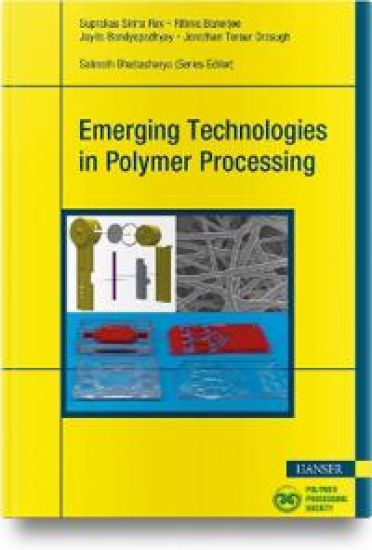
Emerging Technologies in Polymer Processing

Emerging Technologies in Polymer Processing

Suprakas Sinha Ray; Ritima Banerjee; Jayita Bandyopadhyay; Jonathan Tersur Orasugh

Hanser Publications
2024
sidottu
This book integrates fundamental knowledge about computational modeling, rheology, and characterization of polymeric materials with a thorough and critical overview of advanced and emerging manufacturing techniques in polymer processing, including significant past and recent advances. All concepts are illustrated with case studies, so as to enable the reader to correlate theory with practical applications. It is intended for students, researchers, and R&D professionals engaged in developing advanced polymeric materials and products. Conventional polymer processing has been revolutionized by technologies such as computational modeling, machine learning, and advanced machine design. On the other hand, newer advanced manufacturing techniques such as 3D printing, 4D printing, electrospinning, and nanocellular foaming have emerged to enable manufacture of products that would impossible to produce by conventional methods. This book covers both of these aspects, as well as application-specific polymer processing techniques employed in the field of tissue engineering. Furthermore, it addresses fundamental issues related to advanced and emerging processing techniques of sustainable polymeric materials and their nanocomposites, which could shape future research and industrial application of these materials for sustainable future development.
Graphene-Based Materials as Adsorbents for Wastewater Decontamination

Graphene-Based Materials as Adsorbents for Wastewater Decontamination

Suprakas Sinha Ray; Jonathan Tersur Orasugh; Lesego Tabea Temane; Sarah Constance Motshekga

TAYLOR FRANCIS LTD
2024
sidottu
This book aims to provide a fundamental grasp of graphene-based materials (GAMs) and their adsorption process. The effect of diverse process parameters, including pH, temperature, agitation, competing ions, etc., on the adsorption performance of GAMs as well as their recent and relevant applications in biomedical fields, are discussed. The current challenges and future outlook have been addressed as an independent chapter, and the recyclability of these adsorbent materials has also been covered. Features:Focuses on graphene-based materials as adsorbents to remove contaminants from wastewater. Includes detailed computational and statistical analyses and cost comparison points. Compares the performance of graphene-based materials as adsorbents in the context of various other reported adsorbents, including other 2D materials, such as WS2 and BN. Provides fundamental comprehension of the graphene-based materials’ adsorption process. Discusses the recyclable nature of graphene-based materials, as well as approaches used. This book has been aimed at graduate students and researchers in wastewater treatment, environmental, materials, and chemical engineering.
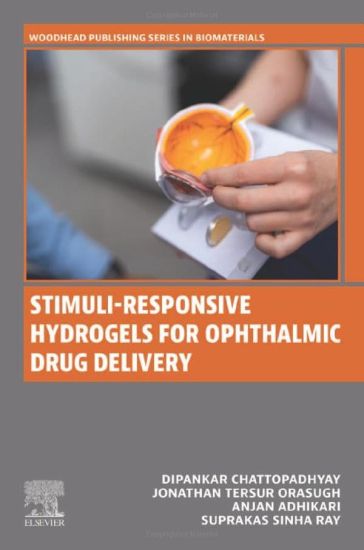
Stimuli-Responsive Hydrogels for Ophthalmic Drug Delivery

Stimuli-Responsive Hydrogels for Ophthalmic Drug Delivery

Dipankar Chattopadhyay; Jonathan Tersur Orasugh; Anjan Adhikari; Suprakas Sinha Ray

ELSEVIER SCIENCE PUBLISHING CO INC
2024
nidottu
Stimuli-Responsive Hydrogels for Ophthalmic Drug Delivery covers fundamental aspects in the preparation of polymeric in-situ, stimuli-responsive hydrogels, including properties, characterization, chemistry, and fabrication of these hydrogels. The book will help the reader select the most appropriate material and design for the desired application. The book goes on to review applications in ophthalmic drug delivery, covering in vitro and in vivo models, animal models, preclinical testing, patents, and more. This is a must-have reference for researchers and academics in the fields of materials science, biomaterials, pharmacology and polymer science, with an interest in clinical aspects of hydrogel design and application.
Graphene-Bearing Polymer Composites

Graphene-Bearing Polymer Composites

Suprakas Sinha Ray; Lesego Tabea Temane; Jonathan Tersur Orasugh

Springer International Publishing AG
2024
sidottu
This book explores recent developments in electrically conducting graphene-containing polymer composites for electromagnetic interference (EMI) shielding and flame-retardant applications. It emphasizes the exceptional performance of graphene and graphene-based materials in these composites. The comprehensive overview covers the fundamental principles of EMI shielding, flame retardancy, and polymer composite processing, addressing critical aspects related to the development of advanced graphene-containing materials. The book aims to fill the gap in reviews that specifically focus on EMI shielding and flame retardancy fundamentals, processing techniques, and application-specific developments. An important aspect discussed is the customization of electrical properties through blend morphology modification and selective localization of graphene-based nanofillers. This aspect has not been adequately covered in previous articles or books. By addressing this research gap,the book becomes an essential resource for researchers seeking a deeper understanding of molecular aspects and result interpretation. With a focus on processing advanced functional composite materials for EMI shielding and flame retardancy, the book promotes a molecular understanding of the subject matter. It is expected to pave the way for future advancements in advanced polymer composites. Researchers and scholars will find this book invaluable as it provides a holistic overview of fundamental concepts and insights into ongoing research intricacies.
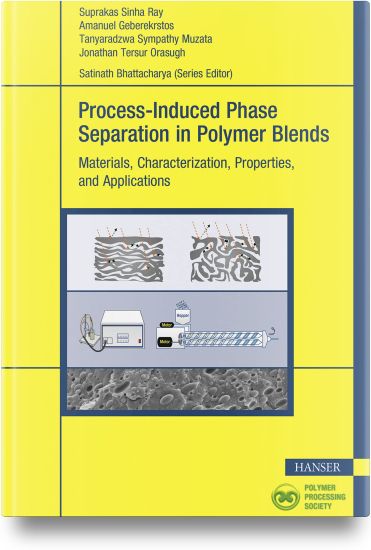
Process-Induced Phase Separation in Polymer Blends

Process-Induced Phase Separation in Polymer Blends

Suprakas Sinha Ray; Amanuel Geberekrstos; Tanyaradzwa Sympathy Muzata; Jonathan Tersur Orasugh

Hanser Publications
2023
sidottu
Phase separation in polymer blends has achieved a tremendous techno-commercial importance. Most of the applications of polymer blends, such as tissue engineering, membrane technology, electromagnetic shielding, energy harvesting, structural materials, packaging, smart multiphase polymer coatings, depend on the morphologies developed during processing. This book outlines the fundamental aspects of polymer blend thermodynamics, the state-of-the-art processing techniques for specific polymer blend systems currently in use, and the design and fabrication of multiphasic polymeric materials, which will present a multiplicity of opportunities in the water remediation, packaging, and electronic industries, to mention a few. It emphasizes recent research developments, processing techniques, characterization methods, factors influencing phase separation temperature in phase-separated, including partially miscible, polymer blends, and key research challenges in the development of phase-separated polymers materials. With unique and systematic coverage of the journey from fundamentals to applications in polymer blends, this book is ideal for polymer scientists and engineers, material scientists, researchers, engineers, and under- and post-graduate students who are interested in this exciting field of research. It will help industrial researchers and R&D managers bring advanced phase-separated polymer materials/products to the market.
Nanokomposit auf Zellulosebasis für ein transdermales Verabreichungssystem für Arzneimittel
In diesem Buch wird ein neuer, einfacher Weg zur Isolierung von Cellulose-Nanokristallen (CNC) vorgestellt, die auch als Nanocellulose bekannt sind. Die Herstellung von Nanokompositen auf Cellulosebasis durch eine einfache Filmgusstechnik und die Studien dar ber, wie CNC die Eigenschaften des MC in den Nanokompositen beeinflusst, werden in diesem Buch vorgestellt. Die synthetisierten Nanokomposite haben eine verbesserte UV-Best ndigkeit, mechanische, Barriere- und thermische Eigenschaften gezeigt. FTIR-Ergebnisse belegten die physikochemische Kompatibilit t zwischen dem Arzneimittel, dem MC und dem CNC in den Nanokompositen. In-vitro-Permeationsstudien, die mit Hilfe der Franz-Diffusionszelle durchgef hrt wurden, ergaben eine diffusionsvermittelte, anhaltende Wirkstofffreisetzung aus den Vorrichtungen, die auf das Vorhandensein von Wechselwirkungen zwischen MC und CNC durch H-Bindung, elektrostatische Wechselwirkungen zwischen den hydrophilen Polymer-/CNC-Ketten mit dem Wirkstoff und die Bildung eines gewundenen Pfades zur ckzuf hren ist. Die Ergebnisse der Nanokomposite beweisen, dass sie f r essbare Verpackungen und die transdermale Medikamentenabgabe eingesetzt werden k nnen.
Nanocomposto à base de celulose para sistema de administração de drogas transdérmicas
Este livro apresenta uma nova via f cil para o isolamento de nanocristais de celulose (CNC) que tamb m conhecida como nanocelulose. O fabrico de nanocomp sitos base de celulose atrav s da t cnica de fundi o simples de pel cula e os estudos sobre como o CNC influencia as propriedades do MC nos nanocomp sitos foram apresentados neste livro. Os nanocomp sitos sintetizados mostraram uma melhor resist ncia aos UV, propriedades mec nicas, de barreira, e t rmicas. Os resultados do FTIR estabeleceram a compatibilidade f sico-qu mica entre a droga, o MC e o CNC nos nanocomp sitos. Estudos de permea o in vitro realizados atrav s da utiliza o da c lula de difus o de Franz revelaram a liberta o sustentada de f rmacos mediada pela difus o dos dispositivos devido presen a de interac o entre o MC e o CNC atrav s da liga o H, interac o electrost tica entre o pol mero hidrof lico/CNC e as cadeias com o f rmaco e a forma o de caminho tortuoso. Os resultados dos nanocomp sitos provam que pode ser aplicado para embalagem comest vel e entrega de f rmacos transd rmicos.
Nanocomposito a base di cellulosa per un sistema di somministrazione transdermica di farmaci
Questo libro presenta una nuova via facile per l'isolamento dei nano-cristalli di cellulosa (CNC), noti anche come nanocellulosa. In questo libro vengono presentati la fabbricazione di nanocompositi a base di cellulosa mediante una semplice tecnica di film casting e gli studi su come il CNC influenzi le propriet del MC nei nanocompositi. I nanocompositi sintetizzati hanno mostrato una migliore resistenza ai raggi UV, propriet meccaniche, barriera e termiche. I risultati FTIR hanno stabilito la compatibilit fisico-chimica tra farmaco, MC e CNC nei nanocompositi. Gli studi di permeazione in vitro eseguiti utilizzando la cella di diffusione di Franz hanno rivelato un rilascio sostenuto di farmaco mediato dalla diffusione dai dispositivi, grazie alla presenza di interazione tra MC e CNC attraverso il legame H, l'interazione elettrostatica tra le catene idrofile del polimero/CNC con il farmaco e la formazione di un percorso tortuoso. I risultati ottenuti dai nanocompositi dimostrano che possono essere applicati per il confezionamento di prodotti commestibili e per la somministrazione transdermica di farmaci.
Nanocomposite à base de cellulose pour système d'administration transdermique de médicaments
Ce livre pr sente une nouvelle voie facile pour l'isolation des nanocristaux de cellulose (CNC), galement connus sous le nom de nanocellulose. La fabrication de nanocomposites base de cellulose par une simple technique de coul e de film et les tudes sur la fa on dont les CNC influencent les propri t s des MC dans les nanocomposites sont pr sent es dans ce livre. Les nanocomposites synth tis s ont montr une meilleure r sistance aux UV, des propri t s m caniques, de barri re et thermiques. Les r sultats de l'IRTF ont tabli la compatibilit physico-chimique entre le m dicament, le MC et le CNC dans les nanocomposites. Les tudes de perm ation in vitro r alis es l'aide de la cellule de diffusion de Franz ont r v l une lib ration prolong e du m dicament par diffusion partir des dispositifs en raison de la pr sence d'une interaction entre le MC et le CNC par le biais d'une liaison H, d'une interaction lectrostatique entre les cha nes hydrophiles du polym re/CNC avec le m dicament et de la formation d'un chemin tortueux. Les r sultats des nanocomposites prouvent qu'ils peuvent tre appliqu s pour l'emballage comestible et l'administration transdermique de m dicaments.