Kirjojen hintavertailu – 12 859 818 kirjaa ja 27 kauppaa

Kirjailija

Jonathan Tonge

Kirjat ja teokset yhdessä paikassa: 11 kirjaa, julkaisuja vuosilta 2005–2024, suosituimpiin kuuluu The Alliance Party of Northern Ireland. Vertaile teosten hintoja ja tarkista saatavuus suomalaisista kirjakaupoista.

11 kirjaa

Kirjojen julkaisuvuodet: 2005–2024.

The Alliance Party of Northern Ireland

The Alliance Party of Northern Ireland

Jonathan Tonge; Máire Braniff; Thomas Hennessey; James W. McAuley; Clare Rice; Sophie A. Whiting

Oxford University Press
2024
sidottu
Northern Ireland's political system is dominated by an Irish Catholic nationalist versus British Protestant unionist faultline, based upon the long-running argument over whether the region should remain part of the United Kingdom or form part of a United Ireland. Yet the largest category of elector in Northern Ireland says they are neither a unionist nor a nationalist and the third most popular political party is now Alliance, which is not aligned to either of the two traditional constitutional positions. Drawing upon a unique in-depth survey of its members, this volume analyses the history and contemporary rise of Alliance and the surge of a centrist party in Northern Irish politics which is challenging the old order. How has a party which eschews ethnic bloc politics, has no constitutional preference, and contains a mix of Catholics, Protestants, and many of no religion come to prominence in a polity whose political institutions are framed upon an old binary divide? The Alliance Party of Northern Ireland undertakes an extensive membership survey analysing the role of a non-ethnic party in an ethnic system, assessing Alliance identities, politics, and futures. Can Alliance integrate Northern Irish society through shared education and housing or will continuing polarisation thwart the Party's project? Would Alliance take a position in the event of a constitutional referendum on Northern Ireland's future - and what might that stand be? These and other key questions form part of a novel study of the party of Northern Ireland's often overlooked centre ground. The volume is essential reading for those wanting to understand how non-ethnic parties can survive and even thrive within an ethnic party system.
Peace or War?

Peace or War?

Chris Gilligan; Jonathan Tonge

Routledge
2020
nidottu
First published in 1997, this volume responded to the peace process of the 1980s and 1990s between Great Britain and Northern Ireland, emerging just prior to the 1998 Good Friday Agreement. It constituted one of the first major academic examinations of the attempts to bring peace to Northern Ireland in the 1990’s, and explores the historical origins of the process, before moving towards a critical account of the role of political parties in the development of the peace process. Critics have argued equally that the process was a sham, tactically repositioning Irish republicanism, and that it provided a framework for reconciliation or even conflict resolution. This book outlines the political changes which allowed the peace process to develop, along with analysing specific themes divided into three broad sections: the general aims of the peace process, the political perspectives and the issues under discussion. Aiming to promote discussion, these contributors explore the origins and function of the peace process, followed by an analysis of political perspectives including the Unionists, the SDLP and Irish Republicanism. Finally, they consider key issues of interest for the peace process, including the ever-present border debate, security strategies, education, and economics, whilst Rachel Ward makes the case for the skilled contributions of women available to formal politics.
Peace or War?

Peace or War?

Chris Gilligan; Jonathan Tonge

Routledge
2019
sidottu
First published in 1997, this volume responded to the peace process of the 1980s and 1990s between Great Britain and Northern Ireland, emerging just prior to the 1998 Good Friday Agreement. It constituted one of the first major academic examinations of the attempts to bring peace to Northern Ireland in the 1990’s, and explores the historical origins of the process, before moving towards a critical account of the role of political parties in the development of the peace process. Critics have argued equally that the process was a sham, tactically repositioning Irish republicanism, and that it provided a framework for reconciliation or even conflict resolution. This book outlines the political changes which allowed the peace process to develop, along with analysing specific themes divided into three broad sections: the general aims of the peace process, the political perspectives and the issues under discussion. Aiming to promote discussion, these contributors explore the origins and function of the peace process, followed by an analysis of political perspectives including the Unionists, the SDLP and Irish Republicanism. Finally, they consider key issues of interest for the peace process, including the ever-present border debate, security strategies, education, and economics, whilst Rachel Ward makes the case for the skilled contributions of women available to formal politics.
The Ulster Unionist Party

The Ulster Unionist Party

Thomas Hennessey; Máire Braniff; James W. McAuley; Jonathan Tonge; Sophie A. Whiting

Oxford University Press
2019
sidottu
The Ulster Unionist Party: Country Before Party? uses unprecedented access to the party that dominated Northern Ireland politics for decades to assess the reasons for its decline and to analyse whether it can recover. Having helped produce the Belfast/Good Friday Agreement, the Ulster Unionist Party (UUP) struggled to deliver the deal amid unease over aspects of what its leadership negotiated. Paramilitary prisoner releases, policing changes, and power-sharing with the republican 'enemy' were all controversial. As the UUP leader won a Nobel Peace Prize, his party began to lost elections. For the UUP leadership, acceptance of change was the right thing to do for Northern Ireland - a case of putting country before party. The decades since the peace agreement have seen the UUP eclipsed by the rival Democratic Unionist Party (DUP) even though most of what the UUP agreed in 1998 has remained in place. This book examines the travails of the UUP in recent times. It draws upon the first-ever survey of UUP members and a wide range of interviews, including with the five most recent leaders of the party, to analyse the reasons for its reverses and the capacity to revive. The volume assesses why the UUP's (still sizeable) membership remains loyal and discusses what the UUP and unionism means to those members, in terms of loyalty, policy, national and religious identity, views of other parties and what a shared future in Northern Ireland will constitute. Amid Brexit and talk of a border poll, crises of devolved government, rows with republicans and intra-unionist tensions, how secure and confident does the UUP membership feel about Northern Ireland's future? Written by the same expert team that produced an award-winning book on the DUP, this book is indispensable to understanding parties and political change in divided societies.
Northern Ireland

Northern Ireland

Jonathan Tonge

Routledge
2015
sidottu
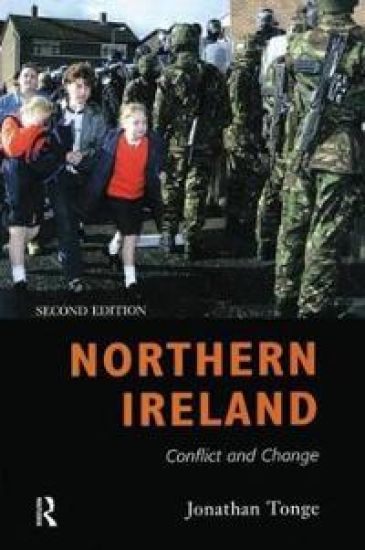
Essential text for a 1 term/semester undergraduate course on Northern Ireland (usually a 2nd year option). Combines coverage of the historical context of the situation in Northern Ireland with a thorough examination of the contemporary political situation and the peace process. The book explores the issues behind the longevity of the conflict and provides a detailed analysis of the attempts to create a lasting peace in Northern Ireland.
The Democratic Unionist Party

The Democratic Unionist Party

Jonathan Tonge; Maire Braniff; Thomas Hennessey; James W. McAuley; Sophie Whiting

Oxford University Press
2014
sidottu
The Democratic Unionist Party (DUP) has moved from a religion-dominated protest party to a pragmatic party of government in Northern Ireland, the most popular in the region, with more votes, Assembly seats, and MPs than any of its rivals. This book draws upon the first-ever survey of the party's members, funded by the Leverhulme Trust, along with over one hundred interviews, to analyse their views on the transformation undergone by the DUP. The book analyses what categories of individual make up the DUP, ranging from religious fundamentalists or moderates, detailing the religious composition of the party. How Free Presbyterian or Orange is the modern DUP and how is its membership changing? What identity do those members hold? The book then assesses the attitudes of members to the contemporary power-sharing arrangements in a divided society. How comfortable is the DUP to sharing political spoils with the republican 'enemy'? How supportive are members of the Executive and Assembly in Northern Ireland and what progress do they think has been made? The book also dissects the modern fears of DUP members, ranging from the dilution of religious fervour to continuing fears over security and opposition to policing reforms. Attitudes to unity with other Unionist groups are explored, as are the prospects of capturing support from Catholic supporters of Northern Ireland's place in the United Kingdom. Drawing upon unprecedented access to a party traditionally suspicious of outsiders, this book offers a unique insight into how an opposition party grounded in religious principles has accommodated change and broadened its appeal, whilst retaining most of its traditional hardcore membership.
Comparative Peace Processes

Comparative Peace Processes

Jonathan Tonge

Polity Press
2014
nidottu
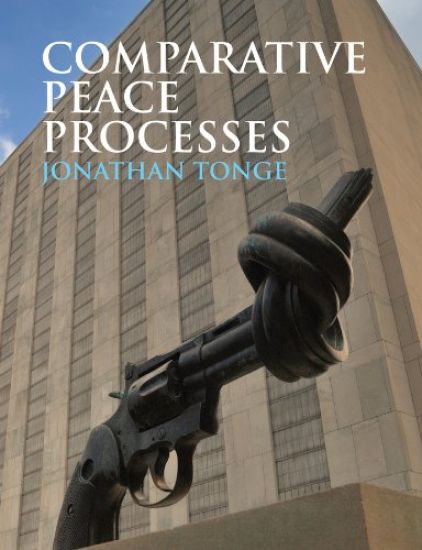
Choice Outstanding Academic Title for 2015The term ?peace process? is now widely used to describe attempts to manage and resolve conflict. As the nature of conflict has changed, so the range of available tools for producing peace has grown. Alongside a plethora of political actions, there is now a greater international awareness of how peace can be brokered and policed. As a result, peace processes now extend well beyond the actuality of ceasefires and an absence of war to cover legacy issues of victims, truth and reconciliation. This book expertly examines the practical application of solutions to conflict. The first part analyses various political means of conflict management, including consociational power-sharing, partition, federalism and devolution. The second explores the extent to which these political formulas have been applied - or ignored - in a wide range of conflicts including Bosnia-Herzegovina, Northern Ireland, Israel-Palestine, Lebanon, the Basque Region and Sri Lanka. Comparative Peace Processes combines optimism with a realist approach to conflict management, acknowledging that the propensity of dominant states to engage in political experimentation is conditioned by the state of conflict. It will be a valuable resource for anyone interested in general theories of political possibilities in peace processes and the practical deployment of political ideas in conflict zones.
Comparative Peace Processes

Comparative Peace Processes

Jonathan Tonge

Polity Press
2014
sidottu
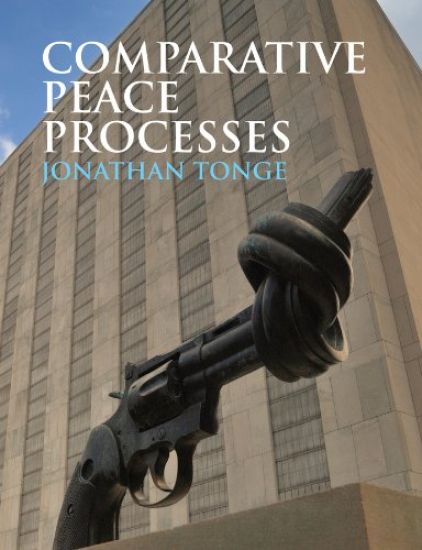
Choice Outstanding Academic Title for 2015The term ?peace process? is now widely used to describe attempts to manage and resolve conflict. As the nature of conflict has changed, so the range of available tools for producing peace has grown. Alongside a plethora of political actions, there is now a greater international awareness of how peace can be brokered and policed. As a result, peace processes now extend well beyond the actuality of ceasefires and an absence of war to cover legacy issues of victims, truth and reconciliation. This book expertly examines the practical application of solutions to conflict. The first part analyses various political means of conflict management, including consociational power-sharing, partition, federalism and devolution. The second explores the extent to which these political formulas have been applied - or ignored - in a wide range of conflicts including Bosnia-Herzegovina, Northern Ireland, Israel-Palestine, Lebanon, the Basque Region and Sri Lanka. Comparative Peace Processes combines optimism with a realist approach to conflict management, acknowledging that the propensity of dominant states to engage in political experimentation is conditioned by the state of conflict. It will be a valuable resource for anyone interested in general theories of political possibilities in peace processes and the practical deployment of political ideas in conflict zones.
Northern Ireland

Northern Ireland

Jonathan Tonge

Polity Press
2006
nidottu
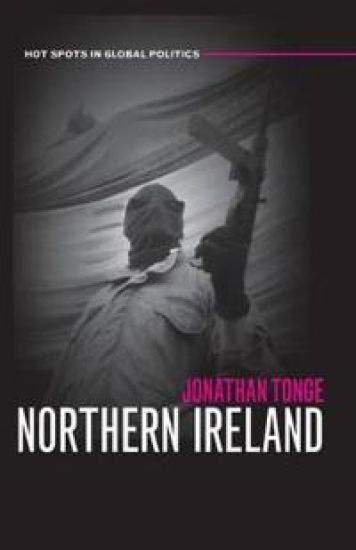
For almost three decades the troubles in Northern Ireland raged, claiming over 3,600 lives, with civilians accounting for almost half the fatalities. In this book, Jonathan Tonge examines the reasons for that conflict; the motivations of the groups involved and explores the prospects for a post-conflict Northern Ireland. The book: assesses the motivations and campaigns of the IRA, UVF and UDA and other armed groups discusses what each paramilitary group achieved through violence analyses the continuing controversies surrounding the Northern Irelands dirty war outlines the extent of collusion between British security forces and loyalist paramilitaries explores how governments and political parties shaped the peace process scrutinizes prospects for the political development of unionism and nationalism within a devolved power sharing framework examines whether the sectarian divide is strengthening or weakening concludes by assessing whether Northern Ireland can move permanently from violence and instability to become a normal peaceful polity, in which the war is merely a historic relic Written by an acknowledged expert in the field, Northern Ireland combines incisive analysis, original research and a lucid style to provide an important assessment of what has been described as an 800 year old problem.
Northern Ireland

Northern Ireland

Jonathan Tonge

Polity Press
2006
sidottu
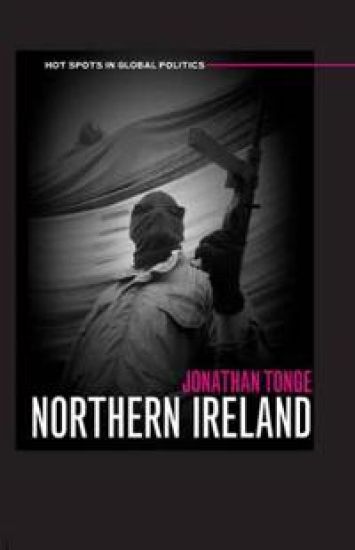
For almost three decades the troubles in Northern Ireland raged, claiming over 3,600 lives, with civilians accounting for almost half the fatalities. In this book, Jonathan Tonge examines the reasons for that conflict; the motivations of the groups involved and explores the prospects for a post-conflict Northern Ireland. The book: assesses the motivations and campaigns of the IRA, UVF and UDA and other armed groups discusses what each paramilitary group achieved through violence analyses the continuing controversies surrounding the Northern Irelands dirty war outlines the extent of collusion between British security forces and loyalist paramilitaries explores how governments and political parties shaped the peace process scrutinizes prospects for the political development of unionism and nationalism within a devolved power sharing framework examines whether the sectarian divide is strengthening or weakening concludes by assessing whether Northern Ireland can move permanently from violence and instability to become a normal peaceful polity, in which the war is merely a historic relic Written by an acknowledged expert in the field, Northern Ireland combines incisive analysis, original research and a lucid style to provide an important assessment of what has been described as an 800 year old problem.
Sinn Fein and the SDLP

Sinn Fein and the SDLP

Gerard Murray; Jonathan Tonge

C Hurst Co Publishers Ltd
2005
nidottu
A political history of the SDLP and Sinn Fein, from the onset of "the Troubles" in 1970 to the 2001 general election. It outlines the political fortunes of the SDLP from its participation in the 1974 power-sharing government to facing direct competition from Sinn Fein during the Hunger Strikes of the early 1980s. The Anglo-Irish Agreement of November 1985 signified a major coup for the SDLP over the Republican movement. Henceforth it was the SDLP's analysis of the Northern Ireland conflict that was accepted by the British and Irish governments, along with the White House. By 1993 it was polling well ahead of Sinn Fein, and in the 1998 Assembly elections it obtained its highest vote ever. Yet three years later, at the 2001 general election, Sinn Fein overtook it as the largest nationalist party. What explains this dramatic reversal of fortunes for the SDLP, and why has Sinn Fein achieved far greater political influence than it ever dared hope for? Drawing on interviews with prominent Sinn Fein members, including Mitchel McLaughlin, Pat Doherty, Alex Maskey and Michelle Gildernew, the authors explain the dynamics of Republican politics since 1970, explaining why armed struggle was replaced by electoral politics, and how Sinn Fein ultimately overtook the SDLP as northern nationalism's primary representative. The work also explores the Republican balance sheet: what were its gains and losses in the 1998 Good Friday Agreement, and how did the leadership persuade the rank and file of its merits?