Kirjojen hintavertailu – 12 903 724 kirjaa ja 27 kauppaa
Kirjailija
Jonathan Tummons
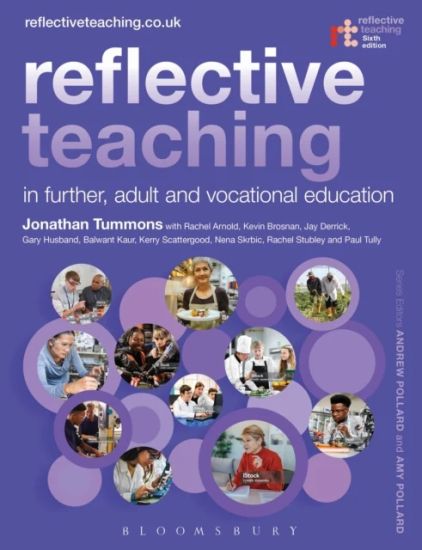
Kirjat ja teokset yhdessä paikassa: 20 kirjaa, julkaisuja vuosilta 2010–2027, suosituimpiin kuuluu Reflective Teaching in Further, Adult and Vocational Education. Vertaile teosten hintoja ja tarkista saatavuus suomalaisista kirjakaupoista.
Drawing on research and practice, this key text provides a rich, detailed, and accessible guide to Communities of Practice (CoPs) theory and how to implement it within higher education. It takes a detailed look at how the theory is constructed, the research that it rests on, and the ways that it has been used and can be used in the future. Beginning by introducing CoP theory and the theory of learning that accompanies it, this book provides empirical examples of CoP research to illustrate how CoPs form and work within higher education. It also explores how different CoPs work together and can learn from each other. The key topics explored in the book allow the reader to critically understand how CoP theory can be used in higher education to enhance an understanding of how students, staff, and organisations learn. Ideal reading for those researching higher education practices or undertaking higher education teaching qualifications as well as those currently teaching, this book provides a research-led and critical discussion of the current state of CoP-informed research into learning, teaching, and assessment practices alongside and interleaved with an exploration of how this same approach can be utilised for informing research.
Drawing on research and practice, this key text provides a rich, detailed, and accessible guide to Communities of Practice (CoPs) theory and how to implement it within higher education. It takes a detailed look at how the theory is constructed, the research that it rests on, and the ways that it has been used and can be used in the future. Beginning by introducing CoP theory and the theory of learning that accompanies it, this book provides empirical examples of CoP research to illustrate how CoPs form and work within higher education. It also explores how different CoPs work together and can learn from each other. The key topics explored in the book allow the reader to critically understand how CoP theory can be used in higher education to enhance an understanding of how students, staff, and organisations learn. Ideal reading for those researching higher education practices or undertaking higher education teaching qualifications as well as those currently teaching, this book provides a research-led and critical discussion of the current state of CoP-informed research into learning, teaching, and assessment practices alongside and interleaved with an exploration of how this same approach can be utilised for informing research.
Drawing on international research and professional practice, this book provides a rich, detailed, and accessible guide to Communities of Practice (CoP) theory, with information on how the theory is constructed, the research that it rests on, and the ways that it has been used in thinking about learning and teaching in the further and adult education sectors. Exploring Communities of Practice in Further and Adult Education introduces CoP theory and the theory of learning that goes with it. It provides empirical examples of CoP research from a range of settings, including further and adult education, to illustrate how CoPs form and work within educational settings, including thinking about assessment and evaluation. It also explores how different CoPs work together and can learn from each other. With these key elements described, this book demonstrates how CoPs can be used in further and adult education settings to help understand more about how students and staff learn. With engaging material including examples from research, prompts for professional learning, and case studies, this comprehensive and accessible title will appeal to student teachers and beginning teachers as well as more experienced teachers in the sector looking to refresh their practice.
Drawing on international research and professional practice, this book provides a rich, detailed, and accessible guide to Communities of Practice (CoP) theory, with information on how the theory is constructed, the research that it rests on, and the ways that it has been used in thinking about learning and teaching in the further and adult education sectors. Exploring Communities of Practice in Further and Adult Education introduces CoP theory and the theory of learning that goes with it. It provides empirical examples of CoP research from a range of settings, including further and adult education, to illustrate how CoPs form and work within educational settings, including thinking about assessment and evaluation. It also explores how different CoPs work together and can learn from each other. With these key elements described, this book demonstrates how CoPs can be used in further and adult education settings to help understand more about how students and staff learn. With engaging material including examples from research, prompts for professional learning, and case studies, this comprehensive and accessible title will appeal to student teachers and beginning teachers as well as more experienced teachers in the sector looking to refresh their practice.
Learning Architectures in Higher Education restores criticality and rigour to the study of communities of practice as a means of understanding learning, acknowledging that this is one of the most influential and widely used theories of learning to emerge during the last 30 years but one that has been misapplied and diluted. Jonathan Tummons explores communities of practice theory, looking at how its focus on learning as apprenticeship can be understood, providing the reader with a conceptual framework for making sense of learning as a social practice as distinct from an individual, psychological process. Tummons looks at how communities of practice theory needs to be reconfigured to take account of the insights provided by other theoretical models and then applies his critically and theoretically reworked perspective to two distinct higher education contexts, providing critical and powerful tools for examining learning and teaching practices.
Learning Architectures in Higher Education restores criticality and rigour to the study of communities of practice as a means of understanding learning, acknowledging that this is one of the most influential and widely used theories of learning to emerge during the last 30 years but one that has been misapplied and diluted. Jonathan Tummons explores communities of practice theory, looking at how its focus on learning as apprenticeship can be understood, providing the reader with a conceptual framework for making sense of learning as a social practice as distinct from an individual, psychological process. Tummons looks at how communities of practice theory needs to be reconfigured to take account of the insights provided by other theoretical models and then applies his critically and theoretically reworked perspective to two distinct higher education contexts, providing critical and powerful tools for examining learning and teaching practices.
Jonathan Tummons has sensitively updated Curzon's long-established Teaching in Further Education, ensuring that not only does this new edition provide the academically rigorous approach of previous editions but it also offers an up to date guide to current practice and research. Topics covered include:- Theories of learning- The teaching-learning process- Instructional techniques- Assessment and evaluation- Intelligence and abilityThis is the complete guide for those training to work in the Further Education sector.
Jonathan Tummons has sensitively updated Curzon's long-established Teaching in Further Education, ensuring that not only does this new edition provide the academically rigorous approach of previous editions but it also offers an up to date guide to current practice and research. Topics covered include: - Theories of learning - The teaching-learning process - Instructional techniques - Assessment and evaluation - Intelligence and ability This is the complete guide for those training to work in the Further Education sector.
As the number of higher education (HE) courses offered in further education (FE) settings increases, so does the need for teachers and trainee teachers to develop their teaching skills. This text is written for all teachers and trainee teachers in FE. It considers what it means to teach HE in FE and how an HE environment can be created in an FE setting. The text covers day-to-day aspects of teaching including planning and assessment, giving guidance on the unique needs of HE students. Chapters on research and quality assurance support the reader in developing some advanced teaching skills. This is a practical guide for FE teachers and trainee teachers as the sector adapts to the needs of education today.
As the number of higher education (HE) courses offered in further education (FE) settings increases, so does the need for teachers and trainee teachers to develop their teaching skills. This text is written for all teachers and trainee teachers in FE. It considers what it means to teach HE in FE and how an HE environment can be created in an FE setting. The text covers day-to-day aspects of teaching including planning and assessment, giving guidance on the unique needs of HE students. Chapters on research and quality assurance support the reader in developing some advanced teaching skills. This is a practical guide for FE teachers and trainee teachers as the sector adapts to the needs of education today.
Dealing with challenging behaviour is normally the number one concern of trainee teachers and even more so for those who are training to work with pupils age 14+ whether within a secondary school context or post-compulsory college context. The aim of this book is to help the reader approach behavioural problems through meaningful self evaluation and reflection. This will equip the practitioner with the skills required to implement change within problematic relationships and environments and to explore a range of possible reasons as to 'why students behave in the way they do'. It challenges existing paradigms in order to break down barriers; substituting and encouraging professional responsibility for promoting positive relationships rather than the passive acceptance of unwanted behaviours, or a reliance on a culture of 'blame'. The idea is to move away from thinking about difficult or 'bad' students towards thinking about difficult relationships or environments. This process of change already allows the practitioner to reflect in a far more constructive and objective manner. This process of reflection and evaluation also allows the practitioner to acknowledge their own feelings in this process. Whilst there are strategies that can help in a reactive sense to situations and behaviours as they occurs such as body language and proxemics there are no 'quick fixes' to deal with what are extremely complicated and complex relationships and situations. This is where a solution-focused approach can be helpful as it is brief and effective. It can be brief because it is future-focused and because it works with the strengths of those who come by making the best use of their resources, and it can bring about lasting change because it aims to build solutions rather than solve problems i.e. identifying small baby steps towards a bigger end goal. Thus this approach, whilst initially daunting, allows the practitioner to be freed of the shackles of 'labels' that are neither helpful nor constructive and instead becomes a powerful tool for transforming negative learning environments.
This book guides student researchers through the different stages of small-scale or practitioner research, a common component of study for students training to work in the lifelong learning sector. The authors look at the entire research journey, from planning a research topic and framing research questions, through the process of data collection and analysis, to writing up and presentation. Using a step-by-step approach the book tackles common thorny issues such as:Understanding the different genres of researchDiscussion of qualitative and quantitative approaches to researchThe importance of forming research questions and of locating them within current research literatureHow to do a literature reviewDealing with permissions, access and ethicsThe nuts and bolts of research methods Interpreting data and writing up research findingsTogether with case studies and examples of real-life research projects that have been completed by the authors’ own students, this book tackles research in a student-friendly and accessible style, carefully unpacking and defining the different terms, concepts and theories that students need to know when beginning research for the first time. This book is essential reading for students who are training to work in the lifelong learning sector or practitioners who are undertaking CPD to maintain their license to practice. “Many teachers training in the lifelong learning sector, as well as those going on to do foundation, honours and masters degrees in education, find the prospect of carrying out educational research for the first time daunting. Thus far, they have been reliant on generic educational research textbooks. Jonathan Tummons’ and Vicky Duckworth’s excellent work now guides them clearly and supportively through the research journey in a way which is underpinned by the authors’ deep understanding of both the sector and nature of the challenge of the research task to the student, using an informal and accessible written style.” Andy Armitage, Head of the Department of Post-Compulsory Education at Canterbury Christ Church University, UK“This book combines sound practical advice with an exploration of the philosophical and methodological concepts underpinning educational research. Often drawing on the authors’ own experiences, it makes a convincing case for the practitioner as researcher and draws clear and appropriate attention to the purposes, uses and dissemination of small scale research.” Susan Wallace, Professor of Continuing Education, Nottingham Trent University, UK
Curriculum is a key issue for trainee teachers in the lifelong learning sector and a core component of most courses. It lies at the heart of the work of teachers and trainers, it shapes the programmes and courses that are taught, and dictates which students can have access to courses. What goes in to the curriculum is argued over by governments, employers, parents and educationalists. How the curriculum is funded can change on a yearly basis. Access to a particular curriculum can raise or diminish the life chances of the learners involved. This book provides an accessible and up-to-date overview of the key issues surrounding the curriculum. Written for all those working towards QTLS, it provides examples and case studies from working FE colleges, adult education centres and work-based learning contexts as well as offering succinct summaries of key theories and debates relating to the curriculum. This fully revised Second Edition reflects the latest policies and thinking, has a new chapter on the implications of e-learning on curricula, and includes a full glossary of key terms and concepts. Jonathan Tummons has worked in higher education since 1995. After six years as a lecturer in teacher education in the further education sector, in 2009 he took up his current post as senior lecturer in education at Teesside University where he is also research co-ordinator for education and a member of the management board for the Social Futures Institute, Teesside's research centre for the social sciences.
Curriculum is a key issue for trainee teachers in the lifelong learning sector and a core component of most courses. It lies at the heart of the work of teachers and trainers, it shapes the programmes and courses that are taught, and dictates which students can have access to courses. What goes in to the curriculum is argued over by governments, employers, parents and educationalists. How the curriculum is funded can change on a yearly basis. Access to a particular curriculum can raise or diminish the life chances of the learners involved. This book provides an accessible and up-to-date overview of the key issues surrounding the curriculum. Written for all those working towards QTLS, it provides examples and case studies from working FE colleges, adult education centres and work-based learning contexts as well as offering succinct summaries of key theories and debates relating to the curriculum. This fully revised Second Edition reflects the latest policies and thinking, has a new chapter on the implications of e-learning on curricula, and includes a full glossary of key terms and concepts. Jonathan Tummons has worked in higher education since 1995. After six years as a lecturer in teacher education in the further education sector, in 2009 he took up his current post as senior lecturer in education at Teesside University where he is also research co-ordinator for education and a member of the management board for the Social Futures Institute, Teesside's research centre for the social sciences.
Assessment theory and practice forms an integral part of the knowledge and understanding required to achieve QTLS. This book is a practical guide and comprehensive introduction to this broad and complex subject area. The text includes chapters on the different types of assessment, feedback, recording, evaluation and inclusive practice and covers e-assessment. Interactive activities are included throughout to help trainees reflect on and develop their own views. This third edition includes coverage of new units of assessment for workplace assessors (TAQA).
Inclusive practice is a crucial component of professional practice in the Lifelong Learning Sector. This accessible text includes comprehensive coverage of key areas and explores what inclusive practice means for teachers and learners in the sector. The book begins by examining definitions of inclusion and goes on to cover specific educational needs. Chapters covering the learning environment, college-level planning and teaching and learning practices offer the reader practical advice on how to anticipate the diverse needs of their learners. Guidance on inclusive planning and assessment is given alongside detailed coverage of the legislation surrounding inclusion.
This book provides an up-to-date and critical analysis of contemporary issues and debates in the lifelong learning sector (LLS)The themes are presented in an accessible format, and are underpinned by recent research as well as policy analysis. The authors examine significant issues in the LLS today including inclusive practice, the employability agenda, the curriculum in the LLS and research-led teaching. There are practical strategies and reflective tasks that encourage readers to become critical, questioning practitioners. Other helpful features include:Learning outcomes at the beginning of each chapterLinks to QTLS standardsCase studies End of chapter summariesFurther reading and useful websitesIt is essential reading for trainees on QTLS programmes and is also important reading for education students and qualified staff undertaking CPD.
This positive guide to professional issues in the Learning and Skills Sector tackles the challenges and anxieties faced by trainee teachers. It examines issues surrounding values and ethics from a variety of perspectives. Everyday examples and case studies are used to help the reader place issues in a working context. It is ideal reading for trainees wanting to understand their responsibilities to students and professional colleagues. Of use to qualified teachers as well as trainees, this book is an essential guide to becoming a professional tutor and is matched to the professional and ethical components for achieving QTLS.