Kirjojen hintavertailu – 12 903 725 kirjaa ja 27 kauppaa

Kirjailija

Jonathan Unger

Kirjat ja teokset yhdessä paikassa: 14 kirjaa, julkaisuja vuosilta 1982–2009, suosituimpiin kuuluu Chen Village. Vertaile teosten hintoja ja tarkista saatavuus suomalaisista kirjakaupoista.

14 kirjaa

Kirjojen julkaisuvuodet: 1982–2009.

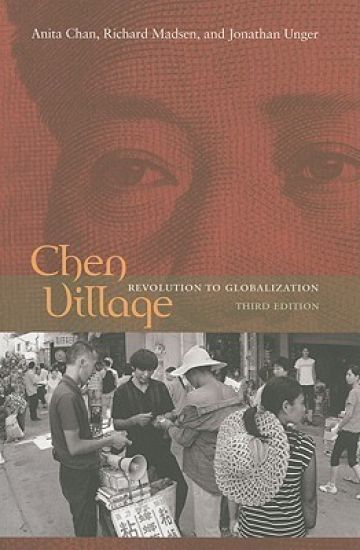
Chen Village

Chen Village

Anita Chan; Richard Madsen; Jonathan Unger

University of California Press
2009
pokkari
The first two editions of "Chen Village" presented an enthralling account of a Chinese village in the throes of Maoist revolution followed by dramatic changes in village life and local politics during the Deng Xiaoping period. Now, more than a decade and a half later, the authors have returned to "Chen Village", and in three new chapters they explore astonishing developments. The once-backwater village is today a center of China's export industry, where more than 50,000 workers labor in modern factories, ruled by the village government. This new edition of "Chen Village" illuminates, in microcosm, the recent history of rural China up to the present time.
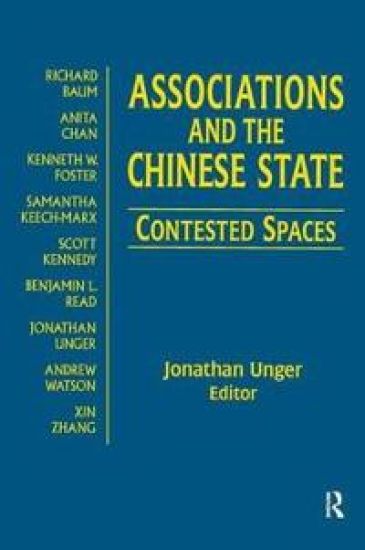
Associations and the Chinese State: Contested Spaces
What role do Chinese popular associations play in the expansion of civil society and democratization? Under Mao few associations were permitted to exist, while today over 200,000 associations are officially recognized. Are they important foundations of civil society, or vehicles for state corporatism and control? In this book leading China specialists examine an interesting range of associations, from business associations to trade unions, to urban homeowners associations, women's groups against domestic violence, and rural NGOs that develop anti-poverty programs. The contributors find different important trends underway in different parts of China's economy and society. Their findings are nuanced, insightful - and often not what might be expected.
Associations and the Chinese State: Contested Spaces
What role do Chinese popular associations play in the expansion of civil society and democratization? Under Mao few associations were permitted to exist, while today over 200,000 associations are officially recognized. Are they important foundations of civil society, or vehicles for state corporatism and control? In this book leading China specialists examine an interesting range of associations, from business associations to trade unions, to urban homeowners associations, women's groups against domestic violence, and rural NGOs that develop anti-poverty programs. The contributors find different important trends underway in different parts of China's economy and society. Their findings are nuanced, insightful - and often not what might be expected.
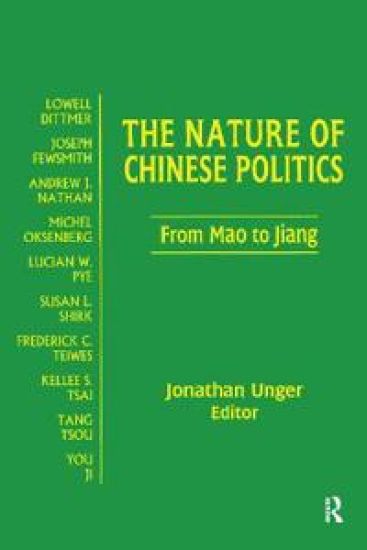
The Nature of Chinese Politics: From Mao to Jiang
This book describes and analyzes how politics among the Chinese leadership has operated and evolved from the period of Mao's court up to the present day. Part I explores politics under Mao and Deng. For this section the five leading western analysts of elite Chinese politics -- Lowell Dittmer, Lucian Pye, Frederick Teiwes, Andrew Nathan, and Tsou Tang -- have contributed major papers that measure the empirical evidence against political science theory, recent Chinese history, and Chinese political culture. Part II explores and analyzes the ongoing changes in Chinese politics during Jiang's tenure, and includes analyzes by almost all the leading English-language scholars in the field.
The Nature of Chinese Politics: From Mao to Jiang
This book describes and analyzes how politics among the Chinese leadership has operated and evolved from the period of Mao's court up to the present day. Part I explores politics under Mao and Deng. For this section the five leading western analysts of elite Chinese politics -- Lowell Dittmer, Lucian Pye, Frederick Teiwes, Andrew Nathan, and Tsou Tang -- have contributed major papers that measure the empirical evidence against political science theory, recent Chinese history, and Chinese political culture. Part II explores and analyzes the ongoing changes in Chinese politics during Jiang's tenure, and includes analyzes by almost all the leading English-language scholars in the field.
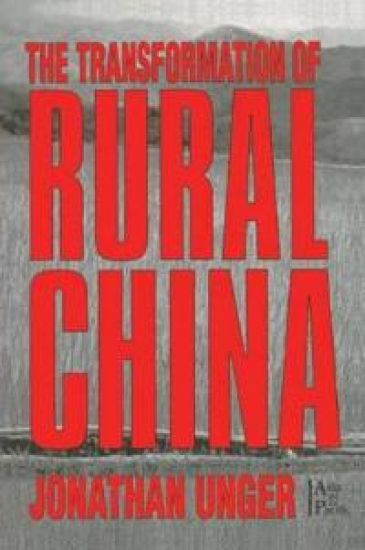
The Transformation of Rural China

The Transformation of Rural China

Jonathan Unger

Routledge
2002
nidottu
During the past quarter century Jonathan Unger has interviewed farmers and rural officials from various parts of China in order to track the extraordinary changes that have swept the countryside from the Maoist era through the Deng era to the present day. A leading specialist on rural China, Professor Unger presents a vivid picture of life in rural areas during the Maoist revolution, and then after the post-Mao disbandment of the collectives. This is a story of unexpected continuities amidst enormous change. Unger describes how rural administrations retain Mao-era characteristics - despite the major shifts that have occurred in the economic and social hierarchies of villages as collectivization and "class struggle" gave way to the slogan "to get rich is glorious." A chapter explores the private entrepreneurship that has blossomed in the prosperous parts of the countryside. Another focuses on the tensions and exploitation that have arisen as vast numbers of migrant laborers from poor districts have poured into richer ones. Another, based on five months of travel by jeep into impoverished villages in the interior, describes the dilemmas of under-development still faced by many tens of millions of farmers, and the ways in which government policies have inadvertently hurt their livelihoods.
The Transformation of Rural China

The Transformation of Rural China

Jonathan Unger

Routledge
2002
sidottu
During the past quarter century Jonathan Unger has interviewed farmers and rural officials from various parts of China in order to track the extraordinary changes that have swept the countryside from the Maoist era through the Deng era to the present day. A leading specialist on rural China, Professor Unger presents a vivid picture of life in rural areas during the Maoist revolution, and then after the post-Mao disbandment of the collectives. This is a story of unexpected continuities amidst enormous change. Unger describes how rural administrations retain Mao-era characteristics - despite the major shifts that have occurred in the economic and social hierarchies of villages as collectivization and "class struggle" gave way to the slogan "to get rich is glorious." A chapter explores the private entrepreneurship that has blossomed in the prosperous parts of the countryside. Another focuses on the tensions and exploitation that have arisen as vast numbers of migrant laborers from poor districts have poured into richer ones. Another, based on five months of travel by jeep into impoverished villages in the interior, describes the dilemmas of under-development still faced by many tens of millions of farmers, and the ways in which government policies have inadvertently hurt their livelihoods.
China After Socialism: In the Footsteps of Eastern Europe or East Asia?

China After Socialism: In the Footsteps of Eastern Europe or East Asia?

Barrett L. McCormick; Jonathan Unger

M.E. Sharpe
1996
nidottu
Nine specialists from four continents address the following questions: is China moving toward the type of developmental state and sophisticated economic powerhouse associated with the East Asian miracle? does China's Leninist political system and the heritage of a state-run-heavy-industrial sector present too great a burden for successful transformation? and what is the likelihood that China's party-state will ultimately collapse in a fashion similar to the Leninist governments of Europe? The findings and analyses should prove interesting to followers of China, East Asia as a whole, and the European postcommunist transition.
China After Socialism: In the Footsteps of Eastern Europe or East Asia?

China After Socialism: In the Footsteps of Eastern Europe or East Asia?

Barrett L. McCormick; Jonathan Unger

M.E. Sharpe
1996
sidottu
Nine specialists from four continents address the following questions: is China moving toward the type of developmental state and sophisticated economic powerhouse associated with the East Asian miracle? does China's Leninist political system and the heritage of a state-run-heavy-industrial sector present too great a burden for successful transformation? and what is the likelihood that China's party-state will ultimately collapse in a fashion similar to the Leninist governments of Europe? The findings and analyses should prove interesting to followers of China, East Asia as a whole, and the European postcommunist transition.
Using the Past to Serve the Present

Using the Past to Serve the Present

Jonathan Unger

M.E. Sharpe
1993
nidottu
An historiographical examination of the political debates of the 1980s over despotism in Chinese history and over Party history. The extent of popular culture and its reinterpretation of history is also assessed, as governmental control of the media has decreased.
Using the Past to Serve the Present

Using the Past to Serve the Present

Jonathan Unger

M.E. Sharpe
1993
sidottu
An historiographical examination of the political debates of the 1980s over despotism in Chinese history and over Party history. The extent of popular culture and its reinterpretation of history is also assessed, as governmental control of the media has decreased.
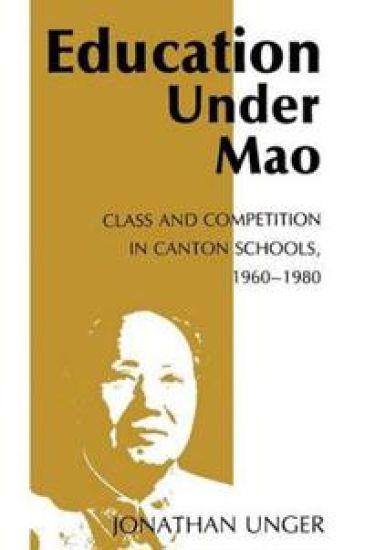
Education Under Mao

Education Under Mao

Jonathan Unger

Columbia University Press
1982
pokkari
In Education Under Mao, an in-depth analysis of modern Chinese education, Jonathan Unger not only probes the policy issues and the nature of the debate between Maoists and modernizers but also shows, more concretely, how schools were organized, the changing attitudes and goals of students, and the tensions that permeated the schools. Unger focuses on Canton's schools through two tumultuous decades, and his rich factual presentation brings to life both the Chinese school system and its social milieu.