Kirjojen hintavertailu – 12 903 725 kirjaa ja 27 kauppaa

Kirjailija

Jonathon A. Cooper

Kirjat ja teokset yhdessä paikassa: 8 kirjaa, julkaisuja vuosilta 2015–2023, suosituimpiin kuuluu Twentieth-Century Influences on Twenty-First-Century Policing. Vertaile teosten hintoja ja tarkista saatavuus suomalaisista kirjakaupoista.

8 kirjaa

Kirjojen julkaisuvuodet: 2015–2023.

Police Pursuing Justice

Police Pursuing Justice

Samantha L. Bennett; Jonathon A. Cooper

BLOOMSBURY PUBLISHING PLC
2023
sidottu
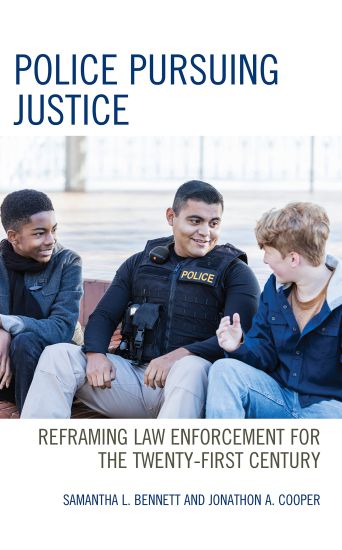
Using the commonwealth of Pennsylvania as a case-study, along with two other states as controls, this book examines how BARJ legislation “trickles down” to the law enforcement level through Pennsylvania’s Juvenile Justice System Enhancement Strategy (PJJSES) and the Juvenile Justice Act (JJA). This legislation is a direct application of the BARJ model to law enforcement, essentially directing police discretion in the direction of informal dispositions. The decision to dispose formal action (such as, a referral to either juvenile court/probation, criminal court, or adult criminal court) or informal action (for instance, handling the situation within the department and/or releasing the juveniles to parents with a warning), play an integral role in determining which juveniles contact the justice system. To this end, while the overall focus of our volume and research is specifically on the impact of the PJJSES and its 2012 amendments on the number of formal dispositions of juvenile suspects by law enforcement officers, it speaks more broadly to the ability of the BARJ model to affect police officer behavior through influencing their decision-making processes.
Police Response to Mental Health Calls for Service

Police Response to Mental Health Calls for Service

Kayla G. Jachimowski; Jonathon A. Cooper

BLOOMSBURY PUBLISHING PLC
2022
nidottu
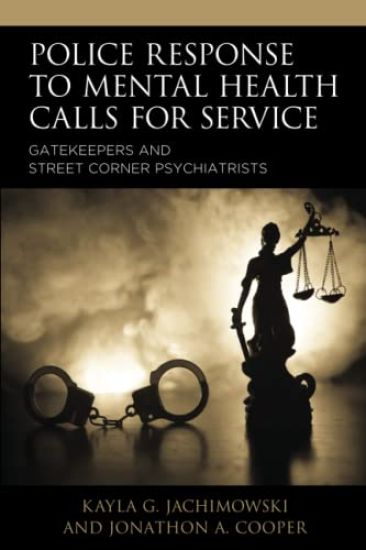
Police Response to Mental Health Calls for Service: Gatekeepers and Street Corner Psychiatrists focuses on closing the gap in literature surrounding police responses to mental health calls for service, with an emphasis on the effect of training and relationships with mental health agencies, in order to better understand the interaction between police officers and individuals with mental health diagnoses. Kayla G. Jachimowski and Jonathon A. Cooper pay close attention to Crisis Intervention Training (CIT) and its impact on how police officers would respond to these calls for service, also examining how the relationships between police, the community, and mental health service providers impact police response. Jachimowski and Cooper argue for the importance of police training about mental health disorders and explore the likelihood of diverting individuals with mental illness from the criminal justice system. Scholars of criminology, sociology, and psychology will find this book particularly useful.
Twentieth-Century Influences on Twenty-First-Century Policing

Twentieth-Century Influences on Twenty-First-Century Policing

Jonathon A. Cooper; John L. Worrall

Lexington Books
2021
sidottu
This newly revised edition includes two new chapters exploring events in policing since the death of Michael Brown in Ferguson, MO in 2014. More than summarizing historical events, Cooper contextualizes the subsequent riots in light of classic sociological theory and political philosophy, and offers a potential and compelling new direction for improving both police use of force and the relationship between police and communities.
Police Response to Mental Health Calls for Service

Police Response to Mental Health Calls for Service

Kayla G. Jachimowski; Jonathon A. Cooper

Lexington Books
2020
sidottu
Police Response to Mental Health Calls for Service: Gatekeepers and Street Corner Psychiatrists focuses on closing the gap in literature surrounding police responses to mental health calls for service, with an emphasis on the effect of training and relationships with mental health agencies, in order to better understand the interaction between police officers and individuals with mental health diagnoses. Kayla G. Jachimowski and Jonathon A. Cooper pay close attention to Crisis Intervention Training (CIT) and its impact on how police officers would respond to these calls for service, also examining how the relationships between police, the community, and mental health service providers impact police response. Jachimowski and Cooper argue for the importance of police training about mental health disorders and explore the likelihood of diverting individuals with mental illness from the criminal justice system. Scholars of criminology, sociology, and psychology will find this book particularly useful.
Twentieth-Century Influences on Twenty-First-Century Policing
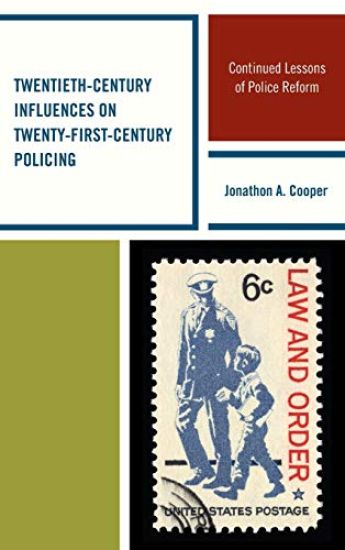
Events in the United States during the 1950s, '60s, and '70s created tectonic shifts in how the police operated. This was especially true in terms of their relationship with society. These events included, among others: the due process revolution, which guided how police were to do their job; social science research that called into question that efficacy of the professional policing model; and race riots against police activity, which were the result of poor police-minority community relations. This book outlines these (and other) changes, explores their implications for the relationship between society and the police, and suggests that a knowledge of these changes is imperative to understanding trends in contemporary policing as well as the direction policing needs to take. As policing becomes more technologically savvy and scientific in its approach to fighting crime (for example, the SMART Policing Initiative, COMPSTAT, and problem oriented approaches such as Project Safe Neighborhoods) in a time when governments are faced with austerity, it is important to reconsider how policing got to the point it is so that, as police and governments move forward, constitutional guarantees are protected, communication with citizens remains viable and salient, and crime prevention becomes an empirical reality rather than a pipe-dream.
Understanding and Using Statistics for Criminology and Criminal Justice

Understanding and Using Statistics for Criminology and Criminal Justice

Jonathon A. Cooper; Peter A. Collins; Anthony Walsh

Oxford University Press
2015
nidottu
Understanding and Using Statistics for Criminology and Criminal Justice shows students how to critically examine the use and interpretation of statistics, covering not only the basics but also the essential probabilistic statistics that students will need in their future careers. Taking a conceptual approach, this unique text introduces students to the mindset of statistical thinking. It presents formulas in a step-by-step manner; explains the techniques using detailed, real-world examples; and encourages students to become insightful consumers of research. FEATURES * Assumes minimal knowledge of math and is accessible to students at all levels * Incorporates examples from real journals, showing how statistics are used in practice * Explains the purpose of hypothesis testing more clearly than any other text, clarifying the concept of probability and its relationship to statistics * Call-out boxes provide more in-depth explanations of concepts
Twentieth-Century Influences on Twenty-First-Century Policing
Events in the United States during the 1950s, '60s, and '70s created tectonic shifts in how the police operated. This was especially true in terms of their relationship with society. These events included, among others: the due process revolution, which guided how police were to do their job; social science research that called into question that efficacy of the professional policing model; and race riots against police activity, which were the result of poor police-minority community relations. This book outlines these (and other) changes, explores their implications for the relationship between society and the police, and suggests that a knowledge of these changes is imperative to understanding trends in contemporary policing as well as the direction policing needs to take. As policing becomes more technologically savvy and scientific in its approach to fighting crime (for example, the SMART Policing Initiative, COMPSTAT, and problem oriented approaches such as Project Safe Neighborhoods) in a time when governments are faced with austerity, it is important to reconsider how policing got to the point it is so that, as police and governments move forward, constitutional guarantees are protected, communication with citizens remains viable and salient, and crime prevention becomes an empirical reality rather than a pipe-dream.