
Kirjojen hintavertailu – 12 903 725 kirjaa ja 27 kauppaa

Kirjailija

Jordan Stump

Kirjat ja teokset yhdessä paikassa: 4 kirjaa, julkaisuja vuosilta 1998–2020, suosituimpiin kuuluu Igifu. Vertaile teosten hintoja ja tarkista saatavuus suomalaisista kirjakaupoista.

4 kirjaa

Kirjojen julkaisuvuodet: 1998–2020.

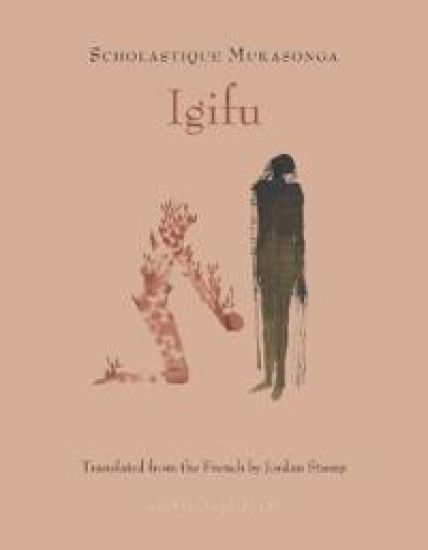
Igifu

Igifu

Scholastique Mukasonga; Jordan Stump

Archipelago Books
2020
nidottu

Halvin toimitettuna 22,60 €

Scholastique Mukasonga's autobiographical stories rend a glorious Rwanda from the obliterating force of recent history, conjuring the noble cows of her home or the dew-swollen grass they graze on. In the title story, five-year-old Colomba tells of a merciless overlord, hunger or igifu, gnawing away at her belly. She searches for sap at the bud of a flower, scraps of sweet potato at the foot of her parent s bed, or a few grains of sorghum in the floor sweepings. Igifu becomes a dizzying hole in her stomach, a plunging abyss into which she falls.
The Memoirs Of Two Young Wives

The Memoirs Of Two Young Wives

Honore De Balzac; Jordan Stump

The New York Review of Books, Inc
2018
nidottu
Two very intelligent, very idealistic young women leave the convent school where they became the fastest of friends to return to their families and embark on their new lives. For Ren e de Maucombe, this means an arranged marriage with a country gentleman of Provence, a fine if slightly dull man for whom she feels admiration but nothing more. Meanwhile, Louise de Chaulieu makes for her family's house in Paris, intent on enjoying her freedom to the fullest: glittering balls, the opera, and above all, she devoutly hopes, the torments and ecstasies of true love and passion. What will come of these very different lives? Despite Honor de Balzac's title, these aren't memoirs; rather, this is an epistolary novel. For some ten years, these two will--enthusiastically if not always faithfully--keep up their correspondence, obeying their vow to tell each other every tiny detail of their strange new lives, comparing their destinies, defending and sometimes bemoaning their choices, detailing the many changes, personal and social, that they undergo. As Balzac writes, "Ren e is reason... Louise is wildness...and both will lose." Balzac being Balzac, he seems to argue for the virtues of one of these lives over the other; but Balzac being Balzac, that argument remains profoundly ambiguous. "I would," he once wrote, "rather be killed by Louise than live a long life with Ren e."
The Other Book

The Other Book

Jordan Stump

University of Nebraska Press
2011
sidottu
Jordan Stump had often contemplated the relationship between a translation and "the book itself," ruminating on the intriguing inherent sameness and difference between the two. In The Other Book, Stump examines the "other" forms of a book and the ways in which they both mirror and depart from the original. Grounding his witty and original study in an exploration of four forms of Raymond Queneau's Le chiendent—a copy, the manuscript, a translation, and a critical edition—Stump poses questions designed to help readers reconsider the nature of fiction and reading. Each form of Le chiendent both is and is not what we mean when we say "Le chiendent," yet the friction between their ways of being and that of "the book itself" proves unexpectedly productive, raising troublesome questions about the nature of textuality, reading, language, and knowledge. It also positions us to assess several answers proposed in response to such questions and to wonder about their usefulness. And as we consider those questions, we will have Queneau's novel beside us, further confounding our attempts to answer—for our inability to answer those questions is precisely the point of The Other Book, as it is of Le chiendent.
Naming and Unnaming

Naming and Unnaming

Jordan Stump

University of Nebraska Press
1998
sidottu
Naming and Unnaming is a dazzling study that centers on the work of Raymond Queneau, one of the most influential French novelists of the twentieth century. Jordan Stump takes as his subject the many implications—epistemological, political, literary, sometimes even physical—of naming in Queneau's remarkable novels. From the idea that the names of characters offer a more immediate and perhaps even a more intimate understanding of their souls than we might glean from their words and deeds has grown the broad field of inquiry known as literary onomastics. Stump argues that there is another approach to the literary proper name, one that concentrates not on the meaning of names but on the meaning of the use of those names—the ways in which the characters and narrator of a novel address or refer to others. Naming and Unnaming considers the literary and philosophical implications of names and naming. Stump examines four issues in Queneau's novels—the nature of writing and of creation in general, the possibility or impossibility of knowledge, the relationship between the individual and the group, and the uses of power and control—in relation to which naming emerges as a force both powerful and utterly impotent. By exploring these forces and their evocation, Stump reveals the complexity of both the act of naming and the novels of Queneau.