Kirjojen hintavertailu – 12 859 829 kirjaa ja 27 kauppaa

Kirjailija

Jordi Diez

Kirjat ja teokset yhdessä paikassa: 12 kirjaa, julkaisuja vuosilta 2006–2025, suosituimpiin kuuluu Political Change and Environmental Policymaking in Mexico. Vertaile teosten hintoja ja tarkista saatavuus suomalaisista kirjakaupoista.

Nimi esiintyy myös muodoissa: Jordi Díez

12 kirjaa

Kirjojen julkaisuvuodet: 2006–2025.

The Judicial Politics of Abortion in Latin America

The Judicial Politics of Abortion in Latin America

Jordi Díez

THE UNIVERSITY OF NORTH CAROLINA PRESS
2025
sidottu
Latin America has traditionally imposed the strictest limits on legal abortion in the democratic world, but over the last twenty years, constitutional courts across the region have issued important rulings on its regulation. In The Judicial Politics of Abortion in Latin America, Jordi Díez analyzes four landmark cases in Argentina, Colombia, Costa Rica, and Mexico. Based on research in all four countries, including interviews with high court justices and law clerks, Díez argues that the decisions' variance is explained by two main factors: justices' and law clerks' ability to assemble legal majorities in favour of reducing abortion restrictions, and each country’s unique political landscape. As debates about a woman’s right to choose unfold around the world, Díez offers important and timely lessons from Latin America.

The Judicial Politics of Abortion in Latin America

The Judicial Politics of Abortion in Latin America

Jordi Díez

THE UNIVERSITY OF NORTH CAROLINA PRESS
2025
pokkari
Latin America has traditionally imposed the strictest limits on legal abortion in the democratic world, but over the last twenty years, constitutional courts across the region have issued important rulings on its regulation. In The Judicial Politics of Abortion in Latin America, Jordi Díez analyzes four landmark cases in Argentina, Colombia, Costa Rica, and Mexico. Based on research in all four countries, including interviews with high court justices and law clerks, Díez argues that the decisions' variance is explained by two main factors: justices' and law clerks' ability to assemble legal majorities in favor of reducing abortion restrictions, and each country’s unique political landscape. As debates about a woman’s right to choose unfold around the world, Díez offers important and timely lessons from Latin America.

Il pendolo di Dio

Il pendolo di Dio

Jordi Díez

Createspace Independent Publishing Platform
2018
pokkari
Per secoli e secoli, i discendenti di una comunit essena hanno cercato di tenere nascosto l'ultimo regalo di Ges ... fino ad ora. C cil, contabile di una ONG che cura progetti umanitari nel Terzo Mondo, viene coinvolto suo malgrado in un losco traffico di antichit che lo porter sulle tracce di Azul Benjelali, suo antico amore e studiosa di lingue arcaiche, sul punto di portare alla luce un segreto nascosto da migliaia di anni. Con l'aiuto di Mars, una misteriosa colombiana dai capelli rossi, C cil si lancia in una corsa contro il tempo che lo porter , un indizio dopo l'altro, sulle tracce di esseni, templari, nazisti... a caccia dei pezzi di un puzzle che i protagonisti dovranno ricomporre a rischio delle loro stesse vite, prima che il segreto cada nelle mani di chi per secoli ha cercato di rubarlo.
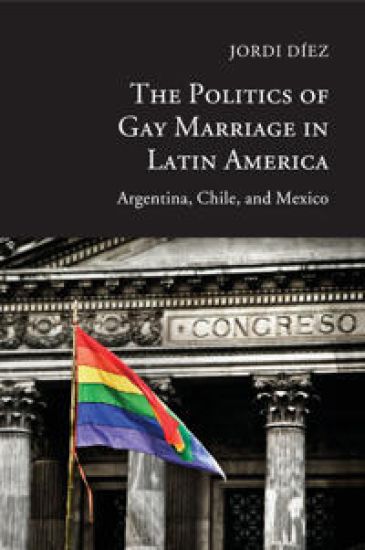
The Politics of Gay Marriage in Latin America

The Politics of Gay Marriage in Latin America

Jordi Díez

Cambridge University Press
2016
pokkari
Addressing one of the defining social issues of our time, The Politics of Gay Marriage in Latin America explores how and why Latin America, a culturally Catholic and historically conservative region, has become a leader among nations of the Global South, and even the Global North, in the passage of gay marriage legislation. In the first comparative study of its kind, Jordi Díez explains cross-national variation in the enactment of gay marriage in three countries: Argentina, Chile, and Mexico. Based on extensive interviews in the three countries, Díez argues that three main key factors explain variation in policy outcomes across these cases: the strength of social movement networks forged by activists in favor of gay marriage; the access to policy making afforded by particular national political institutions; and the resonance of the frames used to demand the expansion of marriage rights to same-sex couples.
The Politics of Gay Marriage in Latin America

The Politics of Gay Marriage in Latin America

Jordi Díez

Cambridge University Press
2015
sidottu
Addressing one of the defining social issues of our time, The Politics of Gay Marriage in Latin America explores how and why Latin America, a culturally Catholic and historically conservative region, has become a leader among nations of the Global South, and even the Global North, in the passage of gay marriage legislation. In the first comparative study of its kind, Jordi Díez explains cross-national variation in the enactment of gay marriage in three countries: Argentina, Chile, and Mexico. Based on extensive interviews in the three countries, Díez argues that three main key factors explain variation in policy outcomes across these cases: the strength of social movement networks forged by activists in favor of gay marriage; the access to policy making afforded by particular national political institutions; and the resonance of the frames used to demand the expansion of marriage rights to same-sex couples.
The Mexican Armed Forces in Transition

The Mexican Armed Forces in Transition

Jordi Diez; Ian Nicholls; Strategic Studies Institute

Lulu.com
2014
nidottu
After the 9/11 attacks on the United States, homeland defense became the primary issue in U. S. defense policy. At the same time, it was clear that homeland defense would have to become a trilateral continental issue, and, thus, would have to include Canada and Mexico. Because the United States and Canada already had developed a relatively close relationship during and after World War II as a result of their common interests and efforts in NATO (North Atlantic Treaty Organization) and NORAD (North American Air Defense), increased knowledge of and contact with the Mexican armed forces became important. Understanding the most recent component of the new continental defense arrangement involves more than accessing the military capabilities of the Mexican armed forces. Rather, the demands of continental defense outside the usual NATO or NORAD contexts require that U. S. and Canadian civilian and military decisionmakers, policymakers, and opinionmakers embark on a comprehensive investigation...
Comparative Public Policy in Latin America

Comparative Public Policy in Latin America

Jordi Diez; Susan Franceschet

University of Toronto Press
2012
pokkari
This pioneering collection offers a comprehensive investigation into how to study public policy in Latin America. While this region exhibits many similarities with the North American and European countries that have traditionally served as sources for generating public policy knowledge, Latin American countries are also different in many fundamental ways. As such, existing policy concepts and frameworks may not always be the most effective tools of analysis for this unique region. To fill this gap, Comparative Public Policy in Latin America offers guidelines for refining current theories to suit Latin America’s contemporary institutional and socio-economic realities. The contributors accomplish this task by identifying the features of the region that shape public policy, including informal norms and practices, social inequality, and weak institutions. This book promises to become the definitive work on contemporary public policy in Latin America, essential for those who study the area as well as comparative public policy more broadly.
Political Change and Environmental Policymaking in Mexico
This book explores environmental policymaking in Mexico as a vehicle to understanding the broader changes in the policy process within a system undergoing a democratic transformation. It constitutes the first major analysis of environmental policymaking in Mexico at the national level, and examines the implementation of forestry policy in Mexico's largest rain forest, the Selva Lacandona of the state of Chiapas.