
Kirjailija
Jorge Iber
Kirjat ja teokset yhdessä paikassa: 10 kirjaa, julkaisuja vuosilta 2000–2025, suosituimpiin kuuluu Tony Romo. Vertaile teosten hintoja ja tarkista saatavuus suomalaisista kirjakaupoista.
10 kirjaa
Kirjojen julkaisuvuodet: 2000–2025.

Tony Romo's place in NFL history is a surprising story, one that Jorge and Raquel Iber tell from its unlikely origins to its happy present in clear language for middle readers. Tony's grandfather was a migrant worker who emigrated from Mexico to Wisconsin, where he and his Texas-born Mexican American spouse fought hardscrabble for a middle-class life. Readers will learn about a Latino/a community's struggles and triumphs in this unlikely midwestern enclave. Unlike other future superstar quarterbacks, Tony didn't get to play for a large city high school team. He was barely noticed by college recruiters, and his only real path to the next level came at a small school, Eastern Illinois University. At EIU, Tony fought his way to become the starting quarterback. The story repeated itself in the NFL, when Tony battled his way from undrafted prospect all the way to All-Pro starting quarterback for the most famous NFL franchise in the world, the Dallas Cowboys. A must-read for young Cowboy fans and their parents, Jorge and Raquel's book places Tony's life story among other famous figures in contemporary American sports. Relive Tony's career, his difficulties and successes. Tony is the quintessential Texas Sport Hero.
Gabriel "Gabe" Rivera was one of the greatest players in the history of Texas Tech football. He earned All American status, was enshrined into the College Football Hall of Fame, and saw his name elevated to the Texas Tech Ring of Honor. After his college career, Rivera became a first-round selection of the Pittsburgh Steelers in 1983, but his career would be tragically cut short by an accident during his rookie year that left him paralyzed from the waist down. Sports historian Jorge Iber's newest book chronicles this Mexican American athlete's rise to prominence and later life. Beginning with the Rivera family in Crystal City, Texas, a hotbed of Chicano activism in the late 1960s, Señor Sack seeks to understand how athletic success impacted the Rivera family's most famous son on his route to stardom. Football provided this family with opportunities that were not often available to other Mexican Americans during the 1940s and 1950s. While Rivera's injury seriously derailed his life, Señor Sack also chronicles his struggle to regain a sense of purpose. With great effort and despite adversity, over the final two decades of his life, Rivera found meaning in helping minority youths in his community of San Antonio, serving as an example of what can be accomplished even under incredibly trying circumstances. Ultimately, the true legacy of Gabe Rivera is not just on the football field, but also in the lives he touched with his volunteer work. One of the most storied Red Raiders and a legend of Texas football, Gabe Rivera powered through many obstacles to make way for future generations of Latinos in American sports.
In 1927 Cuban national Ignacio S. Molinet was recruited to play with the Frankford Yellow Jackets of the old NFL for a single season. Mexican national Jose Martinez-Zorrilla achieved 1932 All-American honors. These are the beginnings of the Latino experience in American Football, which continues amidst a remarkable and diversified setting of Hispanic nationalities and ethnic groups. This history of Latinos in American Football dispels the myths that baseball, boxing, and soccer are the chosen and competent sports for Spanish-surname athletes. The book documents their fascination for the sport that initially denied their participation but that could not discourage their determination to master the game.
The history of baseball is filled with players whose careers were defined by one bad play. Mike Torrez is remembered as the pitcher who gave up the infamous three-run homer to Bucky "Bleeping" Dent in the 1978 playoffs tie-breaker between the Red Sox and Yankees. Yet Torrez's life added up to much more than his worst moment on the mound. Coming from a vibrant Mexican American community that settled in Topeka, Kansas, in the early 1900s, he made it to the Majors by his own talent and efforts, with the help of an athletic program for Mexican youth that spread through the Midwest, Texas and Mexico during the 20th century. He was in the middle of many transformative events of the 1970s--such as the rise of free agency--and was an ethnic role model in the years before the "Fernandomania" of 1981. This book covers Torrez's life and career as the winningest Mexican American pitcher in Major League history.
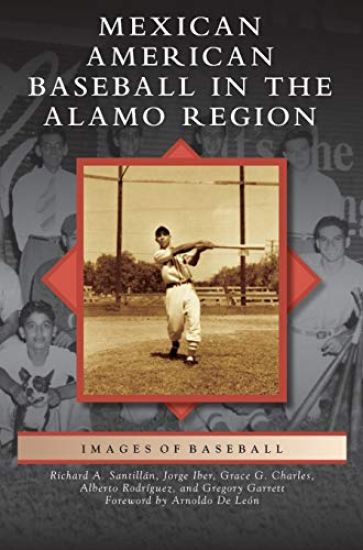
Mexican American Baseball in the Alamo Region
Grace Guajardo Charles; Gregory Lyndon Garrett; Jorge Iber
Arcadia Publishing Library Editions
2015
sidottu
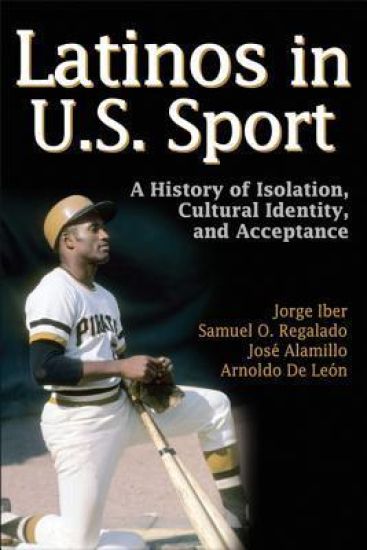
Latinos in U.S Sport
Jorge Iber; Samuel O. Regalado; Jose Alamillo; Arnoldo De Leon
Human Kinetics
2011
sidottu
Latinos in U. S. Sport: A History of Isolation, Cultural Identity, and Acceptance is the first comprehensive exploration of Latino culture and its relationship to sport in what is now the United States. Spanning a period of 500 years from the 16th century to the present and discussing a wide range of Latino communities, regions, and sports, Latinos in U. S. Sport offers an accessible examination of the Latino sporting experience in the United States by covering topics ranging from cultural issues to economics. Using newspaper accounts and primary sources as well as dissertations and scholarly articles from history, education, sport business, and other disciplines, the authors provide a thorough and enlightening account of this population’s role in U. S. sport history. The text details the experiences of Mexican Americans, Puerto Ricans, Cubans, Dominicans, and others as it chronicles the community, school-based, and professional influences of Latinos within a variety of sports and sport contexts. The authors discuss the evolution of sport, games, and physical activity. They also examine the shifting perceptions both within and outside of the Latino community and the outcomes of these changes. The timeline within the text gives readers a visual presentation of the key events and figures in this culture’s history. The book highlights Latino athletes and teams who overcame great odds to succeed at the local, high school, collegiate, and professional levels and details the early participation of such individuals in international athletic competitions, such as the Olympics and Pan-American Games. In addition to examining well-known figures such as Nancy López, Chi Chi Rodríguez, Pancho González, and Roberto Clemente, special Unknown Heroes sidebars introduce readers to many lesser-known but influential athletes and coaches. Latinos in U. S. Sport begins by detailing the games and diversions particular to the Spanish conquistadors, various Native American groups, and the integrated culture of the mestizo, and it traces the ways in which American influence moved into these regions. Moving ahead to the late 19th and early 20th centuries, the text describes how European Americans used baseball as part of their attempt to bring “civilization” to the areas of the Caribbean and the Southwest. The text also discusses how the success of Cubans and other Latin Americans within Major League and Negro League Baseball helped to challenge the perception of Spanish speakers among the broader U. S. population. The final section of the book discusses the increasing presence of Latinos in all fields of sport competition, their growing presence in management and ownership of sport franchises, and their increasing economic power as consumers of athletic events. Latinos in U. S. Sport presents a long-overdue look at the history of Latino participation in multiple facets of American sport and provides a balanced and more complete history of the contribution of Spanish-speaking people to the history of U. S. sport. The text aims to generate discussion and inspire further recognition of the influence of Latinos in the U. S. sport world.
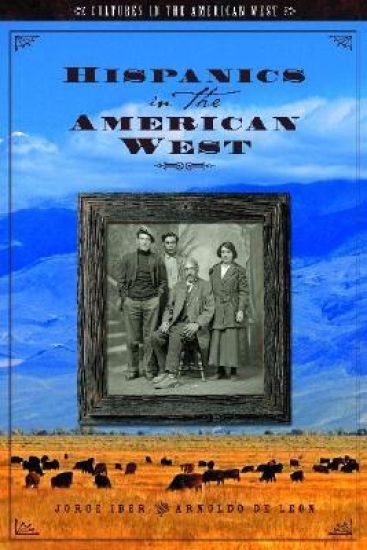
This work provides a revealing look at the history of Hispanic peoples in the American West (or, from the Mexican perspective, El Norte) from the period of Spanish colonization through the present day. Hispanics in the American West portrays the daily lives, struggles, and triumphs of Spanish-speaking peoples from the arrival of Spanish conquistadors to the present, highlighting such defining moments as the years of Mexican sovereignty, the Mexican-American War, the coming of the railroad, the great Mexican migration in the early 20th century, the Great Depression, World War II, the Chicano Movement that arose in the mid-1960s, and more. Coverage includes Hispanics of all nationalities (not just Mexican, but Cuban, Puerto Rican, Salvadoran, and Guatemalan, among others) and ranges beyond the "traditional" Hispanic states (Texas, California, Arizona, New Mexico, and Colorado) to look at newer communities of Spanish-speaking peoples in Oregon, Hawaii, and Utah. The result is a portrait of Hispanic American life in the West that is uniquely inclusive, insightful, and surprising. Includes maps, photos, and a comprehensive index as well as biographical sketches within each chapter that personalize the themes, recounting the lives of individuals caught up in the sweep of historyCovers Hispanic Americans of all origins, offering discussions of the differences among these groups not found in other publications
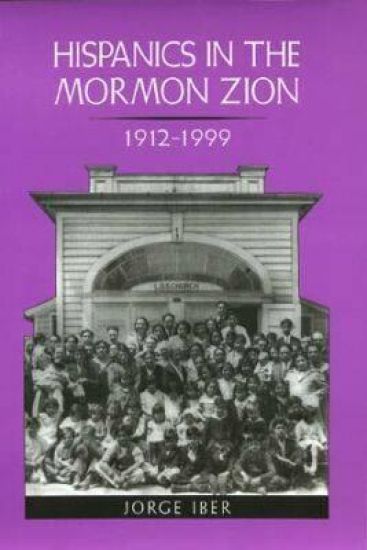
In Utah, unlike most other states, new arrivals can connect with the most powerful institution in the state simply by embracing a set of spiritual beliefs. In Hispanics in the Mormon Zion, 1912-1999, Jorge Iber looks at the history and culture of Hispanics in Utah and examines the impact of their widespread conversion from Catholicism to Mormonism. Hispanics began migrating to Utah in the early 1900s seeking work in the state's thriving sugar beet industry. However, by the end of the twentieth century, Hispanics could be found in all of its major cities working in tourist, industrial, and service occupations. Drawing on University of Utah archives and organizations such as the Salt Lake Catholic Diocese and the Mormon Church, Iber has compiled an informative study that examines Hispanic assimilation and acculturation in a setting vastly different from other states.
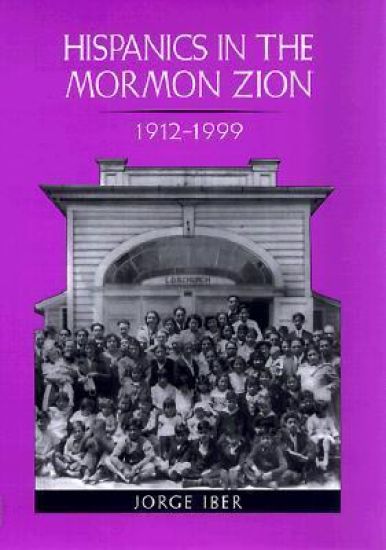
Here, the author looks at the history and culture of Hispanics in Utah and examines the impact of their widespread conversion from Catholicism to Mormonism. His study examines Hispanic assimilation and acculturation in a setting vastly different from other states.