Kirjailija
Jorge Luis Borges
Kirjat ja teokset yhdessä paikassa: 88 kirjaa, julkaisuja vuosilta 1964–2026, suosituimpiin kuuluu Conversations – Volume 2. Vertaile teosten hintoja ja tarkista saatavuus suomalaisista kirjakaupoista.
88 kirjaa
Kirjojen julkaisuvuodet: 1964–2026.
Jorge Luis Borgesin (1899-1986) Omaelämäkerta on kirjailijaelämäkertojen suomennosten merkkiteoksia. Borgesin tyyli on mutkaton, älyllinen ja täynnä hänelle ominaista hienovaraista huumoria. Lukija voi seurata kirjailijan vaellusta Sveitsistä Espanjan kautta Buenos Airesiin, jonne Borges asettui asumaan loppuiäkseen. Varhain sokeutuneen kirjailijan mahtava, detaljeista rikas muisti ja monikielinen lukeneisuus avaavat lukijalle kiehtovan elämäntarinan, jonka vivahteet Pentti Saaritsan tuore suomennos välittää hienosti.
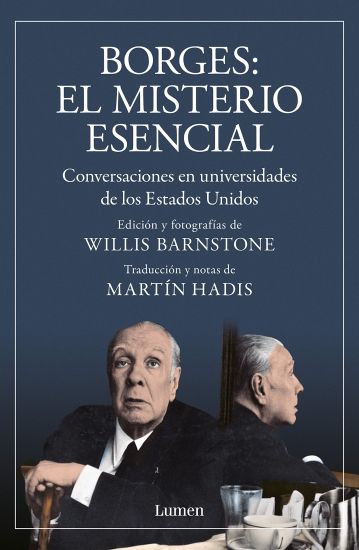
Borges. El Misterio Esencial / Borges. the Essential Mystery
Jorge Luis Borges
Lumen Press
2022
nidottu
La traducci n y las notas de Mart n Hadis junto a las notables fotograf as de Willis Barnstone completan en estas p ginas el sensible retrato de ese misterio esencial de la literatura que conocemos como Borges. En la d cada final de su vida, Jorge Luis Borges emprendi una gira por los Estados Unidos con el fin de participar en una serie de di logos organizados por varias de las universidades m s prestigiosas de esa naci n (Chicago, Indiana, Columbia, Boston, Harvard y el MIT). El recorrido traza una cartograf a inquietante: Borges conversa sobre el sentido del universo con un astrof sico, sobre misticismo con un experto en c bala y sobre el difuso l mite entre realidad y ficci n con escritores y poetas. Asiste a un encuentro en el pen Club de Nueva York y concede incluso una entrevista a una personalidad televisiva: Dick Cavett. A lo largo de estos encuentros, el escritor argentino evoca sue os y pesadillas, sagas n rdicas, frases del ingl s antiguo, la presencia del «otro y el doble, y varios de sus autores favoritos, entre otros temas. El placer intelectual de la conversaci n lleva asimismo a Borges (por lo general, renuente a las confidencias) a revelar el significado de s mbolos y tramas de varias de sus obras. ENGLISH DESCRIPTION Mart n Hadis' translation and notes, and Willis Barnstone's remarkable photographs, build a sensitive portrait of that essential literary mystery known as Borges. In the final years of his life, Borges toured the United States participating in a series of dialogues organized by several of the most prestigious universities in the country: Chicago, Indiana, Columbia, Boston, Harvard, and MIT. The tour draws a disturbing cartography. Borges talks about the meaning of the universe with an astrophysicist, about mysticism with a kabbalah scholar, and about the blurry line separating reality from fiction with writers and poets. He attends a meeting at the Pen Club in New York City, and even gives Dick Cavett a TV interview. Throughout these encounters, the Argentine writer evokes dreams and nightmares, refers to Nordic sagas and Old English quotes, reflects on alterity, and comments on many of his favorite authors. The intellectual pleasure of these conversations also leads to the usually reserved Borges to reveal the meaning of symbols and plots in several of his works.

El Libro de Los Seres Imaginarios/ The Book of Imaginary Beings
Jorge Luis Borges
Debolsillo
2022
nidottu
Homenaje a los bestiarios medievales, El libro de los seres imaginarios es una sucesi n de retratos de animales fant sticos en el que se combinan la f bula y la reflexi n metaf sica. Con iron a, erudici n e inteligencia Jorge Luis Borges lleva a los lectores por los pasadizos hist ricos de la imaginaci n, revelando formas y seres ins litos que van desde el hipogrifo concebido por los griegos como una mezcla de guila, le n y serpiente hasta un monstruo informe solo so ado por Kafka. Este extraordinario viaje por la historia literaria es tambi n una exploraci n de las obsesiones, los miedos y los anhelos de la humanidad. «Uno de los gigantes de la literatura del siglo XX, Borges ha enriquecido enormemente las texturas del vocabulario propio de nuestras fantas as y especulaciones . --Ian McEwan ENGLISH DESCRIPTION A tribute to medieval bestiaries, The Book of Imaginary Beings is a collection of fantastic animals in which fable and metaphysical reflection combine. With irony, erudition, and intelligence, Jorge Luis Borges brings the reader to the historical corridors of imagination, revealing unusual beings that range from the Greek hippogriff (part eagle, part lion, and part serpent) to a formless monster Kafka dreamed of. This extraordinary journey through literature is also an exploration of humanity's obsessions, fears and longings.
Den verdensberømte argentinske forfatter Jorge Luis Borges elskede den italienske forfatter Dante og havde efter sigende altid hans store værk Den guddommelige komedie liggende på sit arbejdsbord. Det kom der igennem Borges’ liv en række betragtninger ud af. Ni essays om Dantes komedie er samlet i denne lille bog, der introduceres og kommenteres af juraprofessor emeritus, debattør og forfatter Ditlev Tamm, som også har stået for oversættelsen. De ni essays har ikke været oversat til dansk før.
Jorge Luis Borges (1899-1986) käsittelee esseekokoelmassaan Viisi aihetta elämän perusasioita, kuten aikaa ja kuolemattomuutta. Näillä sanoilla nimettyjen esseiden lisäksi argentiinalainen mestari paneutuu tässä kirjassa salapoliisiromaanin ideaan ja 1700-luvulla vaikuttaneeseen ruotsalaiseen mystikkoon Emanuel Swedenborgiin. Viides aihe teoksessa on kirja, jota Borges pitää ihmisen luomista ”instrumenteista” erikoisimpana. Se on Borgesille ennen kaikkea ihmisen mielikuvituksen jatke ja vertautuu mikroskooppiin näkökyvyn jatkeena, puhelimeen äänen jatkeena sekä auraa ja miekkaa käden jatkeina. Borgesin valtava lukeneisuus sekä runsas kielten, kirjallisuuden, filosofian ja mytologioiden tuntemus heijastuvat hänen esseissään hienovireisen huumorin sävyttämänä, lukemaan houkuttelevana tarinointina. Argentiinalainen mestari osoittaa tässäkin teoksessaan, että suuri viisaus voi olla samalla kepeää.
Jorge Luis Borges (1899-1986), av många ansedd som 1900-talets mest inflytelserika författare, är äntligen på väg att få den ordentliga presentation han så länge saknat på svenska. I den första delen i vår utgivning av Borges utvalda verk (2018) presenterades den unge Borges, från debuten fram till och med det stora genombrottet i den spanskspråkiga världen med novellsamlingen Fiktioner. I del 2 (2019) var det en mogen författare som fick sitt stora internationella genombrott. I den sista delen som nu ges ut är det den ikoniska Borges vi möter, den blinde barden som dikterade sina verk och hade en hel generation latinamerikanska författare som följeslagare och som hade en sådan status i hemstaden Buenos Aires att han i efterhand liknats vid en staty som klivit ned från sin sockel. Våra Borges-utgåvor innehåller såväl prosa som dikt, och i den här volymen även en serie föredrag Borges höll på 80-talet. Utgåvorna är kommenterade av våra redaktörer Oscar Hemer och Lasse Söderberg och innehåller ett generöst, i det här fallet nästan komplett, urval ur Borges produktion mot livets slut. Ur innehållet: novellsamlingarna Boken av sand och Shakespeares minne, essäböckerna Sju kvällar och Nio Danteessäer, föredragen i Borges, muntligen samt ett stort urval ur diktsamlingarna Tigrarnas guld, Den djupa rosen, Järnmyntet, Nattens historia, Chiffret, Atlas och De sammansvurna.» En av de viktigaste förlagssatsningarna på senare år.« Tidskriften Karavan
Jorge Luis Borges (1899 1986) är äntligen på väg att få den ordentliga presentation han så länge saknat på svenska. I den första delen i vår utgivning av Borges utvalda verk (hösten -18) presenterades den unge Borges, från debuten och fram till och med det stora genombrottet i den spanskspråkiga världen med novellsamlingen Fiktioner. I del 2 är det inledningsvis en fortfarande internationellt okänd författare vi möter. Först i slutet av 50-talet började han få ett internationellt anseende, då även de tidigaste Nobelprisnomineringarna kom. Novellsamlingen Alefen, som tillsammans med Fiktioner är de böcker som i Sverige är mest kända, inleder den här utgåvan. Den följs av essäsamlingen Andra inkvistioner och en sektion med ett urval ur dikt- och kortprosasamlingarna Skaparen, Till skuggans lov och Den andre, densamme, och avslutas med novellsamlingen Brodies rapport. Liksom första delen innehåller boken också en del uppsamlade artiklar, samt förord och kommentarer av redaktörerna. Utöver Alefen och Brodies rapport är textern i den här volymen aldrig tidigare översatta till svenska.
Marcel Schwob - The Children's Crusade
Marcel Schwob; Jorge Luis Borges
Wakefield Press
2018
nidottu
“I’ve just read Marcel Schwob’s The Children’s Crusade twice over, with deep admiration and reverence. I am profoundly moved: what a work! And to think I’d never heard the name of Marcel Schwob. Who is he?”—Rainer Maria Rilke Marcel Schwob’s 1896 novella The Children’s Crusade retells the medieval legend of the exodus of some 30,000 children from all countries to the Holy Land, who traveled to the shores of the sea, which—instead of parting to allow them to march on to Jerusalem—instead delivered them to merchants who sold them into slavery in Tunisia or delivered them to a watery death. It is a cruel and sorrowful story mingling history and legend, which Schwob recounts through the voices of eight different protagonists: a goliard, a leper, Pope Innocent III, a cleric, a qalandar and Pope Gregory IX, as well as two of the marching children, whose naive faith eventually turns into growing fear and anguish. Though it is a tale drawn from the early 13th century, Schwob presents it through a modern framework of shifting subjectivity and fragmented coherency, and its subject matter and its succession of different narrative perspectives has been seen as an influence on and precursor to such diverse works as Alfred Jarry’s The Other Alcestis, Ryunosuke Akutagawa’s “In a Grove,” William Faulkner’s As I Lay Dying and Jerzy Andrzejewski’s The Gates of Paradise. It is a tale told by many yet understood by few, a mosaic surrounding a void, describing a world in which innocence must perish.
The Garden of Forking Paths
Jorge Luis Borges
Penguin Classics
2018
nidottu
Halvin toimitettuna 8,90 €
'Summer was drawing to a close, and I realized that the book was monstrous.'Fantastical tales of mazes, puzzles, lost labyrinths and bookish mysteries, from the unique imagination of a literary magician. Penguin Modern: fifty new books celebrating the pioneering spirit of the iconic Penguin Modern Classics series, with each one offering a concentrated hit of its contemporary, international flavour. Here are authors ranging from Kathy Acker to James Baldwin, Truman Capote to Stanislaw Lem and George Orwell to Shirley Jackson; essays radical and inspiring; poems moving and disturbing; stories surreal and fabulous; taking us from the deep South to modern Japan, New York's underground scene to the farthest reaches of outer space.
Jorge Luis Borgesin (1899-1986) Omaelämäkerta on kirjailijaelämäkertojen suomennosten merkkiteoksia. Borgesin tyyli on mutkaton, älyllinen ja täynnä hänelle ominaista hienovaraista huumoria. Lukija voi seurata kirjailijan vaellusta Sveitsistä Espanjan kautta Buenos Airesiin, jonne Borges asettui asumaan loppuiäkseen. Varhain sokeutuneen kirjailijan mahtava, detaljeista rikas muisti ja monikielinen lukeneisuus avaavat lukijalle keihtovan elämäntarinan, jonka vivahteet Pentti Saaritsan tuore suomennos välittää hienosti.
JORGE LUIS BORGES (1899-1986) är en av nittonhundratalets mest inflytelserika och mytomspunna författare. Utgivningen av Borges på svenska har varit utspridd över lång tid och förvånansvärt mycket har förblivit oöversatt. För första gången presenteras författarskapet nu på ett övergripande sätt, med ett generöst urval i tre band. Urvalet är kronologiskt och rymmer såväl skönlitterära berättelser som essäistik, lyrik och tidningsartiklar. Den här volymen innehåller texter från böckerna Att glöda för Buenos Aires, Månen mittemot, Skrivbok San Martín, Evaristo Carriego, Diskussion och Evighetens historia, samt två av hans samlingar med berättelser, Skändlighetens världshistoria och Fiktioner, i sin helhet. Redaktörer för utgåvan är Lasse Söderberg och Oscar Hemer. Översättningarna är gjorda av Lasse Söderberg, Oscar Hemer, Sun Axelsson/Marina Torres, Ingegerd Wiking och Johan Laserna.
I wrote a poem this morning, and one of the themes of the poem is that languages are not equivalent, that each language is a new way of feeling the world. Jorge Luis Borges Recorded during Borges' final years, this third volume of his conversations with Osvaldo Ferrari offers a rare glimpse into the life and work of Argentina's master writer and favorite conversationalist. In Conversations: Volume 3, Borges and Ferrari discuss subjects as diverse as film criticism, fantastic literature, science fiction, the Argentinian literary tradition, and the works of writers such as Bunyan, Wilde, Joyce, and Yeats, among others. With his signature wit, Borges converses on the philosophical basis of his writing, his travels, and his fascination with religious mysticism. He also ruminates on more personal themes, including the influence of his family on his intellectual development, his friendships, and living with blindness. The recurrent theme of these conversations, however, is a life lived through books. Borges draws on the resources of a mental library that embraces world literature, both ancient and modern. He recalls the works that were a constant presence in his memory and maps his changing attitudes to a highly personal canon. These conversations are a testimony to the supple ways that Borges explored his own relation to numerous traditions the conjunction of his life, his lucidity, and his imagination.
Buddhism, love, Henry James, and the tango are just a few of the topics Jorge Luis Borges, Argentina's master writer, and extraordinary conversationalist, discusses in the first volume of the remarkable new series, Conversations. The eighty-four-year-old blind man's wit is unending and results in lively and insightful discussions that configure a loose autobiography of a subtle, teasing mind. Borges' favorite concepts such as time and dreaming are touched upon, but these dialogues are not a true memoir, they are unrestricted conversations about life at present. The Argentine short-story writer, essayist, poet and translator, contributed immensely to twentieth-century literature, and more specifically to the genres of magical realism and fantasy. As he progressively lost his sight he became completely blind by the age of fifty-five the darkness behind his eyelids held enchanting imagery that translated into rich symbolism in his work. The inner workings of his curious mind are seen vividly in his conversations with Ferrari, and there's not a subject on which he doesn't cast surprising new light. As in his tale The Other, where two Borgeses meet up on a bench beside the River Charles, this is a dialogue between a young poet and the elder teller of tales where all experience floats in a miracle that defies linear time.
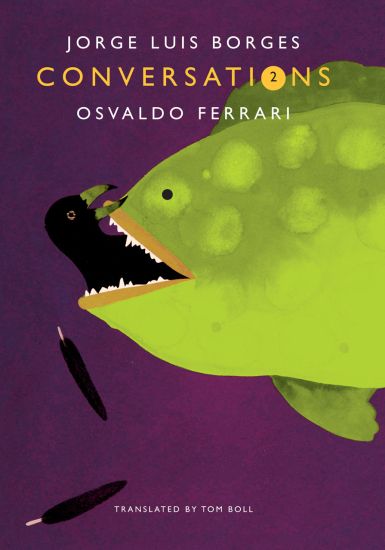
Recorded during Jorge Luis Borges's final years, this second volume of his conversations with Osvaldo Ferrari provides a wide-ranging reflection on the life and work of Argentina's master writer and favorite conversationalist. In Conversations: Volume 2, Borges and Ferrari engage in a dialogue that is both improvisational and frequently humorous as they touch on subjects as diverse as epic poetry, detective fiction, Buddhism, and the moon landing. With his signature wit, Borges offers insight into the philosophical basis of his stories and poems, his fascination with religious mysticism, and the idea of life as dream. He also dwells on more personal themes, including the influence of his mother and father on his intellectual development, his friendships, and living with blindness. These recollections are alive to the passage of history, whether in the changing landscape of Buenos Aires or a succession of political conflicts, leading Borges to contemplate what he describes as his "South American destiny." The recurrent theme of these conversations, however, is a life lived through books. Borges draws on the resources of a mental library that embraces world literature-ancient and modern. He recalls the works that were a constant presence in his memory and maps his changing attitudes to a highly personal canon. In the prologue to the volume, Borges celebrates dialogue and the transmission of culture across time and place. These conversations are a testimony to the supple ways that Borges explored his own relation to numerous traditions. Praise for Borges "Borges is arguably the great bridge between modernism and post-modernism in world literature."-David Foster Wallace
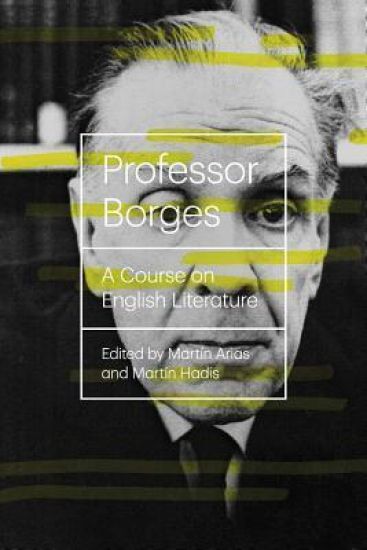
Borges takes us on a startling, idiosyncratic, fresh, and highly opinionated tour of English literature, weaving together countless cultural traditions of the last three thousand years. Borges’s lectures — delivered extempore by a man of extraordinary erudition — bring the canon to remarkably vivid life. Now translated into English for the first time, these lectures are accompanied by extensive and informative notes by the Borges scholars Martín Arias and Martín Hadis. Writing for Harper’s magazine, Edgardo Krebs describes Professor Borges: “A compilation of the twenty-five lectures Borges gave in 1966 at the University of Buenos Aires, where he taught English literature. Starting with the Vikings’ kennings and Beowulf and ending with Stevenson and Oscar Wilde, the book traverses a landscape of ‘precursors,’ cross-cultural borrowings, and genres of expression, all connected by Borges into a vast interpretive web. This is the most surprising and useful of Borges’s works to have appeared posthumously.”
Writing for Harper's Magazine, Edgardo Krebs describes Professor Borges: "A compilation of the twenty-five lectures Borges gave in 1966 at the University of Buenos Aires, where he taught English literature. Starting with the Vikings' kennings and Beowulf and ending with Stevenson and Oscar Wilde, the book traverses a landscape of 'precursors, 'cross-cultural borrowings, and genres of expression, all connected by Borges into a vast interpretive web. This is the most surprising and useful of Borges's works to have appeared posthumously." Borges takes us on a startling, idiosyncratic, fresh, and highly opinionated tour of English literature, weaving together countless cultural traditions of the last three thousand years. Borges's lectures -- delivered extempore by a man of extraordinary erudition -- bring the canon to remarkably vivid life. Now translated into English for the first time, these lectures are accompanied by extensive and informative notes by the Borges scholars Mart n Arias and Mart n Hadis.
Jorge Luis Borges: The Last Interview
Jorge Luis Borges; Gloria Lopez Lecube
Melville House Publishing
2013
nidottu
"Believe me: the benefits of blindness have been greatly exaggerated. If I could see, I would never leave the house, I'd stay indoors reading the many books that surround me." --Jorge Luis Borges Days before his death, Borges gave an intimate interview to his friend, the Argentine journalist Gloria Lopez Lecube. That interview is translated for the first time here, giving English-language readers a new insight into his life, loves, and thoughts about his work and country at the end of his life. Accompanying that interview are a selection of the fascinating interviews he gave throughout his career. Highlights include his celebrated conversations with Richard Burgin during Borges's time as a lecturer at Harvard University, in which he gives rich new insights into his own works and the literature of others, as well as discussing his now oft-overlooked political views. The pieces combine to give a new and revealing window on one of the most celebrated cultural figures of the past century.
Borges at Eighty
Jorge Luis Borges; Willis (TRN) Barnstone
New Directions Publishing Corporation
2013
pokkari
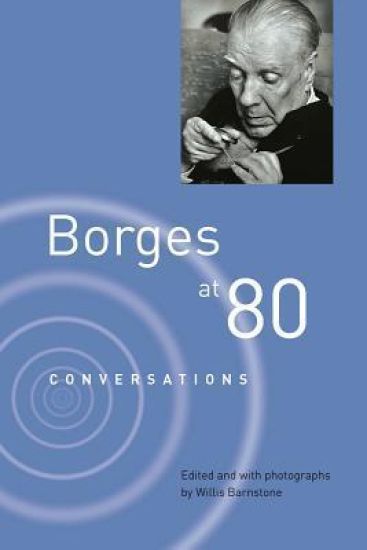
The words of a genius: Borges at Eighty transcends our expectations of ordinary conversation. In these interviews with Barnstone, Dick Cavett, and Alastair Reid, Borges touches on favorite writers (Whitman, Poe, Emerson) and familiar themes -- labyrinths, mystic experiences, and death -- and always with great, throw-away humor. For example, discussing nightmares, he concludes,"When I wake up, I wake to something worse. It's the astonishment of being myself."