Kirjojen hintavertailu – 12 903 725 kirjaa ja 27 kauppaa
Kirjailija
Jorge Pinto Mazal
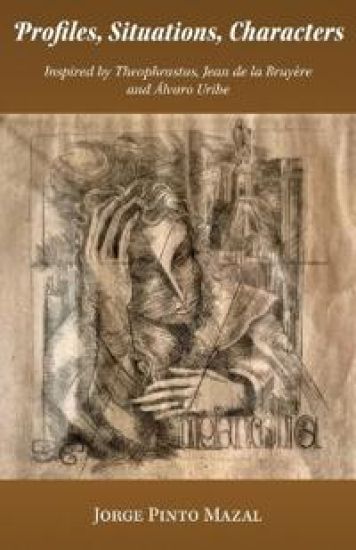
Kirjat ja teokset yhdessä paikassa: 8 kirjaa, julkaisuja vuosilta 2017–2026, suosituimpiin kuuluu Profiles, Situations, Characters. Inspired by Theophrastus, Jean de la Bruyère and Álvaro Uribe. Vertaile teosten hintoja ja tarkista saatavuus suomalaisista kirjakaupoista.
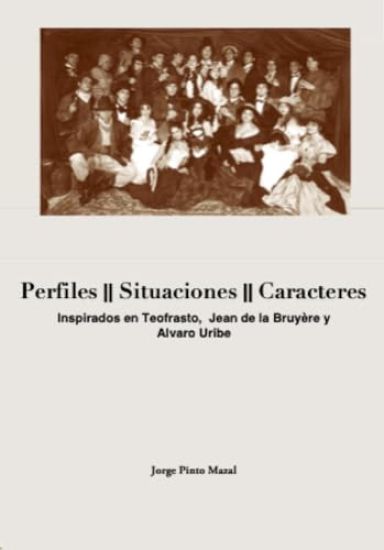
La idea de escribir las siguientes notas acerca de la naturaleza humana con base en los atributos de personajes de mis novelas favoritas se inspir originalmente en el libro Caracteres de lvaro Uribe. Gracias a esta obra descubr a Teofrasto y a Jean de la Bruy re, autores que en su tiempo publicaron importantes libros que describen prototipos o caracteres. Mi idea de buscar descripciones de situaciones, conductas y caracter sticas diversas de los seres humanos en novelas se inspira tambi n en los cincuenta tipos de emociones que Baruch Spinoza, uno de los fil sofos m s importantes e influyentes de la historia, describe su obra c lebre tica: demostrada seg n el orden geom trico. Para la concepci n de este ensayo me ha resultado asimismo provechoso el concepto de las "necesidades" que, seg n Schopenhauer, determinan el comportamiento humano. El presente ensayo no tiene un formato propiamente acad mico ni pretende alcanzar el rigor, el car cter o el color de las obras mencionadas. Se trata m s bien de una libre selecci n de pasajes de novelas cl sicas y contempor neas, cuyas tramas est n ligadas a situaciones o al car cter de personajes que manifiestan ciertas propiedades y concepciones.
Un encuentro fortuito en un evento cultural desencadena un torrente de sentimientos contradictorios en dos individuos que buscan por distintos caminos rehacer fallidas relaciones rom nticas. El inesperado encuentro del narrador con una bella y sofisticada mujer veinte a os menor, transforma su vida estable y c moda en un torbellino de conflictos, fantas as y expectativas,
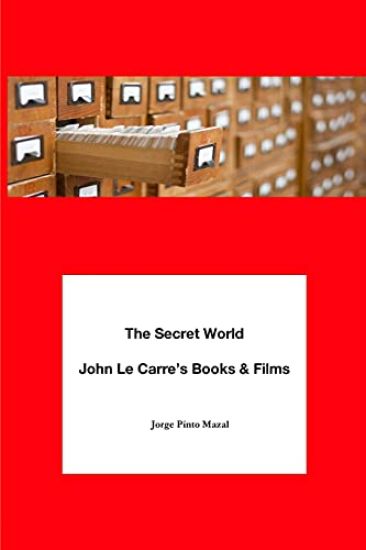
Following the experience of comparing a novel and its film adaptation, I made a list of my favorite movies based on Le Carr 's books. I decided to select my personal preferences and write a short text about the links between literature and film. I never intended to write an academic essay. The book contains brief reviews of Le Carr 's books and their film adaptations. It includes an introduction is followed by notes of A Murder of Quality (1962); The Spy Who came in from the Cold (1963); Tinker, Tailor, Soldier, Spy (1974); The Russia House (1989); The Night Manager (1993); The Tailor of Panama (1996), The Constant Gardener (2001); and A Most Wanted Man (2008)The selection is personal based on the novels and films that I enjoyed and consider among my favorites and also those adaptations that are readily available in streaming services such as Apple TV, BFI, Amazon, Criterion, among others. I avoided unfolding the plot to allow the book readers and film watchers to discover the extraordinary stories by one of the great thriller writers of our time and not spoil the fun.
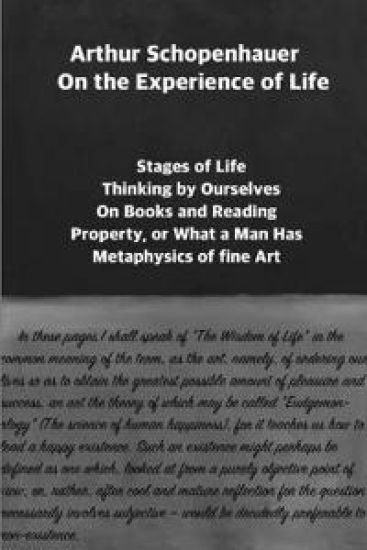
Arthur Schopenhauer (1788 - 1860) is an influential 19th Century philosopher whose works and ideas were followed by other important philosophers, particularly by Nietzsche, who viewed himself as Schopenhauer's successor. His work also influenced Freud's ideas on psychoanalysis. Thomas Mann, winner of the Nobel Prize for Literature, in his long essay Schopenhauer the Living Thoughts of Schopenhauer, says the philosopher is a "psychologist of the will" and his works to run by way of the psychological radicalism of Nietzsche, straight to Freud and the men who built up his psychology of the unconscious and applied it to the mental sciences. Following Thomas Mann's interpretation of Schopenhauer's ideas, it is not surprising to see Dr. Irvin D. Yalom, a well known psychotherapist and best selling author, choose Schopenhauer as a central character of one of his novels: The Schopenhauer Cure. As in his other two novels based on prominent philosophers, Nietzsche and Spinoza, (When Nietzsche Wept: A Novel Of Obsession and The Spinoza Problem: A Novel)I decided to include "The Stages of Life", of Schopenhauer's Counsels and Maxims in this volume. In this essay he considers that in our childhood we are more given to using our intellect than our will. Following that golden age or magic years of learning about the external world, Schopenhauer warns us that then "... comes the great period of disillusion, a period of very gradual growth; but once it has fairly begun, a man will tell you that he has got over all his false notions "l' ge des illusions est pass ". .. Another essay included in this anthology with the evocative title On Thinking for Oneself is written in a didactic style. There, Schopenhauer expresses his strong opinions on the importance of discovering independently what is important for the creative mind. I consider this essay to be relevant in our political environment as well as in our personal and social lives, dominated by social media. In a time of excessive information and opinions that are shared and absorbed without thinking, the ideas contained in Schopenhauer's essay could not be more compelling and current. Following the same ideas, On Books and Reading, another essay included in this book, Schopenhauer can be perceived as an educator and not so much as a philosopher. Here he criticizes those who read for entertainment, as a pastime or for relaxation, consuming books without discerning what is good and what is not or, even worse, reading without assimilating the content. To make the point he uses the following example: you can ruin the stomach and impair the whole body by taking too much nourishment, so you can overfill and choke the mind by feeding it too much. Character is another Schopenhauer essay included in this book. He uses theater to show the contrast between the personality of a narcissistic individual that looks for honor and fame to those actors who only want to perform "great parts: ". In his essay Property, or What a Man Has, Schopenhauer presents the idea of happiness, one of the many topics we often find in his works. Here, the philosopher presents the link between money or wealth and a happy life. Finally, in The Metaphysics of Art, also included in this anthology, Schopenhauer gives an effective path to fight the "Will", which is one of the bases of his philosophy. The "Will", which is in conflict with the intellect, constitutes a series of needs that are an unavoidable part of the human condition and the source of unhappiness, frustration and suffering since what the "Will" commands can never be entirely satisfied.
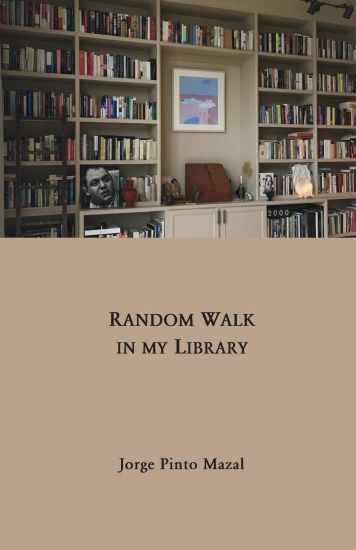
The title Random Walk by my Library is prompted by what I regularly do; walk by my library, look at the covers and pull out different books that I read in the past and want to browse or, in some cases, read again. The series of reviews included in this book is the result of these walks. Apparently, there is no particular reason for the choice, but now that they are together I can see some patterns and some underlying themes that attracted my attention and desire to share my views on these texts. Some of these reviews have connections. Several have a relation to everyday human tragedies, mostly examples of deceit, seduction, adultery, and their consequences. Terrorism is another topic found in books with fanatics as the main characters or individuals manipulated by governments that use terror to promote their interests. Another set of books is a selection of letters written by famous people like those between Thomas Mann and Hermann Hesse, two great Nobel Prize Winners. "All these are readers, and their gestures, their craft, the pleasure, the responsibility and the power they derive from reading, are common with mine. I am not alone." Alberto Manguel, The History of ReadingA classic is a book which has never exhausted all it has to say to its readers. Italo Calvino. Why Read the Classics