Kirjojen hintavertailu – 12 903 725 kirjaa ja 27 kauppaa

Kirjailija

Jorge Quintana Navarrete

Kirjat ja teokset yhdessä paikassa: 4 kirjaa, julkaisuja vuosilta 2024–2025, suosituimpiin kuuluu Biocosmism. Vertaile teosten hintoja ja tarkista saatavuus suomalaisista kirjakaupoista.

4 kirjaa

Kirjojen julkaisuvuodet: 2024–2025.

Changes in the Landscape

Changes in the Landscape

Jens Andermann; Ronald Briggs; Gisela Heffes; Aarti S. Madan; Vanesa Miseres; Lizabeth Paravisini-Gebert; Jorge Quintana Navarrete; Catalina Rodríguez; Emmanuel A Velayos Larrabure; Lesley Wylie

VANDERBILT UNIVERSITY PRESS
2025
nidottu
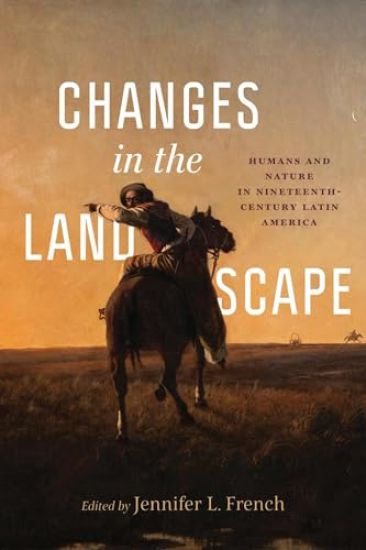
Changes in the Landscape is a collection of timely essays that bring the methodologies and commitments of ecocriticism to bear on the study of Latin American literature and cultural production. The book’s eleven chapters, written by some of the leading voices in the field, invite readers to consider how the relationship between humans and nonhuman nature was fundamentally transformed during a period when new modes of capitalist production were emerging in the region and around the world. Jennifer L. French’s introductory essay provides a historical and theoretical framework for the collection. Ranging from the immediate aftermath of the Spanish-American Wars of Independence (1810–1826) to the early twentieth century (1925), the volume’s essays cover a wide variety of genres and forms of cultural production, from JosÉ HernÁndez’s epic poem MartÍn Fierro to prose fiction, painting and photography, and the personal albums compiled by Spanish-American women. Individually and collectively, the essays engage with scientific writing as both a discourse of power and a source of potentially significant, even revelatory information about human and nonhuman nature. Changes in the Landscape enables readers to more fully understand the transition from colonial regimes to the ecocidal extractivism of the export boom (1870–1930) by drawing out and analyzing some of the cognitive resources and rhetorical strategies that were available to imagine, protest, or enact new norms and expectations regarding the relations between human and nonhuman life, be it the life of wildflowers, waterfalls, or Cuba’s CiÉnaga de Zapata.
Changes in the Landscape

Changes in the Landscape

Jens Andermann; Ronald Briggs; Gisela Heffes; Aarti S. Madan; Vanesa Miseres; Lizabeth Paravisini-Gebert; Jorge Quintana Navarrete; Catalina Rodríguez; Emmanuel A Velayos Larrabure; Lesley Wylie

VANDERBILT UNIVERSITY PRESS
2025
sidottu
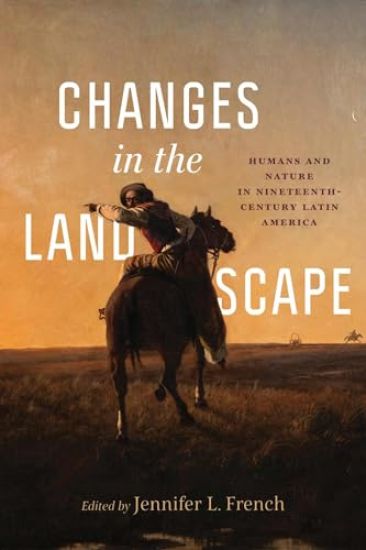
Changes in the Landscape is a collection of timely essays that bring the methodologies and commitments of ecocriticism to bear on the study of Latin American literature and cultural production. The book’s eleven chapters, written by some of the leading voices in the field, invite readers to consider how the relationship between humans and nonhuman nature was fundamentally transformed during a period when new modes of capitalist production were emerging in the region and around the world. Jennifer L. French’s introductory essay provides a historical and theoretical framework for the collection. Ranging from the immediate aftermath of the Spanish-American Wars of Independence (1810–1826) to the early twentieth century (1925), the volume’s essays cover a wide variety of genres and forms of cultural production, from JosÉ HernÁndez’s epic poem MartÍn Fierro to prose fiction, painting and photography, and the personal albums compiled by Spanish-American women. Individually and collectively, the essays engage with scientific writing as both a discourse of power and a source of potentially significant, even revelatory information about human and nonhuman nature. Changes in the Landscape enables readers to more fully understand the transition from colonial regimes to the ecocidal extractivism of the export boom (1870–1930) by drawing out and analyzing some of the cognitive resources and rhetorical strategies that were available to imagine, protest, or enact new norms and expectations regarding the relations between human and nonhuman life, be it the life of wildflowers, waterfalls, or Cuba’s CiÉnaga de Zapata.
Biocosmism

Biocosmism

Jorge Quintana Navarrete

VANDERBILT UNIVERSITY PRESS
2024
nidottu
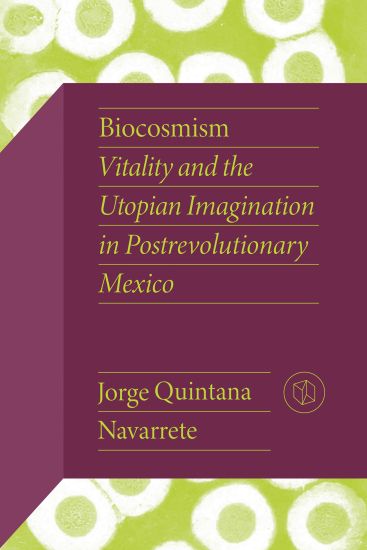
Most scholars study postrevolutionary Mexican culture as a period in which cultural production significantly shaped national identity through murals, novels, essays, and other artifacts that registered the changing political and social realities in the wake of the Revolution. In Biocosmism, Jorge Quintana Navarrete shifts the focus to examine how a group of scientists, artists, and philosophers conceived the manifold relations of the human species with cosmological forces and nonhuman entities (animals, plants, inorganic matter, celestial bodies, among others). Drawing from recent theoretical trends in new materialisms, biopolitics, and posthumanism, this book traces for the first time the intellectual constellation of biocosmism or biocosmic thought: the study of universal life understood as the vital vibrancy that animates everything in the cosmos from inorganic matter to living organisms to outer space. It combines both analysis of unexplored areas—such as Alfonso L. Herrera’s plasmogeny—and innovative readings of canonical texts like Vasconcelos’s La raza cÓsmica to examine how biocomism produced a wide array of utopian projects and theorizations that continue to challenge anthropocentric, biopolitical frameworks.
Biocosmism

Biocosmism

Jorge Quintana Navarrete

VANDERBILT UNIVERSITY PRESS
2024
sidottu
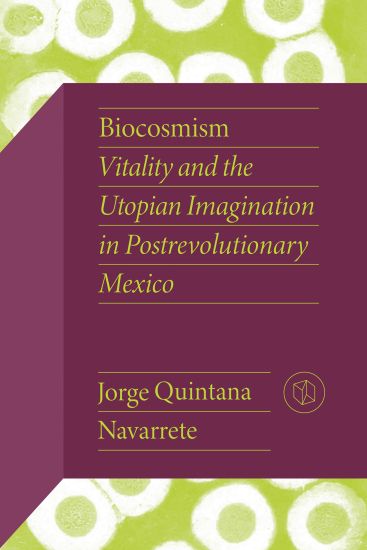
Most scholars study postrevolutionary Mexican culture as a period in which cultural production significantly shaped national identity through murals, novels, essays, and other artifacts that registered the changing political and social realities in the wake of the Revolution. In Biocosmism, Jorge Quintana Navarrete shifts the focus to examine how a group of scientists, artists, and philosophers conceived the manifold relations of the human species with cosmological forces and nonhuman entities (animals, plants, inorganic matter, celestial bodies, among others). Drawing from recent theoretical trends in new materialisms, biopolitics, and posthumanism, this book traces for the first time the intellectual constellation of biocosmism or biocosmic thought: the study of universal life understood as the vital vibrancy that animates everything in the cosmos from inorganic matter to living organisms to outer space. It combines both analysis of unexplored areas—such as Alfonso L. Herrera’s plasmogeny—and innovative readings of canonical texts like Vasconcelos’s La raza cÓsmica to examine how biocomism produced a wide array of utopian projects and theorizations that continue to challenge anthropocentric, biopolitical frameworks.