

Kirjojen hintavertailu – 12 859 819 kirjaa ja 27 kauppaa

Kirjailija

José de Souza Silva

Kirjat ja teokset yhdessä paikassa: 2 kirjaa, julkaisuja vuosilta 1995–2018, suosituimpiin kuuluu Making Nature, Shaping Culture. Vertaile teosten hintoja ja tarkista saatavuus suomalaisista kirjakaupoista.

2 kirjaa

Kirjojen julkaisuvuodet: 1995–2018.

Investigación Científica

Investigación Científica

José de Souza Silva

Editorial Academica Espanola
2018
pokkari
Jos de Souza Silva, desde el genuino coraz n de la desobediencia epist mi-ca y en caudalosa sinton a con el esplendor del esp ritu de los pueblos testimonio de Am rica, que por m s de cinco siglos se han resistido a ser cortesanos de los moldes l gico-racionales euroc ntricos, ha escrito Investigaci n Cient fica: Para el desarrollo o para la vida? En esta faena nos presenta el tejido de la pedagog a de la pregunta como un llamamiento a desterrar la l gica de la raz n instrumental, de la violencia y de la guerra agazapada en el instrumento de los invasores: la pedagog a de la respuesta. Su pensamiento es coincidente con la cosmovisi n de los pueblos originarios de Abya Yala, y propone una investigaci n cient fica insurgente: debemos continuar con la convencional investigaci n para el desarrollo (para el capitalismo), o construir la investigaci n para el Buen Vivir? Pensar de forma independiente implica cultivar premisas emancipadoras para romper con la geopol tica del conocimiento que nos hace rehenes del pensamiento subordinado al conocimiento autorizado por "el m s fuerte", plantea con firmeza el pensador brasile o Daniel Matul Morales, Presidente de Liga Maya, Guatemala].
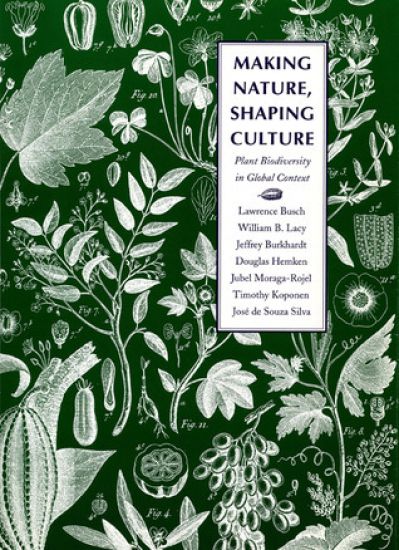
Making Nature, Shaping Culture

Making Nature, Shaping Culture

Lawrence Busch; William B. Lacy; Jeffrey Burkhardt; Douglas Hemken; Jubel Moraga-Rojel; Timothy Koponen; José de Souza Silva

University of Nebraska Press
1995
sidottu
For ages, farmers have domesticated plant varieties, while scientists have "made" nature through hybridization and other processes. This give and take—mediated through negotiations, persuasion, the marketplace, and even coercion—has resulted in what we call "nature" and has led to a homogenization of plant crops. Yet homogenization has led to new problems: genetic vulnerability, and the lack of systems to maintain plant germplasm of varieties no longer grown in the fields. This book addresses issues previously viewed as primarily technical concerning the germplasm debate: that is, how, what, and where to store the range of genetic materials necessary to reproduce plants. By examining Brazil, Chile, France, and the United States, the authors show how different cultures respond to the decline in genetic diversity. The findings show that the quest for uniformity in foods, agriculture, and environment eventually threatens everyone. The politicization of this debate is inevitable because the destruction of human cultural diversity goes hand in hand with the destruction of plant varietal diversity. The authors agree that responses to the controversies must involve food security, relinking of food with agriculture and the environment, revaluing traditional knowledge, and rethinking development. They stress that answers will be found not by experts acting unilaterally but through the democratization of scientific and technical exchange.