Kirjojen hintavertailu – 12 859 818 kirjaa ja 27 kauppaa

Kirjailija

Joseph Chinyong Liow

Kirjat ja teokset yhdessä paikassa: 13 kirjaa, julkaisuja vuosilta 2004–2024, suosituimpiin kuuluu Navigating Uncertainty: Our Region In An Age Of Flux. Vertaile teosten hintoja ja tarkista saatavuus suomalaisista kirjakaupoista.

13 kirjaa

Kirjojen julkaisuvuodet: 2004–2024.

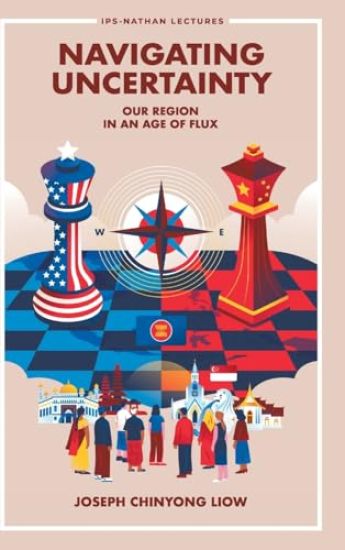
Navigating Uncertainty: Our Region In An Age Of Flux

Navigating Uncertainty: Our Region In An Age Of Flux

Joseph Chinyong Liow

WORLD SCIENTIFIC PUBLISHING CO PTE LTD
2024
sidottu
Professor Joseph Liow is the Institute of Policy Studies' 13th S R Nathan Fellow for the Study of Singapore. This book is an edited collection of his three IPS-Nathan Lectures, delivered from October to November 2023, and includes highlights of his question-and-answer segments with our audience. The Southeast Asian region, celebrated for its economic growth and rich cultural tapestry, currently stands at the crux of global power dynamics. In this lecture series, Professor Liow delves into the complex challenges and dynamics that shape the region. These range from the escalating rivalry between the United States and China, to the emerging centrifugal forces within the region itself. The region's trajectory, tracing its path from Cold War turbulence to recent economic resurgence, is now facing geopolitical shifts and heightened risks of fragmentation arising from its inherent ethnic and religious diversity. By gaining a nuanced perspective on Southeast Asia's history and domestic tensions, we can gain insight into the potential strategies the region; and vitally, Singapore can take in a rapidly changing global environment. The IPS-Nathan Lecture series was launched in 2014 as part of the S R Nathan Fellowship for the Study of Singapore, named after Singapore's sixth and longest-serving president. It seeks to advance public understanding and discussion of issues of critical national interest for Singapore.
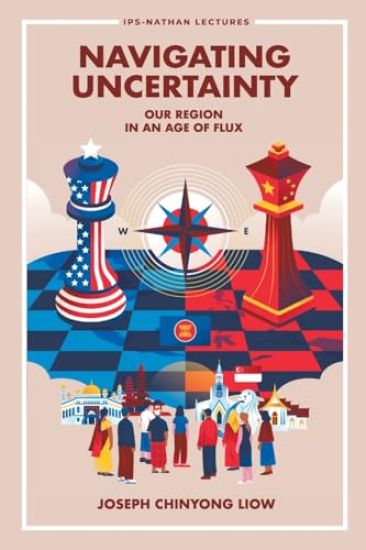
Navigating Uncertainty: Our Region In An Age Of Flux

Navigating Uncertainty: Our Region In An Age Of Flux

Joseph Chinyong Liow

WORLD SCIENTIFIC PUBLISHING CO PTE LTD
2024
nidottu
Professor Joseph Liow is the Institute of Policy Studies' 13th S R Nathan Fellow for the Study of Singapore. This book is an edited collection of his three IPS-Nathan Lectures, delivered from October to November 2023, and includes highlights of his question-and-answer segments with our audience. The Southeast Asian region, celebrated for its economic growth and rich cultural tapestry, currently stands at the crux of global power dynamics. In this lecture series, Professor Liow delves into the complex challenges and dynamics that shape the region. These range from the escalating rivalry between the United States and China, to the emerging centrifugal forces within the region itself. The region's trajectory, tracing its path from Cold War turbulence to recent economic resurgence, is now facing geopolitical shifts and heightened risks of fragmentation arising from its inherent ethnic and religious diversity. By gaining a nuanced perspective on Southeast Asia's history and domestic tensions, we can gain insight into the potential strategies the region; and vitally, Singapore can take in a rapidly changing global environment. The IPS-Nathan Lecture series was launched in 2014 as part of the S R Nathan Fellowship for the Study of Singapore, named after Singapore's sixth and longest-serving president. It seeks to advance public understanding and discussion of issues of critical national interest for Singapore.
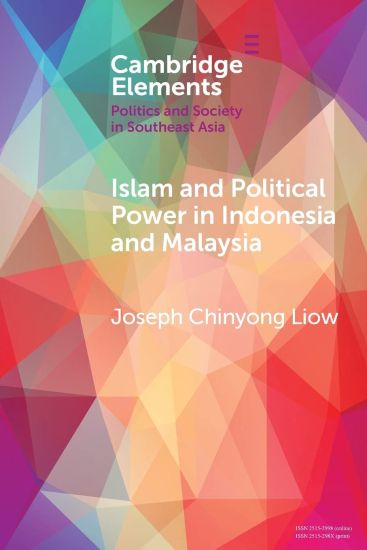
Islam and Political Power in Indonesia and Malaysia

Islam and Political Power in Indonesia and Malaysia

Joseph Chinyong Liow

Cambridge University Press
2022
pokkari
Islamism in Indonesia and Malaysia has undergone a fascinating transformation from social movement roots to mainstream politics. How did this take place, and to what ends? Drawing on social movement theories, this Element explains this transformation by focusing on key Islamic social movements in these two countries. It argues: first, that the popularity and appeal of Islamism in Indonesia and Malaysia cannot be understood without appreciating how these social movements have enabled and facilitated mobilization; and second, that it is precisely these roots in civil societal mobilization that account for the enduring influence of Islamist politics evident in how Islamic social movements have shaped and transformed the political landscape. These arguments will be developed by unpacking how Islamist ideas took root in social movement settings, the kinds of institutional and organizational structures through which these ideas were advanced, and the changing political landscape that facilitated these processes.
Dictionary of the Modern Politics of Southeast Asia

Dictionary of the Modern Politics of Southeast Asia

Joseph Chinyong Liow

TAYLOR FRANCIS LTD
2022
sidottu
The past three decades since the end of the Cold War have been a time of remarkable change for Southeast Asia. Long seen as an arena for superpower rivalry, Southeast Asia is increasingly coming into its own by locating itself at the forefront of regional integration initiatives that involve not only the states of the region, but major external powers such as the United States, China, India, Japan, and Australia. Extensively updated and revised in light of these changes and developments, this fifth edition of Dictionary of the Modern Politics of Southeast Asia remains indispensable. This new edition starts with profiles of each Southeast Asian country, before providing over 500 alphabetically arranged individual entries, each containing detailed accounts and analyses of major episodes and treaties, political parties and institutions, civil society movements, and regional and international organizations. Biographies of significant political leaders and personalities, both past and present, are also provided. Entries are comprehensively cross-referenced, and an index by country directs readers to all entries concerning a particular country. The Dictionary concludes with an extensive bibliography that serves as a guide to further reading. An essential one-stop reference book, this book is an indispensable tool for all scholars and students of Asian politics and international affairs, and a vital resource for journalists, diplomats, policy makers, and others with an interest in the region.
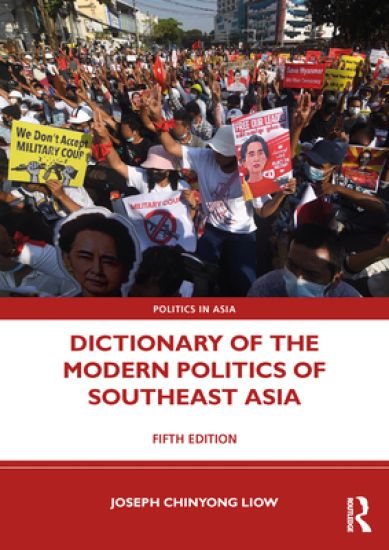
Dictionary of the Modern Politics of Southeast Asia

Dictionary of the Modern Politics of Southeast Asia

Joseph Chinyong Liow

TAYLOR FRANCIS LTD
2022
nidottu
The past three decades since the end of the Cold War have been a time of remarkable change for Southeast Asia. Long seen as an arena for superpower rivalry, Southeast Asia is increasingly coming into its own by locating itself at the forefront of regional integration initiatives that involve not only the states of the region, but major external powers such as the United States, China, India, Japan, and Australia. Extensively updated and revised in light of these changes and developments, this fifth edition of Dictionary of the Modern Politics of Southeast Asia remains indispensable. This new edition starts with profiles of each Southeast Asian country, before providing over 500 alphabetically arranged individual entries, each containing detailed accounts and analyses of major episodes and treaties, political parties and institutions, civil society movements, and regional and international organizations. Biographies of significant political leaders and personalities, both past and present, are also provided. Entries are comprehensively cross-referenced, and an index by country directs readers to all entries concerning a particular country. The Dictionary concludes with an extensive bibliography that serves as a guide to further reading. An essential one-stop reference book, this book is an indispensable tool for all scholars and students of Asian politics and international affairs, and a vital resource for journalists, diplomats, policy makers, and others with an interest in the region.
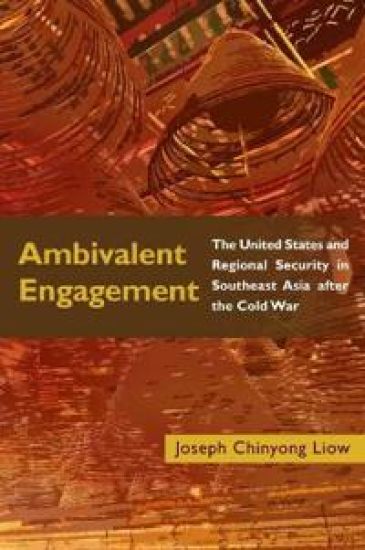
Ambivalent Engagement

Ambivalent Engagement

Joseph Chinyong Liow

Brookings Institution
2020
nidottu
The paradox of U. S. involvement in Southeast AsiaThe Obama administration’s pivot-to-Asia policy establishes an important place for Southeast Asia in U. S. foreign policy. But Washington’s attention to the region has fluctuated dramatically, from the intense intervention of the cold war era to near neglect in more recent years. As a consequence, countries in Southeast Asia worry that the United States once again will become distracted by other problems and disengage from the region. This book written by an astute observer of the region and U. S. policy casts light on the sources of these anxieties. A main consideration is that it still is not clear how Southeast Asia fits into U. S. strategy for Asia and the broader world. Is the region central to U. S. policymaking, or an afterthought? Ambivalent Engagement highlights a dilemma that is becoming increasingly conspicuous and problematic. Southeast Asia continues to rely on the United States to play an active role in the region even though it is an external power. But the countries of Southeast Asia have very different views about precisely what role the United States should play. The consequences of this ambivalence will grow in importance with the expanding role of yet another outside power, China.
Asia's Quest for Balance

Asia's Quest for Balance

Jay L. Batongbacal; Elliot Brennan; Tetsuo Kotani; Evan A. Laksmana; Joseph Chinyong Liow; Hunter Marston; Rory Medcalf; Sylvia Mishra; C. Raja Mohan; Prashanth Parameswaran; Tran Truong Thuy; Ha Anh Tuan

Rowman Littlefield
2018
sidottu
In recent years the narrative surrounding China’s “peaceful rise” has given way to a more ominous story of friction, ambition, and great-power rivalry. As Chinese foreign policy has grown more nationalist and assertive, its intensifying competition with the U. S. has assumed center stage. The impact on China's neighbors, by contrast, and their evolving responses, have received comparatively less attention. The Realist theory of international relations suggests the rapid accumulation of power by one nation-state will prompt its neighbors and peers to adopt Balancing strategies. They will strive enhance their internal defense capabilities and forge new external security partnerships to hedge against this potential new threat. Have these predictions rung true? Are key Indo-Pacific capitals Balancing, and drawing closer to the U. S. as insurance against Chinese aggression? Or is China a new breed of rising power, challenging traditional theories of international relations in a newly-globalized, economically interdependent world? In Asia’s Quest for Balance: China’s Rise and Balancing in the Indo-Pacific leading author-experts from Australia, India, Indonesia, Japan, Malaysia, Myanmar, the Philippines, Singapore, and Vietnam explore these questions and more, decoding China’s complex and evolving relationships with its neighbors and exploring how their responses are altering the security landscape of the region. Contributions by Jay L. Batongbacal, Elliot Brennan, Tetsuo Kotani, Evan A. Laksmana, Joseph Chinyong Liow, Hunter Marston, Rory Medcalf, Sylvia Mishra, C. Raja Mohan, Prashanth Parameswaran, Jeff M. Smith, Tran Truong Thuy, and Ha Anh Tuan
Ambivalent Engagement

Ambivalent Engagement

Joseph Chinyong Liow

Brookings Institution
2017
sidottu
The paradox of U. S. involvement in Southeast AsiaThe Obama administration's pivot-to-Asia policy implies an important place for Southeast Asia in U. S. foreign policy. But Washington's attention to the region has fluctuated dramatically, from intense intervention of the cold war era to near neglect in more recent years. As a consequence, countries in Southeast Asia worry that the United States once again will become distracted by other problems and disengage from the region. This book by an astute observer of the region and U. S. policy casts light in the sources of these anxieties. A main consideration is that it still is not clear how Southeast Asia fits into U. S. strategy for Asia and the broader world. Is the region central to U. S. policymaking, or an afterthought? Moreover, domestic considerations, both in the United States and in the region, often contrive to obstruct foreign policy decision-making, in the process frustrating mutual engagement in the post-cold war era. Cooperation among states within the region also is uncertain, at best. Ambivalent Engagement highlights a paradox that is becoming increasingly conspicuous and problematic. Southeast Asia continues to rely on the United States playing an active role despite it being an external power. But the states in the region have very different views about precisely what role the United States should play. The consequences of this paradox will grow in importance with the expanding role of yet another outside power, China.
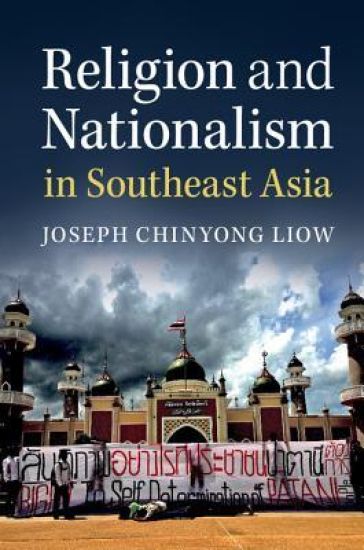
Religion and Nationalism in Southeast Asia

Religion and Nationalism in Southeast Asia

Joseph Chinyong Liow

Cambridge University Press
2016
sidottu
Religion and nationalism are two of the most potent and enduring forces that have shaped the modern world. Yet, there has been little systematic study of how these two forces have interacted to provide powerful impetus for mobilization in Southeast Asia, a region where religious identities are as strong as nationalist impulses. At the heart of many religious conflicts in Southeast Asia lies competing conceptions of nation and nationhood, identity and belonging, and loyalty and legitimacy. In this accessible and timely study, Joseph Liow examines the ways in which religious identity nourishes collective consciousness of a people who see themselves as a nation, perhaps even as a constituent part of a nation, but anchored in shared faith. Drawing on case studies from across the region, Liow argues that this serves both as a vital element of identity and a means through which issues of rights and legitimacy are understood.
Religion and Nationalism in Southeast Asia

Religion and Nationalism in Southeast Asia

Joseph Chinyong Liow

Cambridge University Press
2016
pokkari
Religion and nationalism are two of the most potent and enduring forces that have shaped the modern world. Yet, there has been little systematic study of how these two forces have interacted to provide powerful impetus for mobilization in Southeast Asia, a region where religious identities are as strong as nationalist impulses. At the heart of many religious conflicts in Southeast Asia lies competing conceptions of nation and nationhood, identity and belonging, and loyalty and legitimacy. In this accessible and timely study, Joseph Liow examines the ways in which religious identity nourishes collective consciousness of a people who see themselves as a nation, perhaps even as a constituent part of a nation, but anchored in shared faith. Drawing on case studies from across the region, Liow argues that this serves both as a vital element of identity and a means through which issues of rights and legitimacy are understood.
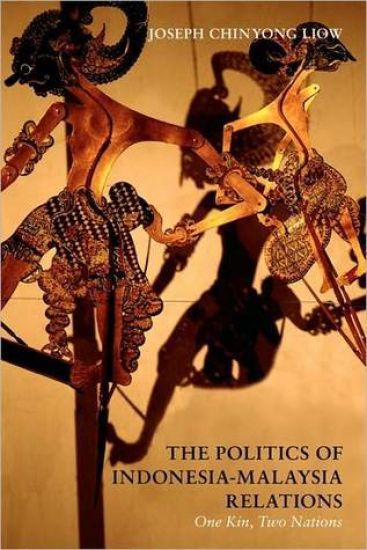
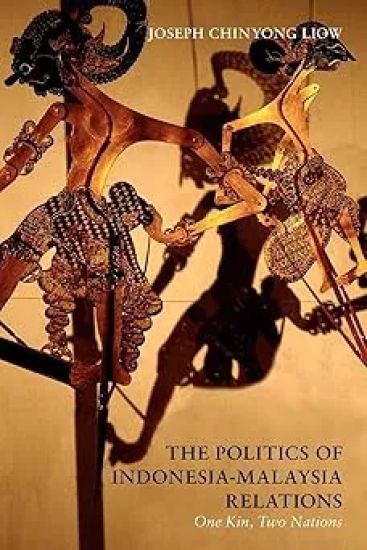
The Politics of Indonesia-Malaysia Relations

The Politics of Indonesia-Malaysia Relations

Joseph Chinyong Liow

Routledge
2009
nidottu
This book provides a comprehensive overview of the relationship between Indonesia and Malaysia, focusing especially on how the relationship has developed in the last fifty years. It argues that the political relationship between the two countries has been largely defined by rivalry, despite the fact that the processes of national self-determination began by emphasising Indo-Malay fraternity. It shows how the two countries have different, contested interpretations of Indo-Malay history, and how the continuing suspicion of Javanese hegemony which defined much of the history of the Indo-Malay world is also a key factor in the relationship.
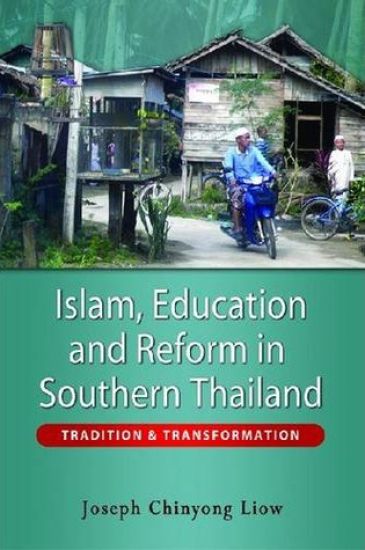
Islam, Education and Reform in Southern Thailand

Islam, Education and Reform in Southern Thailand

Joseph Chinyong Liow

Institute of Southeast Asian Studies
2009
sidottu
"This is a remarkable piece of scholarship that illuminates general and specific tendencies in Islamic education in South Thailand. Armed with an enormous amount of rich empirical detail and an elegant writing style, the author debunks the simplistic Orientalist conceptions of Wahhabi and Salafi influences on Islamic education in South Thailand. This work will be a state-of-the-art source for understanding the role of Islam and the ongoing conflict in this troubled region of Southeast Asia. The book is significant for those scholars who are attempting to understand Muslim communities in Southeast Asia, and also for those who want deep insights into Islamic education and its influence in any area of the Islamic world." - Raymond Scupin, Professor of Anthropology and International Studies Lindenwood University, USA "Few books address the sensitive issue of Islamic education with empathy as well as critical distance as Joseph C. Liow's Islam, Education, and Reform in Southern Thailand. He examines global networks of religious learning within a local Thai as well as regional Asian context by brilliantly revealing the intersections between religion, politics and modernity in an accessible and illuminating manner. Traditional educational institutions rarely receive such sensitive and balanced treatment. Liow's book is a tour de force and mandatory reading for policy-makers, academics and all of those interested in current affairs." - Ebrahim Moosa, Associate Professor of Islamic Studies, Department of Religion, Associate Director, Duke Islamic Studies Center (DISC), Duke University, USA "Islam, Education, and Reform in Southern Thailand is Joseph Chinyong Liow's critical attempt to map out the reflexive questioning, locations of authority, dynamics and contestations within the Muslim community over what constitutes Islamic knowledge and education. Through the optics of Islamic education in Southern Thailand, Liow manages to brilliantly portray the ways in which Muslim minority negotiate their lives in the local context of violence and the global context of crisis of modernity." - Chaiwat Satha-Anand, Senior Research Scholar, Thailand Research Fund, Author of The Life of this World: Negotiated Muslim Lives in Thai Society
The Politics of Indonesia-Malaysia Relations

The Politics of Indonesia-Malaysia Relations

Joseph Chinyong Liow

Routledge
2004
sidottu
This book provides a comprehensive overview of the relationship between Indonesia and Malaysia, focusing especially on how the relationship has developed in the last fifty years. It argues that the political relationship between the two countries has been largely defined by rivalry, despite the fact that the processes of national self-determination began by emphasising Indo-Malay fraternity. It shows how the two countries have different, contested interpretations of Indo-Malay history, and how the continuing suspicion of Javanese hegemony which defined much of the history of the Indo-Malay world is also a key factor in the relationship.