Kirjojen hintavertailu – 12 903 724 kirjaa ja 27 kauppaa

Kirjailija

Joseph Clark

Kirjat ja teokset yhdessä paikassa: 7 kirjaa, julkaisuja vuosilta 1998–2022, suosituimpiin kuuluu Habits of Success. Vertaile teosten hintoja ja tarkista saatavuus suomalaisista kirjakaupoista.

7 kirjaa

Kirjojen julkaisuvuodet: 1998–2022.

Habits of Success

Habits of Success

Alinka Rutkowska; Amauche Chidozie; Andreas Schweitzer; Antony Gordon; Carl Worden; Chris Shockowitz; Christina Alva; David Solyomi; George Putnam; Gordon Wollman; Ingrid Dedecker; James D Shields; Jewel Grutman; Johnny Welsh; Joseph Clark; Joseph Laporta; Kathryn Eriksen; Kathy Oaks; Krishanthi Rondon Fuentes; Laura Gallaher; Lyndon Cerejo; Markus Pfeiler; Michael Middleton; Michelle Beyo; Mika Tienhaara; Moritz Davidesko; Muhammad Arif Anis; Patricia A Talbot; Patrick Thean; Paul L Gunn; Phillip John Campbell; Phillip Meade

Leaders Press SRL
2022
nidottu
For the sleeping giants of our workforce pursuing a more productive life, HABITS OF SUCCESS is an anthology illuminating the varieties of choices, habits and strategies that lead to the same goal: success. READING IS A KEY HABIT OF SUCCESS. FORM THE HABIT WITH ANOTHER STELLAR ANTHOLOGY FROM LEADERS PRESS As the world resumes from a year and a half of pandemic disruption, we find ourselves wondering what to do next? Should we go back to normal or move forward to better? How do we maximize our time and efforts to find our most successful selves? What habits will sustain that success the next time our world is shaken up? You will find these answers reading the brilliant contributors to HABITS OF SUCCESS. This anthology draws wisdom from over a dozen exceptional leaders, ranging from CEOs to Coaches to world-changers. Habits of Success presents a diverse array of habits that you may choose to suit your concept of success. Each chapter in Habits of Success will shed light on different methods for acquiring habits and how to utilize them on your path to success: Adopt the habit of understanding what success means to you. Practice the habit of taking risks, knowing when to diverge from the traditional path and experience the life you've always wanted to live. Thrive through the habit of adaptation to stay productive even as your world turns completely upside down. Develop daily habits of planning to improve collaborations with yourself, your coworkers, and your family. Embrace the habit of renewal as you evolve into this next chapter of life. As the world restarts, take this opportunity to assess the path you are on. Are you taking the most efficient path? How certain are you that success awaits and the end of this journey? Fortunately, habits are products of behavior. You can always adapt them to suit the situation and goals. What habits will accompany you on the next leg of your journey? Get a copy of Habits of Success and pave your path to success today
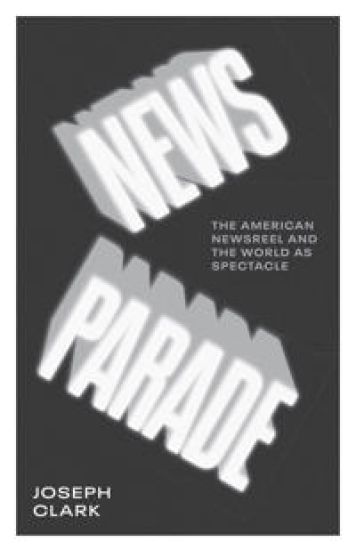
News Parade

News Parade

Joseph Clark

University of Minnesota Press
2020
sidottu
A fascinating look at the United States’ conflicted relationship with news and the media, through the lens of the newsreel When weekly newsreels launched in the early twentieth century, they offered the U. S. public the first weekly record of events that symbolized “indisputable evidence” of the news. In News Parade, Joseph Clark examines the history of the newsreel and how it changed the way Americans saw the world. He combines an examination of the newsreel’s methods of production, distribution, and reception with an analysis of its representational strategies to understand the newsreel’s place in the history of twentieth-century American culture and film history. Clark focuses on the sound newsreel of the 1930s and 1940s, arguing that it represents a crucial moment in the development of a spectacular society where media representations of reality became more fully integrated into commodity culture. Using several case studies, including the newsreel’s coverage of Charles Lindbergh’s transatlantic flight and the Sino–Japanese War, News Parade shows how news film transformed the relationship between its audience and current events, as well as the social and political consequences of these changes. It pays particular attention to how discourses of race and gender worked together with the rhetoric of speed, mobility, and authority to establish the power and privilege of newsreel spectatorship. In the age of fake news and the profound changes to journalism brought on by the internet, News Parade demonstrates how new technologies and media reshaped the American public’s relationship with the news in the 1930s-a history that can help us to better understand the transformations happening today.
News Parade

News Parade

Joseph Clark

University of Minnesota Press
2020
pokkari
A fascinating look at the United States’ conflicted relationship with news and the media, through the lens of the newsreel When weekly newsreels launched in the early twentieth century, they offered the U. S. public the first weekly record of events that symbolized “indisputable evidence” of the news. In News Parade, Joseph Clark examines the history of the newsreel and how it changed the way Americans saw the world. He combines an examination of the newsreel’s methods of production, distribution, and reception with an analysis of its representational strategies to understand the newsreel’s place in the history of twentieth-century American culture and film history. Clark focuses on the sound newsreel of the 1930s and 1940s, arguing that it represents a crucial moment in the development of a spectacular society where media representations of reality became more fully integrated into commodity culture. Using several case studies, including the newsreel’s coverage of Charles Lindbergh’s transatlantic flight and the Sino–Japanese War, News Parade shows how news film transformed the relationship between its audience and current events, as well as the social and political consequences of these changes. It pays particular attention to how discourses of race and gender worked together with the rhetoric of speed, mobility, and authority to establish the power and privilege of newsreel spectatorship. In the age of fake news and the profound changes to journalism brought on by the internet, News Parade demonstrates how new technologies and media reshaped the American public’s relationship with the news in the 1930s-a history that can help us to better understand the transformations happening today.
Jungle Wedding

Jungle Wedding

Joseph Clark

W. W. Norton Company
1998
pokkari
Few writers of fiction have demonstrated so early in their career such a firm grasp of the forms disaster can take as Joseph Clark does in Jungle Wedding. Fewer still have been able to balance their unnerving feeling for apocalypse with an equally unerring sense of the possibilities for grace and transcendence, however provisional. In the title story a cutting-edge video artist is hired to document a shamanistic New Age wedding ceremony deep in the Central American jungle -- and gets far more than he bargained for. In Public Burning a sociological experiment in the study and surveillance of an average American spirals down into a literally incendiary conclusion. Wild Blue is a tour de force narrative of one man's collision with the scarily dysfunctional American armed forces of the 1970s. Other stories in Jungle Wedding hold out possibilities for communion, reconciliation, and absolution. In Revenge emotional rescue for a psychologically besieged divorc e arrives in the form of a clearly too-young lust object, while Oasis stages a haunting father-daughter reunion in terrain reminiscent of a Sam Shepard play. Whatever his subject, Clark stakes out his territory with an imaginative authority and vigor of language that is truly exciting.