Kirjailija
Joseph Conrad
Kirjat ja teokset yhdessä paikassa: 2 285 kirjaa, julkaisuja vuosilta 1895–2026, suosituimpiin kuuluu Lord Jim. Vertaile teosten hintoja ja tarkista saatavuus suomalaisista kirjakaupoista.
Nimi esiintyy myös muodoissa: Joseph. Conrad
2 285 kirjaa
Kirjojen julkaisuvuodet: 1895–2026.
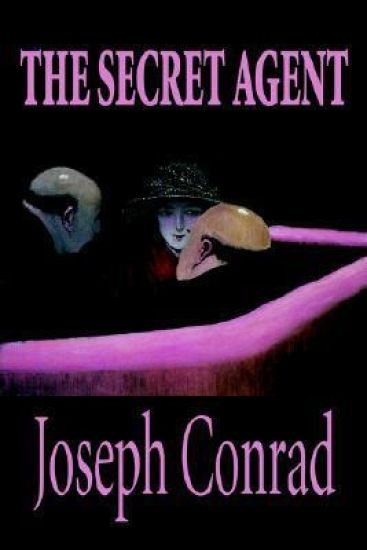
Speaking of this novel, Conrad wrote, "The origin of _The Secret Agent_: subject, treatment, artistic purpose, and every other motive that may induce an author to take up his pen, can, I believe, be traced to a period of mental and emotional reaction. The actual facts are that I began this book impulsively and wrote it continuously. When in due course it was bound and delivered to the public gaze I found myself reproved for having produced it at all. Some of the admonitions were severe, others had a sorrowful note. I have not got them textually before me but I remember perfectly the general argument, which was very simple; and also my surprise at its nature. All this sounds a very old story now! And yet it is not such a long time ago. . . ."
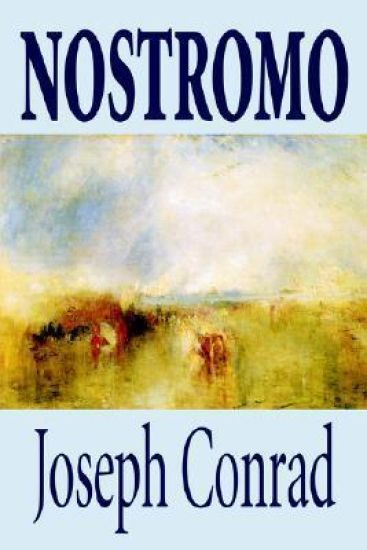
NOSTROMO is the most anxiously meditated of the longer novels which belong to the period following upon the publication of the TYPHOON volume of short stories. I don't mean to say that I became then conscious of any impending change in my mentality and in my attitude towards the tasks of my writing life. And perhaps there was never any change, except in that mysterious, extraneous thing which has nothing to do with the theories of art; a subtle change in the nature of the inspiration; a phenomenon for which I can not in any way be held responsible. What, however, did cause me some concern was that after finishing the last story of the TYPHOON volume it seemed somehow that there was nothing more in the world to write about. This so strangely negative but disturbing mood lasted some little time; and then, as with many of my longer stories, the first hint for NOSTROMO came to me in the shape of a vagrant anecdote completely destitute of valuable details. . . . -- Joseph Conrad
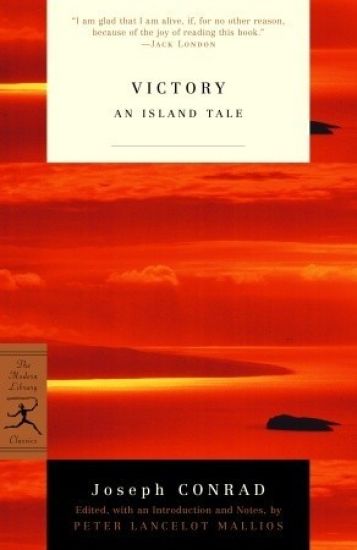
Set in the islands of the Malay Archipelago, Victory tells the story of a disillusioned Swede, Axel Heyst, who rescues Lena, a young English musician, from the clutches of a brutish German hotel owner. Seeking refuge at Heyst's remote island retreat on Samburan, the couple is soon besieged by three villains dispatched by the enraged hotelier. The arrival on the island paradise of this trio of fiends sets off a terrifying series of events that ultimately ends in catastrophe. "With Victory, Conrad inaugurated a new style and aesthetic," writes Peter Lancelot Mallios in his Introduction. "The tremendous literary sophistication to be found in Victory does not result in the exclusion of the popular reader." The text of this Modern Library Paperback Classic was set from the first British edition, published by Methuen & Co. in 1915.
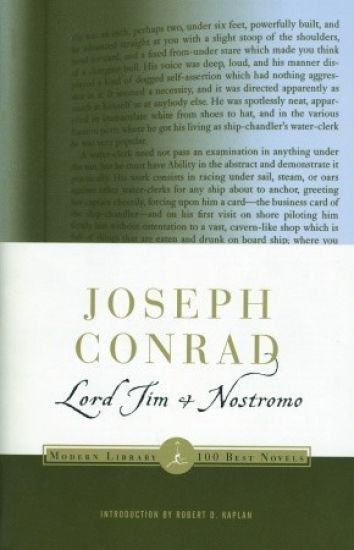
WITH A NEW INTRODUCTION BY ROBERT D. KAPLANCOMMENTARY BY VIRGINIA WOOLF, HAROLD BLOOM, EDWARD SAID,F. R. LEAVIS, AND ROBERT PENN WARREN" Never were Mr. Conrad's felicity of phrase and charm of atmosphere more obvious. . . . A book of the rare literary quality of Lord Jim is something to receive with gratitude and joy."--The New York TimesOriginally published in 1900, Lord Jim is one of Joseph Conrad's most complex literary masterpieces. The story of a young sailor whose moment of cowardice haunts him for the rest of his life, Lord Jim explores Conrad's lifelong obsessions with the nature of guilt and the possibility of redemption. Nostromo is considered by many to be Conrad's supreme achievement, and Conrad himself referred to Nostromo as his "widest canvas." Set in the fictitious South American republic of Costaguana, Nostromo reveals the effects that misguided idealism, unparalleled greed, and imperialist interests can have on a fledging nation. V. S. Pritchett wrote: "Nostromo is the most strikingly modern of Conrad's novels. It is pervaded by a profound, even morbid sense of insecurity which is the very spirit of our age." Robert D. Kaplan's Introduction explains why the two novels together form Conrad's darkest glimpse into the flawed nature of humankind. JOSEPH CONRAD (1857-1924) grew up amid political unrest in Russian-occupied Poland. After twenty years at sea in the French and British merchant navies, he settled in England in 1894. Over the next three decades, he revolutionized the English novel with works such as Youth (1902), Heart of Darkness (1902), Typhoon (1903), The Secret Agent (1907), Under Western Eyes (1911), Chance (1913), and Victory (1915). ROBERT D. KAPLAN is a correspondent for The Atlantic Monthly and the author of seven books of travel and foreign affairs that have been translated into a dozen languages, including Balkan Ghosts, The Ends of the Earth, and An Empire Wilderness, all bestsellers, and a collection of essays, The Coming Anarchy. He lectures frequently to the U. S. military.
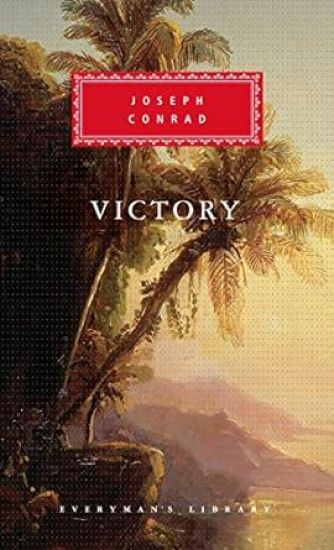
Joseph Conrad possessed a matchless gift for embodying life as it is lived under extreme physical and psychological pressure. Victory, his last masterpiece, tells the story of Axel Heyst, a radically isolated, philosophically minded soul living apart on a remote Pacific island, who performs two acts of instinctive kindness and thereby embroils himself in storms of greed and vengeance, and of love and mercy. When Heyst impulsively rescues a young English musician, Lena, from the predations of a lascivious hotel owner named Schomberg, he cannot know that she will be the means of releasing him from the emotional detachment with which he has long barricaded himself. Their affair does not last long, however, once the enraged Schomberg sends agents of revenge to invade Heyst's island retreat. Out of the maelstrom of violence and tragedy that ensues, Conrad produces a profound, unflinching meditation on human connection and redemption.
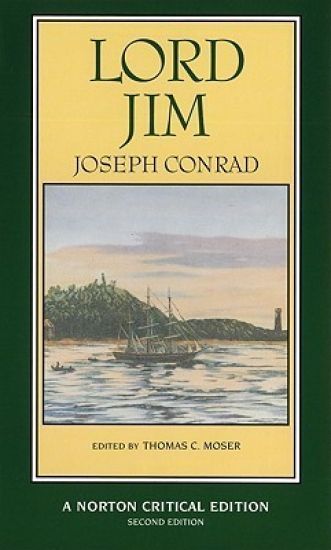
All discrepancies have been checked against the second English edition and the second American edition; the resulting Textual Notes include over 500 substantive changes. The text is thoroughly annotated, and the editor has added a "Glossary of Eastern and Nautical Terms." "Backgrounds" includes the complete text of "Tuan Jim." "Sources" is a special section edited for this Norton Critical Edition by Dr. Norman Sherry of the University of Liverpool, presenting his discoveries about the real-life counterpart of Lord Jim, the incidents described in the novel, and life in the Dutch East Indies in the nineteenth century. Dr. Sherry is the author of Conrad's Eastern World. Among the perspectives presented in "Criticism" are those of Hugh Clifford, Albert J. Guerard, Ian Watt, Fredric Jameson, J. Hillis Miller, Edward Said, Philip M. Weinstein, Paul B. Armstrong, Marianne DeKoven, and Daphana Erdinast-Vulcan.
This is the only novel that Conrad set in London, and it communicates a profoundly ironic view of human affairs. The story is woven around an attack on the Greenwich Observatory in 1894. Verloc, (a Russian spy who is also working for the police) is ostensibly a member of an anarchist group in Soho.
Joseph Conrad's foresight and his ability to distill human adventure from complex historical circumstances were so keen that his greatest novel, Nostromo--though more than a century old--says as much about Latin America as any recent account of that region's turbulent political life. Conrad's story is set in the fictional Costaguana, a South American republic with a troubled history of tyranny and revolution. When wealthy businessman Charles Gould decides to use his valuable silver mine to support the current dictator in hopes of achieving stability, he instead sets off a new round of chaos and warfare. Fearful that his silver will fall into the hands of invading revolutionaries, Gould entrusts Nostromo--a man of the people considered by all to be incorruptible--with the task of escaping with and hiding a boatload of ingots from the mine. Nostromo's heroic actions save his city from revolution, but the fate of the silver becomes his dark secret, one that will destroy him. Insistently dramatic in its storytelling, spectacular in its re-creation of the subtropical landscape, this picture of an insurrectionary society and the opportunities it provides for moral corruption gleams on every page with its author's impeccable intelligence. (Book Jacket Status: Not Jacketed).
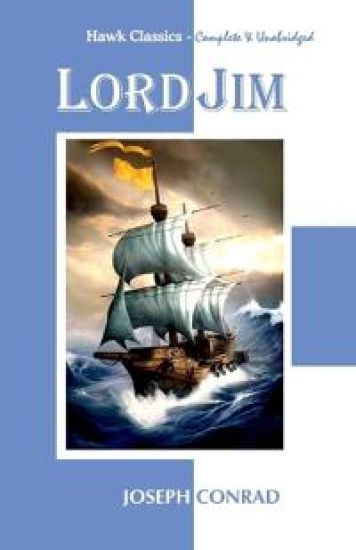
From the author of Heart of Darkness: A condemned British seaman on the run from a grievous mistake in his past may find redemption in the Far East. A young British seaman, Jim lands a major opportunity when he becomes first mate on the Patna, a ship transporting Muslim pilgrims to Mecca for the hajj. But when disaster strikes at sea, Jim and the rest of the crew abandon the ship and its passengers. While his crewmates evade trial, Jim must face the court and is punished for his dereliction of duty. Depressed and tortured by his conscience over his act of cowardice, and stripped of his navigation officer's certificate by the court, Jim travels east to avoid further scandal. His sea captain friend, Charles Marlow, helps him find work and settle in the remote island kingdom of Patusan, where the natives come to revere him. But as Jim slowly develops a measure of serenity and respect within himself, a looming danger may jeopardize the new life he has built. An adventurous tale of tragedy and redemption, Lord Jim is considered one of the greatest works by the author of Typhoon and The Secret Agent.
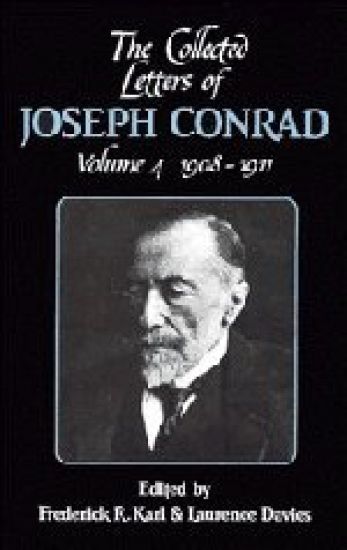
This is the fourth of eight volumes comprising all the surviving letters of Joseph Conrad. Conrad spent half the period of Volume Four writing Under Western Eyes and the other half recovering from the ensuing mental and physical breakdown. During the early months of 1908, the short story 'Razumov' began growing into a novel that embodied Conrad's appalled fascination with Russian politics, his misgivings about language, and his acute sense of loneliness. After the completion of the novel in 1910 and a vehement quarrel with J. B. Pinker, his agent, Conrad suffered a breakdown whose effects lingered for many months. By the spring of 1911, however, he was able to resume the long-delayed Chance. The tale of these years emerges vividly from the correspondence. Of special interest are frank critiques of John Galsworthy's work, manoeuvrings around the new and distinguished English Review, an indignant falling out with Ford Madox Ford, mercurial transactions with Pinker, enlightening accounts of writing in progress (The Secret Sharer and A Personal Record as well as the two novels), reactions to the tumultuous politics of the day, anecdotes about John and Borys Conrad, and evidence of new friendships with American and French writers, among them André Gide.
This is the third of the projected eight-volume edition comprising all the surviving letters of Joseph Conrad under the general editorship of Professor Frederick R. Karl. When completed, it will have assembled about 4,000 letters, over a third of them published before only in defective versions. As with previous volumes in the series, this volume contains an editorial introduction, illustrations, and extensive annotation. The period covered by the third volume is 1903 to 1907 when Conrad stood at the height of his powers. It was during these years that he completed Nostromo and The Secret Agent. Yet this was not a happy time for him: his plans for leisurely, contemplative work were constantly interrupted by dangerous illnesses in the family, his own bad health, financial worries, and the pleas of editors desperate for copy. Conrad maintained his correspondence with old friends such as Galsworthy, Wells, and Ford Madox Ford, and developed a number of new friendships. This is also the period in which Conrad became absorbed in political fiction, and this is reflected in an intriguing sequence of America, and censorship. As always, the letters to his literary agent J. B. Pinker provide a detailed (and largely unpublished) account of Conrad's plans and literary commitments, week by week, month by month.

The first of a projected eight-volume edition of all the surviving letters of Joseph Conrad. Volume One opens with a child, not yet four, writing to comfort his imprisoned father and closes with an author, exile, and master mariner just turned forty.