

Kirjailija
Joseph Donahue
Kirjat ja teokset yhdessä paikassa: 7 kirjaa, julkaisuja vuosilta 2019–2027, suosituimpiin kuuluu The Breeze Behind the Breeze. Vertaile teosten hintoja ja tarkista saatavuus suomalaisista kirjakaupoista.
7 kirjaa
Kirjojen julkaisuvuodet: 2019–2027.

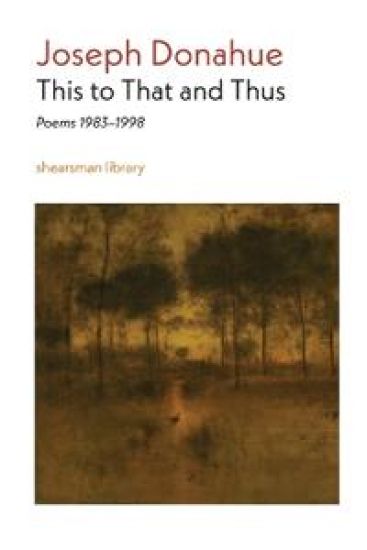
This to That and Thus contains four separate complete collections, the author's first four books, thus demonstrating the wellsprings of a remarkable career." For a poetry that yields such immediate and immense pleasure, the work of Joseph Donahue remains hard to characterize. Joseph Donahue has spent [four] decades crafting a sensibility that straddles the often-reductive binaries of literary discourse. As sacred as it is profane, as popular as it is avant-garde, and as funny as it is forlorn, Donahue's poetry puts forward a voice that resists easy categorization. While there are many aesthetic reasons that make Donahue's poetry difficult to encapsulate, the most pressing obstruction to characterizing his poetry is the little precedence that exists for such an endeavor." -J. Peter Moore, Jacket2"For sheer invention and sheer beauty, there is little around at all that can match such a book." -Nathaniel Tarn, Plume, on Wind Maps"'Hints and symbols die out./ All's actual now.' These lines seem to contain the germ of Joseph Donahue's massive, mesmerizing new book, Incidental Eclipse. Something is going under, something is coming to the surface; each is documented by two voices, one speaking in italics. There is little comfort here, but there is glamor in the inevitable, 'incidental' screen of darkness moving across the light. This sequence confirms Donahue as one of the major American poets of this time." -John Ashbery, on Incidental Eclipse (2003)
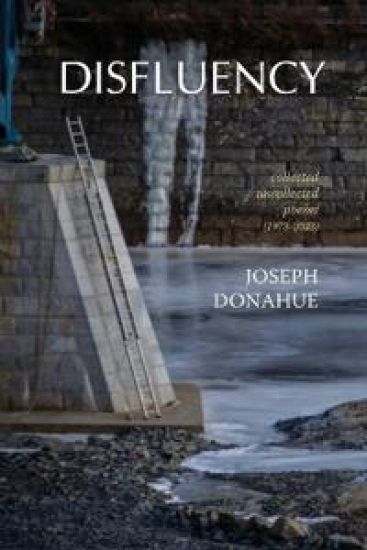
In poetry written over fifty years Disfluency, Collected Uncollected Poems 1973-2023, is a brightly shattered bildungsroman, a portrait of the artist told in excavated images and recovered turns of thought. Beginning with early years in an ethnic, religious enclave, Disfluency traces the desertion of the town for the city, renders a pained disavowal of a life defined by kinship and sacraments, for the promise of the city, in this case, Manhattan. In a poetry devoted images and dreams, Disfluency edges ever outward into the world of history and myth, of capturing the passing clarities of lives and loves. A serial prosepoem written over decades, "Purple Ritual" begins with a revised version of a work that appeared in the author's first book, Before Creation. A meditation on the fate of Orestes as he wanders from temple to temple through the ancient world seeking relief from his guilt is placed in correspondence with a later rendition of the foibles of a national family, the Kennedys. The awakening of consciousness to the events of public life begins with the assassination of JFK, followed by that of RFK, by the crime of Chappaquiddick, and by the sad and tawdry fates of later generations, wherein we see perhaps with some dismay, family romance and collective fate, intertwined. These poems written over many years, some lost a long time, some forgotten, some at variance with the inclination of whatever the book was that was being written, were once poems that didn't quite fit anywhere but have eerily come together, as if they had foreseen what the poet did not, a secret autobiography of a self that the author was not sure was any longer there, but appears now, bearing witness to all that had been forgotten.
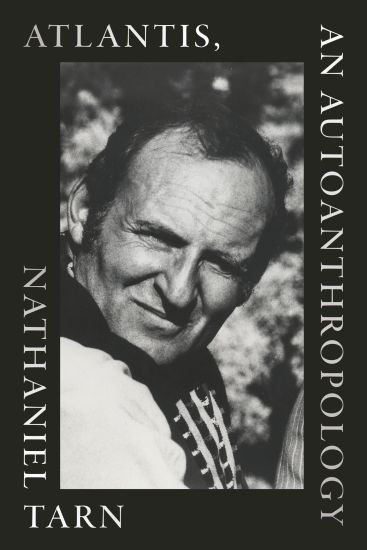
Over the course of his long career, Nathaniel Tarn has been a poet, anthropologist, and book editor, while his travels have taken him into every continent. Born in France, raised in England, and earning a Ph. D. from the University of Chicago, he knew André Breton, Salvador Dalí, Marcel Duchamp, Margot Fonteyn, Charles Olson, Claude Lévi-Strauss, and many more of the twentieth century’s major artists and intellectuals. In Atlantis, an Autoanthropology he writes that he has "never (yet) been able to experience the sensation of being only one person.” Throughout this literary memoir and autoethnography, Tarn captures this multiplicity and reaches for the uncertainties of a life lived in a dizzying array of times, cultures, and environments. Drawing on his practice as an anthropologist, he takes himself as a subject of study, examining the shape of a life devoted to the study of the whole of human culture. Atlantis, an Autoanthropology prompts us to consider our own multiple selves and the mysteries contained within.
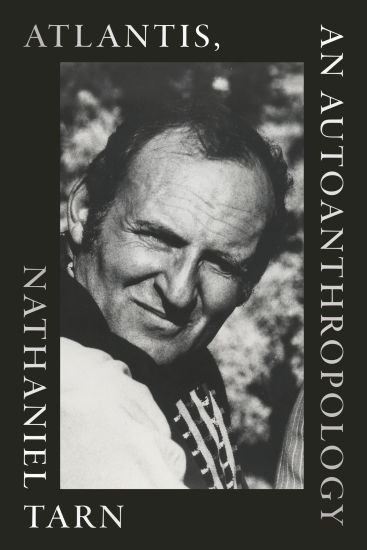
Over the course of his long career, Nathaniel Tarn has been a poet, anthropologist, and book editor, while his travels have taken him into every continent. Born in France, raised in England, and earning a Ph. D. from the University of Chicago, he knew André Breton, Salvador Dalí, Marcel Duchamp, Margot Fonteyn, Charles Olson, Claude Lévi-Strauss, and many more of the twentieth century’s major artists and intellectuals. In Atlantis, an Autoanthropology he writes that he has "never (yet) been able to experience the sensation of being only one person.” Throughout this literary memoir and autoethnography, Tarn captures this multiplicity and reaches for the uncertainties of a life lived in a dizzying array of times, cultures, and environments. Drawing on his practice as an anthropologist, he takes himself as a subject of study, examining the shape of a life devoted to the study of the whole of human culture. Atlantis, an Autoanthropology prompts us to consider our own multiple selves and the mysteries contained within.

Joseph Donahue's latest book is lit by intelligence, visionary light, and what Seamus Heaney called the "redemptive effect" as the poet attempts to bear the weight of the world. The Disappearance of Fate chronicles our chaotic time where a forked tongue can strike like lightning. These poems form a narrative that maps both marvelous and murderous events created by the world's diverse religions and nations, ancient and current. History runs parallel with present time. Birds perch and flit through crafted lines. Luminous dreams blend with reality. Donahue's latest book is veined with traces of "immortal diamond." The Disappearance of Fate is an exquisite book. Robert Adamson