Kirjojen hintavertailu – 12 859 818 kirjaa ja 27 kauppaa
Kirjailija
Joseph E. David
Kirjat ja teokset yhdessä paikassa: 7 kirjaa, julkaisuja vuosilta 2013–2026, suosituimpiin kuuluu Kinship, Law and Politics. Vertaile teosten hintoja ja tarkista saatavuus suomalaisista kirjakaupoista.
Why are we so concerned with belonging? In what ways does our belonging constitute our identity? Is belonging a universal concept or a culturally dependent value? How does belonging situate and motivate us? Joseph E. David grapples with these questions through a genealogical analysis of ideas and concepts of belonging. His book transports readers to crucial historical moments in which perceptions of belonging have been formed, transformed, or dismantled. The cases presented here focus on the pivotal role played by belonging in kinship, law, and political order, stretching across cultural and religious contexts from eleventh-century Mediterranean religious legal debates to twentieth-century statist liberalism in Western societies. With his thorough inquiry into diverse discourses of belonging, David pushes past the politics of belonging and forces us to acknowledge just how wide-ranging and fluid notions of belonging can be.
Why are we so concerned with belonging? In what ways does our belonging constitute our identity? Is belonging a universal concept or a culturally dependent value? How does belonging situate and motivate us? Joseph E. David grapples with these questions through a genealogical analysis of ideas and concepts of belonging. His book transports readers to crucial historical moments in which perceptions of belonging have been formed, transformed, or dismantled. The cases presented here focus on the pivotal role played by belonging in kinship, law, and political order, stretching across cultural and religious contexts from eleventh-century Mediterranean religious legal debates to twentieth-century statist liberalism in Western societies. With his thorough inquiry into diverse discourses of belonging, David pushes past the politics of belonging and forces us to acknowledge just how wide-ranging and fluid notions of belonging can be.
The book provides in depth studies of two epistemological aspects of Jewish Law (Halakhah) as the ‘Word of God’ – the question of legal reasoning and the problem of knowing and remembering.- How different are the epistemological concerns of religious-law in comparison to other legal systems?- In what ways are jurisprudential attitudes prescribed and dependent on theological presumptions?- What specifies legal reasoning and legal knowledge in a religious framework? The author outlines the rabbinic jurisprudential thought rooted in Talmudic literature which underwent systemization and enhancement by the Babylonian Geonim and the Andalusian Rabbis up until the twelfth century. The book develops a synoptic view on the growth of rabbinic legal thought against the background of Christian theological motifs on the one hand and Karaite and Islamic systemized jurisprudence on the other hand. It advances a perspective of legal-theologythat combines analysis of jurisprudential reflections and theological views within a broad historical and intellectual framework. The book advocates two approaches to the study of the legal history of the Halakhah: comparative jurisprudence and legal-theology, based on the understanding that jurisprudence and theology are indispensable and inseparable pillars of legal praxis.
The book provides in depth studies of two epistemological aspects of Jewish Law (Halakhah) as the ‘Word of God’ – the question of legal reasoning and the problem of knowing and remembering.- How different are the epistemological concerns of religious-law in comparison to other legal systems?- In what ways are jurisprudential attitudes prescribed and dependent on theological presumptions?- What specifies legal reasoning and legal knowledge in a religious framework? The author outlines the rabbinic jurisprudential thought rooted in Talmudic literature which underwent systemization and enhancement by the Babylonian Geonim and the Andalusian Rabbis up until the twelfth century. The book develops a synoptic view on the growth of rabbinic legal thought against the background of Christian theological motifs on the one hand and Karaite and Islamic systemized jurisprudence on the other hand. It advances a perspective of legal-theologythat combines analysis of jurisprudential reflections and theological views within a broad historical and intellectual framework. The book advocates two approaches to the study of the legal history of the Halakhah: comparative jurisprudence and legal-theology, based on the understanding that jurisprudence and theology are indispensable and inseparable pillars of legal praxis.
This volume of essays presents a compelling and comprehensive analysis of the intriguing issue of the gift of the land of Israel and the fate of the Canaanites as presented in diverse biblical sources. Jewish thought has long grappled with the moral and theological implications and challenges of this issue. Innovative interpretive strategies and philosophical reflections were offered, modified, and sometimes rejected over the centuries. Leading contemporary scholars follow these threads of interpretation offered by Jewish thinkers from antiquity to modern times.
This volume of essays presents a compelling and comprehensive analysis of the intriguing issue of the gift of the land of Israel and the fate of the Canaanites as presented in diverse biblical sources. Jewish thought has long grappled with the moral and theological implications and challenges of this issue. Innovative interpretive strategies and philosophical reflections were offered, modified, and sometimes rejected over the centuries. Leading contemporary scholars follow these threads of interpretation offered by Jewish thinkers from antiquity to modern times.
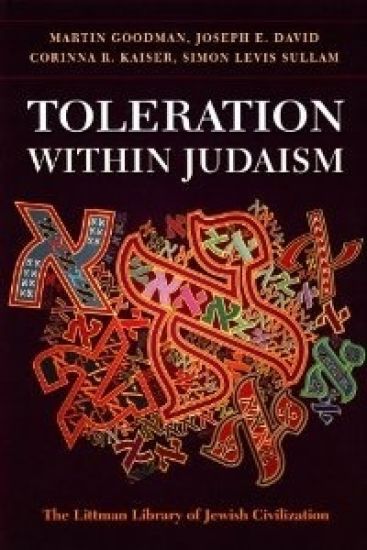
The Bible itself calls the Jewish people ‘a company of nations’, suggesting that difference within Judaism is not a new phenomenon. It has continued throughout Jewish history, and this volume investigates how and why such difference has been tolerated. Drawing on examples from different geographical areas and from ancient times to the present, the contributors consider why Jews sometimes attempt to impose constraints on other Jews or relate to them as if they were not Jews at all, but at other times recognize differences of practice and belief and develop ways of handling them. In doing so, they provide an insight into a history of Judaism as a complex web of interactions between groups of Jews despite grounds for mutual antagonism. Substantial introductory chapters lay out the issues and provide an extensive survey of cases of toleration throughout the past two thousand years, outlining possible structural reasons for it. The eight chapters that follow each take a specific case of toleration within Judaism, attempting to explain it in light of the models outlined in the Introduction. Presented in chronological order, the cases have been selected to reflect a spectrum of responses, from grudging forbearance to enthusiastic welcome of difference. Covering both practice and theology, each case is presented in depth, with full documentation. The Conclusion provides an overview of the patterns of tolerance that have emerged and discusses the implications for writing the history of Judaism as a narrative more complex than either the tracing of a linear progression from the Bible to the present, with variations presented as deviations, or as a model of overlapping ‘Judaisms’. This innovative volume sheds light on an important and overlooked aspect of the history of Judaism and should have broad appeal, not only for students and scholars of Judaism but for students of religious studies more generally.