Kirjojen hintavertailu – 12 859 819 kirjaa ja 27 kauppaa

Kirjailija

Joseph M. Chan

Kirjat ja teokset yhdessä paikassa: 4 kirjaa, julkaisuja vuosilta 2010–2018, suosituimpiin kuuluu Media, Social Mobilisation and Mass Protests in Post-colonial Hong Kong. Vertaile teosten hintoja ja tarkista saatavuus suomalaisista kirjakaupoista.

4 kirjaa

Kirjojen julkaisuvuodet: 2010–2018.

Media, Social Mobilisation and Mass Protests in Post-colonial Hong Kong
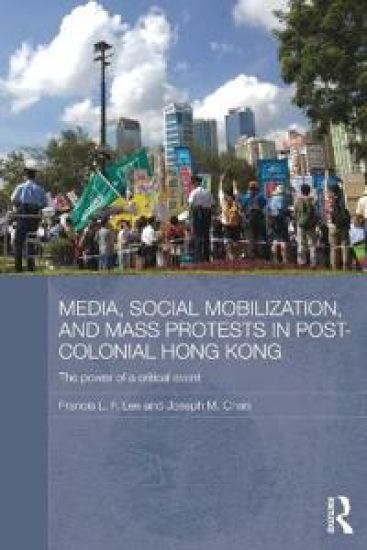
Since 2003, Hong Kong has witnessed a series of large-scale protests which have constituted the core of a reinvigorated pro-democracy movement. What drove tens of thousands of citizens to the street on a yearly basis to protest? What were the social and organizational bases of the protest movement? How did media and public discourses affect the protests’ formation and mobilization? How did the protesters understand their own actions and the political environment? This book tackles such questions by using a wide range of methods, including population and protest onsite surveys, media content analysis, and in-depth interviews with activists, politicians, and protest participants. It provides an account of the "self-mobilization processes" behind the historic July 1, 2003 protest, and how the protest kick-started new political dynamics and discursive contestations in the public arena which not only turned a single protest into a series of collective actions constituting a movement, but also continually shaped the movement’s characteristics and influence. The book is highly pertinent to readers interested in political development in Hong Kong, and as a case study on "the power of critical events," the book also has broad implications on the study of both media politics and social movements in general.
Media, Social Mobilisation and Mass Protests in Post-colonial Hong Kong
Since 2003, Hong Kong has witnessed a series of large-scale protests which have constituted the core of a reinvigorated pro-democracy movement. What drove tens of thousands of citizens to the street on a yearly basis to protest? What were the social and organizational bases of the protest movement? How did media and public discourses affect the protests’ formation and mobilization? How did the protesters understand their own actions and the political environment? This book tackles such questions by using a wide range of methods, including population and protest onsite surveys, media content analysis, and in-depth interviews with activists, politicians, and protest participants. It provides an account of the "self-mobilization processes" behind the historic July 1, 2003 protest, and how the protest kick-started new political dynamics and discursive contestations in the public arena which not only turned a single protest into a series of collective actions constituting a movement, but also continually shaped the movement’s characteristics and influence. The book is highly pertinent to readers interested in political development in Hong Kong, and as a case study on "the power of critical events," the book also has broad implications on the study of both media politics and social movements in general.
Media and Protest Logics in the Digital Era

Media and Protest Logics in the Digital Era

Francis L.F. Lee; Joseph M. Chan

Oxford University Press Inc
2018
sidottu
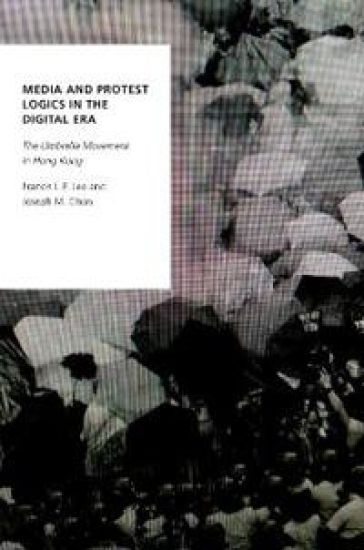
Digital and social media are increasingly integrated into the dynamics of protest movements around the world. They strengthen the mobilization power of movements, extend movement networks, facilitate new modes of protest participation, and give rise to new protest formations. Meanwhile, conventional media remains an important arena where protesters and their targets contest for public support. This book examines the role of the media -- understood as an integrated system comprised of both conventional media institutions and digital media platforms -- in the formation and dynamics of the Umbrella Movement in Hong Kong. For 79 days in 2014, Hong Kong became the focus of international attention due to a public demonstration for genuine democracy that would become known as the Umbrella Movement. During this time, twenty percent of the local population would join the demonstration, the most large-scale and sustained act of civil disobedience in Hong Kong's history -- and the largest public protest campaign in China since the 1989 student movement in Beijing. On the surface, this movement was not unlike other large-scale protest movements that have occurred around the world in recent years. However, it was distinct in how bottom-up processes evolved into a centrally organized, programmatic movement with concrete policy demands. In this book, Francis L. F. Lee and Joseph M. Chan connect the case of the Umbrella Movement to recent theorizations of new social movement formations. Here, Lee and Chan analyze how traditional mass media institutions and digital media combined with on-the-ground networks in such a way as to propel citizen participation and the evolution of the movement as a whole. As such, they argue that the Umbrella Movement is important in the way it sheds light on the rise of digital-media-enabled social movements, the relationship between digital media platforms and legacy media institutions, the power and limitations of such occupation protests and new "action logics," and the continual significance of old protest logics of resource mobilization and collective action frames. Through a combination of protester surveys, population surveys, analyses of news contents and social media activities, this book reconstructs a rich and nuanced account of the Umbrella Movement, providing insight into numerous issues about the media-movement nexus in the digital era.
Media and Protest Logics in the Digital Era

Media and Protest Logics in the Digital Era

Francis L.F. Lee; Joseph M. Chan

Oxford University Press Inc
2018
nidottu
Digital and social media are increasingly integrated into the dynamics of protest movements around the world. They strengthen the mobilization power of movements, extend movement networks, facilitate new modes of protest participation, and give rise to new protest formations. Meanwhile, conventional media remains an important arena where protesters and their targets contest for public support. This book examines the role of the media -- understood as an integrated system comprised of both conventional media institutions and digital media platforms -- in the formation and dynamics of the Umbrella Movement in Hong Kong. For 79 days in 2014, Hong Kong became the focus of international attention due to a public demonstration for genuine democracy that would become known as the Umbrella Movement. During this time, twenty percent of the local population would join the demonstration, the most large-scale and sustained act of civil disobedience in Hong Kong's history -- and the largest public protest campaign in China since the 1989 student movement in Beijing. On the surface, this movement was not unlike other large-scale protest movements that have occurred around the world in recent years. However, it was distinct in how bottom-up processes evolved into a centrally organized, programmatic movement with concrete policy demands. In this book, Francis L. F. Lee and Joseph M. Chan connect the case of the Umbrella Movement to recent theorizations of new social movement formations. Here, Lee and Chan analyze how traditional mass media institutions and digital media combined with on-the-ground networks in such a way as to propel citizen participation and the evolution of the movement as a whole. As such, they argue that the Umbrella Movement is important in the way it sheds light on the rise of digital-media-enabled social movements, the relationship between digital media platforms and legacy media institutions, the power and limitations of such occupation protests and new "action logics," and the continual significance of old protest logics of resource mobilization and collective action frames. Through a combination of protester surveys, population surveys, analyses of news contents and social media activities, this book reconstructs a rich and nuanced account of the Umbrella Movement, providing insight into numerous issues about the media-movement nexus in the digital era.