
Kirjojen hintavertailu – 12 859 828 kirjaa ja 27 kauppaa

Kirjailija

Joseph P. Reidy

Kirjat ja teokset yhdessä paikassa: 2 kirjaa, julkaisuja vuosilta 1992–2020, suosituimpiin kuuluu Illusions of Emancipation. Vertaile teosten hintoja ja tarkista saatavuus suomalaisista kirjakaupoista.

2 kirjaa

Kirjojen julkaisuvuodet: 1992–2020.

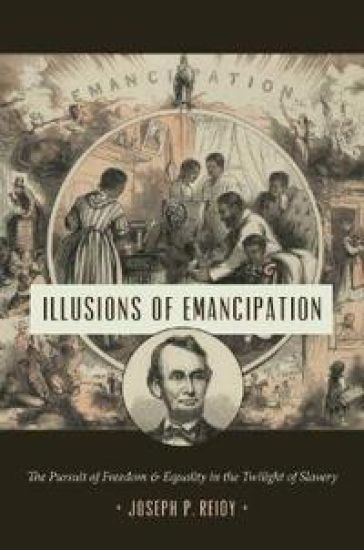
Illusions of Emancipation

Illusions of Emancipation

Joseph P. Reidy

The University of North Carolina Press
2020
nidottu
As students of the Civil War have long known, emancipation was not merely a product of Lincoln's proclamation or of Confederate defeat in April 1865. It was a process that required more than legal or military action. With enslaved people fully engaged as actors, emancipation necessitated a fundamental reordering of a way of life whose implications stretched well beyond the former slave states. Slavery did not die quietly or quickly, nor did freedom fulfill every dream of the enslaved or their allies. The process unfolded unevenly. In this sweeping reappraisal of slavery's end during the Civil War era, Joseph P. Reidy employs the lenses of time, space, and individuals' sense of personal and social belonging to understand how participants and witnesses coped with drastic change, its erratic pace, and its unforeseeable consequences. Emancipation disrupted everyday habits, causing sensations of disorientation that sometimes intensified the experience of reality and sometimes muddled it. While these illusions of emancipation often mixed disappointment with hope, through periods of even intense frustration they sustained the promise that the struggle for freedom would result in victory.
Slaves No More

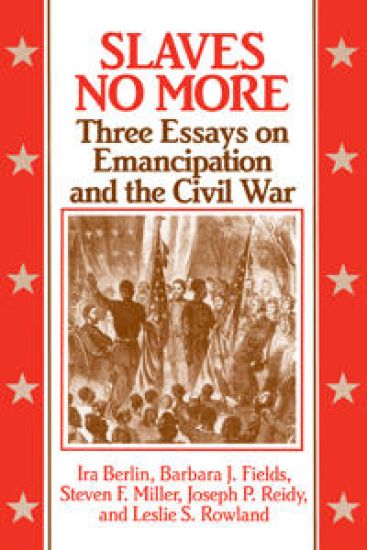
Slaves No More

Ira Berlin; Barbara J. Fields; Steven F. Miller; Joseph P. Reidy; Leslie S. Rowland

Cambridge University Press
1992
pokkari
The three essays in this volume present an introduction and history of the emancipation of the slaves during the Civil War. The first essay traces the destruction of slavery by discussing the shift from a war for the Union to a war against slavery. The slaves are shown to have shaped the destiny of the nation through their determination to place their liberty on the wartime agenda. The second essay examines the evolution of freedom in occupied areas of the lower and upper South. The struggle of those freed to obtain economic independence in difficult wartime circumstances indicates conflicting conceptions of freedom among former slaves and slaveholders, Northern soldiers and civilians. The third essay demonstrates how the enlistment and military service of nearly 200,000 slaves hastened the transformation of the war into a struggle for universal liberty, and how this experience shaped the lives of these former slaves long after the war had ended.