

Kirjailija
Joseph R. Cerami
Kirjat ja teokset yhdessä paikassa: 15 kirjaa, julkaisuja vuosilta 2012–2025, suosituimpiin kuuluu Wresting the Initiative. Vertaile teosten hintoja ja tarkista saatavuus suomalaisista kirjakaupoista.
Nimi esiintyy myös muodoissa: Joseph R Cerami
15 kirjaa
Kirjojen julkaisuvuodet: 2012–2025.

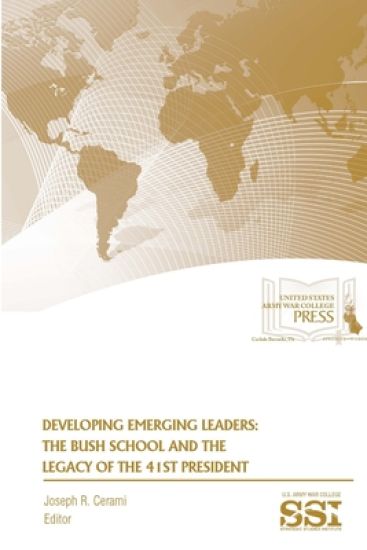
Developing Emerging Leaders: the Bush School and the Legacy of the 41st President
Joseph R. Cerami; Strategic Studies Institute; U.S. Army War College
Lulu.com
2015
nidottu
Leadership remains at the core of the military profession. Gaining a reputation as an effective and ethical leader is the foundation for a successful career as a commissioned and noncommissioned officer. Naturally, a great deal of attention in pre-commissioning and professional military schools, as well as experiential learning in a variety of demanding positions, is necessary for advancement. Understanding the ideas and best practices of expert leaders as individuals and as a member of groups, teams, organizations, and institutions remain an important area of research and study for individual and organizational learning. Learning leaders and learning organizations are the focus of this monograph. Specific attention is placed on identifying the key ideas and actions, or best practices, in comparing the leadership studies and research literature that bridge the guiding civilian and military approaches, and compares ideas and practices across the public, private, and nonprofit sectors.
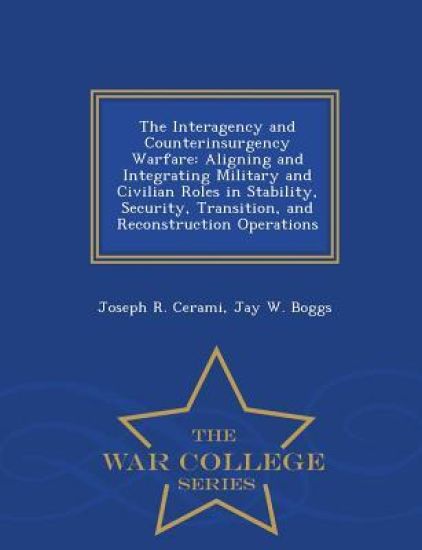
The Interagency and Counterinsurgency Warfare
Joseph R Cerami; Jay W Boggs
War College Series
2015
pokkari
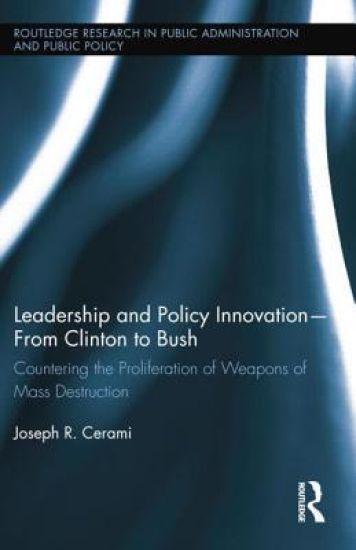
Throughout the Cold War there were longstanding efforts to control the spread of Weapons of Mass Destruction (WMD) through extensive arms control, deterrence, and defense programs. Since then counterproliferation efforts by the U. S. and international community have accelerated. Given the attention to counterproliferation in the last decade, how effective was the leadership provided by President Clinton and his Secretaries of Defense, Aspin, Perry and Cohen, in providing innovative and effective policies for countering the proliferation of WMD? Comparing the cases of U. S.-North Korea Agreed Framework, the Nunn-Lugar Cooperative Threat Reduction Program and U. S. and U. N. efforts in Iraq under Saddam Hussein, Joseph R. Cerami examines patterns of organizational leadership and policy innovation in the development and implementation of WMD policy initiatives. Rather than criticize the framework of American and international political institutions, this leadership perspective draws important insights on the capabilities of institutions to further U. S. and international goals and objectives in security policymaking. In doing so, the book argues that the U. S.’s role and the roles of its internal government agencies are most significant in international affairs. Smartly and appealingly positioned at the intersection of theory and practice, Cerami’s book crafts a new perspective in international relations and public administration offering great potential for understanding as well as designing policy innovations to counter the proliferation of WMD in the 21st century.
The Future of Transatlantic Security Relations - Colloquium Report
Richard A. Chilcoat; Joseph R. Cerami; Patrick B. Baetjer
Lulu.com
2014
nidottu
The George Bush School of Government and Public Service, the European Center of Excellence at Texas A&M University, the George Bush Presidential Library Foundation, the Department of the Army's Eisenhower National Security Series, and the U. S. Army War College's Strategic Studies Institute were proud to sponsor the Future of Transatlantic Security Relations Conference held at the Bush Presidential Conference Center in College Station, Texas, on March 8, 2006. A number of scholars from all over the United States and Europe came great distances to participate in the discussions and seminars. We appreciated their efforts, and I believe we have captured their remarks and ideas faithfully within this conference report. The Transatlantic Security Relationship has been an anchor of European and U. S. foreign policy since the closing days of World War II. As the conflict drew to a close, a new one rose from its ashes.
The Interagency and Counterinsurgency Warfare: Stability, Security, Transition, and Reconstruction Roles
Strategic Studies Institute; Joseph R. Cerami; Jay W. Boggs
Lulu.com
2014
nidottu
The interagency process was the focus of a Capstone project and Research Symposium at the Bush School of Government and Public Service at Texas A&M University during the 2006-07 academic year. The Bush School's Capstone seminar is a semester-long graduate course in the Master's Program in International Affairs that provides a research experience for students in the final semester of the 2-year program. As part of their leadership development, the students operate in teams to address an important policy issue (under the direction of a faculty member) and in support of a client. In this case, the client was the Office of the Deputy Assistant Secretary of Defense for Stability Operations. Our thanks to Colonel Richard Lacquement and Dr. Janine Davidson for sponsoring our Capstone interagency project.
Leadership and National Security Reform: the Next President's Agenda - Colloquium Report
Strategic Studies Institute; Joseph R. Cerami; Robin Dorff; Lisa M. Moorman
Lulu.com
2014
nidottu
On March 20, 2008, the Bush School of Government and Public Service and the European Union Center of Excellence of Texas A&M University teamed with the LBJ School of the University of Texas at Austin and with the U. S. Army War College Strategic Studies Institute for a program to examine the choices facing the American voter in foreign and defense policy in the November 2008 elections. This colloquium examined the conditions existing in the contemporary threat environment and how they may shape American security policy for the next presidential administration. Integral to this objective is articulating how U. S. threats, policies, and strategies have changed since 2001, and how the national security system has been slow in adjusting to changing operating requirements. The colloquium highlighted differing notions of national security and the difficulty of aligning and synchronizing competing visions and missions represented by various government agencies, nongovernmental organizations, military services...
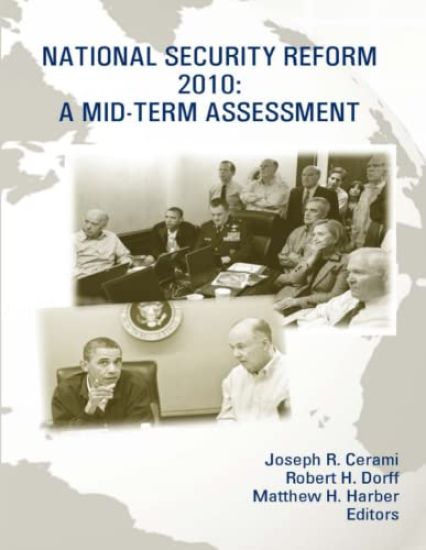
National Security Reform 2010: A Mid-Term Assessment [Enlarged Edition]
Joseph R. Cerami; Robert H. Dorff; Matthew H. Harber; Strategic Studies Institute; U.S. Army War College
Lulu.com
2013
nidottu
Throughout the Cold War there were longstanding efforts to control the spread of Weapons of Mass Destruction (WMD) through extensive arms control, deterrence, and defense programs. Since then counterproliferation efforts by the U. S. and international community have accelerated. Given the attention to counterproliferation in the last decade, how effective was the leadership provided by President Clinton and his Secretaries of Defense, Aspin, Perry and Cohen, in providing innovative and effective policies for countering the proliferation of WMD? Comparing the cases of U. S.-North Korea Agreed Framework, the Nunn-Lugar Cooperative Threat Reduction Program and U. S. and U. N. efforts in Iraq under Saddam Hussein, Joseph R. Cerami examines patterns of organizational leadership and policy innovation in the development and implementation of WMD policy initiatives. Rather than criticize the framework of American and international political institutions, this leadership perspective draws important insights on the capabilities of institutions to further U. S. and international goals and objectives in security policymaking. In doing so, the book argues that the U. S.’s role and the roles of its internal government agencies are most significant in international affairs. Smartly and appealingly positioned at the intersection of theory and practice, Cerami’s book crafts a new perspective in international relations and public administration offering great potential for understanding as well as designing policy innovations to counter the proliferation of WMD in the 21st century.
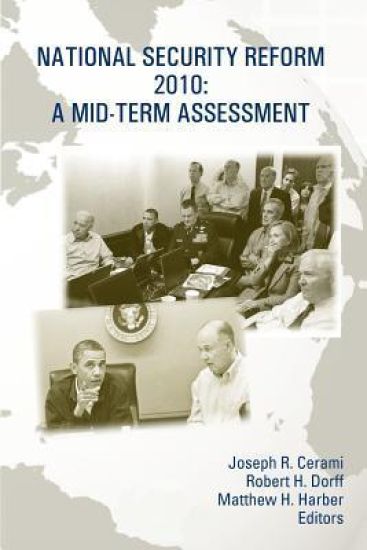
National Security Reform 2010: A Mid-Term Assessment
Robert H. Dorff; Matthew H. Harber; Joseph R. Cerami
Createspace Independent Publishing Platform
2012
nidottu