Kirjojen hintavertailu – 12 903 725 kirjaa ja 27 kauppaa
Kirjailija
Joseph Rikhof
Kirjat ja teokset yhdessä paikassa: 4 kirjaa, julkaisuja vuosilta 2018–2023, suosituimpiin kuuluu Transnational and Cross-Border Criminal Law. Vertaile teosten hintoja ja tarkista saatavuus suomalaisista kirjakaupoista.
Robert J. Currie; Donald K. Piragoff; Gillian MacNeil; Joseph Rikhof; Michael Nesbitt; Christopher Ram; Leah West; Robin Parker; Peter M. German; James Cohen; Sanaa Ahmed; Michelle Gallant; Joanna Harrington; W. Michael G. Osborne; Kathryn Zedde; Stephen Schneider; Frédéric Mégret; Jeffrey G. Johnston; Amélie Aubut; Adelina Iftene; Olivia Genge; Fraser M. Kelly; Elizabeth Bennett
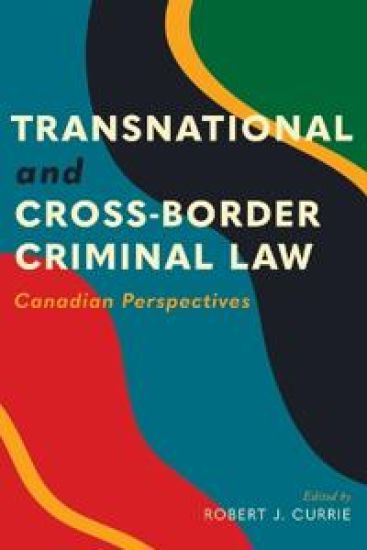
The time of globalization has seen an onslaught of criminal activity that crosses borders. The legal suppression and prosecution of transnational and cross-border crime raise unique and complex legal issues, and law enforcement, lawyers, and judges have struggled to keep up. Transnational & Cross-Border Criminal Law: Canadian Perspectives fills a pronounced gap in Canadian legal literature. Written by subject matter experts, each chapter exposes and analyzes a current and pressing issue in this realm and is designed both to serve as a resource for researchers and to provide cutting-edge insight on front-burner issues. The group of authors -- made up of prosecutors, defence lawyers, government counsel, academics, and civil society advocates -- take on a variety of subjects, including terrorism, financial crime and corruption, jurisdiction, extradition, money laundering, trafficking, maritime enforcement, cross-border evidence-gathering, and the international transfer of prisoners. This unique collection will help to advance general understanding of one of the most pressing public policy issues of our time.
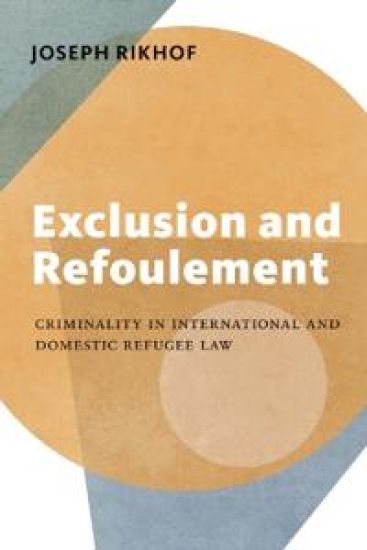
After the Second World War, human rights law became entrenched in legal discourse as demonstrated by a proliferation of human rights treaties. While the right of asylum was recognized as a fundamental right in the Universal Declaration of Human Rights, it has never been an absolute right but instead has been restricted in various ways -- most significantly, that asylum should not be conferred on criminals and that refugees with a criminal background could be removed from the country of refuge. Exclusion and Refoulement: Criminality in International and Domestic Refugee Law examines the legislative instruments at the international and domestic levels as well as the extensive jurisprudence emanating from these instruments, which has attempted to balance the right of asylum for an individual versus the state of refuge to restrict this right in situations of criminality.
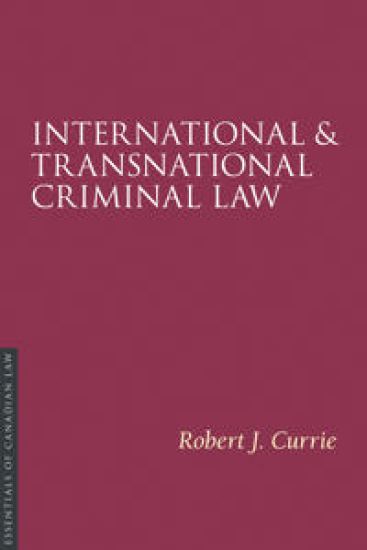
International criminal law has focused on the prosecution of truly international crimes -- genocide, crimes against humanity, war crimes, and aggression. The emerging field of transnational criminal law reflects the fact that our post-Cold War, post-9/11 world has seenbthe growth of transnational crimes of international concern, such as terrorism, money laundering, organized crime, and human and narcotics trafficking, as well as transnational crimes of domestic concern, which are simply ordinary domestic crimes that involve the jurisdiction of more than one state. This book surveys these two related but increasingly distinct fields with a focus on Canada, bringing together in one accessible text topics that are of increasing importance in a world of globalized crime, from a substantive perspective and through examination of the expanding range of international tribunals dealing with such crimes. This third edition updates caselaw and international practice from Canada, including substantial revisions relating to the prosecution of cross-border crimes. It also combines examinations of international courts and tribunals, transnational criminal law treaties, and recent literature to provide a unique perspective on these two international law disciplines that, while best viewed as separate, retain a common heritage and some overlapping concepts and applications.
This study is the second in a four-part series entitled "Rethinking the Essentials of International Criminal Law and Transitional Justice." The first volume - The Concept of Universal Crimes in International Law - explored the parameters and theories related to crimes under international law. This volume examines the notion of punishable participation in such crimes. It presents a general theory of personal criminal liability and provides a comprehensive overview of all forms of criminal participation in international law. The authors examine numerous primary materials in international and transnational criminal law, both historical and current, relating to both international and domestic case law. They also analyse academic literature that attempts to explain and bring consistency to the jurisprudence, as well as other sources such as reports of the International Law Commission. This rich tapestry is then used to test and further develop an overarching conceptual theory and matrix that provides a better understanding of the boundaries of personal criminal liability lex lata and lex ferenda, and of the relationship between the various forms of punishable participation in universal crimes. Like the first volume, this book makes an important contribution to a more coherent and practical understanding of international criminal law. The authors are recognised experts in the field, with many years of experience from academic, government and judicial service.