Kirjojen hintavertailu – 12 903 737 kirjaa ja 27 kauppaa

Kirjailija

Joseph Rykwert

Kirjat ja teokset yhdessä paikassa: 12 kirjaa, julkaisuja vuosilta 1981–2025, suosituimpiin kuuluu Structure and Meaning in Human Settlement. Vertaile teosten hintoja ja tarkista saatavuus suomalaisista kirjakaupoista.

12 kirjaa

Kirjojen julkaisuvuodet: 1981–2025.

Remembering Places: A Memoir

Remembering Places: A Memoir

Joseph Rykwert

TAYLOR FRANCIS LTD
2025
nidottu
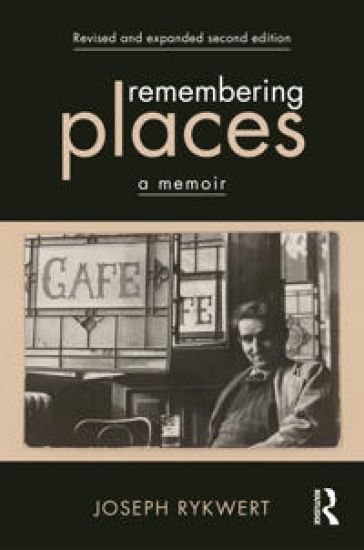
Born in Warsaw in 1926, Joseph Rykwert was one of the best-known critics and historians of architecture. One of very few writers to be awarded the RIBA’s highest honour, the Royal Gold Medal, in 2014, and author of countless books and essays, his influence over the past 60 years cannot be underestimated. In this new edition of his memoir, he posthumously expands upon the first edition by 20,000 words, delving deeper into how his life’s experiences shaped his working life. He addresses the dualities between which he had to navigate: Jewish/Polish, Polish/British and later Practice/Scholarship. He spent most of his working life between the US and UK, and worked as a designer, teacher and a writer; as such, his groundbreaking ideas and work have had a major impact on the thinking of architects and designers since the 1960s, and continue to do so to this day.
Remembering Places: A Memoir

Remembering Places: A Memoir

Joseph Rykwert

TAYLOR FRANCIS LTD
2025
sidottu
Born in Warsaw in 1926, Joseph Rykwert was one of the best-known critics and historians of architecture. One of very few writers to be awarded the RIBA’s highest honour, the Royal Gold Medal, in 2014, and author of countless books and essays, his influence over the past 60 years cannot be underestimated. In this new edition of his memoir, he posthumously expands upon the first edition by 20,000 words, delving deeper into how his life’s experiences shaped his working life. He addresses the dualities between which he had to navigate: Jewish/Polish, Polish/British and later Practice/Scholarship. He spent most of his working life between the US and UK, and worked as a designer, teacher and a writer; as such, his groundbreaking ideas and work have had a major impact on the thinking of architects and designers since the 1960s, and continue to do so to this day.
Projecting Urbanity: Architecture for and against the City

Projecting Urbanity: Architecture for and against the City

David Leatherbarrow; Joseph Rykwert

Artifice Press
2023
sidottu
Existing histories of modern architecture typically give their highest praise to private houses and their most severe condemnation to architect-authored urban plans, often neglecting the built works that are no smaller than a single building and possibly as large as an urban block, the middle or institutional scale, where culturally significant urban transformation actually takes place. Urban architecture is a timely topic as today cities worldwide are suffering accelerated urbanisation, which is often dehumanising and destructive, especially to the unbuilt environment, airs, waters and soils. The middle or institutional scale is shown to activate and actualise latent potentials for cultural experience and environmental intelligence, allowing the city to surprise itself and delight in its discoveries. In Projecting Urbanity, David Leatherbarrow, via author-architect texts by his former doctorate students, lays out the basis for a revision of modern architecture’s contribution to cities and their culture. Presenting a series of texts featuring buildings or their parts of various scales – from the construction detail, to the room or garden, to ensembles within a neighborhood – the contributors introduce concepts for contemporary and future urban architecture, together with richly indicative examples from the past several decades. While architecture cannot “solve” today’s urban problems, it certainly has a role to play in their productive transformation, articulating opportunities for life and culture that are more humane, less wasteful, and more beautiful.
Remembering Places: A Memoir

Remembering Places: A Memoir

Joseph Rykwert

Routledge
2017
nidottu
Born in Warsaw in 1926, Joseph Rykwert is one of the best-known critics and historians of architecture. One of very few writers to be awarded the RIBA’s highest honour, the Royal Gold Medal, in 2014, and author of countless books and essays, his influence over the past 60 years cannot be underestimated. In this memoir he tells for the first time of how his life’s experiences shaped his working life. He addresses the dualities between which he had to navigate: Jewish/Polish, Polish/British and later, Practice/Scholarship. He spent most of his working life between the US and UK and worked both as a designer and a writer; as such his ground-breaking ideas and work have had a major impact on the thinking of architects and designers since the 1960s and continue to do so to this day.
Remembering Places: A Memoir

Remembering Places: A Memoir

Joseph Rykwert

Routledge
2017
sidottu
Born in Warsaw in 1926, Joseph Rykwert is one of the best-known critics and historians of architecture. One of very few writers to be awarded the RIBA’s highest honour, the Royal Gold Medal, in 2014, and author of countless books and essays, his influence over the past 60 years cannot be underestimated. In this memoir he tells for the first time of how his life’s experiences shaped his working life. He addresses the dualities between which he had to navigate: Jewish/Polish, Polish/British and later, Practice/Scholarship. He spent most of his working life between the US and UK and worked both as a designer and a writer; as such his ground-breaking ideas and work have had a major impact on the thinking of architects and designers since the 1960s and continue to do so to this day.
Judicious Eye

Judicious Eye

Joseph Rykwert

Reaktion Books
2007
sidottu
Is architecture art? This vexed question has been posed since the 1700s, when breaking from earlier centuries in which there were no divisions between visual artist, architect, and engineer architects and laypeople alike began to see these vocations as distinct. Exploring how this separation of roles occurred, and how in the twentieth century the arts and architecture began to come together again, "The Judicious Eye" is the definitive history of the relationships between painting, sculpture and architecture as they have shifted over the past three centuries. Joseph Rykwert locates the first major shift during the Enlightenment, when key philosophers drew implied and explicit distinctions between the visual arts and architecture. As time progressed, architects came to see themselves as part of an established profession, while visual artists increasingly moved toward society's margins, widening the chasm between them. Detailing the eventual attempts to heal this breach, Rykwert concludes his book in the mid-twentieth century, when the artistic avant-garde turned to architects in its battle against a stagnant society. "The Judicious Eye", then, provides a necessary foundation for understanding architecture and visual art in the twenty-first century, as they continue to break new ground by growing closer to their intertwined roots.
Structure and Meaning in Human Settlement

Structure and Meaning in Human Settlement

Tony Atkin; Joseph Rykwert

University of Pennsylvania Museum of Archaeology Anthropology
2005
sidottu
This book explores the relationships between form, space, and cultural meaning in human habitation. Authors from a variety of disciplines and international sites address the possibilities of common ground in architectural theories about place and dwelling, anthropological research on settlement archaeology, and the study of cultural landscapes and geography. Illustrated with 220 full-color images, this book is a unique attempt to combine thinking about cultural meaning in space and settlements, both ancient and contemporary.
The Seduction of Place

The Seduction of Place

Joseph Rykwert

Oxford University Press
2004
nidottu
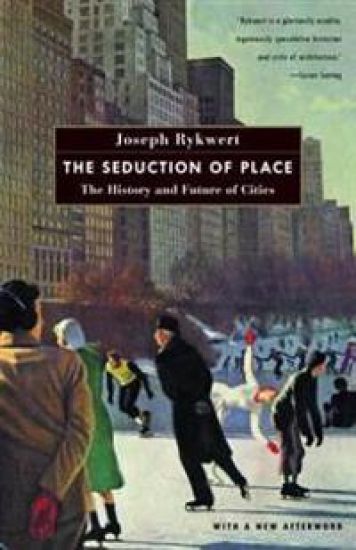
Joseph Rykwert explores the great cities of the modern world, examining their fabric and assessing how successfully they have met the needs of their inhabitants. He charts the complex story of the growth of the city, setting architectural development firmly within a political, economic, social, and cultural context.
The Seduction of Place: The History and Future of Cities
No other place on earth is as full both of promise and of dread as the city; it is at once alienating and exciting. These concentrations of people have not, however, come about as the result of vast immutable, impersonal forces, but because of human choices. The worsening or betterment of urban life will also be the result of choices. Our choices. That cities display and represent the personal desires of their inhabitants is central to Joseph Rykwert's argument in The Seduction of Place. Insisting that they are the physical constructs of communities, he travels through history to trace their roots in ancient times and outlines current attempts and future possibilities to improve the metropolis. Rykwert includes a broad range of urban landscapes: 18th-and 19th-century Paris and London, the current sprawl of Mexico City and Cairo, planned cities like Brasilia, and, finally, New York, the world capital. Always opinionated and often controversial, Rykwert assesses how and why urban projects from the past succeeded or failed and what lessons can be drawn from them for the future. Ultimately, The Seduction of Place is a deeply felt and powerfully reasoned call for a commitment by every citizen to the creation of a more humane place to live.
Salvador Dali's Art and Writing, 1927-1942: The Metamorphosis of Narcissus

Salvador Dali's Art and Writing, 1927-1942: The Metamorphosis of Narcissus

Haim Finkelstein; Francesco Pellizzi; Joseph Rykwert

Cambridge University Press
1996
sidottu
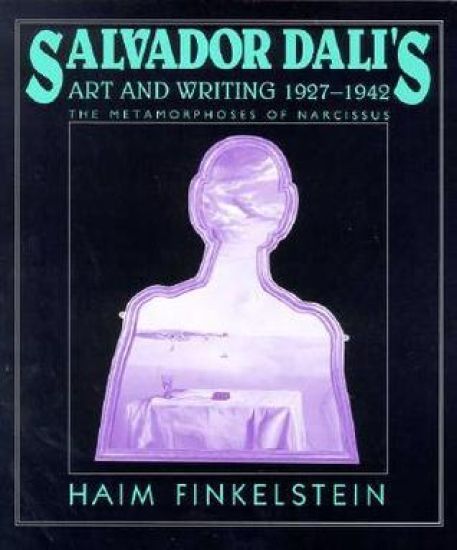
This book examines the evolution of Dalí’s art during the 1920s and 1930s when he was associated first with the Catalan avant-garde and then with the Surrealist group in Paris. During this period, Dalí’s painting style changed radically, a phenomenon which has never been fully accounted for in the extensive literature on this subject. Haim Finkelstein demonstrates that Dalí’s writing, in which he explicated theoretical systems such as Paranoia-Criticism and other ideas adopted from Freud, were important for the active and critical role that they played in his development as an artist and often controversial figure. His study is the first to examine these writings in detail as the foundation for the evolution of Dalí’s unique artistic vision.
On Adam's House in Paradise

On Adam's House in Paradise

Joseph Rykwert

MIT Press
1981
pokkari
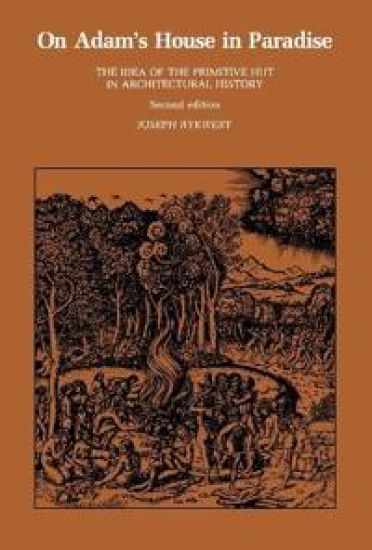
On Adam's House in Paradise "takes off backward through history hunting for Adam's house, the original image. En route, with wry wit and charm, Rykwert singes every generation of architectural theoreticians back to Vitruvius, but he manages to illuminate their efforts and their immolations."-Charles Moore, Progressive ArchitectureThis new edition of On Adam's House in Paradise (first published by the Museum of Modern Art) incorporates all the original illustrations and several new ones, as well as additional text by the author.