Kirjojen hintavertailu – 12 903 725 kirjaa ja 27 kauppaa

Kirjailija

Joseph Stalin

Kirjat ja teokset yhdessä paikassa: 47 kirjaa, julkaisuja vuosilta 2001–2026, suosituimpiin kuuluu The Selected Works of Joseph Stalin. Vertaile teosten hintoja ja tarkista saatavuus suomalaisista kirjakaupoista.

47 kirjaa

Kirjojen julkaisuvuodet: 2001–2026.

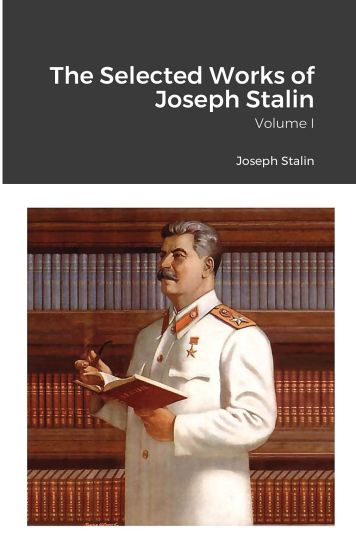
The Selected Works of Joseph Stalin

The Selected Works of Joseph Stalin

Joseph Stalin

Lulu.com
2021
pokkari

Halvin toimitettuna 49,00 €

Collected here are the major works of Joseph Stalin in English along with several less prominent works that either help put things in context or have other historical or political value. We trust that the reader will be satisfied with this collection.
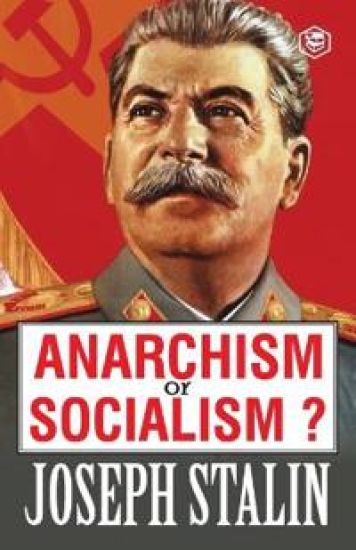
Anarchism or Socialism?

Anarchism or Socialism?

Joseph Stalin

SANAGE PUBLISHING HOUSE LLP
2022
nidottu
Anarchism or Socialism? is a 1906/1907 work by Soviet leader Joseph Stalin. The work sought to analyze anarchism using Marxist methods. The composition of this work was developed in the years following the failed 1905 Russian Revolution; Stalin at this period of time adopted a strong Marxist ideology. The articles that became Anarchism or Socialism began as a series of newspaper articles written in Georgian. The first four articles were published in their original form in the daily Bolshevik newspaper ახალი ცხოვრება ("New Life") published in Tbilisi, under the direction of Stalin, in June-July 1906. The series continued to be published in ჩვენი ცხოვრება ("Our Life") from February 1907 to its closure on 6 March 1907, and then in დრო ("Time") in April 1907.
The Results of the First Five-Year Plan
History has shown that the international significance of the five-year plan is immeasurable. History has shown that the five-year plan is not the private affair of the Soviet Union, but the concern of the whole international proletariat. Long before the five-year plan appeared on the scene, in the period when we were finishing our struggle against the interventionists and were going over to the work of economic construction-even in that period Lenin said that our economic construction was of profound international significance; that every step forward taken by the Soviet Government along the path of economic construction was finding a powerful response among the most varied strata in capitalist countries and dividing people into two camps-the camp of the supporters of the proletarian revolution and the camp of its opponents.
Marxism and Problems of Linguistics
A group of younger comrades have asked me to give my opinion in the press on problems relating to linguistics, particularly in reference to Marxism in linguistics1. I am not a linguistic expert and, of course, cannot fully satisfy the request of the comrades. As to Marxism in linguistics, as in other social sciences, this is something directly in my field. I have therefore consented to answer a number of questions put by the comrades.
Correspondence between Stalin and the leaders of the USA and UK During the War
The present edition, contains the full texts of all the documents available in the Soviet Union of J. V. Stalin's correspondence with Franklin D. Roosevelt, Harry S. Truman, Winston S. Churchill and Clement R. Attlee during World War II. The correspondence between the heads of the Governments published here was conducted chiefly by exchanging code messages through the Soviet Embassies in Washington and London and through the Embassies of the U. S. A. and Great Britain in Moscow. The messages were decoded in the respective Embassies and their texts delivered to the addressee generally in the original language. Some of the messages were delivered by diplomatic post or by authorised representatives of the Powers concerned. Brief reference notes and photostats are appended.
Concerning Questions of Leninism

Concerning Questions of Leninism

Joseph Stalin

Lulu.com
2021
pokkari
Was Leninism elaborated only on Russian soil, for Russia alone, and not on the soil of imperialism, and for the imperialist countries generally? Do such works of Lenin as "Imperialism, the Highest Stage of Capitalism," "The State and Revolution," "The Proletarian Revolution and the Renegade Kautsky," "Left-Wing Communism, an Infantile Disorder," etc., apply only to Russia, and not to all imperialist countries in general? Is not Leninism the generalisation of the experience of the revolutionary movement of all countries? Are not the fundamentals of the theory and tactics of Leninism suitable, are they not obligatory, for the proletarian parties of all countries? Was not Lenin right when he said that "Bolshevism can serve as a model of tactics for all"?
Marxism and the National Question
In this highly referenced volume, Stalin defined the nation and laid out the Marxist-Leninist position on national liberation. The results resounded throughout the colonial world. "What is a nation? A nation is primarily a community, a definite community of people. This community is not racial, nor is it tribal. The modern Italian nation was formed from Romans, Teutons, Etruscans, Greeks, Arabs, and so forth. The French nation was formed from Gauls, Romans, Britons, Teutons, and so on. The same must be said of the British, the Germans and others, who were formed into nations from people of diverse races and tribes. Thus, a nation is not a racial or tribal, but a historically constituted community of people."

Correspondence between Stalin and the leaders of the USA and UK During the War
The present edition, contains the full texts of all the documents available in the Soviet Union of J. V. Stalin's correspondence with Franklin D. Roosevelt, Harry S. Truman, Winston S. Churchill and Clement R. Attlee during World War II. The correspondence between the heads of the Governments published here was conducted chiefly by exchanging code messages through the Soviet Embassies in Washington and London and through the Embassies of the U. S. A. and Great Britain in Moscow. The messages were decoded in the respective Embassies and their texts delivered to the addressee generally in the original language. Some of the messages were delivered by diplomatic post or by authorised representatives of the Powers concerned. Brief reference notes and photostats are appended.
Mastering Bolshevism

Mastering Bolshevism

Joseph Stalin

Lulu.com
2021
pokkari
Stalin's fight against wreckers and Trotskyists comes to the fore in "Mastering Bolshevism". First published in 1937, this book documents struggles in the USSR and its Communist Party in the run up to World War II. Also includes Stalin's speech to voters.
Anarchism or Socialism & Trotskyism or Leninism

Anarchism or Socialism & Trotskyism or Leninism

Joseph Stalin

FOREIGN LANGUAGES PRESS
2020
pokkari
"The point is that Marxism and anarchism are built up on entirely different principles, in spite of the fact that both come into the arena of the struggle under the flag of socialism. The cornerstone of anarchism is the individual, whose emancipation, according to its tenets, is the principal condition for the emancipation of the masses, the collective body. According to the tenets of anarchism, the emancipation of the masses is impossible until the individual is emancipated. Accordingly, its slogan is: 'Everything for the individual.' The cornerstone of Marxism, however, is the masses, whose emancipation, according to its tenets, is the principal condition for the emancipation of the individual. That is to say, according to the tenets of Marxism, the emancipation of the individual is impossible until the masses are emancipated. Accordingly, its slogan is: 'Everything for the masses.'"-Joseph Stalin
Leninism

Leninism

Joseph Stalin

Routledge
2019
nidottu
Translated from the Russian in 1933, this and the first volume of the same title give an invaluable picture of what the Russian leader Joseph Stalin understood by Leninism. Building on the pamphlet Foundations of Leninism, (which forms the first part of this book) the work presents a unified and complete work on the problems of Leninism and socialist construction as they were manifested in the 1920s, as well as discussion of the October Revolution and the relationship of the USSR and the West in the years following the First World War.
Leninism

Leninism

Joseph Stalin

Routledge
2019
nidottu
Translated from the Russian in 1928, this and the second volume of the same title give an invaluable picture of what the Russian leader Joseph Stalin understood by Leninism. Building on the pamphlet Foundations of Leninism, (which forms the first part of this book) the work presents a unified and complete work on the problems of Leninism and socialist construction as they were manifested in the 1920s, as well as discussion of the October Revolution and the relationship of the USSR and the West in the years following the First World War.
Leninism

Leninism

Joseph Stalin

Routledge
2017
sidottu
Translated from the Russian in 1928, this and the second volume of the same title give an invaluable picture of what the Russian leader Joseph Stalin understood by Leninism. Building on the pamphlet Foundations of Leninism, (which forms the first part of this book) the work presents a unified and complete work on the problems of Leninism and socialist construction as they were manifested in the 1920s, as well as discussion of the October Revolution and the relationship of the USSR and the West in the years following the First World War.
Leninism

Leninism

Joseph Stalin

Routledge
2017
sidottu
Translated from the Russian in 1933, this and the first volume of the same title give an invaluable picture of what the Russian leader Joseph Stalin understood by Leninism. Building on the pamphlet Foundations of Leninism, (which forms the first part of this book) the work presents a unified and complete work on the problems of Leninism and socialist construction as they were manifested in the 1920s, as well as discussion of the October Revolution and the relationship of the USSR and the West in the years following the First World War.