Kirjojen hintavertailu – 12 903 735 kirjaa ja 27 kauppaa

Kirjailija

Joseph T. Kelley

Kirjat ja teokset yhdessä paikassa: 5 kirjaa, julkaisuja vuosilta 1984–2011, suosituimpiin kuuluu The World's Beaches. Vertaile teosten hintoja ja tarkista saatavuus suomalaisista kirjakaupoista.

5 kirjaa

Kirjojen julkaisuvuodet: 1984–2011.

The World's Beaches

The World's Beaches

Orrin H. Pilkey; William J. Neal; James Andrew Graham Cooper; Joseph T. Kelley

University of California Press
2011
pokkari
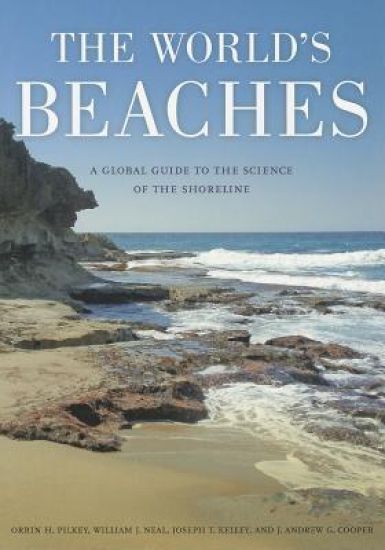
Take this book to the beach; it will open up a whole new world. Illustrated throughout with color photographs, maps, and graphics, it explores one of the planet's most dynamic environments - from tourist beaches to Arctic beaches strewn with ice chunks to steaming hot tropical shores. "The World's Beaches" tells how beaches work, explains why they vary so much, and shows how dramatic changes can occur on them in a matter of hours. It discusses tides, waves, and wind; the patterns of dunes, washover fans, and wrack lines; and the shape of berms, bars, shell lags, cusps, ripples, and blisters. What is the world's longest beach? Why do some beaches sing when you walk on them? Why do some have dark rings on their surface and tiny holes scattered far and wide? This fascinating, comprehensive guide also considers the future of beaches, and explains how extensively people have affected them - from coastal engineering to pollution, oil spills, and rising sea levels.
Atlantic Coast Beaches: A Guide to Ripples, Dunes, and Other Natural Features of the Seashore

Atlantic Coast Beaches: A Guide to Ripples, Dunes, and Other Natural Features of the Seashore

William J. Neal; Orrin H. Pilkey; Joseph T. Kelley

Mountain Press Publishing Company
2007
nidottu
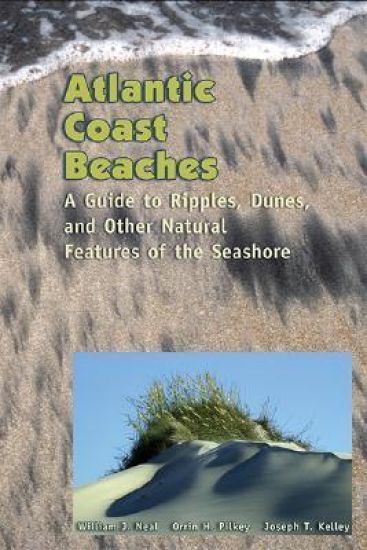
At first glance, the beach may appear to be an endless, flat, monotone landscape meant only for swimming, snoozing, or working on your tan. Upon closer inspection, though, the beach reveals that it has myriad treasures for the curious to locate, such as ephemeral beach ripples decorating the sand, traces of miniature organisms inscribed on dunes, and armored mudballs. Atlantic Coast Beaches, from Maine to Florida, are full of amazing features formed by the interactions between tides, currents, bedrock, weather, beach critters, and much more. Written for a general audience, Atlantic Coast Beaches: A Guide to Ripples, Dunes, and Other Natural Features of the Seashore covers everything, from microscopic nematodes to the potentially cataclysmic changes occurring along the coastline due to rising sea level. Its clear writing, illustrative photographs, and instructive diagrams answer some curious questions, such as why do some sands bark and sing, how do miniature sand volcanoes form, and how do barrier islands migrate?
Living with the Coast of Maine

Living with the Coast of Maine

Joseph T. Kelley; Alice R. Kelley

Duke University Press
1989
sidottu
Maine is known for its rockbound coast and pristine shoreline. Yet there is more to this shore than rocky cliffs. This book describes the origin of the more common "soft coast" of eroding bluffs, sand beaches, and salt marshes. A central theme is the formation of the present shoreline during the current ongoing rise in sea level and the ways in which coastal residents can best cope with the changes to come. Although it is not widely known, Maine is experiencing a rapid, uneven drowning of its shore at the same time that coastal development is at an all-time high. The authors explain how the shoreline is changing and provide a series of highly detailed maps that show the relative safety of particular locations on the coast. Specific guidelines for recognizing various safe and unsafe coastal settings are presented, as are recommendations for sound construction techniques in hazardous coastal areas. Photographs and drawings illustrate the danger of living too near the shoreline, and an up-to-date review of Maine's regulations governing coastal construction is simply and readably described. A bibliography of important coastal literature is also included, as well as a guide to federal, state, and local sources of information.
Living with the Louisiana Shore

Living with the Louisiana Shore

Joseph T. Kelley; Alice R. Kelley; Orrin H. Pilkey

Duke University Press
1984
sidottu
Nowhere in America is there a more beautiful, more varied, or more endangered shoreline than in Louisiana. Because of its setting at the mouth of the Mississippi River, Louisiana differs from other coastal states. In addition to long stretches of sandy beach there are 12,000 square miles of marsh along the coast. Although the state's shoreline has not yet experienced the urban sprawl of a New Jersey or Florida, two-thirds of all Louisianans now live within a two-hour drive of salt marsh. The oil industry is expanding and competing for space and resources. But the most striking feature of Louisiana's coastline is rapidly accelerating change, which means (1) some coastal parishes may literally disappear by the year 2000; (2) the loss of marshland will damage the prolific seafood industry; (3) a retreating coastline could cost the state hundreds of millions of dollars in tax revenues from offshore oil facilities; (4) present and potential shoreline residents will face many new problems and possibilities.
Living with the Louisiana Shore

Living with the Louisiana Shore

Joseph T. Kelley; Alice R. Kelley; Orrin H. Pilkey

Duke University Press
1984
pokkari
Nowhere in America is there a more beautiful, more varied, or more endangered shoreline than in Louisiana. Because of its setting at the mouth of the Mississippi River, Louisiana differs from other coastal states. In addition to long stretches of sandy beach there are 12,000 square miles of marsh along the coast. Although the state's shoreline has not yet experienced the urban sprawl of a New Jersey or Florida, two-thirds of all Louisianans now live within a two-hour drive of salt marsh. The oil industry is expanding and competing for space and resources. But the most striking feature of Louisiana's coastline is rapidly accelerating change, which means (1) some coastal parishes may literally disappear by the year 2000; (2) the loss of marshland will damage the prolific seafood industry; (3) a retreating coastline could cost the state hundreds of millions of dollars in tax revenues from offshore oil facilities; (4) present and potential shoreline residents will face many new problems and possibilities.