Kirjojen hintavertailu – 12 859 827 kirjaa ja 27 kauppaa

Kirjailija

Joseph V. Chiaretti

Kirjat ja teokset yhdessä paikassa: 4 kirjaa, julkaisuja vuosilta 2014–2021, suosituimpiin kuuluu United Arab Emirates Keys to Soil Taxonomy. Vertaile teosten hintoja ja tarkista saatavuus suomalaisista kirjakaupoista.

4 kirjaa

Kirjojen julkaisuvuodet: 2014–2021.

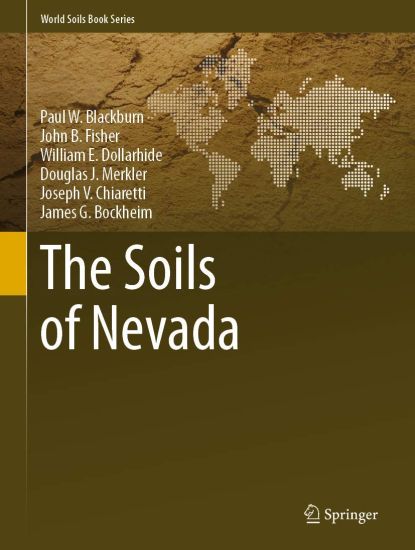
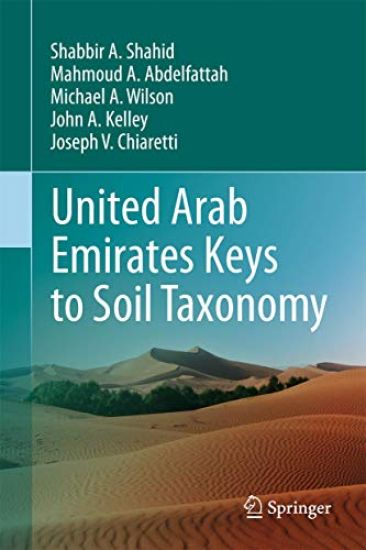
United Arab Emirates Keys to Soil Taxonomy

United Arab Emirates Keys to Soil Taxonomy

Shabbir A. Shahid; Mahmoud A. Abdelfattah; Michael A. Wilson; John A. Kelley; Joseph V. Chiaretti

Springer
2014
sidottu
Central to human life and civilization, soils are an integral part of the physical and cultural environment. Although we may take them for granted, the rise and fall of civilizations is closely linked with the use and abuse of soil and water resources. It is therefore important to evaluate soils for their quality and link them to appropriate uses and services. This book provides information on soil classification and shows how to key out taxa relevant to UAE soils. The latest soil inventory of United Arab Emirates reveals that a rather uniform looking desert landscape has, in fact, a diversity of subsurface features. These features confirm the soil diversity in terms of classification, chemistry, physics, mineralogy, fertility, suitability for different uses and vulnerability to land degradation. United Arab Emirates Keys to Soil Taxonomy presents information for keying out the soils of the United Arab Emirates into separate classes and provides a guide to associated laboratory methods. The classification used predominantly is extracted from the 11th edition of the USDA-NRCS Keys to Soil Taxonomy, and sections relevant to the soils found in the UAE are included here. Primarily, this key is designed to fit the soil system of the United Arab Emirates. Information not found in the USDA key has been added, including criteria and classes for: 1) differentiating anhydritic soils from gypsic soils, 2) identifying “lithic” subgroups for Aquisalids and Haplosalids, 3) identifying “salidic” subgroups within the great groups of Gypsids, Calcids, Psamments, and Orthents, and 4) incorporation of phases for soil taxa. A subsurface diagnostic horizon and mineralogy class (anhydritic), not reported earlier in the world soil literature and, recently found in the UAE, has also been added to the book. The book also offers a mechanism for updating the current soil surveys, and will facilitate the correlation of soils from new surveys in the UAE. Additionally, it will helpthe international soil science community to converse about UAE soils, and facilitate comparison to soils of other regions. These linkages allow countries with similar mapping and classification procedures and similar soils to transfer agriculture technology without conducting long-term experiments under similar environmental conditions, especially for Gulf Cooperation Council countries (Bahrain, Kuwait, Qatar, Oman, and Saudi Arabia).
The Soils of Nevada

The Soils of Nevada

Paul W. Blackburn; John B. Fisher; William E. Dollarhide; Douglas J. Merkler; Joseph V. Chiaretti; James G. Bockheim

Springer Nature Switzerland AG
2021
nidottu
This book discusses Nevada in the context of the history of soil investigations; soil-forming factors; general soil regions; soil geomorphology; taxonomic structure of the soils; taxonomic soil regions; soil-forming processes; benchmark, endemic, rare, and endangered soils; and use of soils. With an average mean annual precipitation of 175 mm (7 in), Nevada is the driest state in the USA. More than three-quarters (89%) of the state has been mapped and the first soil survey was completed in 1909. Nevada is divided into 10 major land-resource areas and features two large deserts (the Great Basin Desert and the Mojave Desert), and over 100 north–south trending enclosed basins separated by mountain ranges (Basin and Range Province), several of which have peaks exceeding 3,400 m. Further, the soils of Nevada represent seven of the 12 globally recognized orders, 29 suborders, 69 great groups, and over 1,800 soil series, and some of the classic research on the origin of duripans andpetrocalcic horizons was conducted in the state. This book presents the first report on the soils of Nevada and provides the first soil map of Nevada utilizing soil.
The Soils of Nevada

The Soils of Nevada

Paul W. Blackburn; John B. Fisher; William E. Dollarhide; Douglas J. Merkler; Joseph V. Chiaretti; James G. Bockheim

Springer Nature Switzerland AG
2020
sidottu
This book discusses Nevada in the context of the history of soil investigations; soil-forming factors; general soil regions; soil geomorphology; taxonomic structure of the soils; taxonomic soil regions; soil-forming processes; benchmark, endemic, rare, and endangered soils; and use of soils. With an average mean annual precipitation of 175 mm (7 in), Nevada is the driest state in the USA. More than three-quarters (89%) of the state has been mapped and the first soil survey was completed in 1909. Nevada is divided into 10 major land-resource areas and features two large deserts (the Great Basin Desert and the Mojave Desert), and over 100 north–south trending enclosed basins separated by mountain ranges (Basin and Range Province), several of which have peaks exceeding 3,400 m. Further, the soils of Nevada represent seven of the 12 globally recognized orders, 29 suborders, 69 great groups, and over 1,800 soil series, and some of the classic research on the origin of duripans andpetrocalcic horizons was conducted in the state. This book presents the first report on the soils of Nevada and provides the first soil map of Nevada utilizing soil.
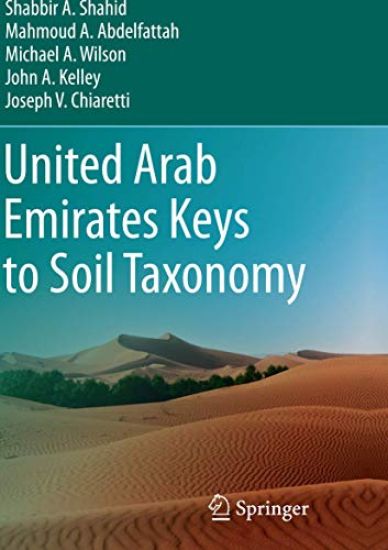
United Arab Emirates Keys to Soil Taxonomy

United Arab Emirates Keys to Soil Taxonomy

Shabbir A. Shahid; Mahmoud A. Abdelfattah; Michael A. Wilson; John A. Kelley; Joseph V. Chiaretti

Springer
2016
nidottu
Central to human life and civilization, soils are an integral part of the physical and cultural environment. Although we may take them for granted, the rise and fall of civilizations is closely linked with the use and abuse of soil and water resources. It is therefore important to evaluate soils for their quality and link them to appropriate uses and services. This book provides information on soil classification and shows how to key out taxa relevant to UAE soils. The latest soil inventory of United Arab Emirates reveals that a rather uniform looking desert landscape has, in fact, a diversity of subsurface features. These features confirm the soil diversity in terms of classification, chemistry, physics, mineralogy, fertility, suitability for different uses and vulnerability to land degradation. United Arab Emirates Keys to Soil Taxonomy presents information for keying out the soils of the United Arab Emirates into separate classes and provides a guide to associated laboratory methods. The classification used predominantly is extracted from the 11th edition of the USDA-NRCS Keys to Soil Taxonomy, and sections relevant to the soils found in the UAE are included here. Primarily, this key is designed to fit the soil system of the United Arab Emirates. Information not found in the USDA key has been added, including criteria and classes for: 1) differentiating anhydritic soils from gypsic soils, 2) identifying “lithic” subgroups for Aquisalids and Haplosalids, 3) identifying “salidic” subgroups within the great groups of Gypsids, Calcids, Psamments, and Orthents, and 4) incorporation of phases for soil taxa. A subsurface diagnostic horizon and mineralogy class (anhydritic), not reported earlier in the world soil literature and, recently found in the UAE, has also been added to the book. The book also offers a mechanism for updating the current soil surveys, and will facilitate the correlation of soils from new surveys in the UAE. Additionally, it will helpthe international soil science community to converse about UAE soils, and facilitate comparison to soils of other regions. These linkages allow countries with similar mapping and classification procedures and similar soils to transfer agriculture technology without conducting long-term experiments under similar environmental conditions, especially for Gulf Cooperation Council countries (Bahrain, Kuwait, Qatar, Oman, and Saudi Arabia).