Kirjojen hintavertailu – 12 903 725 kirjaa ja 27 kauppaa

Kirjailija

Joseph Valente

Kirjat ja teokset yhdessä paikassa: 6 kirjaa, julkaisuja vuosilta 1995–2020, suosituimpiin kuuluu James Joyce and the Problem of Justice. Vertaile teosten hintoja ja tarkista saatavuus suomalaisista kirjakaupoista.

6 kirjaa

Kirjojen julkaisuvuodet: 1995–2020.

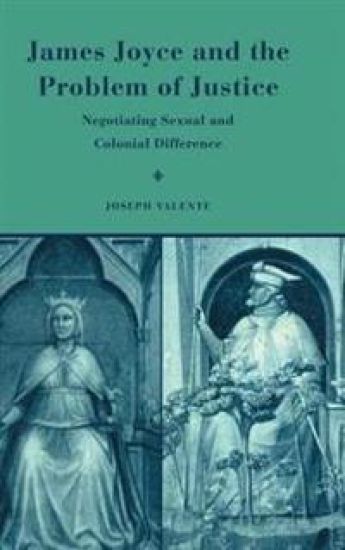
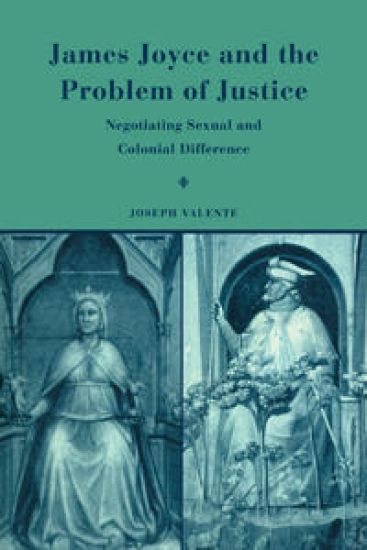
James Joyce and the Problem of Justice

James Joyce and the Problem of Justice

Joseph Valente

Cambridge University Press
1995
sidottu
This is the first full-length study of James Joyce to subject his work to ethical and political analysis. It addresses important issues in contemporary literary and cultural studies surrounding problems of justice, as well as discussions of gender, homosociality and the colonial condition. Valente uses an original theory and psychology of justice through which to explore both the well-known and the more obscure of Joyce's works. He traces the remarkable formal and stylistic evolution that defined Joyce's career, and his progressive attempt to negotiate the context of social difference in racial, colonial, class and sexual terms. By analysing Joyce's verbal strategies within both the psychobiographical and sociohistorical contexts, Valente unlocks the politics of Joyce's unconscious and reveals the legacy of Western political thought.
The Child Sex Scandal and Modern Irish Literature

The Child Sex Scandal and Modern Irish Literature

Joseph Valente; Margot Gayle Backus; Fintan O'Toole

Indiana University Press
2020
sidottu
Even though the Irish child sex abuse scandals in the Catholic Church have appeared steadily in the media, many children remain in peril. In The Child Sex Scandal and Modern Irish Literature, Joseph Valente and Margot Gayle Backus examine modern cultural responses to child sex abuse in Ireland. Using descriptions of these scandals found in newspapers, historiographical analysis, and 20th- and 21st-century literature, Valente and Backus expose a public sphere ardently committed to Irish children's souls and piously oblivious to their physical welfare. They offer historically contextualized and psychoanalytically informed readings of scandal narratives by nine notable modern Irish authors who actively, pointedly, and persistently question Ireland's responsibilities regarding its children. Through close, critical readings, a more nuanced and troubling account emerges of how Ireland's postcolonial heritage has served to enable such abuse. The Child Sex Scandal and Modern Irish Literature refines the debates on why so many Irish children were lost by offering insight into the lived experience of both the children and those who failed them.
The Child Sex Scandal and Modern Irish Literature

The Child Sex Scandal and Modern Irish Literature

Joseph Valente; Margot Gayle Backus; Fintan O'Toole

Indiana University Press
2020
pokkari
Even though the Irish child sex abuse scandals in the Catholic Church have appeared steadily in the media, many children remain in peril. In The Child Sex Scandal and Modern Irish Literature, Joseph Valente and Margot Gayle Backus examine modern cultural responses to child sex abuse in Ireland. Using descriptions of these scandals found in newspapers, historiographical analysis, and 20th- and 21st-century literature, Valente and Backus expose a public sphere ardently committed to Irish children's souls and piously oblivious to their physical welfare. They offer historically contextualized and psychoanalytically informed readings of scandal narratives by nine notable modern Irish authors who actively, pointedly, and persistently question Ireland's responsibilities regarding its children. Through close, critical readings, a more nuanced and troubling account emerges of how Ireland's postcolonial heritage has served to enable such abuse. The Child Sex Scandal and Modern Irish Literature refines the debates on why so many Irish children were lost by offering insight into the lived experience of both the children and those who failed them.
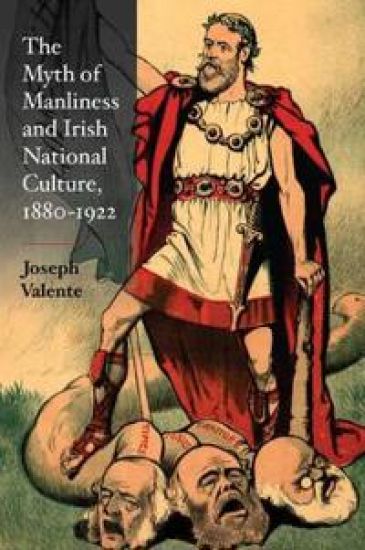
The Myth of Manliness in Irish National Culture, 1880-1922

The Myth of Manliness in Irish National Culture, 1880-1922

Joseph Valente

University of Illinois Press
2010
sidottu
This study aims to supply the first contextually precise account of the male gender anxieties and ambivalences haunting the culture of Irish nationalism in the period between the Act of Union and the founding of the Irish Free State. To this end, Joseph Valente focuses upon the Victorian ethos of manliness or manhood, the specific moral and political logic of which proved crucial to both the translation of British rule into British hegemony and the expression of Irish rebellion as Irish psychomachia. The influential operation of this ideological construct is traced through a wide variety of contexts, including the career of Ireland's dominant Parliamentary leader, Charles Stewart Parnell; the institutions of Irish Revivalism--cultural, educational, journalistic, and literary; the writings of both canonical authors (Yeats, Synge, Gregory, and Joyce) and subcanonical authors (James Stephens, Patrick Pearse, Lennox Robinson); and major political movements of the time, including suffragism, Sinn Fein, Na Fianna E Éireann, and the Volunteers. The construct of manliness remains very much alive today, underpinning the neo-imperialist marriage of ruthless aggression and the sanctities of duty, honor, and sacrifice. Mapping its earlier colonial and postcolonial formations can help us to understand its continuing geopolitical appeal and danger.
James Joyce and the Problem of Justice

James Joyce and the Problem of Justice

Joseph Valente

Cambridge University Press
2009
pokkari
This is the first full-length study of James Joyce to subject his work to ethical and political analysis. It addresses important issues in contemporary literary and cultural studies surrounding problems of justice, as well as discussions of gender, homosociality and the colonial condition. Valente uses an original theory and psychology of justice through which to explore both the well-known and the more obscure of Joyce's works. He traces the remarkable formal and stylistic evolution that defined Joyce's career, and his progressive attempt to negotiate the context of social difference in racial, colonial, class and sexual terms. By analysing Joyce's verbal strategies within both the psychobiographical and sociohistorical contexts, Valente unlocks the politics of Joyce's unconscious and reveals the legacy of Western political thought.
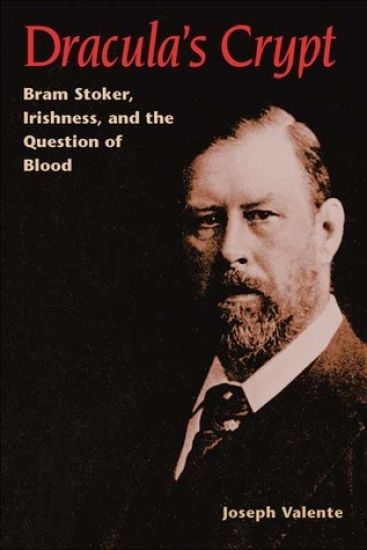
Dracula's Crypt

Dracula's Crypt

Joseph Valente

University of Illinois Press
2001
sidottu
Dracula's Crypt unearths the Irish roots of Bram Stoker's gothic masterpiece, offering a fresh interpretation of the author's relationship to his novel and to the politics of blood that consumes its characters. An ingenious reappraisal of a classic text, Dracula's Crypt presents Stoker's novel as a subtly ironic commentary on England's preoccupation with racial purity. Probing psychobiographical, political, and cultural elements of Stoker's background and milieu, Joseph Valente distinguishes Stoker's viewpoint from that of his virulently racist, hypermasculine vampire hunters, showing how the author's dual Anglo-Celtic heritage and uncertain status as an Irish parvenu among London's theatrical elite led him to espouse a progressive racial ideology at odds with the dominant Anglo-Saxon supremacism. In the light of Stoker's experience, the shabby-genteel Count Dracula can be seen as a doppelgänger, an ambiguous figure who is at once the blood-conscious landed aristocrat and the bloodthirsty foreign invader. Stoker also confronts gender ideals and their implications, exposing the "inner vampire" in men like Jonathan Harker who dominate and absorb the women who become their wives. Ultimately, Valente argues, the novel celebrates a feminine heroism, personified by Mina Harker, that upholds an ethos of social connectivity against the prevailing obsession with blood as a vehicle of identity. Revealing a profound and heretofore unrecognized ethical and political message, Dracula's Crypt maintains that the real threat delineated in Dracula is not racial degeneration but the destructive force of racialized anxiety itself. Stoker's novel emerges as a powerful critique of the very anxieties it has previously been taken to express: anxieties concerning the decline of the British empire, the deterioration of Anglo-Saxon culture, and the contamination of the Anglo-Saxon race.