Kirjojen hintavertailu – 12 903 725 kirjaa ja 27 kauppaa

Kirjailija

Joseph Walsh

Kirjat ja teokset yhdessä paikassa: 11 kirjaa, julkaisuja vuosilta 1995–2023, suosituimpiin kuuluu Social Work and Psychotropic Medication: Toward Effective Collaboration with Mental Health Clients, Families, and Providers. Vertaile teosten hintoja ja tarkista saatavuus suomalaisista kirjakaupoista.

11 kirjaa

Kirjojen julkaisuvuodet: 1995–2023.

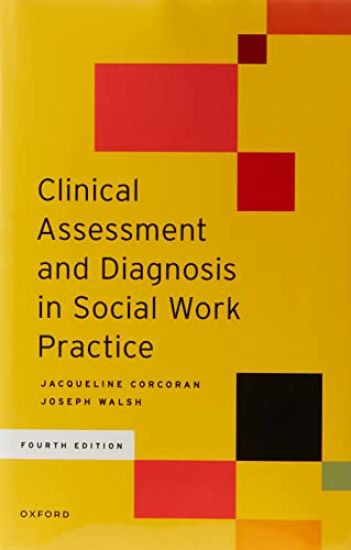
Clinical Assessment and Diagnosis in Social Work Practice

Clinical Assessment and Diagnosis in Social Work Practice

Jacqueline Corcoran; Joseph Walsh

Oxford University Press
2022
sidottu
In Clinical Assessment and Diagnosis in Social Work Practice, seasoned practitioner-scholars Jacqueline Corcoran and Joseph Walsh provide an in-depth exploration of sixteen major mental disorders that social workers commonly see in practice, including anxiety disorders, depression, bipolar disorder, and schizophrenia. They skillfully integrate several perspectives in order to help practitioners meet the challenges they will face in client assessment, and present a risk and resilience framework that helps social workers understand environmental influences on the emergence of mental disorders and the strengths that clients already possess. The authors also catalog the latest evidence-based assessment instruments and treatments for each disorder so that social workers can intervene efficiently and effectively, using the best resources available. Students and practitioners alike will appreciate the wealth of case examples, evidence-based assessment instruments, treatment plans, and new social diversity sections that make this an essential guide to the assessment and diagnostic processes in social work practice.
The Dynamics of the Social Worker-Client Relationship

The Dynamics of the Social Worker-Client Relationship

Joseph Walsh

Oxford University Press Inc
2021
nidottu
The recent establishment of evidence-based practice (EBP) interventions in the mental health space has enabled social workers to diagnose various mental, emotional, and behavioral issues in clients. This increased focus on using scientific methods to develop EBPs has been helpful for professionals making choices about client intervention, but it tends to distract attention from the client-facing process of delivering a given intervention. The effectiveness of direct social work practice always requires one's competence in providing a variety of intervention modalities, but the outcomes are also dependent on the social worker's ability to develop and maintain constructive relationships with clients. The Dynamics of the Social Worker-Client Relationship is an in-depth contemporary approach to the many ways in which social workers can develop, maintain, and rebuild constructive working relationships with clients who display various psychological symptoms. Building on 14 years of practitioner experience and 25 years teaching clinical social work practice, Joseph Walsh provides helpful ways to cultivate positive relationships and promote better opportunities for successful intervention. Each chapter focuses on a particular challenge that social workers may encounter in that process, including the benefits and limitations of theory selection, boundaries, the use of self, the working alliance, relationship ruptures, special issues presented by children and adolescents, terminations and transfers, clients about whom a social worker experiences highly positive or negative feelings, appropriate usage of physical touch and humor, working with psychotic clients, and various uses of technology. The book is filled with case studies from a wide range of field placements. Walsh analyzes these in each instance and walks readers through each predicament to ensure effective relationships are always at top of mind.
Who Says It's Over: A fading child star's humorous and compelling true story about gambling, life-threatening encounters and a remarkable
"...admire the good humor and gusto with which Walsh narrates his rocky path through the entertainment world." - Publishers Weekly"Joseph Walsh wrote the best gambling movie ever, California Split, and now he's out with a spectacularly entertaining Hollywood memoir..." - Ben Mankiewicz, Film critic/ host of TCMWalsh's wonderfully funny memoir of showbiz, gambling and the Hollywood elite, is one exciting roller coaster ride - whether dealing with hostile bookmakers looking to break legs - disastrous theatrical auditions - or a harrowing, near-death encounter with a bottle-slashing thug. From New York's #1 child star in early TV, to 'has-been' by 18, back to 'Hollywood somebody', this true-life adventure will keep you smiling, then holding your breath, then laughing out loud. Undaunted by a fading career, Walsh's love of 'action' would intensify, giving rise to the obsessional belief that he was the greatest football handicapper known to man. Tapping his childhood friend, Elliott Gould, for his last 60 bucks, they would go on to destroy their first bookmaker for thousands, on a once-in-a-lifetime winning streak. Little did Walsh know it would lead him to the brink of death, and into 'escape from New York' mode. Arriving in Hollywood with hopes of cashing in on earlier fame, he quickly discovered Tinseltown had no interest in the kid who had starred with Danny Kaye in Hans Christian Andersen and Kirk Douglas in The Juggler. Hanging tough, this never-say-die street kid would go on to eventually shine again - working with such notables as Steven Spielberg, Robert Altman, Elliott Gould, George Segal, Jack Nicholson, Robert Mitchum, Frank Sinatra, Gregory Peck, including memorable encounters with John Huston and Elvis Presley. His destiny would be fulfilled when he turned his life experiences into the gambling film classic California Split. Anyone looking for an awesome comeback story, guided by grit and grace, is in for a real treat "Quite a life. It's laugh-out-loud funny, riveting and just so damn good I was sorry it came to an end." Alan Ladd, Jr. / Former President of 20th Century Fox Pictures and Chairman & CEO of MGM Pictures, Academy Award Winning Producer of Braveheart & Chariots of Fire." It's extremely entertaining. Walsh has led an incredible life." Peter Gethers / Penguin Random House"...a gold mine about a one of a kind human being and indefatigable spirit you gotta love." Elliott Gould / Actor

Mental Health in Social Work

Mental Health in Social Work

Jacqueline Corcoran; Joseph Walsh

Pearson
2019
nidottu
Learn essential clinical assessment skills for working in the mental health field using a case-based approach Mental Health in Social Work: A Casebook on Diagnosis and Strengths-Based Assessment emphasizes gaining competency in the DSM-5 diagnoses of mental disorders that are commonly seen in clinical and social service settings. Using a case-based approach, students and professionals learn to understand clients holistically as they proceed with the assessment and intervention process. The 3rd Edition includes new chapters on obsessive-compulsive disorder (Ch. 9), post-traumatic stress disorder (Ch.10), and gender dysphoria (Ch. 14) It also includes additional content on socially diverse populations throughout the text, and new “Questions to Consider” for making a DSM diagnosis are included with each case study.
Theories for Direct Social Work Practice

Theories for Direct Social Work Practice

Joseph Walsh

Cengage Learning
2014
pokkari
Walsh's text incorporates concise, comprehensive coverage of eleven major clinical practice theories commonly used in assessment, planning, and intervention tasks with individuals, families, and groups. The book's scope encompasses a broad view of the field of practice, yet still allows students to look closely at each theory discussed.
The Recovery Philosophy and Direct Social Work Practice

The Recovery Philosophy and Direct Social Work Practice

Joseph Walsh

Oxford University Press Inc
2013
nidottu
The concept of recovery in mental health represents the radical shift from the reductive ideas of disease and cure to a holistic understanding of the individual. It is an investment in the personal journey toward wellness that involves developing hope, supportive relationships, self-motivation, social inclusion, and a greater sense of life's purpose. The principles behind the recovery movement mirror the NASW core values for the social work profession: emphasizing service and social justice through the empowerment and full engagement of the consumer in defining his or her strengths, needs, and goals. The Recovery Philosophy and Direct Social Work Practice explores the potential of the social work profession to use these core values to help persons with mental illness work toward recovery. The book addresses the ways social workers can implement and support recovery activities through a consideration of recovery philosophy, the utilization of a social work perspective on recovery, and in-depth examples of recovery practice with individuals who have schizophrenia, depression, bipolar disorder, and autism spectrum. This book is a practical guide for direct practitioners. It emphasizes the cooperative dynamic of the social worker/consumer relationship and addresses the difficult topic of endings in recovery practice. The models presented in this book will enable social workers to expand their existing intervention skills to work more collaboratively with consumers toward their goals of holistic recovery from mental illness.
The Social Worker and Psychotropic Medication

The Social Worker and Psychotropic Medication

Kia Bentley; Joseph Walsh

Brooks/Cole
2013
nidottu
This up-to-date primer on psychopharmacology and psychosocial interventions serves as a useful resource as you expand your daily roles in psychiatric medication management. Presenting material within a contemporary framework of "partnership" practice that is rich with case examples, the authors offer facts, myths, and relevant information about psychotropic medication in an easy-to-access manner. Content on a variety of topics, including coverage of children and adolescents, helps you become more responsive to the medication-related concerns of mental health clients--and work more collaboratively on these issues with families and other mental health care providers. Data from the authors' national survey of randomly selected NASW members provides information that enables you to be aware and active with respect to clients' medication-related dilemmas, but also mindful of the sociopolitical context of prescription practice in psychiatry.
Psychoeducation in Mental Health

Psychoeducation in Mental Health

Joseph Walsh

Oxford University Press Inc
2009
nidottu
Psychoeducation involves educating participants about a significant challenge in living, helping participants develop social and resource supports to manage the challenge, and to develop coping skills, and ultimately, to deal with the challenge. In Psychoeducation in Mental Health, Joseph Walsh offers a clear guide to human services practitioners looking to expand their professional toolkit with psychoeducational methods. In this book, Walsh incorporates the theories and fundamental "curative" factors of all psychoeducational interventions, as well as tips for professionals to effectively educate clients and those they rely on for support. He contends that psychoeducation is about "lifestyle regularity and healthy habits, early detection of warning signs, and treatment adherence." Here, Walsh focuses on alleviating the suffering of those with mental, emotional, and behavioral problems; people with physical health disadvantages; and people experiencing bereavement. Through his decades of experience in direct services in the field of mental health, the author is able to outline practical theories of psychoeducation for professionals in the fields of psychotherapy, counseling, and case management to help practitioners make a lasting difference in the lives of clients and their families.
Endings in Clinical Practice, Second Edition

Endings in Clinical Practice, Second Edition

Joseph Walsh

Oxford University Press Inc
2007
nidottu
Effective endings ensure that intervention gains continue after the therapeutic relationship ends. Joseph Walsh relates this critical topic to all practitioners through his use of diverse settings, detailed coverage of clinical endings, and extensive case illustrations that make the content concrete, practical, and accessible. Walsh takes a multi-setting and multi-theoretical approach to the often-overlooked topic of endings in clinical practice. Endings in Clinical Practice is organized into three parts. The first part covers types of endings in clinical practice, both planned and unplanned; the importance of closure; and common endings tasks across fields of practice. Part Two outlines theoretical perspectives on endings especially pertinent to advanced practitioners. The final section considers a variety of specific clinical ending situations and the ways in which clients and practitioners may react to them.