Kirjojen hintavertailu – 12 903 725 kirjaa ja 27 kauppaa

Kirjailija

Joshua Mitchell

Kirjat ja teokset yhdessä paikassa: 10 kirjaa, julkaisuja vuosilta 1993–2023, suosituimpiin kuuluu American Awakening. Vertaile teosten hintoja ja tarkista saatavuus suomalaisista kirjakaupoista.

10 kirjaa

Kirjojen julkaisuvuodet: 1993–2023.

Tocqueville in Arabia

Tocqueville in Arabia

Joshua Mitchell

ENCOUNTER BOOKS,USA
2023
pokkari
We live in the democratic age. So wrote Alexis de Tocqueville in 1835, in his magisterial work, Democracy in America. Tocqueville thought this meant that as each nation left behind the vestiges of its aristocracy, life for its citizens or subjects would be increasingly isolated and lonely. In America, we know of our growing isolation and loneliness. What of the Middle East? In the Middle East today, citizens and subjects live amid a profound tension: Familial and tribal linkages hold them fast, and at the same time rapid modernization has left them as isolated and lonely as so many Americans are today. The looming question, anticipated so long ago by Tocqueville, is how they will respond to this isolation and loneliness. Joshua Mitchell has spent years teaching Tocqueville’s social theory, in America and the Arab Gulf, and with Tocqueville in Arabia, he offers a profound account of how the crisis of isolation and loneliness is playing out in similar and in different ways, in America and in the Middle East. We live in a time rife with mutual misunderstandings between America and the Middle East. Tocqueville in Arabia offers a guide to the present, troubled times, leavened by the author’s hopes about the future.
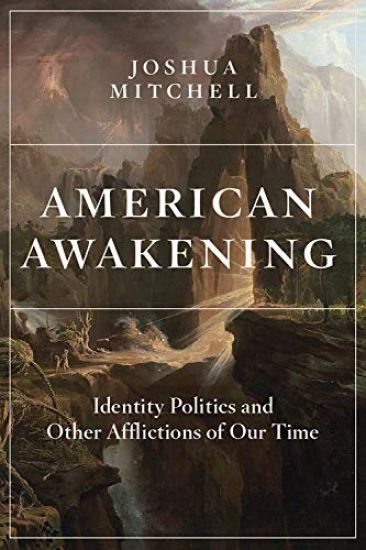
American Awakening

American Awakening

Joshua Mitchell

ENCOUNTER BOOKS,USA
2023
pokkari
America has always been committed to the idea that citizens can work together to build a common world. Today, three afflictions keep us from pursuing that noble ideal. The first and most obvious affliction is identity politics, which seeks to transform America by turning politics into a religious venue of sacrificial offering. For now, the sacrificial scapegoat is the white, heterosexual, man. After he is humiliated and purged, who will be the object of cathartic rage? White women? Black men? Identity politics is the anti-egalitarian spiritual eugenics of our age. It demands that pure and innocent groups ascend, and the stained transgressor groups be purged. The second affliction is that citizens oscillate back and forth, in bipolar fashion, at one moment feeling invincible on their social media platforms and, the next, feeling impotent to face the everyday problems of life without the guidance of experts and global managers. Third, Americans are afflicted by a disease that cannot quite be named, characterized by an addictive hope that they can find cheap shortcuts that bypass the difficult labors of everyday life. Instead of real friendship, we seek social media “friends.” Instead of meals at home, we order “fast food.” Instead of real shopping, we “shop” online. Instead of counting on our families and neighbors to address our problems, we look to the state to take care of us. In its many forms, this disease promises release from our labors, yet impoverishes us all. American Awakening chronicles all of these problems, yet gives us hope for the future.
American Awakening

American Awakening

Joshua Mitchell

Encounter Books,USA
2020
sidottu
America has always been committed to the idea that citizens can work together to build a common world. Today, three afflictions keep us from pursuing that noble ideal. The first and most obvious affliction is identity politics, which seeks to transform America by turning politics into a religious venue of sacrificial offering. For now, the sacrificial scapegoat is the white, heterosexual, man. After he is humiliated and purged, who will be the object of cathartic rage? White women? Black men? Identity politics is the anti-egalitarian spiritual eugenics of our age. It demands that pure and innocent groups ascend, and the stained transgressor groups be purged. The second affliction is that citizens oscillate back and forth, in bipolar fashion, at one moment feeling invincible on their social media platforms and, the next, feeling impotent to face the everyday problems of life without the guidance of experts and global managers. Third, Americans are afflicted by a disease that cannot quite be named, characterized by an addictive hope that they can find cheap shortcuts that bypass the difficult labors of everyday life. Instead of real friendship, we seek social media “friends.” Instead of meals at home, we order “fast food.” Instead of real shopping, we “shop” online. Instead of counting on our families and neighbors to address our problems, we look to the state to take care of us. In its many forms, this disease promises release from our labors, yet impoverishes us all. American Awakening chronicles all of these problems, yet gives us hope for the future.
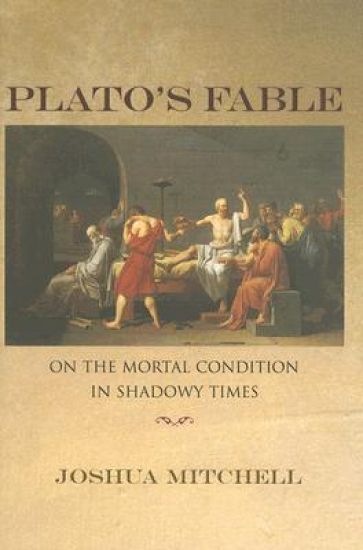
Plato's Fable

Plato's Fable

Joshua Mitchell

Princeton University Press
2006
sidottu
This book is an exploration of Plato's Republic that bypasses arcane scholarly debates. Plato's Fable provides refreshing insight into what, in Plato's view, is the central problem of life: the mortal propensity to adopt defective ways of answering the question of how to live well. How, in light of these tendencies, can humankind be saved? Joshua Mitchell discusses the question in unprecedented depth by examining one of the great books of Western civilization. He draws us beyond the ancients/moderns debate, and beyond the notion that Plato's Republic is best understood as shedding light on the promise of discursive democracy. Instead, Mitchell argues, the question that ought to preoccupy us today is neither "reason" nor "discourse," but rather "imitation." To what extent is man first and foremost an "imitative" being? This, Mitchell asserts, is the subtext of the great political and foreign policy debates of our times. Plato's Fable is not simply a work of textual exegesis. It is an attempt to move debates within political theory beyond their current location. Mitchell recovers insights about the depth of the problem of mortal imitation from Plato's magnificent work, and seeks to explicate the meaning of Plato's central claim--that "only philosophy can save us."
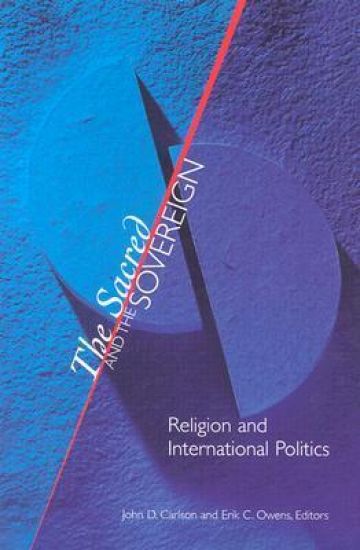
The Sacred and the Sovereign

The Sacred and the Sovereign

Jean Bethke Elshtain; Joshua Mitchell

Georgetown University Press
2003
pokkari
Until September 11th, 2001, few in the West fully appreciated the significance of religion in international politics. The terrible events of that day refocused our attention on how thoroughly religion and politics intermingle, sometimes with horrific results. But must this intermingling always be so deadly? The Sacred and the Sovereign brings together leading voices to consider the roles that religion should-and should not-play in a post-Cold War age distinguished by humanitarian intervention, terrorism, globalization, and challenges to state sovereignty. But these challenges to state sovereignty have deep and abiding roots in religion that invite us to revisit just what values we hold sacred. Offsetting the commonly shared idea that religion is politics' perennial nemesis, this volume demonstrates that religious traditions, institutions, and ideas are essential elements of the political quest for human rights, peace, order, legitimacy, and justice. The Sacred and the Sovereign brings distinguished scholars of religious studies, theology, and politics together with ranking members of the military and government to reflect seriously about where-and if-safe boundaries can be drawn between religion and politics in the international arena.
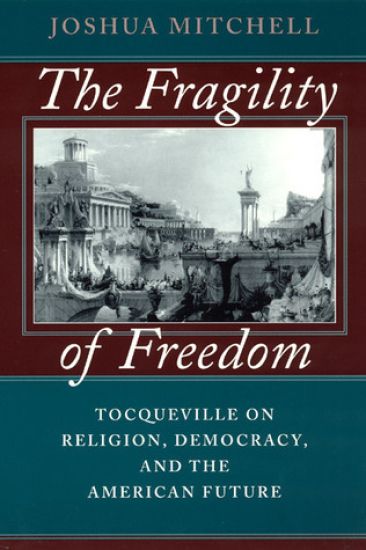
The Fragility of Freedom

The Fragility of Freedom

Joshua Mitchell

University of Chicago Press
1999
nidottu
Joshua Mitchell offers an interpretation of Toqueville as a moral historian, concerned less with history as an objective record of the past than as a disclosure of the trajectory of the human spirit. Though Tocqueville is the dominating figure, Mitchell also examines Augustine, Hobbes, Rousseau, Hegel and Nietzsche. Mitchell argues that Tocqueville's analysis of democracy is ultimately founded in an Augustinian idea of human psychology in which the soul or self alternately seeks withdrawal from the world or restive immersion in it. For a democracy to survive, Tocqueville recognized that its citizens had to navigate successfully between these two extremes of isolation and commitment. Democracy also paradoxically seemed to foster the very qualities - including ambition and envy - that threaten to undermine that fragile freedom which democracy affords. It is only such mediating institutions as the family and religion that can safeguard the continued vitality of democratic life and the health of the "democratic soul". Mitchell examines these institutions within the larger context of Tocqueville's thought, identifying them as a particularly American embodiment of the Christian tradition which continues to both protect the inherent instabilities of democracy and invigorate the conditions of equality.
Not by Reason Alone

Not by Reason Alone

Joshua Mitchell

University of Chicago Press
1996
nidottu
This text seeks to create a new interpretation of early modern political thought. Where most accounts assume that modern thought followed a decisive break with Christianity, Joshua Mitchell asserts that the line between the age of faith and that of reason is not quite so clear. Instead, he argues that the ideas of Luther, Hobbes, Locke, and Rousseau draw on history, rather than reason alone, for a sense of political authority. This ambitious work crosses disciplinary boundaries to attempt to expose unsuspected connections between political theory, religion, and history.
The Fragility of Freedom

The Fragility of Freedom

Joshua Mitchell

University of Chicago Press
1995
sidottu
Joshua Mitchell offers an interpretation of Toqueville as a moral historian, concerned less with history as an objective record of the past than as a disclosure of the trajectory of the human spirit. Though Tocqueville is the dominating figure, Mitchell also examines Augustine, Hobbes, Rousseau, Hegel and Nietzsche. Mitchell argues that Tocqueville's analysis of democracy is ultimately founded in an Augustinian idea of human psychology in which the soul or self alternately seeks withdrawal from the world or restive immersion in it. For a democracy to survive, Tocqueville recognized that its citizens had to navigate successfully between these two extremes of isolation and commitment. Democracy also paradoxically seemed to foster the very qualities - including ambition and envy - that threaten to undermine that fragile freedom which democracy affords. It is only such mediating institutions as the family and religion that can safeguard the continued vitality of democratic life and the health of the "democratic soul". Mitchell examines these institutions within the larger context of Tocqueville's thought, identifying them as a particularly American embodiment of the Christian tradition which continues to both protect the inherent instabilities of democracy and invigorate the conditions of equality.
Not by Reason Alone

Not by Reason Alone

Joshua Mitchell

University of Chicago Press
1993
sidottu
Interweaving political, religious, and historical themes, "Not By Reason Alone" reinterprets early modern thought. Rather than assuming that it is founded upon the primacy of reason, Mitchell argues that the thought of Luther, Hobbes, Locke, and Rousseau is an attempt to locate politics within an authoritative history that cannot be grasped by reason alone. Devoting an extensive chapter to each of these four figures, Mitchell demonstrates that reason's deference to faith (Luther), to revelation (Hobbes and Locke), or to the wisdom of the heart (Rousseau) must be placed at the centre of our effort to understand the early modern project. In this view, early modern thinking is not seen as bending toward either an ephemeral foundationalism or a destructive anti-foundationalism.