Kirjojen hintavertailu – 12 903 735 kirjaa ja 27 kauppaa

Kirjailija

Joyce Henri Robinson

Kirjat ja teokset yhdessä paikassa: 10 kirjaa, julkaisuja vuosilta 2001–2018, suosituimpiin kuuluu An Endless Panorama of Beauty. Vertaile teosten hintoja ja tarkista saatavuus suomalaisista kirjakaupoista.

10 kirjaa

Kirjojen julkaisuvuodet: 2001–2018.

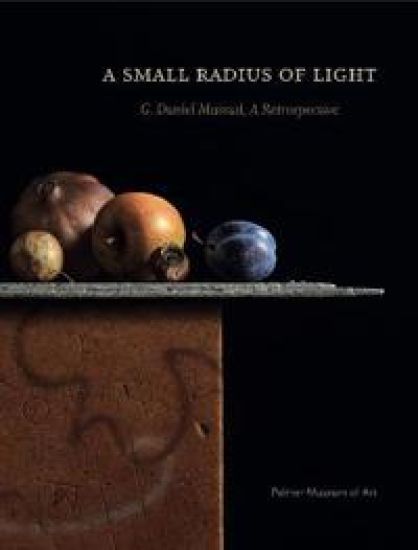
A Small Radius of Light

A Small Radius of Light

Joyce Henri Robinson; G. Daniel Massad

Palmer Museum of Art
2018
sidottu
A Small Radius of Light maps the territory artist G. Daniel Massad has explored for almost four decades. After earning degrees in English at Princeton and the University of Chicago and working for a time as a psychotherapist, Massad made the decision to pursue graduate work in painting in 1979. Two years later, while working on his MFA at the University of Kansas, Massad made an unexpected shift from abstraction to still life, and from oil to pastel as a painting medium. His abandonment of painterly gesture for knife-edge precisionism led him in the late 1980s to the painstaking reenactment of minute detail in order to express, as he puts it, “the way I encounter the world.” Since 1990, still life’s traditional tabletop and its implied interior space have given way in his work to less easily definable architectural fragments of brick or stone; the darkness surrounding these broken walls and cairns is deep, immeasurable, and richly potent. Over the last two decades, Massad has moved past description and metaphor, layering into his images other kinds of data—maps, words, numbers, constellations, personal symbols—all of which suggest readings of his remarkable still lifes as aniconic portraiture, implied narrative, and visual autobiography. This book accompanies an exhibition of the same name organized by the Palmer Museum of Art and features a comprehensive essay by curator Joyce Henri Robinson and forty-three “backstories” by the artist. These memoir-like reflections invite us to peer into Massad’s artistic, emotional, and mental process as he moves from making the intangible tangible, revealing along the way sources and associations that precede the final reenactment of the world around him—a world brought into focus by a small radius of light.
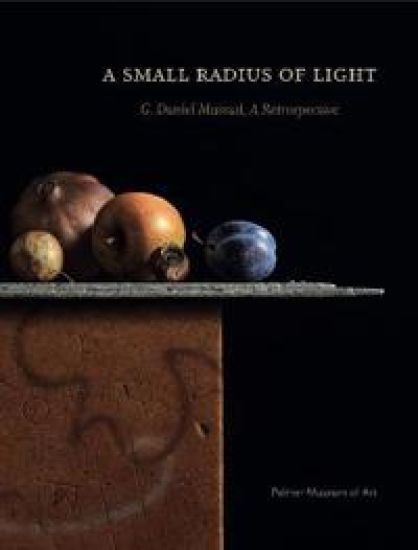
A Small Radius of Light

A Small Radius of Light

Joyce Henri Robinson; G. Daniel Massad

Palmer Museum of Art
2018
pokkari
A Small Radius of Light maps the territory artist G. Daniel Massad has explored for almost four decades. After earning degrees in English at Princeton and the University of Chicago and working for a time as a psychotherapist, Massad made the decision to pursue graduate work in painting in 1979. Two years later, while working on his MFA at the University of Kansas, Massad made an unexpected shift from abstraction to still life, and from oil to pastel as a painting medium. His abandonment of painterly gesture for knife-edge precisionism led him in the late 1980s to the painstaking reenactment of minute detail in order to express, as he puts it, “the way I encounter the world.” Since 1990, still life’s traditional tabletop and its implied interior space have given way in his work to less easily definable architectural fragments of brick or stone; the darkness surrounding these broken walls and cairns is deep, immeasurable, and richly potent. Over the last two decades, Massad has moved past description and metaphor, layering into his images other kinds of data—maps, words, numbers, constellations, personal symbols—all of which suggest readings of his remarkable still lifes as aniconic portraiture, implied narrative, and visual autobiography. This book accompanies an exhibition of the same name organized by the Palmer Museum of Art and features a comprehensive essay by curator Joyce Henri Robinson and forty-three “backstories” by the artist. These memoir-like reflections invite us to peer into Massad’s artistic, emotional, and mental process as he moves from making the intangible tangible, revealing along the way sources and associations that precede the final reenactment of the world around him—a world brought into focus by a small radius of light.
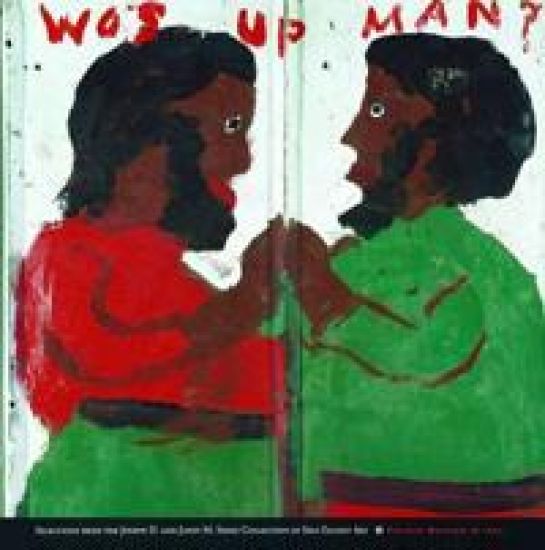
Wos up man?

Wos up man?

Joyce Henri Robinson

Palmer Museum of Art
2005
pokkari
Published in conjunction with a 2005 exhibition of the same name at the Palmer Museum of Art, Wos up man? features numerous works from Joseph and Janet Shein's important collection of self-taught (or "outsider") art.
Through the Looking Glass

Through the Looking Glass

Joyce Henri Robinson; Sarah Rich

Palmer Museum of Art
2003
pokkari
Through the Looking Glass provides readers with an informative record of the exhibition of self-portraits by Ana Mendieta, Carrie Mae Weems, and other leading women artists, held in 2003 at the Palmer Museum of Art as part of the Women's Self-Representation Project at The Pennsylvania State University. Fully illustrated, this catalogue enables readers to revisit the provocative juxtaposition of Yayoi Kusama's Multi-Fabrics and Alba d'Urbano's Couture, or Martha Rosler's Semiotics of the Kitchen and several of Cindy Sherman's famed Film Stills. An essay by Sarah Rich addresses important questions about women's use of self-portraiture. How, for example, does self-representation by women engage with narcissism, a long-time trait long ascribed to the stereotypical "woman"? To what extent is gender a necessary element in women's self-portraiture?
An Endless Panorama of Beauty

An Endless Panorama of Beauty

Joyce Henri Robinson

Palmer Museum of Art
2003
sidottu
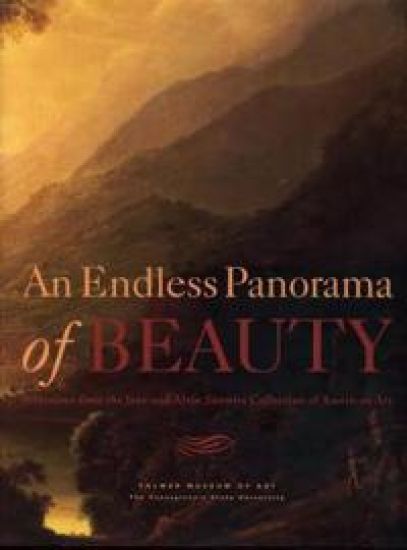
This catalogue from the Palmer Museum of Art of The Pennsylvania State University accompanied an exhibition, also entitled An Endless Panorama of Beauty, that presented highlights from the Jean and Alvin Snowiss collection of American art. Their remarkable collection ranges from the Revolutionary period of American history through the mid-twentieth century and includes major works by such famed artists as John Singleton Copley, Thomas Eakins, Winslow Homer, Charles Demuth, and Georgia O'Keeffe, among many others. An Endless Panorama of Beauty is the first publication devoted to the Snowiss holdings in American art. Fully illustrated, it discusses the scope and significance of their rich yet little-known collection. The contributors to the catalogue—Joyce Henri Robinson, Leo G. Mazow, and Julia Dolan—also set the art into the context of American social and cultural history. Mazow's introductory essay concerns the expanded horizons and deeply recessed spaces frequently found in nineteenth- and twentieth-century landscape paintings, exploring the ways in which these represent a "panoramic sensibility" at the core of American cultural history.
An Endless Panorama of Beauty

An Endless Panorama of Beauty

Joyce Henri Robinson

Palmer Museum of Art
2002
pokkari
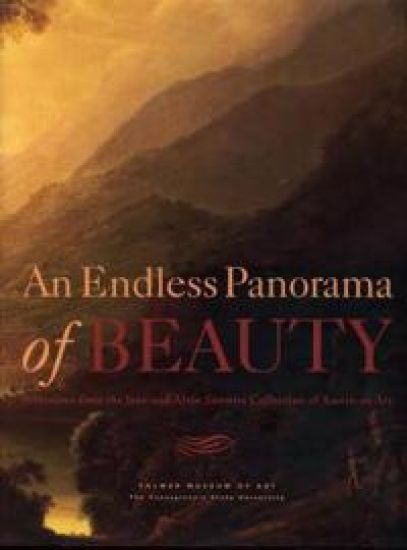
This catalogue from the Palmer Museum of Art of The Pennsylvania State University accompanied an exhibition, also entitled An Endless Panorama of Beauty, that presented highlights from the Jean and Alvin Snowiss collection of American art. Their remarkable collection ranges from the Revolutionary period of American history through the mid-twentieth century and includes major works by such famed artists as John Singleton Copley, Thomas Eakins, Winslow Homer, Charles Demuth, and Georgia O'Keeffe, among many others. An Endless Panorama of Beauty is the first publication devoted to the Snowiss holdings in American art. Fully illustrated, it discusses the scope and significance of their rich yet little-known collection. The contributors to the catalogue—Joyce Henri Robinson, Leo G. Mazow, and Julia Dolan—also set the art into the context of American social and cultural history. Mazow's introductory essay concerns the expanded horizons and deeply recessed spaces frequently found in nineteenth- and twentieth-century landscape paintings, exploring the ways in which these represent a "panoramic sensibility" at the core of American cultural history.
Musical Notes by Honoré Daumier

Musical Notes by Honoré Daumier

Joyce Henri Robinson

Palmer Museum of Art
2002
pokkari
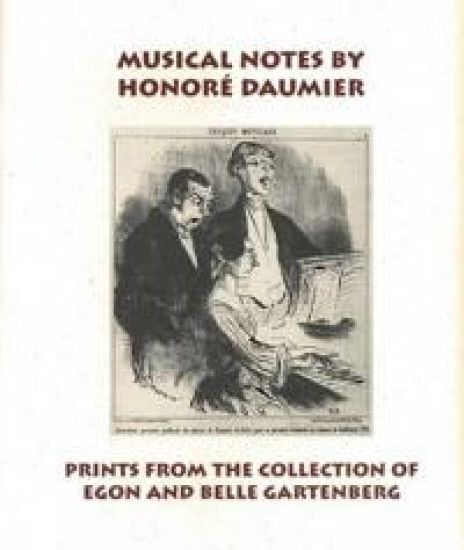
A painter, sculptor, and printmaker, Honoré Daumier (1808–1879) was one of the most prolific and important artists of nineteenth-century France. He played a leading role in shaping the new realism brought to the portrayal of everyday life, but he is now best known for the thousands of caricatures he published in magazines and newspapers such as Le Charivari, a daily with satirical articles and a wide circulation. Musical Notes by Honoré Daumier, which accompanied an exhibition of prints from the Collection of Egon and Belle Gartenberg, focuses on Daumier's vivid records of the musical life of Paris. Although not himself a musician, Daumier had a keen interest in the amateur practice of the art as well as in grand opera and the celebrated performers and composers of his day. Hector Berlioz, Franz Liszt, Gioacchino Rossini, and Niccolò Paganini are among the "greats" lampooned in the lithographs in Musical Notes by Honoré Daumier. Other prints offer satirical glimpses into the music making of everyday Parisians—from squawking clarinets to flirtatious piano teachers and straining tenors. In these lithographs, as in most of the prints Daumier produced during his long career, he discloses the foibles and follies of a society facing rapid changes in its cultural norms.
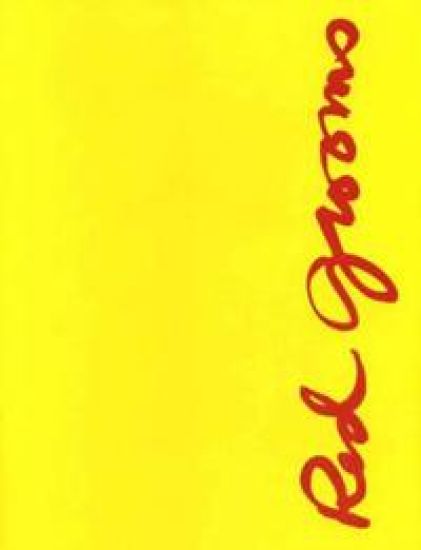
Red Grooms and the Heroism of Modern Life

Red Grooms and the Heroism of Modern Life

Joyce Henri Robinson

Palmer Museum of Art
2002
pokkari
Red Grooms is a cross between Marcel Duchamp and P. T. Barnum. Working in a brash, freewheeling style, Grooms has explored the raucous spectacle of life around him since his career began in the 1950s. This catalogue, which accompanied an exhibition of the same name at the Palmer Museum of Art, brings together forty of his works to demonstrate that even his most whimsical creations have serious implications. Many of the mixed-media constructions in Red Grooms and the Heroism of Modern Life reflect upon America's love affair with sports, business, and celebrity. The mixture of parody and homage in Grooms's portraits of such stars as Pablo Picasso and Fats Domino charges all his depictions of American popular culture, from bulky football players and haggard shoppers to a brightly colored Ferris wheel. In her essay for this catalogue, Joyce Henri Robinson contends that Grooms should be should be considered a contemporary counterpart to Charles Baudelaire's Parisian flaneur. Much like this famed character, she observes, Grooms approaches the world around him as a spectacle filled with novel forms of heroism. In this regard, the key work in the catalogue is an installation centered upon a full-scale version of a New York City bus. Grooms's Bus tempers revelation of the gritty realities of urban life with humor and flashes of poetry.
An Interlude in Giverny

An Interlude in Giverny

Joyce Henri Robinson; Derrick R. Cartwright

Palmer Museum of Art
2001
pokkari
Frederick MacMonnies is best known today as one of the leading figurative sculptors of the American Renaissance. Residing in France for much of his professional career, MacMonnies, along with his first wife, the painter Mary Fairchild MacMonnies, often visited Giverny, home to the reclusive Claude Monet and numerous American Impressionists in the final decade of the nineteenth century. By 1894 the town was the MacMonnies's favorite summer retreat, and in 1898 they moved permanently into an old priory in Giverny, dubbed the "MacMonastery" by friends. It was at this time, just as the new century dawned, that MacMonnies launched his career as a painter. Although he continued to produce sculpture, the artist happily painted portraits and occasionally submitted paintings to the annual salons for nearly a decade. Mary MacMonnies also continued to pursue her artistic career from their remote enclave outside Paris. This catalogue, which accompanied two exhibitions, "An Interlude in Giverny: The French Chevalier by Frederick MacMonnies" and "An Interlude in Giverny: Dans la nursery by Mary MacMonnies Low," explores the artistic and personal milieus surrounding the creation of two masterworks by the MacMonnieses during this Giverny interlude.
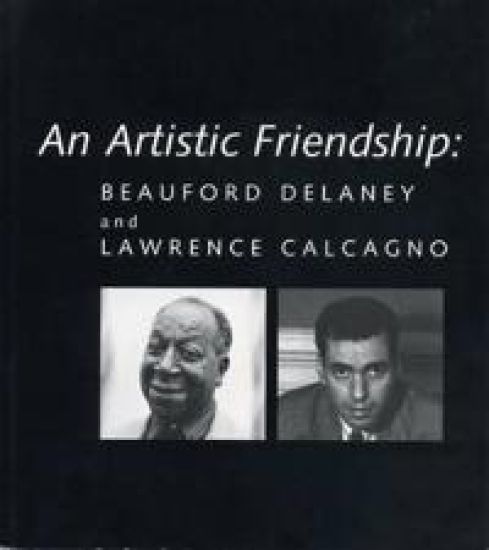
An Artistic Friendship

An Artistic Friendship

Joyce Henri Robinson

Palmer Museum of Art
2001
pokkari
In honor of the centennial of Beauford Delaney's birth, An Artistic Friendship examines the close artistic and personal friendship between two important American artists of the twentieth century, Beauford Delaney and Lawrence Calcagno. An unlikely pair, the two became friends in Paris in the early 1950s and remained close over the next twenty years until Delaney's deteriorating mental health removed him from his orbit of friends and family. Delaney (1901-79), a black American from Knoxville, Tennessee, spent most of his mature life as an expatriate artist in Paris. Lawrence Calcagno (1913-93), a white American from northern California, spent much of his peripatetic career in the United States and in Europe in search of a place to call home. But Delaney and Calcagno had many things in common. Both men committed themselves wholeheartedly to lyrical abstraction, though Delaney's work was ultimately influenced more by Claude Monet's fluid water-lily paintings than by the color-field painters so important in Calcagno's formation as an artist. Both men shared an interest in the philosophical underpinnings of their abstract work. Calcagno's abstract "landscapes of the mind"—with their recognizable and consistent horizons—derived in part from the artist's sense of the universal, yet mysterious harmony of nature. For Delaney, abstraction gave form to the "higher power" of light in the world, a light that, according to his close friend James Baldwin, "held the power to illuminate, even to redeem and reconcile and heal." Both men experienced the power of melancholia (in Delaney's case, the debilitating effects of mental illness), and both understood well the social isolation accompanying their homosexuality.