Kirjojen hintavertailu – 12 859 828 kirjaa ja 27 kauppaa

Kirjailija

Joyce Kerpchar

Kirjat ja teokset yhdessä paikassa: 25 kirjaa, julkaisuja vuosilta 2010–2022, suosituimpiin kuuluu Leveraging Lean in the Emergency Department. Vertaile teosten hintoja ja tarkista saatavuus suomalaisista kirjakaupoista.

25 kirjaa

Kirjojen julkaisuvuodet: 2010–2022.

Assess and Analyze

Assess and Analyze

Charles Protzman; Fred Whiton; Joyce Kerpchar

TAYLOR FRANCIS LTD
2022
sidottu
Lean is about building and improving stable and predictable systems and processes to deliver to customers high-quality products/services on time by engaging everyone in the organization. Combined with this, organizations need to create an environment of respect for people and continuous learning. It’s all about people. People create the product or service, drive innovation, and create systems and processes, and with leadership buy-in and accountability to ensure sustainment with this philosophy, employees will be committed to the organization as they learn and grow personally and professionally. Lean is a term that describes a way of thinking about and managing companies as an enterprise. Becoming Lean requires the following: the continual pursuit to identify and eliminate waste; the establishment of efficient flow of both information and process; and an unwavering top-level commitment. The concept of continuous improvement applies to any process in any industry. Based on the contents of The Lean Practitioner’s Field Book, the purpose of this series is to show, in detail, how any process can be improved by utilizing a combination of tasks and people tools and introduces the BASICS Lean® concept. The books are designed for all levels of Lean practitioners and introduce proven tools for analysis and implementation that go beyond the traditional point kaizen event. Each book can be used as a stand-alone volume or used in combination with other titles based on specific needs. Each book is chock-full of case studies and stories from the authors’ own experiences in training organizations who have started or are continuing their Lean journey of continuous improvement. Contents include valuable lessons learned and each chapter concludes with questions pertaining to the focus of the chapter. Numerous photographs enrich and illustrate specific tools used in Lean methodology. Assess and Analyze: Discovering the Waste Consuming Your Profits explores the tools used to assess and analyze the process. It starts off with Learning to See waste and follows with the three analysis tools: mapping the product flow, documenting the full work of the operator, and implementing SMED or changeover reduction and closes with exploring Lean and change management.
Assess and Analyze

Assess and Analyze

Charles Protzman; Fred Whiton; Joyce Kerpchar

TAYLOR FRANCIS LTD
2022
nidottu
Lean is about building and improving stable and predictable systems and processes to deliver to customers high-quality products/services on time by engaging everyone in the organization. Combined with this, organizations need to create an environment of respect for people and continuous learning. It’s all about people. People create the product or service, drive innovation, and create systems and processes, and with leadership buy-in and accountability to ensure sustainment with this philosophy, employees will be committed to the organization as they learn and grow personally and professionally. Lean is a term that describes a way of thinking about and managing companies as an enterprise. Becoming Lean requires the following: the continual pursuit to identify and eliminate waste; the establishment of efficient flow of both information and process; and an unwavering top-level commitment. The concept of continuous improvement applies to any process in any industry. Based on the contents of The Lean Practitioner’s Field Book, the purpose of this series is to show, in detail, how any process can be improved by utilizing a combination of tasks and people tools and introduces the BASICS Lean® concept. The books are designed for all levels of Lean practitioners and introduce proven tools for analysis and implementation that go beyond the traditional point kaizen event. Each book can be used as a stand-alone volume or used in combination with other titles based on specific needs. Each book is chock-full of case studies and stories from the authors’ own experiences in training organizations who have started or are continuing their Lean journey of continuous improvement. Contents include valuable lessons learned and each chapter concludes with questions pertaining to the focus of the chapter. Numerous photographs enrich and illustrate specific tools used in Lean methodology. Assess and Analyze: Discovering the Waste Consuming Your Profits explores the tools used to assess and analyze the process. It starts off with Learning to See waste and follows with the three analysis tools: mapping the product flow, documenting the full work of the operator, and implementing SMED or changeover reduction and closes with exploring Lean and change management.
Baseline

Baseline

Charles Protzman; Fred Whiton; Joyce Kerpchar

TAYLOR FRANCIS LTD
2022
sidottu
Lean is about building and improving stable and predictable systems and processes to deliver to customers high-quality products/services on time by engaging everyone in the organization. Combined with this, organizations need to create an environment of respect for people and continuous learning. It’s all about people. People create the product or service, drive innovation, and create systems and processes, and with leadership buy-in and accountability to ensure sustainment with this philosophy, employees will be committed to the organization as they learn and grow personally and professionally. Lean is a term that describes a way of thinking about and managing companies as an enterprise. Becoming Lean requires the following: the continual pursuit to identify and eliminate waste; the establishment of efficient flow of both information and process; and an unwavering top-level commitment. The concept of continuous improvement applies to any process in any industry. Based on the contents of The Lean Practitioners Field Book, the purpose of this series is to show, in detail, how any process can be improved utilizing a combination of tasks and people tools and introduces the BASICS Lean® concept. The books are designed for all levels of Lean practitioners and introduces proven tools for analysis and implementation that go beyond the traditional point kaizen event. Each book can be used as a stand-alone volume or used in combination with other titles based on specific needs. Each book is chock-full of case studies and stories from the authors’ own experiences in training organizations that have started or are continuing their Lean journey of continuous improvement. Contents include valuable lessons learned and each chapter concludes with questions pertaining to the focus of the chapter. Numerous photographs enrich and illustrate specific tools used in Lean methodology. Baseline: Confronting Reality & Planning the Path for Success focuses on change management and how to manage and accelerate change. The authors also outline how to get ready to implement lean, how to baseline your processes prior to implementing Lean, and how to create a value stream map of processes. This book also discusses Lean accounting.
Check

Check

Charles Protzman; Fred Whiton; Joyce Kerpchar

TAYLOR FRANCIS LTD
2022
nidottu
Lean is about building and improving stable and predictable systems and processes to deliver to customers high-quality products/services on time by engaging everyone in the organization. Combined with this, organizations need to create an environment of respect for people and continuous learning. It’s all about people. People create the product or service, drive innovation, and create systems and processes, and with leadership buy-in and accountability to ensure sustainment with this philosophy, employees will be committed to the organization as they learn and grow personally and professionally. Lean is a term that describes a way of thinking about and managing companies as an enterprise. Becoming Lean requires the following: the continual pursuit to identify and eliminate waste; the establishment of efficient flow of both information and process; and an unwavering top-level commitment. The concept of continuous improvement applies to any process in any industry. Based on the contents of The Lean Practitioners Field Book, the purpose of this series is to show, in detail, how any process can be improved utilizing a combination of tasks and people tools and introduces the BASICS Lean® concept. The books are designed for all levels of Lean practitioners and introduces proven tools for analysis and implementation that go beyond the traditional point kaizen event. Each book can be used as a stand-alone volume or used in combination with other titles based on specific needs. Each book is chock-full of case studies and stories from the authors’ own experiences in training organizations that have started or are continuing their Lean journey of continuous improvement. Contents include valuable lessons learned and each chapter concludes with questions pertaining to the focus of the chapter. Numerous photographs enrich and illustrate specific tools used in Lean methodologyCheck: Identifying Gaps on the Path to Success Transactional Processes contains chapters on implementing Lean, Kanban systems, line balancing, Heijunka-leveling, and the +QDIP process plus case studies of machine shop and transactional implementations. The implementation model describes the different approaches to Lean, compares them to Toyota, and explains each implementation model.
Check

Check

Charles Protzman; Fred Whiton; Joyce Kerpchar

TAYLOR FRANCIS LTD
2022
sidottu
Lean is about building and improving stable and predictable systems and processes to deliver to customers high-quality products/services on time by engaging everyone in the organization. Combined with this, organizations need to create an environment of respect for people and continuous learning. It’s all about people. People create the product or service, drive innovation, and create systems and processes, and with leadership buy-in and accountability to ensure sustainment with this philosophy, employees will be committed to the organization as they learn and grow personally and professionally. Lean is a term that describes a way of thinking about and managing companies as an enterprise. Becoming Lean requires the following: the continual pursuit to identify and eliminate waste; the establishment of efficient flow of both information and process; and an unwavering top-level commitment. The concept of continuous improvement applies to any process in any industry. Based on the contents of The Lean Practitioners Field Book, the purpose of this series is to show, in detail, how any process can be improved utilizing a combination of tasks and people tools and introduces the BASICS Lean® concept. The books are designed for all levels of Lean practitioners and introduces proven tools for analysis and implementation that go beyond the traditional point kaizen event. Each book can be used as a stand-alone volume or used in combination with other titles based on specific needs. Each book is chock-full of case studies and stories from the authors’ own experiences in training organizations that have started or are continuing their Lean journey of continuous improvement. Contents include valuable lessons learned and each chapter concludes with questions pertaining to the focus of the chapter. Numerous photographs enrich and illustrate specific tools used in Lean methodologyCheck: Identifying Gaps on the Path to Success Transactional Processes contains chapters on implementing Lean, Kanban systems, line balancing, Heijunka-leveling, and the +QDIP process plus case studies of machine shop and transactional implementations. The implementation model describes the different approaches to Lean, compares them to Toyota, and explains each implementation model.
Sustaining Lean

Sustaining Lean

Charles Protzman; Fred Whiton; Joyce Kerpchar

TAYLOR FRANCIS LTD
2022
sidottu
Lean is about building and improving stable and predictable systems and processes to deliver to customers high-quality products/services on time by engaging everyone in the organization. Combined with this, organizations need to create an environment of respect for people and continuous learning. It’s all about people. People create the product or service, drive innovation, and create systems and processes, and with leadership buy-in and accountability to ensure sustainment with this philosophy, employees will be committed to the organization as they learn and grow personally and professionally. Lean is a term that describes a way of thinking about and managing companies as an enterprise. Becoming Lean requires the following: the continual pursuit to identify and eliminate waste; the establishment of efficient flow of both information and process; and an unwavering top-level commitment. The concept of continuous improvement applies to any process in any industry. Based on the contents of The Lean Practitioners Field Book, the purpose of this series is to show, in detail, how any process can be improved utilizing a combination of tasks and people tools and introduces the BASICS Lean® concept. The books are designed for all levels of Lean practitioners and introduces proven tools for analysis and implementation that go beyond the traditional point kaizen event. Each book can be used as a stand-alone volume or used in combination with other titles based on specific needs. Each book is chock-full of case studies and stories from the authors’ own experiences in training organizations that have started or are continuing their Lean journey of continuous improvement. Contents include valuable lessons learned and each chapter concludes with questions pertaining to the focus of the chapter. Numerous photographs enrich and illustrate specific tools used in Lean methodology. Sustaining Lean: Creating a Culture of Continuous Improvement focuses on standard work audits, training, Lean Practitioner certification, Hoshin planning, Lean Leadership, and how to run effective meetings. The authors discuss the cultural transformation which must occur to create a Lean culture by understanding what the components are in this culture. The importance of training and the value of the person are also discussed, as is what it takes to be a Lean leader.
Implementing Lean

Implementing Lean

Charles Protzman; Fred Whiton; Joyce Kerpchar

TAYLOR FRANCIS LTD
2022
nidottu
Lean is about building and improving stable and predictable systems and processes to deliver to customers high-quality products/services on time by engaging everyone in the organization. Combined with this, organizations need to create an environment of respect for people and continuous learning. It’s all about people. People create the product or service, drive innovation, and create systems and processes, and with leadership buy-in and accountability to ensure sustainment with this philosophy, employees will be committed to the organization as they learn and grow personally and professionally. Lean is a term that describes a way of thinking about and managing companies as an enterprise. Becoming Lean requires the following: the continual pursuit to identify and eliminate waste; the establishment of efficient flow of both information and process; and an unwavering top-level commitment. The concept of continuous improvement applies to any process in any industry. Based on the contents of The Lean Practitioners Field Book, the purpose of this series is to show, in detail, how any process can be improved utilizing a combination of tasks and people tools and introduces the BASICS Lean® concept. The books are designed for all levels of Lean practitioners and introduces proven tools for analysis and implementation that go beyond the traditional point kaizen event. Each book can be used as a stand-alone volume or used in combination with other titles based on specific needs. Each book is chock-full of case studies and stories from the authors’ own experiences in training organizations that have started or are continuing their Lean journey of continuous improvement. Contents include valuable lessons learned and each chapter concludes with questions pertaining to the focus of the chapter. Numerous photographs enrich and illustrate specific tools used in Lean methodology. Implementing Lean: Converting Waste to Profit explores implementation methods, line balancing methods, including baton zone or bumping, and implementing Lean in the office and machine shops. The goal of this book is to introduce the balance of the tools and how to proceed once the analysis is completed. There are many pieces to a Lean implementation and all of them are interconnected. This book walks through the relationships and how the data presented can be leveraged to prepare for the implementation. It also provides suggest solutions for improvements and making recommendations to management to secure their buy-in and approval.
Suggesting Solutions

Suggesting Solutions

Charles Protzman; Fred Whiton; Joyce Kerpchar

TAYLOR FRANCIS LTD
2022
sidottu
Lean is about building and improving stable and predictable systems and processes to deliver to customers high-quality products/services on time by engaging everyone in the organization. Combined with this, organizations need to create an environment of respect for people and continuous learning. It’s all about people. People create the product or service, drive innovation, and create systems and processes, and with leadership buy-in and accountability to ensure sustainment with this philosophy, employees will be committed to the organization as they learn and grow personally and professionally. Lean is a term that describes a way of thinking about and managing companies as an enterprise. Becoming Lean requires the following: the continual pursuit to identify and eliminate waste; the establishment of efficient flow of both information and process; and an unwavering top-level commitment. The concept of continuous improvement applies to any process in any industry. Based on the contents of The Lean Practitioners Field Book, the purpose of this series is to show, in detail, how any process can be improved utilizing a combination of tasks and people tools and introduces the BASICS Lean® concept. The books are designed for all levels of Lean practitioners and introduces proven tools for analysis and implementation that go beyond the traditional point kaizen event. Each book can be used as a stand-alone volume or used in combination with other titles based on specific needs. Each book is chock-full of case studies and stories from the authors’ own experiences in training organizations that have started or are continuing their Lean journey of continuous improvement. Contents include valuable lessons learned and each chapter concludes with questions pertaining to the focus of the chapter. Numerous photographs enrich and illustrate specific tools used in Lean methodology. Suggesting Solutions: Brainstorming Creative Ideas to Maximize Productivity explores the process block diagram tool, how to do a Lean layout and Lean master layout and how to create standard work and visual management systems. The goal of this book is to introduce the balance of the tools and how to proceed once the analysis is completed. There are many pieces to a Lean implementation and all of them are interconnected. This book walks through the relationships and how the data presented can be leveraged to prepare for the implementation. It also provides suggest solutions for improvements and making recommendations to management to secure their buy-in and approval.
Suggesting Solutions

Suggesting Solutions

Charles Protzman; Fred Whiton; Joyce Kerpchar

TAYLOR FRANCIS LTD
2022
nidottu
Lean is about building and improving stable and predictable systems and processes to deliver to customers high-quality products/services on time by engaging everyone in the organization. Combined with this, organizations need to create an environment of respect for people and continuous learning. It’s all about people. People create the product or service, drive innovation, and create systems and processes, and with leadership buy-in and accountability to ensure sustainment with this philosophy, employees will be committed to the organization as they learn and grow personally and professionally. Lean is a term that describes a way of thinking about and managing companies as an enterprise. Becoming Lean requires the following: the continual pursuit to identify and eliminate waste; the establishment of efficient flow of both information and process; and an unwavering top-level commitment. The concept of continuous improvement applies to any process in any industry. Based on the contents of The Lean Practitioners Field Book, the purpose of this series is to show, in detail, how any process can be improved utilizing a combination of tasks and people tools and introduces the BASICS Lean® concept. The books are designed for all levels of Lean practitioners and introduces proven tools for analysis and implementation that go beyond the traditional point kaizen event. Each book can be used as a stand-alone volume or used in combination with other titles based on specific needs. Each book is chock-full of case studies and stories from the authors’ own experiences in training organizations that have started or are continuing their Lean journey of continuous improvement. Contents include valuable lessons learned and each chapter concludes with questions pertaining to the focus of the chapter. Numerous photographs enrich and illustrate specific tools used in Lean methodology. Suggesting Solutions: Brainstorming Creative Ideas to Maximize Productivity explores the process block diagram tool, how to do a Lean layout and Lean master layout and how to create standard work and visual management systems. The goal of this book is to introduce the balance of the tools and how to proceed once the analysis is completed. There are many pieces to a Lean implementation and all of them are interconnected. This book walks through the relationships and how the data presented can be leveraged to prepare for the implementation. It also provides suggest solutions for improvements and making recommendations to management to secure their buy-in and approval.
Baseline

Baseline

Charles Protzman; Fred Whiton; Joyce Kerpchar

TAYLOR FRANCIS LTD
2022
nidottu
Lean is about building and improving stable and predictable systems and processes to deliver to customers high-quality products/services on time by engaging everyone in the organization. Combined with this, organizations need to create an environment of respect for people and continuous learning. It’s all about people. People create the product or service, drive innovation, and create systems and processes, and with leadership buy-in and accountability to ensure sustainment with this philosophy, employees will be committed to the organization as they learn and grow personally and professionally. Lean is a term that describes a way of thinking about and managing companies as an enterprise. Becoming Lean requires the following: the continual pursuit to identify and eliminate waste; the establishment of efficient flow of both information and process; and an unwavering top-level commitment. The concept of continuous improvement applies to any process in any industry. Based on the contents of The Lean Practitioners Field Book, the purpose of this series is to show, in detail, how any process can be improved utilizing a combination of tasks and people tools and introduces the BASICS Lean® concept. The books are designed for all levels of Lean practitioners and introduces proven tools for analysis and implementation that go beyond the traditional point kaizen event. Each book can be used as a stand-alone volume or used in combination with other titles based on specific needs. Each book is chock-full of case studies and stories from the authors’ own experiences in training organizations that have started or are continuing their Lean journey of continuous improvement. Contents include valuable lessons learned and each chapter concludes with questions pertaining to the focus of the chapter. Numerous photographs enrich and illustrate specific tools used in Lean methodology. Baseline: Confronting Reality & Planning the Path for Success focuses on change management and how to manage and accelerate change. The authors also outline how to get ready to implement lean, how to baseline your processes prior to implementing Lean, and how to create a value stream map of processes. This book also discusses Lean accounting.
Implementing Lean

Implementing Lean

Charles Protzman; Fred Whiton; Joyce Kerpchar

TAYLOR FRANCIS LTD
2022
sidottu
Lean is about building and improving stable and predictable systems and processes to deliver to customers high-quality products/services on time by engaging everyone in the organization. Combined with this, organizations need to create an environment of respect for people and continuous learning. It’s all about people. People create the product or service, drive innovation, and create systems and processes, and with leadership buy-in and accountability to ensure sustainment with this philosophy, employees will be committed to the organization as they learn and grow personally and professionally. Lean is a term that describes a way of thinking about and managing companies as an enterprise. Becoming Lean requires the following: the continual pursuit to identify and eliminate waste; the establishment of efficient flow of both information and process; and an unwavering top-level commitment. The concept of continuous improvement applies to any process in any industry. Based on the contents of The Lean Practitioners Field Book, the purpose of this series is to show, in detail, how any process can be improved utilizing a combination of tasks and people tools and introduces the BASICS Lean® concept. The books are designed for all levels of Lean practitioners and introduces proven tools for analysis and implementation that go beyond the traditional point kaizen event. Each book can be used as a stand-alone volume or used in combination with other titles based on specific needs. Each book is chock-full of case studies and stories from the authors’ own experiences in training organizations that have started or are continuing their Lean journey of continuous improvement. Contents include valuable lessons learned and each chapter concludes with questions pertaining to the focus of the chapter. Numerous photographs enrich and illustrate specific tools used in Lean methodology. Implementing Lean: Converting Waste to Profit explores implementation methods, line balancing methods, including baton zone or bumping, and implementing Lean in the office and machine shops. The goal of this book is to introduce the balance of the tools and how to proceed once the analysis is completed. There are many pieces to a Lean implementation and all of them are interconnected. This book walks through the relationships and how the data presented can be leveraged to prepare for the implementation. It also provides suggest solutions for improvements and making recommendations to management to secure their buy-in and approval.
Sustaining Lean

Sustaining Lean

Charles Protzman; Fred Whiton; Joyce Kerpchar

TAYLOR FRANCIS LTD
2022
nidottu
Lean is about building and improving stable and predictable systems and processes to deliver to customers high-quality products/services on time by engaging everyone in the organization. Combined with this, organizations need to create an environment of respect for people and continuous learning. It’s all about people. People create the product or service, drive innovation, and create systems and processes, and with leadership buy-in and accountability to ensure sustainment with this philosophy, employees will be committed to the organization as they learn and grow personally and professionally. Lean is a term that describes a way of thinking about and managing companies as an enterprise. Becoming Lean requires the following: the continual pursuit to identify and eliminate waste; the establishment of efficient flow of both information and process; and an unwavering top-level commitment. The concept of continuous improvement applies to any process in any industry. Based on the contents of The Lean Practitioners Field Book, the purpose of this series is to show, in detail, how any process can be improved utilizing a combination of tasks and people tools and introduces the BASICS Lean® concept. The books are designed for all levels of Lean practitioners and introduces proven tools for analysis and implementation that go beyond the traditional point kaizen event. Each book can be used as a stand-alone volume or used in combination with other titles based on specific needs. Each book is chock-full of case studies and stories from the authors’ own experiences in training organizations that have started or are continuing their Lean journey of continuous improvement. Contents include valuable lessons learned and each chapter concludes with questions pertaining to the focus of the chapter. Numerous photographs enrich and illustrate specific tools used in Lean methodology. Sustaining Lean: Creating a Culture of Continuous Improvement focuses on standard work audits, training, Lean Practitioner certification, Hoshin planning, Lean Leadership, and how to run effective meetings. The authors discuss the cultural transformation which must occur to create a Lean culture by understanding what the components are in this culture. The importance of training and the value of the person are also discussed, as is what it takes to be a Lean leader.
Leveraging Lean in Healthcare

Leveraging Lean in Healthcare

Charles Protzman; George Mayzell; Joyce Kerpchar

CRC Press
2018
sidottu
Winner of a 2013 Shingo Research and Professional Publication AwardThis practical guide for healthcare executives, managers, and frontline workers, provides the means to transform your enterprise into a High-Quality Patient Care Business Delivery System. Designed for continuous reference, its self-contained chapters are divided into three primary sections: Defines what Lean is and includes some interesting history about Lean not found elsewhere. Describes and explains the application of each Lean tool and concept organized in their typical order of use. Explains how to implement Lean in various healthcare processes?providing examples, case studies, and valuable lessons learned This book will help to take you out of your comfort zone and provide you with new ways to extend value to your customers. It drives home the importance of the Lean Six Sigma journey. The pursuit of continuous improvement is a journey with no end. Consequently, the opportunities are endless as to what you and your organization can accomplish. Forty percent of the authors? profits from this book will be donated to help the homeless through two Baltimore charities. Praise for the book: ? well-timed and highly informative for those committed to creating deep levels of sustainable change in healthcare.? Peter B. Angood, MD, FACS, FCCM, Senior Advisor ? Patient Safety, in National Quality Forum ? the most practical and healthcare applicable book I have ever read on LEAN thinking and concepts. ? Gary Shorb, CEO, Methodist Le Bonheur Healthcare ... well written ... an essential reference in the library of all healthcare leaders interested in performance improvement.? Lee M. Adler, DO, VP, Quality and Safety Innovation and Research, Florida Hospital, Orlando; Asso
Leveraging Lean in the Emergency Department

Leveraging Lean in the Emergency Department

Joyce Kerpchar; Charles Protzman; George Mayzell

CRC Press
2017
sidottu
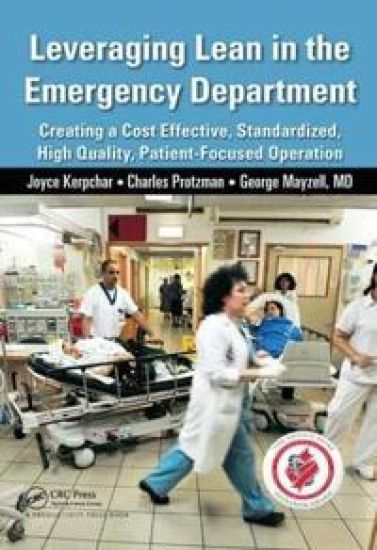
This book is part of a series of titles that are a spin-off of the Shingo Prize-winning book Leveraging Lean in Healthcare: Transforming Your Enterprise into a High Quality Patient Care Delivery System. Each book in the series focuses on a specific aspect of healthcare that has demonstrated significant process and quality improvements after a Lean implementation. Emergency departments have become notorious for long wait times and questionable quality of care. By adopting Lean manufacturing concepts, hospitals can turn the emergency department into a valuable service for the hospital and the community it serves. Leveraging Lean in the Emergency Department: Creating a Cost Effective, Standardized, High Quality, Patient-Focused Operation supplies a functional understanding of Lean emergency department processes and quality improvement techniques. It is ideal for healthcare executives, leaders, process improvement team members, and inquisitive frontline workers who want to implement and leverage Lean. Supplying detailed descriptions of Lean tools and methodologies, the book identifies powerful Lean solutions specific to the needs of the emergency department. The first section provides an overview of Lean concepts, tools, methodologies, and applications. The second section focuses on the application of Lean in the emergency department within the confines of the hospital or clinic. Presenting numerous examples, stories, case studies, and lessons learned, it examines the normal operation of each area in emergency departments and highlights the areas where typical problems occur. Next, the book walks readers through various Lean initiatives and demonstrates how Lean tools and concepts have been used to achieve lasting improvements to processes and quality of care. It also supplies actionable blueprints that readers can duplicate or modify for use in their own institutions. Illustrating leadership‘s role i
Leveraging Lean in Medical Laboratories

Leveraging Lean in Medical Laboratories

Charles Protzman; Joyce Kerpchar; George Mayzell

CRC Press
2017
sidottu
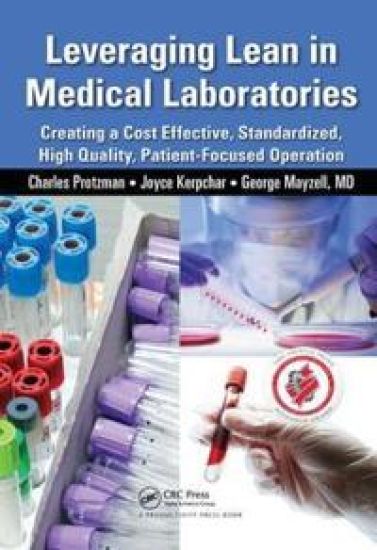
This book is part of a series of titles that are a spin-off of the Shingo Prize-winning book Leveraging Lean in Healthcare: Transforming Your Enterprise into a High Quality Patient Care Delivery System. Each book in the series focuses on a specific aspect of healthcare that has demonstrated significant process and quality improvements after a Lean implementation. Lean principles can help medical laboratories drive up efficiencies and quality without increasing costs or compromising quality. Leveraging Lean in Medical Laboratories: Creating a Cost Effective, Standardized, High Quality, Patient-Focused Operation provides a functional understanding of Lean laboratory processes and quality improvement techniques. This book is an ideal guide for healthcare executives, leaders, process improvement team members, and inquisitive frontline workers who want to implement and leverage Lean in medical laboratories. Supplying detailed descriptions of Lean tools and methodologies, it identifies powerful Lean solutions specific to the needs of the medical laboratory. The first section provides an overview of Lean concepts, tools, methodologies, and applications. The second section focuses on the application of Lean in the laboratory environment. Presenting numerous examples, stories, case studies, and lessons learned, it examines the normal operation of each area in the lab environment and highlights the areas where typical problems occur. Next, it walks readers through various Lean initiatives and demonstrates how Lean tools and concepts have been used to achieve lasting improvements to processes and quality of care. It also supplies actionable blueprints that readers can duplicate or modify for use in their own institutions. Illustrating leadership‘s role in achieving departmental goals, this book will provide you with a well-rounded understanding of how Lean can be applied to achieve significant improvements throughou
Leveraging Lean in Surgical Services

Leveraging Lean in Surgical Services

Joyce Kerpchar; Charles Protzman; George Mayzell

CRC Press
2017
sidottu
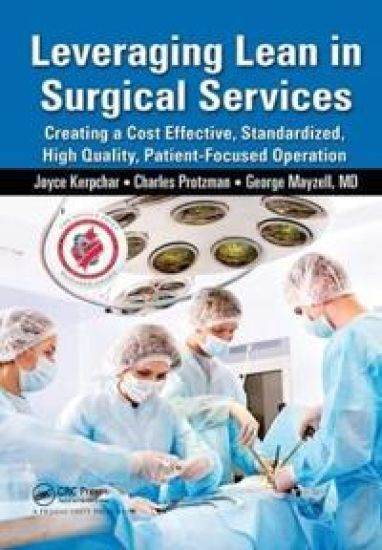
This book is part of a series of titles that are a spin-off of the Shingo Prize-winning book Leveraging Lean in Healthcare: Transforming Your Enterprise into a High Quality Patient Care Delivery System. Each book in the series focuses on a specific aspect of healthcare that has demonstrated significant process and quality improvements after a Lean implementation. The result of implementing Lean in the surgical suite is a powerful and proven mix that enables members of cross-functional teams to improve their processes, efficiency, and financial performance. Leveraging Lean in Surgical Services: Creating a Cost Effective, Standardized, High Quality, Patient-Focused Operation provides a functional understanding of Lean processes and quality improvement techniques for the surgical department. This book is an ideal guide for healthcare executives, leaders, process improvement team members, and inquisitive frontline workers who want to implement and leverage Lean in the surgical suite. Supplying detailed descriptions of Lean tools and methodologies, it identifies powerful solutions specific to the needs of surgical services. The first section provides an overview of Lean concepts, tools, methodologies, and applications. The second section focuses on the application of Lean in the surgical services environment. Presenting numerous examples, stories, case studies, and lessons learned, it examines the normal operation of each area in the surgical suite and highlights the areas where typical problems occur. Next, the book walks readers through various Lean initiatives and demonstrates how Lean tools and concepts have been used to achieve lasting improvements to processes and quality of care. It also introduces actionable blueprints that readers can duplicate or modify for use in their own institutions. Illustrating leadership‘s role in achieving departmental goals, this book will provide you with a well-rounded understandin
Leveraging Lean in Ancillary Hospital Services

Leveraging Lean in Ancillary Hospital Services

Charles Protzman; Joyce Kerpchar; George Mayzell

CRC Press
2017
sidottu
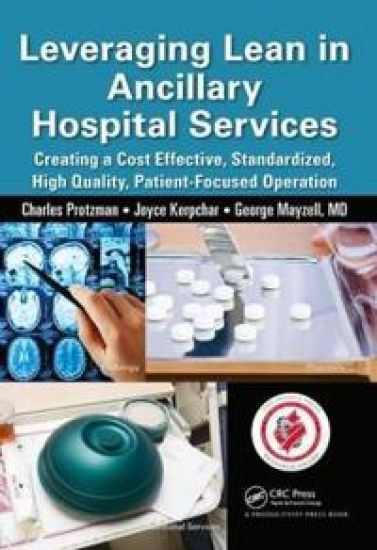
This book is part of a series of titles that are a spin-off of the Shingo Prize-winning book Leveraging Lean in Healthcare: Transforming Your Enterprise into a High Quality Patient Care Delivery System. Each book in the series focuses on a specific aspect of healthcare that has demonstrated significant process and quality improvements after a Lean implementation. There are many departments within a hospital that support the primary function of caregiving and each can benefit from implementing Lean methodologies. Leveraging Lean in Ancillary Hospital Services: Creating a Cost Effective, Standardized, High Quality, Patient-Focused Operation provides a functional understanding of Lean processes and quality improvement techniques in nutritional services, inpatient floors, pharmacy, and radiology. This book is ideal for healthcare executives, leaders, process improvement team members, and inquisitive frontline workers who want to implement and leverage Lean. Supplying detailed descriptions of Lean tools and methodologies, it identifies powerful Lean solutions specific to the needs of ancillary hospital services. The first section provides an overview of Lean concepts, tools, methodologies, and applications. The second section focuses on the application of Lean in the ancillary hospital services environment. Presenting numerous examples, stories, case studies, and lessons learned, it examines the normal operation of each area in radiology, pharmacy, and nutritional services and highlights the areas where typical problems occur. The case studies walk readers through various Lean initiatives and demonstrate how Lean tools and concepts have been used to achieve lasting improvements to processes and quality of care. It also introduces actionable blueprints that readers can duplicate or modify for use in their own institutions. Illustrating leadership‘s role in achieving departmental goals, this book will provide yo
Leveraging Lean in Outpatient Clinics

Leveraging Lean in Outpatient Clinics

Charles Protzman; Joyce Kerpchar; George Mayzell

CRC Press
2017
sidottu
This book is part of a series of titles that are a spin-off of the Shingo Prize-winning book Leveraging Lean in Healthcare: Transforming Your Enterprise into a High Quality Patient Care Delivery System. Each book in the series focuses on a specific aspect of healthcare including emergency departments, medical laboratories, outpatient clinics, ancillary services, and surgical services that has demonstrated significant process and quality improvements after a Lean implementation. Because ambulatory care settings play a significant role in the healthcare delivery system, it is important to understand how Lean concepts and tools can be used to deliver high-quality, cost-effective care. Leveraging Lean in Outpatient Clinics: Creating a Cost Effective, Standardized, High Quality, Patient-Focused Operation provides a functional understanding of Lean processes and quality improvement techniques in an outpatient clinic environment. This book is an ideal guide for healthcare executives, leaders, process improvement team members, and inquisitive frontline workers who want to implement and leverage Lean in outpatient clinical settings. Supplying detailed descriptions of Lean tools and methodologies, it identifies powerful Lean solutions specific to the needs of outpatient facilities. The first section provides an overview of Lean concepts, tools, methodologies, and applications. The second section focuses on the application of Lean in the outpatient clinic environment. It presents illustrative examples of Lean deployments in primary care, GI, and preadmission testing clinics. The examples provide broad content which can be readily transferable to other outpatient clinic settings. Illustrating leadership‘s role in achieving departmental goals, this book will provide you with a well-rounded understanding of how Lean can be applied to achieve significant improvements throughout the complete continuum of care.
The Lean Practitioner's Field Book

The Lean Practitioner's Field Book

Charles Protzman; Fred Whiton; Joyce Kerpchar; Christopher Lewandowski; Steve Stenberg; Patrick Grounds

Productivity Press
2016
sidottu
While there are numerous Lean Certification programs, most companies have their own certification paths whereby they bestow expert status upon employees after they have participated in or led a certain number of kaizen events. Arguing that the number of kaizen events should not determine a person's expert status, The Lean Practitioner's Field Book: Proven, Practical, Profitable and Powerful Techniques for Making Lean Really Work outlines a true learning path for anyone seeking to understand essential Lean principles. The book includes a plethora of examples drawn from the personal experiences of its many well-respected and award-winning contributors. These experts break down Lean concepts to their simplest terms to make everything as clear as possible for Lean practitioners. A refresher for some at times, the text provides thought-provoking questions with examples that will stimulate learning opportunities. Introducing the Lean Practitioner concept, the book details the five distinct Lean Practitioner levels and includes quizzes and criteria for each level. It highlights the differences between the kaizen event approach and the Lean system level approach as well as the difference between station balancing and baton zone. This book takes readers on a journey that begins with an overview of Lean principles and culminates with readers developing professionally through the practice of self-reliance. Providing you with the tools to implement Lean tools in your organization, the book includes discussions and examples that demonstrate how to transition from traditional accounting methods to a Lean accounting system. The book outlines an integrated, structured approach identified by the acronym BASICS (baseline, analyze, suggest solutions, implement, check, and sustain), which is combined with a proven business strategy to help ensure a successful and sustainable transformation of your organization.
Leveraging Lean in the Emergency Department

Leveraging Lean in the Emergency Department

Joyce Kerpchar; Charles Protzman; George Mayzell

Apple Academic Press Inc.
2014
nidottu
This book is part of a series of titles that are a spin-off of the Shingo Prize-winning book Leveraging Lean in Healthcare: Transforming Your Enterprise into a High Quality Patient Care Delivery System. Each book in the series focuses on a specific aspect of healthcare that has demonstrated significant process and quality improvements after a Lean implementation. Emergency departments have become notorious for long wait times and questionable quality of care. By adopting Lean manufacturing concepts, hospitals can turn the emergency department into a valuable service for the hospital and the community it serves. Leveraging Lean in the Emergency Department: Creating a Cost Effective, Standardized, High Quality, Patient-Focused Operation supplies a functional understanding of Lean emergency department processes and quality improvement techniques. It is ideal for healthcare executives, leaders, process improvement team members, and inquisitive frontline workers who want to implement and leverage Lean. Supplying detailed descriptions of Lean tools and methodologies, the book identifies powerful Lean solutions specific to the needs of the emergency department. The first section provides an overview of Lean concepts, tools, methodologies, and applications. The second section focuses on the application of Lean in the emergency department within the confines of the hospital or clinic. Presenting numerous examples, stories, case studies, and lessons learned, it examines the normal operation of each area in emergency departments and highlights the areas where typical problems occur. Next, the book walks readers through various Lean initiatives and demonstrates how Lean tools and concepts have been used to achieve lasting improvements to processes and quality of care. It also supplies actionable blueprints that readers can duplicate or modify for use in their own institutions. Illustrating leadership’s role in achieving departmental goals, this book will provide you with a well-rounded understanding of how Lean can be applied to achieve significant improvements throughout the entire continuum of care.