Kirjojen hintavertailu – 12 859 827 kirjaa ja 27 kauppaa

Kirjailija

Joyce Marcus

Kirjat ja teokset yhdessä paikassa: 11 kirjaa, julkaisuja vuosilta 1987–2024, suosituimpiin kuuluu The Flocks of the Wamani. Vertaile teosten hintoja ja tarkista saatavuus suomalaisista kirjakaupoista.

11 kirjaa

Kirjojen julkaisuvuodet: 1987–2024.

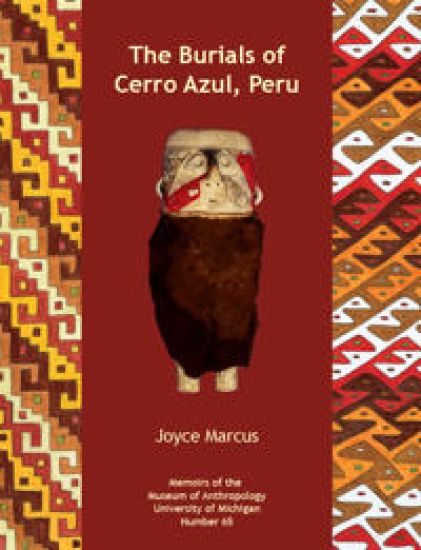
The Burials of Cerro Azul, Peru

The Burials of Cerro Azul, Peru

Joyce Marcus

THE UNIVERSITY OF MICHIGAN PRESS
2024
nidottu
Cerro Azul in Peru’s Cañete Valley, a pre-Inca fishing community in the Kingdom of Huarco, stood at the interface between a rich marine ecosystem and an irrigated coastal plain. Under the direction of its noble families, Cerro Azul dried millions of fish for shipment to inland communities, from which it received agricultural products and dried llama meat. Joyce Marcus directed excavations at the site. In two previous volumes she reported on (1) a fish storage facility and the architecture, ceramics, and brewery in an elite residential compound, and (2) the inner workings of the coastal economic system. In the course of her fieldwork, Marcus came across areas where Late Intermediate (AD 1000—1470) burials had been disturbed by illegal looting. She decided to salvage as much information from these looted burials as she could. Among her discoveries were that men at Cerro Azul were often buried with fishing nets, slings, and bolas, while women were frequently buried with belt looms, workbaskets, cotton and woolen yarn, barcoded spindles, and needle cases. This third Cerro Azul volume provides an inventory of all the burial data that Marcus was able to salvage.
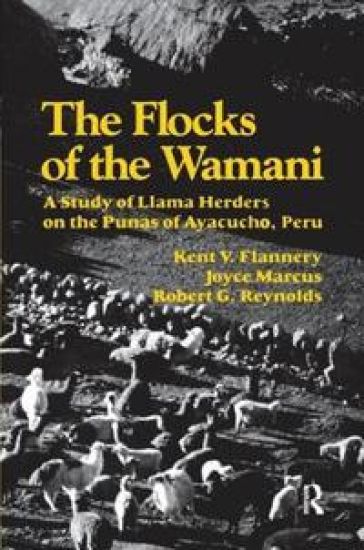
The Flocks of the Wamani

The Flocks of the Wamani

Kent V Flannery; Joyce Marcus; Robert G Reynolds

Routledge
2017
sidottu
In this volume, the authors present an original ethnographic study of five llama herding communities in Ayacucho, Peru. Data on herd dynamics are subjected to computer modeling in an effort to evaluate the roles of biology, symbolic and ritual behavior, ecological adaptation, and practical reason. The book contains the most detailed study of the waytakuy llama marking ceremony yet available. The role of this ceremony in preventing herds from going to extinction is evaluated against anthropological and sociobiological theory. This is an interdisciplinary book will appeal to professional archaeologists, prehistorians, cultural anthropologists, Andeanists, theoretical biologists, evolutionary biologists, and zoologists interested in animal domestication.
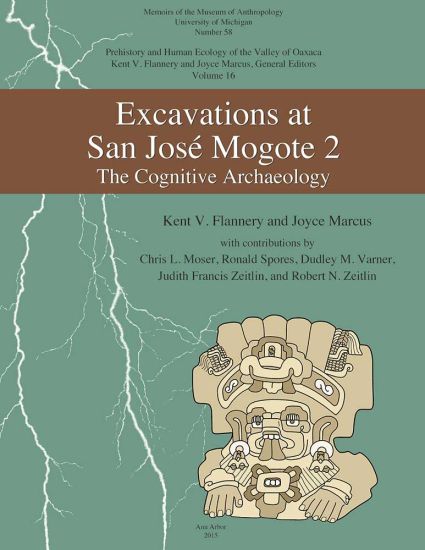
Excavations at San José Mogote 2

Excavations at San José Mogote 2

Kent V. Flannery; Joyce Marcus

University of Michigan, Museum of Anthropology, Publications Department
2015
nidottu
San José Mogote is a 60-70 ha Formative site in the northern Valley of Oaxaca, Mexico, which was occupied for a thousand years before the city of Monte Albán was founded. Filling 432 pages and utilizing more than 400 photographs and line drawings, this book describes in detail more than 35 public buildings, including men’s houses, one-room temples, a performance platform, two-room state temples, a ballcourt, and two types of palaces.
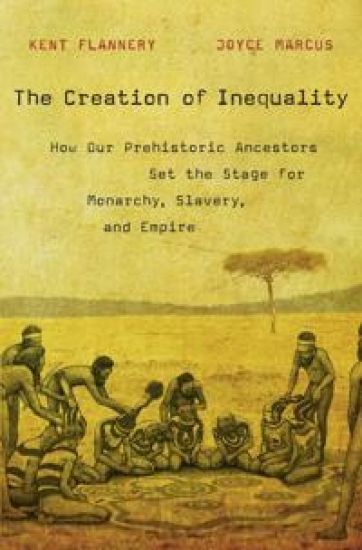
The Creation of Inequality

The Creation of Inequality

Kent Flannery; Joyce Marcus

Harvard University Press
2014
nidottu
Our early ancestors lived in small groups and worked actively to preserve social equality. As they created larger societies, however, inequality rose, and by 2500 bce truly egalitarian societies were on the wane. In The Creation of Inequality, Kent Flannery and Joyce Marcus demonstrate that this development was not simply the result of population increase, food surplus, or the accumulation of valuables. Instead, inequality resulted from conscious manipulation of the unique social logic that lies at the core of every human group. A few societies allowed talented and ambitious individuals to rise in prestige while still preventing them from becoming a hereditary elite. But many others made high rank hereditary, by manipulating debts, genealogies, and sacred lore. At certain moments in history, intense competition among leaders of high rank gave rise to despotic kingdoms and empires in the Near East, Egypt, Africa, Mexico, Peru, and the Pacific. Drawing on their vast knowledge of both living and prehistoric social groups, Flannery and Marcus describe the changes in logic that create larger and more hierarchical societies, and they argue persuasively that many kinds of inequality can be overcome by reversing these changes, rather than by violence.
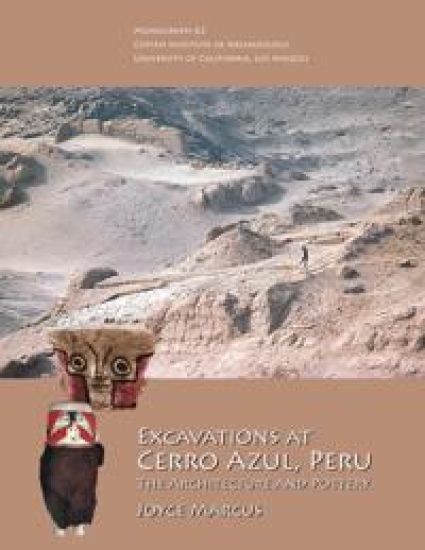
Excavations at Cerro Azul, Peru

Excavations at Cerro Azul, Peru

Joyce Marcus

Cotsen Institute of Archaeology at UCLA
2008
sidottu
Recipient of the Jo Anne Stolaroff Cotsen Prize During the Late Intermediate period (AD 1100-1470), the lower Canete Valley of Peru was controlled by the walled Kingdom of Huarco. While inland sites produced irrigated crops, the seaside community of Cerro Azul, 130 km south of Lima, produced fish for the rest of the kingdom. Cerro Azul's noble families lived in large, multipurpose compounds with tapia walls. Their pottery had its strongest ties with valleys to the south, such as Chincha and Ica. During the course of excavation, the University of Michigan Project excavated two tapia buildings in their entirety, saving every sherd from every room, walled work area, feature, and midden. This remarkable volume is the final site report on the architecture and pottery of Late Intermediate Cerro Azul.
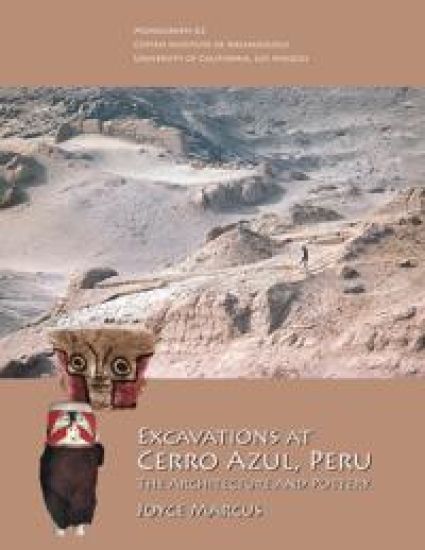
Excavations at Cerro Azul, Peru

Excavations at Cerro Azul, Peru

Joyce Marcus

Cotsen Institute of Archaeology at UCLA
2008
nidottu
Recipient of the Jo Anne Stolaroff Cotsen Prize During the Late Intermediate period (AD 1100-1470), the lower Canete Valley of Peru was controlled by the walled Kingdom of Huarco. While inland sites produced irrigated crops, the seaside community of Cerro Azul, 130 km south of Lima, produced fish for the rest of the kingdom. Cerro Azul's noble families lived in large, multipurpose compounds with tapia walls. Their pottery had its strongest ties with valleys to the south, such as Chincha and Ica. During the course of excavation, the University of Michigan Project excavated two tapia buildings in their entirety, saving every sherd from every room, walled work area, feature, and midden. This remarkable volume is the final site report on the architecture and pottery of Late Intermediate Cerro Azul.
The Flocks of the Wamani

The Flocks of the Wamani

Kent V Flannery; Joyce Marcus; Robert G Reynolds

Left Coast Press Inc
2008
nidottu
In this volume, the authors present an original ethnographic study of five llama herding communities in Ayacucho, Peru. Data on herd dynamics are subjected to computer modeling in an effort to evaluate the roles of biology, symbolic and ritual behavior, ecological adaptation, and practical reason. The book contains the most detailed study of the waytakuy llama marking ceremony yet available. The role of this ceremony in preventing herds from going to extinction is evaluated against anthropological and sociobiological theory. This is an interdisciplinary book will appeal to professional archaeologists, prehistorians, cultural anthropologists, Andeanists, theoretical biologists, evolutionary biologists, and zoologists interested in animal domestication.
Excavation at San José Mogote 1

Excavation at San José Mogote 1

Kent V. Flannery; Joyce Marcus

The University of Michigan Press
2005
nidottu
San José Mogote, an early village and chiefly center in Mexico’s Oaxaca Valley, was excavated over a fifteen-year period. This volume reports in detail on every Early and Middle Formative house recovered, including a complete inventory of artifacts, features, plants, animal bones, and craft raw materials by house, with extensive piece-plotting of items on house floors and dooryards.
Early Formative Pottery of the Valley of Oaxaca

Early Formative Pottery of the Valley of Oaxaca

Kent V. Flannery; Joyce Marcus

The University of Michigan Press
1994
nidottu
Using more than 300 illustrations, the authors present an encyclopedic analysis of the many types of pottery found in the Oaxaca Valley in the Early Formative period. From details of sherd profiles and tempers to discussions of the growth of various villages, this volume is an exhaustively thorough treatment of the topic and represents decades of archaeological fieldwork in the region.
Late Intermediate Occupation at Cerro Azul, Perú, A Preliminary Report
Cerro Azul was a late prehistoric fishing community on the south-central coast of Peru. It was one of several communities that belonged to the region of Huarco before falling to the Inca. This volume is the preliminary report of an interdisciplinary project carried out at the site from 1982 to 1986. The remains of many buildings exist on the site. During this project, crews excavated four of these, as well as middens and burials.