Kirjojen hintavertailu – 12 859 818 kirjaa ja 27 kauppaa

Kirjailija

Józef Czapski

Kirjat ja teokset yhdessä paikassa: 3 kirjaa, julkaisuja vuosilta 2018–2022, suosituimpiin kuuluu Memories of Starobielsk. Vertaile teosten hintoja ja tarkista saatavuus suomalaisista kirjakaupoista.

Nimi esiintyy myös muodoissa: Jozef Czapski

3 kirjaa

Kirjojen julkaisuvuodet: 2018–2022.

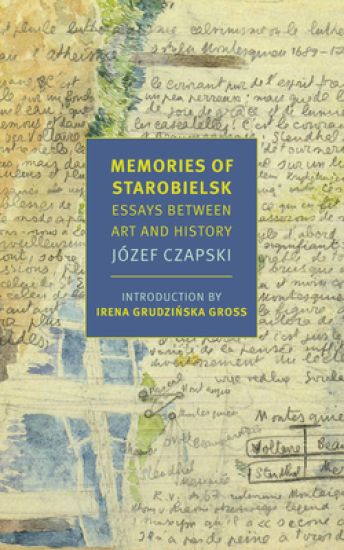
Memories of Starobielsk

Memories of Starobielsk

Jozef Czapski; Alissa Valles

The New York Review of Books, Inc
2022
nidottu
Vivid accounts of life in a Soviet prison camp by the author of 'Inhuman Land.' Interned with thousands of Polish army officers and a handful of civilians in the Soviet prisoner-of-war camp at Starobielsk in September 1939, the artist J zef Czapski was one of a very small number to survive the massacre carried out in the forest of Katyn in April 1940. In prose written while the war still raged, Czapski portrays these doomed men, some with the detail of a finished portrait and others in vivid sketches imbued with a rare combination of intimacy and respect, registering their fierce striving to remain fully engaged in humane pursuits under hopeless circumstances. This memoir is complemented by essays on art, history, and literature that show Czapski's lifelong attachment to the Russian culture that educated him, in all its contradictory manifestations, from the poet Aleksandr Blok's fascinated response to revolution to the lonely struggle of the painter Chaim Soutine. They include a wartime sequence of short essays on painting written on a train when Czapski was traveling from Moscow to the Second Polish Army's strategic base in Central Asia, which are among his most lyrical and insightful reflections on art.
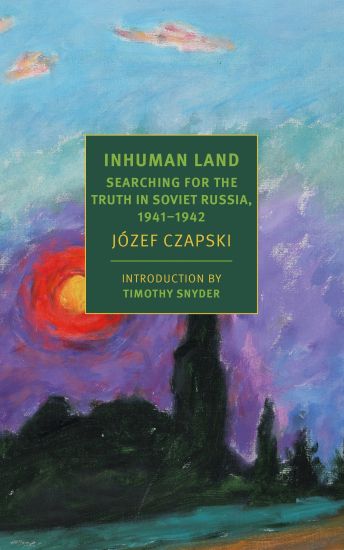
Inhuman Land

Inhuman Land

Antonia Lloyd-Jones; Józef Czapski

The New York Review of Books, Inc
2018
nidottu
A classic work of reportage about the Katyń Massacre during World War II by a soldier who narrowly escaped the atrocity himself. In 1941, when Germany turned against the USSR, tens of thousands of Poles--men, women, and children who were starving, sickly, and impoverished--were released from Soviet prison camps and allowed to join the Polish army being formed in the south of Russia. One of the survivors who made the difficult winter journey was the painter and reserve officer J zef Czapski. General Anders, the army's commander in chief, assigned Czapski the task of receiving the Poles arriving for military training; gathering accounts of what their fates had been; organizing education, culture, and news for the soldiers; and, most important, investigating the disappearance of thousands of missing Polish officers. Blocked at every level by the Soviet authorities, Czapski was unaware that in April 1940 the officers had been shot dead in the Katyn forest, a crime for which Soviet Russia never accepted responsibility. Czapski's account of the years following his release from the camp, the formation of the Polish army, and its arduous trek through Central Asia and the Middle East to fight on the Italian front is rich in anecdotes about the suffering of the Poles in the USSR, quotations from the Polish poetry that sustained him and his companions, encounters with literary gures (including Anna Akhmatova), and philosophical thoughts about the relationships between nationalities.
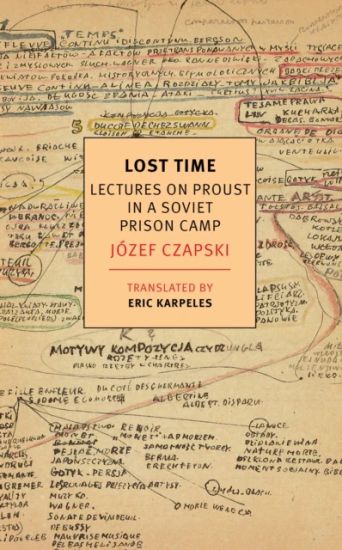
Lost Time

Lost Time

Eric Karpeles; Józef Czapski

The New York Review of Books, Inc
2018
nidottu

Halvin toimitettuna 20,90 €

The first translation of painter and writer J zef Czapski's inspiring lectures on Proust, first delivered in a prison camp in the Soviet Union during World War II. During the Second World War, as a prisoner of war in a Soviet camp, and with nothing but memory to go on, the Polish artist and soldier J zef Czapski brought Marcel Proust's In Search of Lost Time to life for an audience of prison inmates. In a series of lectures, Czapski described the arc and import of Proust's masterpiece, sketched major and minor characters in striking detail, and movingly evoked the work's originality, depth, and beauty. Eric Karpeles has translated this brilliant and -altogether unparalleled feat of the critical imagination into English for the first time, and in a thoughtful introduction he brings out how, in reckoning with Proust's great meditation on memory, Czapski helped his fellow officers to remember that there was a world apart from the world of the camp. Proust had staked the art of the novelist against the losses of a lifetime and the imminence of death. Recalling that triumphant wager, unfolding, like Sheherazade, the intricacies of Proust's world night after night, Czapski showed to men at the end of their tether that the past remained present and there was a future in which to hope.