

Kirjailija
Juan Carlos Moreno García
Kirjat ja teokset yhdessä paikassa: 6 kirjaa, julkaisuja vuosilta 2019–2025, suosituimpiin kuuluu El Estado En El Antiguo Egipto. Vertaile teosten hintoja ja tarkista saatavuus suomalaisista kirjakaupoista.
Nimi esiintyy myös muodoissa: Juan Carlos Moreno Garcia
6 kirjaa
Kirjojen julkaisuvuodet: 2019–2025.
Monarchies and the Organization of Power
Juan Carlos Moreno García; Seth Richardson
Cambridge University Press
2025
sidottu
This Element explores the organization of power in ancient Egypt and Mesopotamia and the interaction of diverse social actors between 2100 and 1750 BC. On the one hand, the forms of integration of towns and villages in larger political entities and the role played by local authorities, with a focus on local agency, the influence of mobile populations, the exercise of power in small localities, and the contrast between power reality and royal ideological claims, be they legal, divinely sanctioned, or other. On the other hand, the modalities of penetration of the royal authority in the local sphere, the alliances that linked court dignitaries and local potentates, and the co-option of local leaders. Finally, the influence of such networks of power on the historical evolution of the monarchies and the adaptability of the latter in coping with the challenges they faced to assert and reproduce their authority.
Monarchies and the Organization of Power
Juan Carlos Moreno García; Seth Richardson
Cambridge University Press
2025
pokkari
This Element explores the organization of power in ancient Egypt and Mesopotamia and the interaction of diverse social actors between 2100 and 1750 BC. On the one hand, the forms of integration of towns and villages in larger political entities and the role played by local authorities, with a focus on local agency, the influence of mobile populations, the exercise of power in small localities, and the contrast between power reality and royal ideological claims, be they legal, divinely sanctioned, or other. On the other hand, the modalities of penetration of the royal authority in the local sphere, the alliances that linked court dignitaries and local potentates, and the co-option of local leaders. Finally, the influence of such networks of power on the historical evolution of the monarchies and the adaptability of the latter in coping with the challenges they faced to assert and reproduce their authority.
Power and Regions in Ancient States
Gary M. Feinman; Juan Carlos Moreno García
Cambridge University Press
2022
pokkari
The aim of the Element is to provide a comprehensive comparison of the basic organization of power in Mesoamerica and Egypt. How power emerged and was exercised, how it reproduced itself, how social units (from households to cities) became integrated into political formation and how these articulations of power expanded and collapsed over time. The resilience of particular areas (Oaxaca, Middle Egypt), to the point that they preserved a highly distinctive cultural personality when they were included or not within states, may provide a useful guideline about the basics of integration, negotiation and autonomy in the organization of political formations.
This book presents a new analysis of the organization, structure and changes of the pharaonic state through three millennia of its history. Moreno García sheds new light on this topic by bringing to bear recent developments in state theory and archaeology, especially comparative study of the structure of ancient states and empires. The role played by pharaonic Egypt in new studies often reiterates old views about the stability, conservatism and ‘exceptionalism’ of Egyptian kingship, which supposedly remained the same across the Bronze and Iron Ages. Ancient Egypt shared many parallels with other Bronze and Iron Age societies as can be shown by an analysis of the structure of the state, of the limits of royal power, of the authority of local but neglected micro-powers (such as provincial potentates and wealthy non-elite), and of the circulation and control of wealth. Furthermore, Egypt experienced deep changes in its social, economic, political and territorial organization during its history, thus making the land of the pharaohs an ideal arena in which to test applications of models of governments and to define the dynamics that rule societies on the longue durée. When seen through these new perspectives, the pharaonic monarchies appear less exceptional than previously thought, and more dependent on the balance of power, on their capacity to control the kingdom’s resources and on the changing geopolitical conditions of their time.
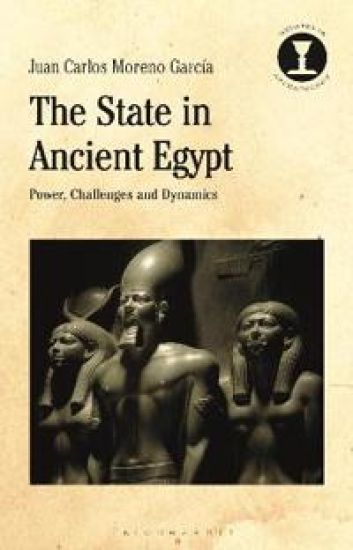
This book presents a new analysis of the organization, structure and changes of the pharaonic state through three millennia of its history. Moreno García sheds new light on this topic by bringing to bear recent developments in state theory and archaeology, especially comparative study of the structure of ancient states and empires. The role played by pharaonic Egypt in new studies often reiterates old views about the stability, conservatism and ‘exceptionalism’ of Egyptian kingship, which supposedly remained the same across the Bronze and Iron Ages. Ancient Egypt shared many parallels with other Bronze and Iron Age societies as can be shown by an analysis of the structure of the state, of the limits of royal power, of the authority of local but neglected micro-powers (such as provincial potentates and wealthy non-elite), and of the circulation and control of wealth. Furthermore, Egypt experienced deep changes in its social, economic, political and territorial organization during its history, thus making the land of the pharaohs an ideal arena in which to test applications of models of governments and to define the dynamics that rule societies on the longue durée. When seen through these new perspectives, the pharaonic monarchies appear less exceptional than previously thought, and more dependent on the balance of power, on their capacity to control the kingdom’s resources and on the changing geopolitical conditions of their time.