Kirjojen hintavertailu – 12 859 829 kirjaa ja 27 kauppaa

Kirjailija

Juan Cole

Kirjat ja teokset yhdessä paikassa: 11 kirjaa, julkaisuja vuosilta 1998–2025, suosituimpiin kuuluu The Ayatollahs and Democracy in Contemporary Iraq. Vertaile teosten hintoja ja tarkista saatavuus suomalaisista kirjakaupoista.

11 kirjaa

Kirjojen julkaisuvuodet: 1998–2025.

Rethinking the Qur’an in Late Antiquity
How the Qur’an reflects on and responds to the regional cultural, religious and political currents swirling in Western Arabia and neighboring areas during the great war, 603-630, between the Roman and Sasanian empires? The book approaches the Qur’an through six case studies. The first two consider the era 200-800 CE, which classicist Peter Brown dubbed late antiquity. The second two contextualize quranic stories and tropes in the era of Herakleios and Khosrow II. The final pair consider issues in how the Qur’an was constituted, both physically and stylistically, and also sets these processes in their late antique context. The book treats the constitution of the quranic text, first physically and then rhetorically. The use in the Qur’an of the technique of narrative apostrophe is for the first time subjected to a concerted analysis. These themes are all united by a concern to understand better issues in why the Qur’an makes certain narrative choices, how the narrative changes over time, and how it articulates with other texts and perspectives.
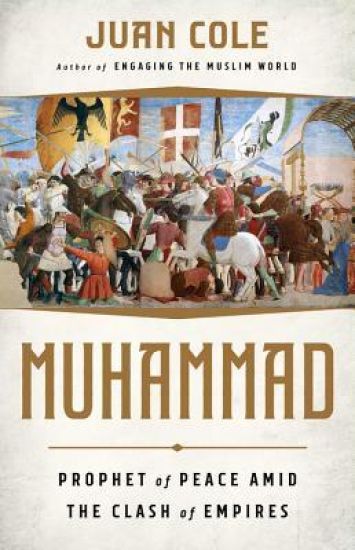
Muhammad: Prophet of Peace Amid the Clash of Empires
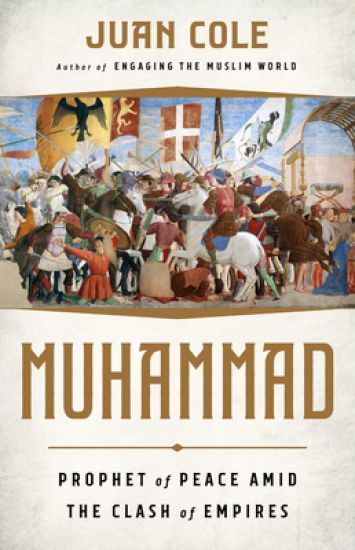
In the midst of the dramatic seventh-century war between two empires, Muhammad was a spiritual seeker in search of community and sanctuary. Many observers stereotype Islam and its scripture as inherently extreme or violent-a narrative that has overshadowed the truth of its roots. In this masterfully told account, preeminent Middle East expert Juan Cole takes us back to Islam's-and the Prophet Muhammad's-origin story. Cole shows how Muhammad came of age in an era of unparalleled violence. The eastern Roman Empire and the Sasanian Empire of Iran fought savagely throughout the Near East and Asia Minor. Muhammad's profound distress at the carnage of his times led him to envision an alternative movement, one firmly grounded in peace. The religion Muhammad founded, Islam, spread widely during his lifetime, relying on soft power instead of military might, and sought armistices even when militarily attacked. Cole sheds light on this forgotten history, reminding us that in the Qur'an, the legacy of that spiritual message endures. A vibrant history that brings to life the fascinating and complex world of the Prophet, Muhammad is the story of how peace is the rule and not the exception for one of the world's most practiced religions.
Muhammad: Prophet of Peace Amid the Clash of Empires

Muhammad: Prophet of Peace Amid the Clash of Empires

Juan Cole

Bold Type Books
2018
sidottu

Halvin toimitettuna 27,90 €

In the midst of the dramatic seventh-century war between two empires, Muhammad was a spiritual seeker in search of community and sanctuary. Many observers stereotype Islam and its scripture as inherently extreme or violent-a narrative that has overshadowed the truth of its roots. In this masterfully told account, preeminent Middle East expert Juan Cole takes us back to Islam's-and the Prophet Muhammad's-origin story. Cole shows how Muhammad came of age in an era of unparalleled violence. The eastern Roman Empire and the Sasanian Empire of Iran fought savagely throughout the Near East and Asia Minor. Muhammad's profound distress at the carnage of his times led him to envision an alternative movement, one firmly grounded in peace. The religion Muhammad founded, Islam, spread widely during his lifetime, relying on soft power instead of military might, and sought armistices even when militarily attacked. Cole sheds light on this forgotten history, reminding us that in the Qur'an, the legacy of that spiritual message endures. A vibrant history that brings to life the fascinating and complex world of the Prophet, Muhammad is the story of how peace is the rule and not the exception for one of the world's most practiced religions.
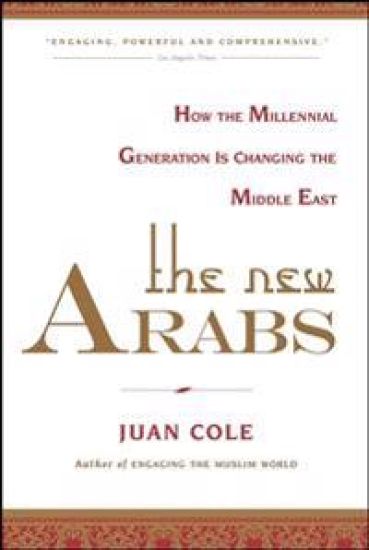
The New Arabs: How the Millennial Generation Is Changing the Middle East
Renowned blogger and Middle East expert Juan Cole takes us "inside the youth movements in Tunisia, Egypt, and Libya, showing us how activists used technology and social media to amplify their message and connect with like-minded citizens" (The New York Times) in this "rousing study of the Arab Spring" (Publishers Weekly, starred review). For three decades, Cole has sought to put the relationship of the West and the Muslim world in historical context. In The New Arabs he has written "an elegant, carefully delineated synthesis of the complicated, intertwined facets of the Arab uprisings," (Kirkus Reviews), illuminating the role of today's Arab youth--who they are, what they want, and how they will affect world politics. Not all big groups of teenagers and twenty-somethings necessarily produce historical movements centered on their identity as youth, with a generational set of organizations, symbols, and demands rooted at least partially in the distinctive problems of people their age. The Arab Millennials did. And, in a provocative, big-picture argument about the future of the Arab world, The New Arabs shows just how they did it. "Engaging, powerful, and comprehensive... The book feels as indispensable to scholars as it is insightful for a more casual reader" (Los Angeles Times).
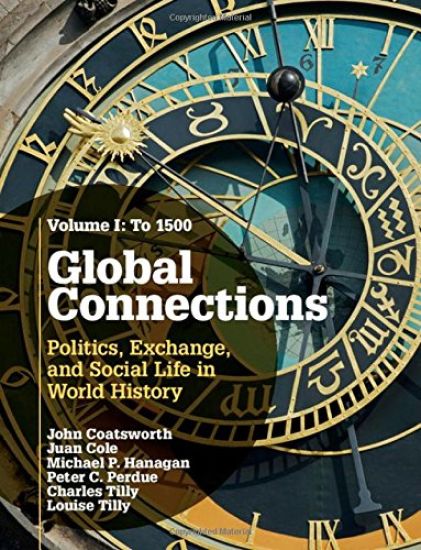
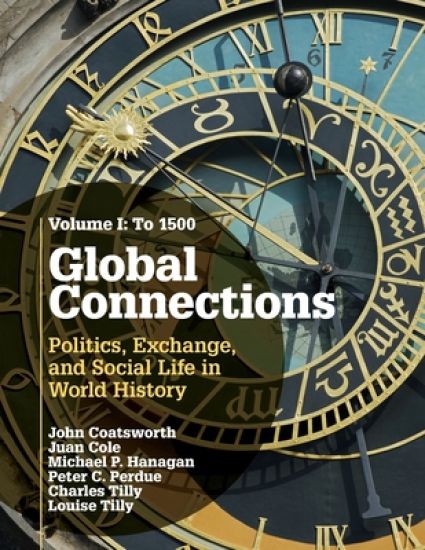
Global Connections: Volume 1, To 1500

Global Connections: Volume 1, To 1500

John Coatsworth; Juan Cole; Michael P. Hanagan; Peter C. Perdue; Charles Tilly; Louise Tilly

Cambridge University Press
2015
sidottu

Halvin toimitettuna 97,60 €

The first textbook to present world history via social history, drawing on social science methods and research. This interdisciplinary, comprehensive and comparative textbook is authored by distinguished scholars and experienced teachers, and offers expert scholarship on global history that is ideal for undergraduate students. Volume 1 takes us from the origin of hominids to ancient civilizations, the rise of empires, and the Middle Ages. The book pays particular attention to the ways in which ordinary people lived through the great changes of their times, and how everyday experience connects to great political events and the commercial exchanges of an interconnected world. With 65 maps, 45 illustrations, timelines, boxes, and primary source extracts, the book moves students easily from particular historical incidents to broader perspectives, enabling them to use historical material and social science methodologies to analyze the events of the past, present and future.
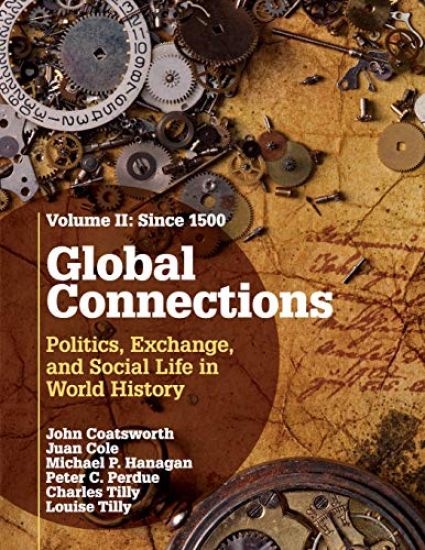
Global Connections: Volume 2, Since 1500

Global Connections: Volume 2, Since 1500

John Coatsworth; Juan Cole; Michael P. Hanagan; Peter C. Perdue; Charles Tilly; Louise Tilly

Cambridge University Press
2015
pokkari

Halvin toimitettuna 54,90 €

The first textbook to present world history via social history, drawing on social science methods and research. This interdisciplinary, comprehensive, and comparative textbook is authored by distinguished scholars and experienced teachers, and offers expert scholarship on global history that is ideal for undergraduate students. Volume 2 takes us from the early modern period to speculation about the world in 2050, visiting diverse civilizations, nation-states, ecologies, and people along the journey through time and place. The book pays particular attention to the ways in which ordinary people lived through the great changes of their times, and how everyday experience connects to great political events and the commercial exchanges of an interconnected world. With 75 maps, 65 illustrations, timelines, boxes, and primary source extracts, the book enables students to use historical material and social science methodologies to analyze the events of the past, present, and future.
Global Connections: Volume 1, To 1500

Global Connections: Volume 1, To 1500

John Coatsworth; Juan Cole; Michael P. Hanagan; Peter C. Perdue; Charles Tilly; Louise Tilly

Cambridge University Press
2015
pokkari

Halvin toimitettuna 54,90 €

The first textbook to present world history via social history, drawing on social science methods and research. This interdisciplinary, comprehensive and comparative textbook is authored by distinguished scholars and experienced teachers, and offers expert scholarship on global history that is ideal for undergraduate students. Volume 1 takes us from the origin of hominids to ancient civilizations, the rise of empires, and the Middle Ages. The book pays particular attention to the ways in which ordinary people lived through the great changes of their times, and how everyday experience connects to great political events and the commercial exchanges of an interconnected world. With 65 maps, 45 illustrations, timelines, boxes, and primary source extracts, the book moves students easily from particular historical incidents to broader perspectives, enabling them to use historical material and social science methodologies to analyze the events of the past, present and future.
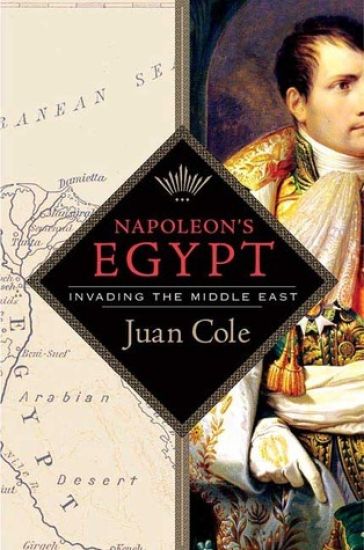
Napoleon's Egypt: Invading the Middle East

Napoleon's Egypt: Invading the Middle East

Juan Cole

St. Martin's Griffin
2008
nidottu
In this vivid and timely history, Juan Cole tells the story of Napoleon's invasion of Egypt. Revealing the young general's reasons for leading the expedition against Egypt in 1798 and showcasing his fascinating views of the Orient, Cole delves into the psychology of the military titan and his entourage. He paints a multi-faceted portrait of the daily travails of the soldiers in Napoleon's army, including how they imagined Egypt, how their expectations differed from what they found, and how they grappled with military challenges in a foreign land. Cole ultimately reveals how Napoleon's invasion, the first modern attempt to invade the Arab world, invented and crystallized the rhetoric of liberal imperialism.
The Ayatollahs and Democracy in Contemporary Iraq

The Ayatollahs and Democracy in Contemporary Iraq

Juan Cole

Amsterdam University Press
2006
nidottu
Iraqi Shiism is undergoing profound changes, leading to new elaborations of the relationship between clerics and democratic principles in an Islamic state. The Najaf tradition of thinking about Shiite Islam and the modern state in Iraq, which first developed during the Iranian constitutional revolution of 1905–1911, rejects the principle that supreme power in an Islamic state must be in clerical hands. Grand Ayatollah Ali Sistani of Iraq stands in this tradition, and he has striven to uphold and develop it since the fall of Saddam Hussein. At key points he came into conflict with the Bush administration, which was not eager for direct democracy. Parliamentary politics have also drawn in clerics of the Dawa Party, the Sadr movement, and the Supreme Council for Islamic Revolution in Iraq, all of which had earlier been authoritarian in outlook. Is Iraqi Shiism experiencing its enlightenment moment?
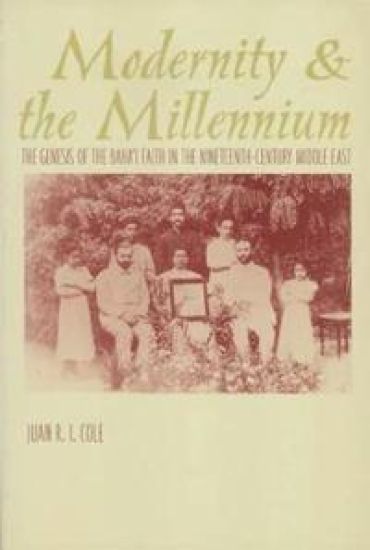
Modernity and the Millennium

Modernity and the Millennium

Juan Cole

Columbia University Press
1998
sidottu
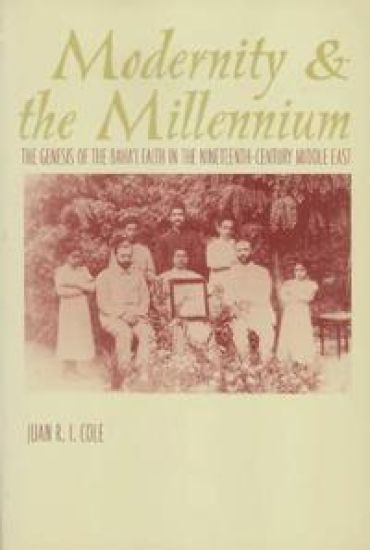
Modernity and the Millennium is the first book to chart responses in the Muslim Middle East to modernity through an examination of the evolution of the Baha'i faith--a millenarian movement led by the nineteenth-century Iranian prophet Baha'u'llah ("the Glory of God"). This volume illuminates the complexity and ambiguity that characterized the changing relationship of Baha'u'llah and his followers to modernity, considered as a transnational and fluid political and cultural field of contestation. The insights presented here into these responses to modernity illuminate not only the genesis of a new world-religion but also important facets of Middle Eastern-particularly Iranian-social and cultural shifts in the nineteenth century. Drawing on the work of Habermas, Giddens, Touraine and Bryan Turner, among others, Juan R. I. Cole considers some of the ways in which Middle Eastern society was affected by five developments central to modernity: the lessening entanglement of the state with religion, the move from absolutism to democracy, the rise of sovereign nation-states, the advent of nationalism, and the women's movement. He explores the Baha'is' positive response to religious toleration, democracy, and greater rights for women and their "utopian realist" critique of nationalism, militant Jacobin secularization, industrialized warfare, and genocide, oppression of the poor and working classes, and xenophobia.
Modernity and the Millennium

Modernity and the Millennium

Juan Cole

Columbia University Press
1998
pokkari
Modernity and the Millennium is the first book to chart responses in the Muslim Middle East to modernity through an examination of the evolution of the Baha'i faith--a millenarian movement led by the nineteenth-century Iranian prophet Baha'u'llah ("the Glory of God"). This volume illuminates the complexity and ambiguity that characterized the changing relationship of Baha'u'llah and his followers to modernity, considered as a transnational and fluid political and cultural field of contestation. The insights presented here into these responses to modernity illuminate not only the genesis of a new world-religion but also important facets of Middle Eastern-particularly Iranian-social and cultural shifts in the nineteenth century. Drawing on the work of Habermas, Giddens, Touraine and Bryan Turner, among others, Juan R. I. Cole considers some of the ways in which Middle Eastern society was affected by five developments central to modernity: the lessening entanglement of the state with religion, the move from absolutism to democracy, the rise of sovereign nation-states, the advent of nationalism, and the women's movement. He explores the Baha'is' positive response to religious toleration, democracy, and greater rights for women and their "utopian realist" critique of nationalism, militant Jacobin secularization, industrialized warfare, and genocide, oppression of the poor and working classes, and xenophobia.