
Kirjailija
Juan José Lahuerta
Kirjat ja teokset yhdessä paikassa: 8 kirjaa, julkaisuja vuosilta 2015–2026, suosituimpiin kuuluu Casa Batlló. Vertaile teosten hintoja ja tarkista saatavuus suomalaisista kirjakaupoista.
Nimi esiintyy myös muodoissa: Juan Jose Lahuerta
8 kirjaa
Kirjojen julkaisuvuodet: 2015–2026.
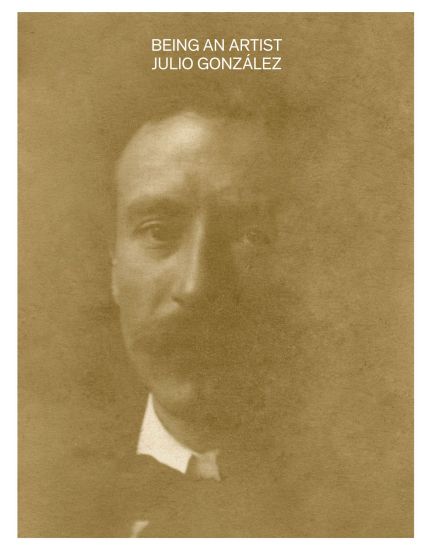
A richly illustrated catalog, with biography, of artist Julio González. The sculptures of Julio González (1876–1942) were shown at MoMA in 1956, and our understanding of his influence on modern art has grown steadily since. This lavishly illustrated book offers a new, highly nuanced account of González’s life, work, and legacy. Beginning with González’s complex family relationships, Juan José Lahuerta explores the tensions involved as González sought to combine his craft with efforts to become a painter, as the Romantic, bohemian mentality of the late nineteenth century had idealized. Lahuerta also explores the importance of González’s relationships with Picasso and other contemporaries, which helps us understand how, in the 1930s, his naïve artist’s urge was replaced by a radical urge to make art that would break every taboo related to tradition, craft, and material. The second section of the book offers a stunning presentation of the new exhibition of the Julio González collection at the Institut Valencià d'Art Modern. The book will serve as a milestone in our understanding of González’s work and influence.
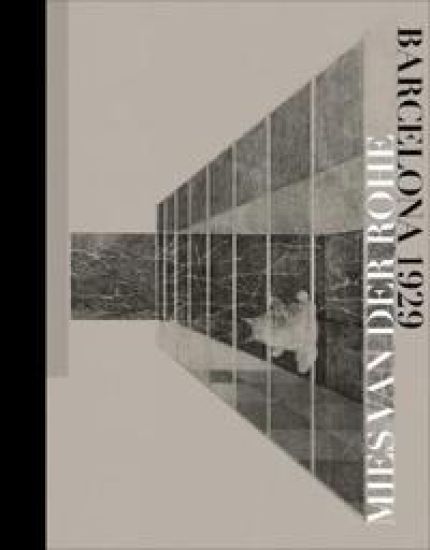
Mies Van Der Rohe: Barcelona-1929
Remei Capdevila-Werning; Beatriz Colomina; Juan Jose Lahuerta; Laura Martinez de Guerenu; Dietrich Neumann; Fritz Neumeyer; Spyros Papapetros; Lutz Robbers; Carmen Rodriguez Pedret
Editorial Tenov S.L.
2018
sidottu
The expert contributors to this lavishly illustrated volume, devoted entirely to Mies van der Rohe's Barcelona Pavilion of 1929, address here for the first time the forgotten contexts of the Pavilion's genesis. Habitually thought of as an abstract, unpolluted, and splendidly isolated building--a precursor of Mies's American period--the Pavilion is revealed here as a thoroughly European work, perhaps less pristine but more authentic. Mies and Lilly Reich were commissioned to design not only the Pavilion but also more than one hundred thousand square feet of German stands spread throughout the Exposition. By examining that work in addition to the Pavilion itself, the contributors present a farreaching reinterpretation of the whole. They also explore connections with the mass media, highlight the work's antecedents and meaning in the history of architecture, and analyze the current pavilion, a reconstruction of the original built in 1986. No other critical study offers a comparable overview of Mies's work in Barcelona.
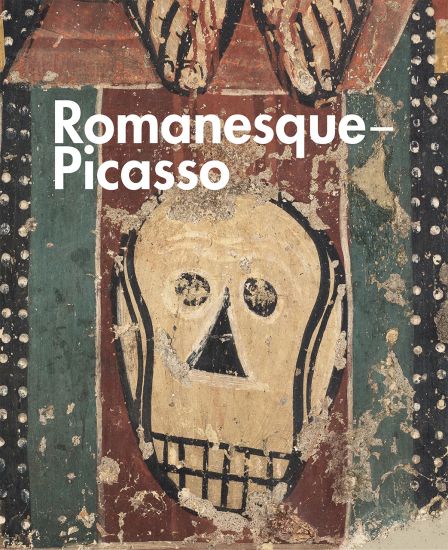
This beautifully illustrated book, the catalog for an exhibition on view at the National Museum of Art of Catalonia in Barcelona and coorganized with the Picasso Museum in Paris, explores important affinities between Picasso and Romanesque art. Using two key moments as starting points, Juan Jose Lahuerta and Emilia Philippot first discuss the summer of 1906, when Picasso stayed in the village of Gosol in the Catalan Pyrenees, and then turn to 1934, as he visited the Romanesque art collections of what is today the National Museum of Art of Catalonia. Picasso's discovery of the Romanesque nurtured his interest in other "primitive" or ethnographic art, later echoed in such decisive works as Les Demoiselles d'Avignon. Importantly, while Lahuerta and Philippot avoid any attempt to trace direct Romanesque influences on Picasso as they note, his work consistently escapes such linear accounts they do demonstrate that Picasso's interest in the twelfth-century sculpture Virgin from Gosol, his lifelong fascination with the theme of the crucifixion, and his study of the skull all reflect elements that were also of major importance in Romanesque art and architecture. What these shared features allow, Lahuerta and Philippot ultimately argue, is not only a richer understanding of Picasso's work, but also a rediscovering and reinvention of Romanesque art in our contemporary moment, causing the medieval to become refreshingly and paradoxically modern.
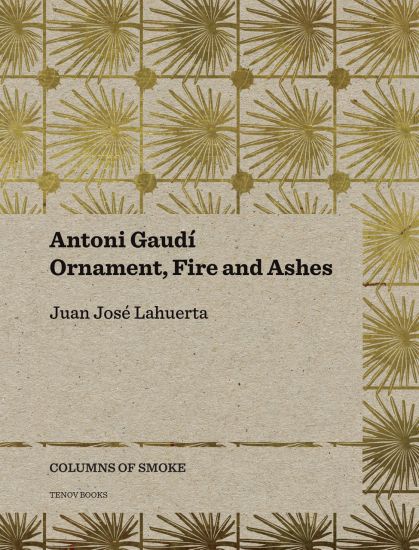
Antoni Gaudí – Ornament, Fire and Ashes
Juan José Lahuerta; Joana Teixidor; Llorenç Bonet; Graham Thomson
Editorial Tenov S.L.
2016
nidottu
Juan José Lahuerta’s Columns of Smoke series offers bold new readings of modernity and its key figures while redefining the connections between architecture, ornamentation, and the portrayal of both in print media. The third volume focuses on the Spanish architect Antoni Gaudí (1852–1926), whose spectacular fin-de-siècle bohemian modernism stood in revolutionary contrast to the leading approaches of the day. With the rise of Le Corbusier’s modern style of architecture in the early twentieth century, architects who favored ornamentation and a strong bond with nature, like Gaudí, were relegated to the sidelines. Lahuerta draws on first-hand documents, many previously unpublished, to show that Gaudí, far from being the isolated eccentric seen in other accounts, was keenly aware of the major theories and works of his time and cleverly used industrial processes to produce ornamental details that appear today to be almost handmade. Equally impressive was Gaudí’s ability to capitalize on his fame once in the public eye, as both the architect and his buildings appeared in illustrations in the popular press. His influence on avant-garde artists like Salvador Dalí, who admired the edible appearance of Gaudí’s Casa Milà in Barcelona, and Pablo Picasso, who was fascinated by the eroticism of the Casa Batlló, attests to the architect’s impact far beyond his field. Richly illustrated with rare images from a variety of sources, this highly visual take on Gaudí is also a spirited commentary on the roots of modernism more generally. Entertaining and perceptive, Antoni Gaudí challenges us to reconsider what we thought we knew about this pioneering architect and his distinctive work.
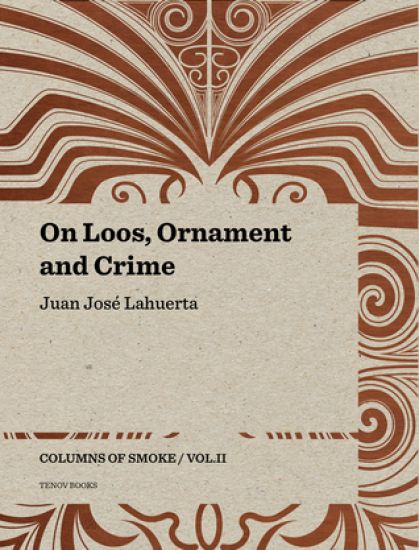
On Loos, Ornament and Crime – Columns of Smoke: Volume II
Juan José Lahuerta; Graham Thomson
Editorial Tenov S.L.
2015
nidottu
In his Columns of Smoke series, Juan Jose Lahuerta takes on the enormously ambitious task of re-reading modernity, offering us fresh ways of looking at it while drawing new links between the ideas of architecture and ornamentation, with a special focus on how they have been treated in print. While the first volume of Columns of Smoke considered epoch-making architect Adolf Loos's relationship with photography, here Lahuerta turns to the Classical strand in Loos's architecture and to his written work-and specifically his engagement with architectural and artistic theory. Lahuerta pays particular attention to Loos's seminal "Ornament and Crime," the essay that established disornamentation as the signal feature of twentieth-century architecture. Through close analysis of that essay he unearths the racially charged, pseudoscientific ideas from early anthropology that underpin Loos's thinking. Sure to be controversial, this new reading of Loos's landmark writings calls the whole disornamentation project into question, and in the process, it reveals a radically new perspective on a major turn in modern design and culture.
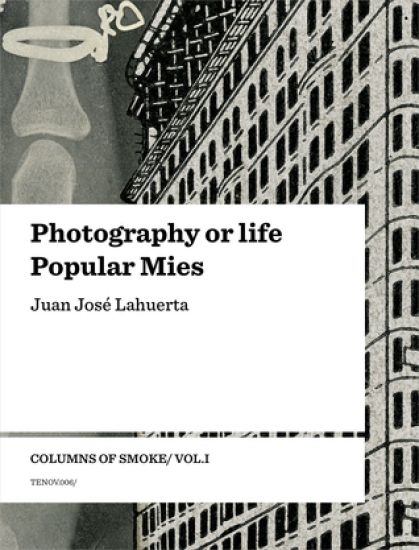
Photography or Life / Popular Mies – Columns of Smoke, Volume 1
Juan Jose Lahuerta
Editorial Tenov S.L.
2015
nidottu
Columns of Smoke is a two-volume collection. The first volume includes "Photography or Life" and "Popular Mies," which illuminate overlooked aspects of modern architecture and photography and reveal a more nuanced-and plausible-conception of the modern world. In "Photography or Life," Juan Jose Lahuerta contrasts well-known images tied to the history of twentieth-century architecture with anonymous graphic materials and pictures from the popular press. In doing so, he demonstrates that pointing a camera at a building is neither natural nor innocent-it involves deliberate and telling decisions. His analysis of the work of Adolf Loos and Le Corbusier, for example, suggests irreconcilable differences between the two architects that represent radically opposed approaches to architecture and life. Furthermore, a close study of snapshots of Walter Gropius' Bauhaus building taken by teachers and students leads to new ways of understanding the myths associated with the Dessau school. Using the same method in "Popular Mies," Lahuerts looks at photographs of architect Ludwig Mies van der Rohe's work and shows that Mies was influenced not only by Stieglitz and Camera Work, but also a mass culture that enjoyed zeppelins, music halls, x-rays, and phantasmagorical gadgets. At the same time, in their portrayals of Mies' work, the press and anonymous photographers situated it in a popular context that stands as a counterpoint to the notion of a heroic modern era. This first volume of Columns of Smoke is a brilliant treatment of modern visual culture that will redefine our concept of modernity.
Religious subject matter is not central in 20th century art. One might therefore suspect that, for the avantgarde, the Spanish Civil War (1936-1939) would have eclipsed religion altogether. However, as Juan José Lahuerta argues in this book, the war caused a considerable revival of certain themes of religious art. In particular, it intensified Pablo Picasso's lifelong preoccupation with the subject of the Crucifixion. The work of the Swiss surrealist painter Max von Moos (1903-1979) throws additional light on the paradox at hand. In 1938, i.e. one year after Picasso painted "Guernica," von Moos published an essay entitled "Religious Painting of Our Time" that addresses some of the critical issues then confronted by church art: issues of communication and expression, realism and abstraction that turn out to offer surprising insights into Picasso's art - if not into modern art altogether.