Kirjojen hintavertailu – 12 903 725 kirjaa ja 27 kauppaa

Kirjailija

Juana María Rodríguez

Kirjat ja teokset yhdessä paikassa: 8 kirjaa, julkaisuja vuosilta 2003–2026, suosituimpiin kuuluu Puto. Vertaile teosten hintoja ja tarkista saatavuus suomalaisista kirjakaupoista.

8 kirjaa

Kirjojen julkaisuvuodet: 2003–2026.

Puto

Puto

Ricardo A Bracho; Cherríe Moraga; Juana María Rodríguez

DUKE UNIVERSITY PRESS
2026
pokkari
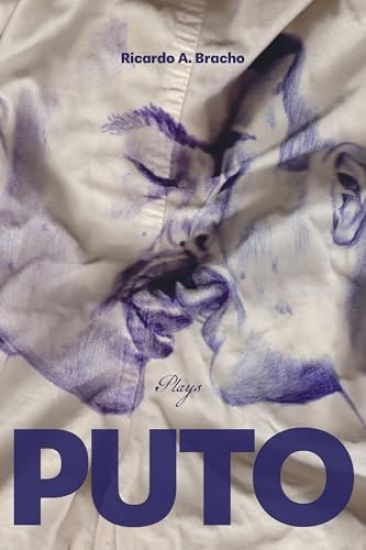
Ricardo A. Bracho is a queer Chicano Marxist playwright from Los Angeles whose theatrical works dramatize the lives of gay Black and Brown partisans of anti-capitalism and decolonization. Characterized by their playful use of theory, Bracho’s plays utilize the stage as a place for characters to debate questions of sexual and political liberation. Though Bracho’s work has been breaking ground within the experimental Latinx theater and arts community since the 1990s, his plays have not been widely accessible beyond their staging. Driven by passion—for politics, for the dancefloor, for dispossessed bodies, communities, and lands—Bracho’s award-winning plays express a polyphony of outlaw voices and contemporary dramas. With a foreword by Bracho’s teacher and iconic Chicana writer CherrÍe Moraga, an afterword by Juana Maria Rodriguez, as well as critical notes and an introduction by editors Jennifer Ponce de León, Richard T. Rodriguez, and Randall Williams, Puto makes Bracho’s key works available to a broader public for the first time, bringing Bracho’s frank, transgressive, and revolutionary work to the forefront just when the world needs it most.
Puto

Puto

Ricardo A Bracho; Cherríe Moraga; Juana María Rodríguez

DUKE UNIVERSITY PRESS
2026
sidottu
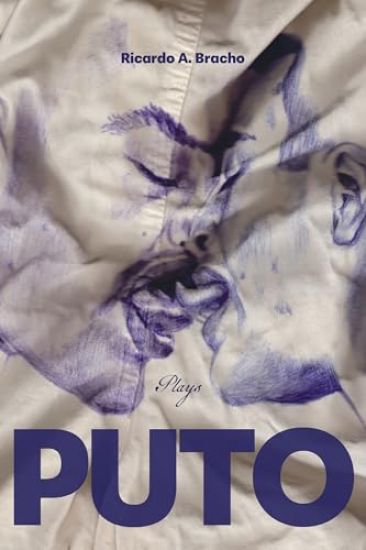
Ricardo A. Bracho is a queer Chicano Marxist playwright from Los Angeles whose theatrical works dramatize the lives of gay Black and Brown partisans of anti-capitalism and decolonization. Characterized by their playful use of theory, Bracho’s plays utilize the stage as a place for characters to debate questions of sexual and political liberation. Though Bracho’s work has been breaking ground within the experimental Latinx theater and arts community since the 1990s, his plays have not been widely accessible beyond their staging. Driven by passion—for politics, for the dancefloor, for dispossessed bodies, communities, and lands—Bracho’s award-winning plays express a polyphony of outlaw voices and contemporary dramas. With a foreword by Bracho’s teacher and iconic Chicana writer CherrÍe Moraga, an afterword by Juana Maria Rodriguez, as well as critical notes and an introduction by editors Jennifer Ponce de León, Richard T. Rodriguez, and Randall Williams, Puto makes Bracho’s key works available to a broader public for the first time, bringing Bracho’s frank, transgressive, and revolutionary work to the forefront just when the world needs it most.
Puta Life

Puta Life

Juana María Rodríguez

DUKE UNIVERSITY PRESS
2023
sidottu
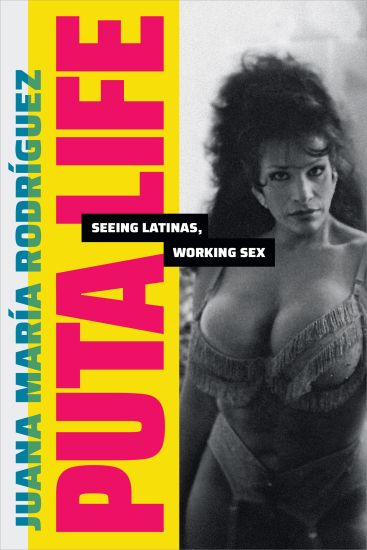
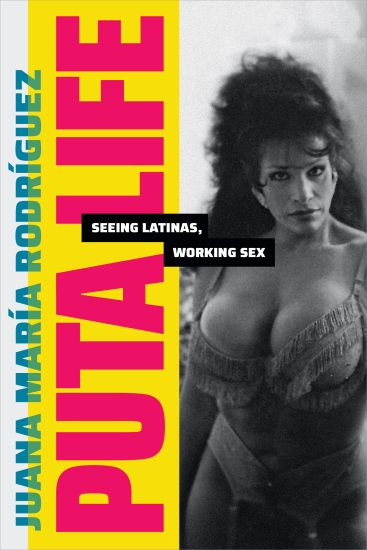
In Puta Life, Juana MarÍa RodrÍguez probes the ways that sexual labor and Latina sexuality become visual phenomena. Drawing on state archives, illustrated biographies, documentary films, photojournalistic essays, graphic novels, and digital spaces, she focuses on the figure of the puta-the whore, that phantasmatic figure of Latinized feminine excess. RodrÍguez’s eclectic archive features the faces and stories of women whose lives have been mediated by sex work's stigmatization and criminalization-washerwomen and masked wrestlers, porn stars and sexiles. RodrÍguez examines how visual tropes of racial and sexual deviance expose feminine subjects to misogyny and violence, attuning our gaze to how visual documentation shapes perceptions of sexual labor. Throughout this poignant and personal text, RodrÍguez brings the language of affect and aesthetics to bear upon understandings of gender, age, race, sexuality, labor, disability, and migration. Highlighting the criminalization and stigmatization that surrounds sex work, she lingers on those traces of felt possibility that might inspire more ethical forms of relation and care.
Puta Life

Puta Life

Juana María Rodríguez

DUKE UNIVERSITY PRESS
2023
pokkari
In Puta Life, Juana MarÍa RodrÍguez probes the ways that sexual labor and Latina sexuality become visual phenomena. Drawing on state archives, illustrated biographies, documentary films, photojournalistic essays, graphic novels, and digital spaces, she focuses on the figure of the puta-the whore, that phantasmatic figure of Latinized feminine excess. RodrÍguez’s eclectic archive features the faces and stories of women whose lives have been mediated by sex work's stigmatization and criminalization-washerwomen and masked wrestlers, porn stars and sexiles. RodrÍguez examines how visual tropes of racial and sexual deviance expose feminine subjects to misogyny and violence, attuning our gaze to how visual documentation shapes perceptions of sexual labor. Throughout this poignant and personal text, RodrÍguez brings the language of affect and aesthetics to bear upon understandings of gender, age, race, sexuality, labor, disability, and migration. Highlighting the criminalization and stigmatization that surrounds sex work, she lingers on those traces of felt possibility that might inspire more ethical forms of relation and care.
Sexual Futures, Queer Gestures, and Other Latina Longings

Sexual Futures, Queer Gestures, and Other Latina Longings

Juana María Rodríguez

New York University Press
2014
pokkari
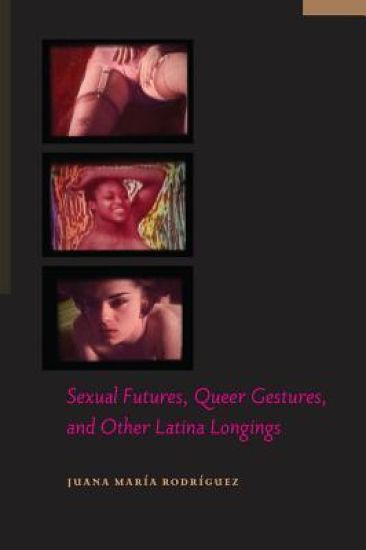
Winner of the Alan Bray Memorial Book Prize presented by the GL/Q Caucus of the Modern Language Association Finalist for the 2015 LGBT Studies Award presented by the Lambda Literary Foundation Sexual Futures, Queer Gestures and Other Latina Longings proposes a theory of sexual politics that works in the interstices between radical queer desires and the urgency of transforming public policy, between utopian longings and everyday failures. Considering the ways in which bodily movement is assigned cultural meaning, Juana María Rodríguez takes the stereotypes of the hyperbolically gestural queer Latina femme body as a starting point from which to discuss how gestures and forms of embodiment inform sexual pleasures and practices in the social realm. Centered on the sexuality of racialized queer female subjects, the book's varied archive—which includes burlesque border crossings, daddy play, pornography, sodomy laws, and sovereignty claims—seeks to bring to the fore alternative sexual practices and machinations that exist outside the sightlines of mainstream cosmopolitan gay male culture. Situating articulations of sexual subjectivity between the interpretive poles of law and performance, Rodríguez argues that forms of agency continually mediate among these various structures of legibility—the rigid confines of the law and the imaginative possibilities of the performative. She reads the strategies of Puerto Rican activists working toward self-determination alongside sexual performances on stage, in commercial pornography, in multi-media installations, on the dance floor, and in the bedroom. Rodríguez examines not only how projections of racialized sex erupt onto various discursive mediums but also how the confluence of racial and gendered anxieties seeps into the gestures and utterances of sexual acts, kinship structures, and activist practices. Ultimately, Sexual Futures, Queer Gestures, and Other Latina Longings reveals —in lyrical style and explicit detail—how sex has been deployed in contemporary queer communities in order to radically reconceptualize sexual politics.
Sexual Futures, Queer Gestures, and Other Latina Longings

Sexual Futures, Queer Gestures, and Other Latina Longings

Juana María Rodríguez

New York University Press
2014
sidottu
Winner of the Alan Bray Memorial Book Prize presented by the GL/Q Caucus of the Modern Language Association Finalist for the 2015 LGBT Studies Award presented by the Lambda Literary Foundation Sexual Futures, Queer Gestures and Other Latina Longings proposes a theory of sexual politics that works in the interstices between radical queer desires and the urgency of transforming public policy, between utopian longings and everyday failures. Considering the ways in which bodily movement is assigned cultural meaning, Juana María Rodríguez takes the stereotypes of the hyperbolically gestural queer Latina femme body as a starting point from which to discuss how gestures and forms of embodiment inform sexual pleasures and practices in the social realm. Centered on the sexuality of racialized queer female subjects, the book's varied archive—which includes burlesque border crossings, daddy play, pornography, sodomy laws, and sovereignty claims—seeks to bring to the fore alternative sexual practices and machinations that exist outside the sightlines of mainstream cosmopolitan gay male culture. Situating articulations of sexual subjectivity between the interpretive poles of law and performance, Rodríguez argues that forms of agency continually mediate among these various structures of legibility—the rigid confines of the law and the imaginative possibilities of the performative. She reads the strategies of Puerto Rican activists working toward self-determination alongside sexual performances on stage, in commercial pornography, in multi-media installations, on the dance floor, and in the bedroom. Rodríguez examines not only how projections of racialized sex erupt onto various discursive mediums but also how the confluence of racial and gendered anxieties seeps into the gestures and utterances of sexual acts, kinship structures, and activist practices. Ultimately, Sexual Futures, Queer Gestures, and Other Latina Longings reveals —in lyrical style and explicit detail—how sex has been deployed in contemporary queer communities in order to radically reconceptualize sexual politics.
Queer Latinidad

Queer Latinidad

Juana María Rodríguez

New York University Press
2003
pokkari
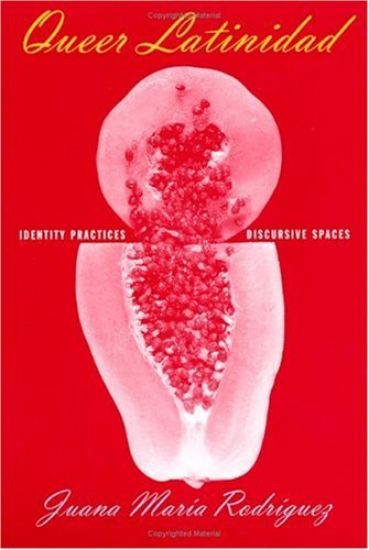
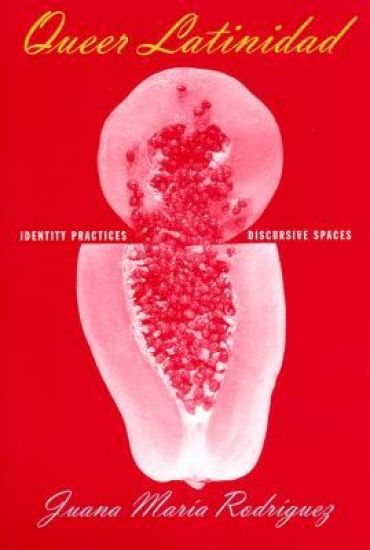
An examination into queer identity in relation to Latino/a America According to the 2000 census, Latinos/as have become the largest ethnic minority group in the United States. Images of Latinos and Latinas in mainstream news and in popular culture suggest a Latin Explosion at center stage, yet the topic of queer identity in relation to Latino/a America remains under examined. Juana María Rodríguez attempts to rectify this dearth of scholarship in Queer Latinidad: Identity Practices, Discursive Spaces, by documenting the ways in which identities are transformed by encounters with language, the law, culture, and public policy. She identifies three key areas as the project's case studies: activism, primarily HIV prevention; immigration law; and cyberspace. In each, Rodríguez theorizes the ways queer Latino/a identities are enabled or constrained, melding several theoretical and methodological approaches to argue that these sites are complex and dynamic social fields. As she moves the reader from one disciplinary location to the other, Rodríguez reveals the seams of her own academic engagement with queer latinidad. This deftly crafted work represents a dynamic and innovative approach to the study of identity formation and representation, making a vital contribution to a new reformulation of gender and sexuality studies.
Queer Latinidad

Queer Latinidad

Juana María Rodríguez

New York University Press
2003
sidottu
An examination into queer identity in relation to Latino/a America According to the 2000 census, Latinos/as have become the largest ethnic minority group in the United States. Images of Latinos and Latinas in mainstream news and in popular culture suggest a Latin Explosion at center stage, yet the topic of queer identity in relation to Latino/a America remains under examined. Juana María Rodríguez attempts to rectify this dearth of scholarship in Queer Latinidad: Identity Practices, Discursive Spaces, by documenting the ways in which identities are transformed by encounters with language, the law, culture, and public policy. She identifies three key areas as the project's case studies: activism, primarily HIV prevention; immigration law; and cyberspace. In each, Rodríguez theorizes the ways queer Latino/a identities are enabled or constrained, melding several theoretical and methodological approaches to argue that these sites are complex and dynamic social fields. As she moves the reader from one disciplinary location to the other, Rodríguez reveals the seams of her own academic engagement with queer latinidad. This deftly crafted work represents a dynamic and innovative approach to the study of identity formation and representation, making a vital contribution to a new reformulation of gender and sexuality studies.