Kirjojen hintavertailu – 12 859 818 kirjaa ja 27 kauppaa
Kirjailija
Judith Butler
Kirjat ja teokset yhdessä paikassa: 102 kirjaa, julkaisuja vuosilta 1991–2026, suosituimpiin kuuluu Kuka pelkää sukupuolta?. Vertaile teosten hintoja ja tarkista saatavuus suomalaisista kirjakaupoista.
Years of remodelling the welfare state, the rise of technology, and the growing power of neoliberal government apparatuses have established a society of the precarious. In this new reality, productivity is no longer just a matter of labour, but affects the formation of the self, blurring the division between personal and professional lives. Encouraged to believe ourselves flexible and autonomous, we experience a creeping isolation that has both social and political impacts, and serves the purposes of capital accumulation and social control. In State of Insecurity, Isabell Lorey explores the possibilities for organization and resistance under the contemporary status quo, and anticipates the emergence of a new and disobedient self-government of the precarious.
Years of remodelling the welfare state, the rise of technology, and the growing power of neoliberal government apparatuses have established a society of the precarious. In this new reality, productivity is no longer just a matter of labour, but affects the formation of the self, blurring the division between personal and professional lives. Encouraged to believe ourselves flexible and autonomous, we experience a creeping isolation that has both social and political impacts, and serves the purposes of capital accumulation and social control. In State of Insecurity, Isabell Lorey explores the possibilities for organization and resistance under the contemporary status quo, and anticipates the emergence of a new and disobedient self-government of the precarious.
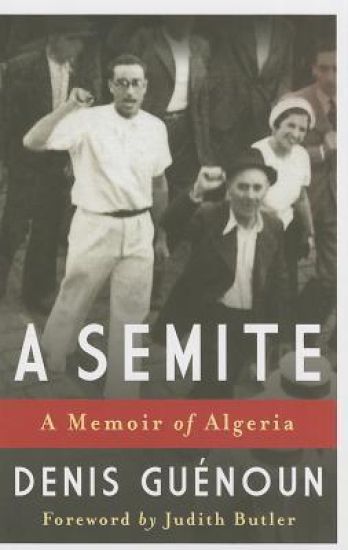
In this vivid memoir, Denis Guenoun excavates his family's past and progressively fills out a portrait of an imposing, enigmatic father. Rene Guenoun was a teacher and a pioneer, and his secret support for Algerian independence was just one of the many things he did not discuss with his teenaged son. To be Algerian, pro-independence, a French citizen, a Jew, and a Communist were not, to Rene's mind, dissonant allegiances. He believed Jews and Arabs were bound by an authentic fraternity and could only realize a free future together. Rene Guenoun called himself a Semite, a word that he felt united Jewish and Arab worlds and best reflected a shared origin. He also believed that Algerians had the same political rights as Frenchmen. Although his Jewish family was rooted in Algeria, he inherited French citizenship and revered the principles of the French Revolution. He taught science in a French lycee in Oran and belonged to the French Communist Party. His steadfast belief in liberty, equality, and fraternity led him into trouble, including prison and exile, yet his failures as an activist never shook his faith in a rational, generous future. Rene Guenoun was drafted to defend Vichy France's colonies in the Middle East during World War II. At the same time, Vichy barred him and his wife from teaching because they were Jewish. When the British conquered Syria, he was sent home to Oran, and in 1943, after the Allies captured Algeria, he joined the Free French Army and fought in Europe. After the war, both parents did their best to reconcile militant unionism and clandestine party activity with the demands of work and family. The Guenouns had little interest in Israel and considered themselves at home in Algeria; yet because he supported Algerian independence, Rene Guenoun outraged his French neighbors and was expelled from Algeria by the French paramilitary Organisation Armee Secrete. He spent his final years in Marseille. Gracefully weaving together youthful memories with research into his father's life and times, Denis Guenoun re-creates an Algerian past that proved lovely, intellectually provocative, and dangerous.
Judith Butler follows Edward Said's late suggestion that through a consideration of Palestinian dispossession in relation to Jewish diasporic traditions a new ethos can be forged for a one-state solution. Butler engages Jewish philosophical positions to articulate a critique of political Zionism and its practices of illegitimate state violence, nationalism, and state-sponsored racism. At the same time, she moves beyond communitarian frameworks, including Jewish ones, that fail to arrive at a radical democratic notion of political cohabitation. Butler engages thinkers such as Edward Said, Emmanuel Levinas, Hannah Arendt, Primo Levi, Martin Buber, Walter Benjamin, and Mahmoud Darwish as she articulates a new political ethic. In her view, it is as important to dispute Israel's claim to represent the Jewish people as it is to show that a narrowly Jewish framework cannot suffice as a basis for an ultimate critique of Zionism. She promotes an ethical position in which the obligations of cohabitation do not derive from cultural sameness but from the unchosen character of social plurality. Recovering the arguments of Jewish thinkers who offered criticisms of Zionism or whose work could be used for such a purpose, Butler disputes the specific charge of anti-Semitic self-hatred often leveled against Jewish critiques of Israel. Her political ethic relies on a vision of cohabitation that thinks anew about binationalism and exposes the limits of a communitarian framework to overcome the colonial legacy of Zionism. Her own engagements with Edward Said and Mahmoud Darwish form an important point of departure and conclusion for her engagement with some key forms of thought derived in part from Jewish resources, but always in relation to the non-Jew. Butler considers the rights of the dispossessed, the necessity of plural cohabitation, and the dangers of arbitrary state violence, showing how they can be extended to a critique of Zionism, even when that is not their explicit aim. She revisits and affirms Edward Said's late proposals for a one-state solution within the ethos of binationalism. Butler's startling suggestion: Jewish ethics not only demand a critique of Zionism, but must transcend its exclusive Jewishness in order to realize the ethical and political ideals of living together in radical democracy.
Come si vive dopo l'11 settembre? Quali conseguenze per le vite private e per le libert individuali? Opponendosi all'uso della violenza come risposta al lutto collettivo, Judith Butlersostiene che la posizione di privilegio del mondo occidentale ci consente di immaginare unmondo in cui l'interdipendenza tra i popoli e gli individui divenga la base di una comunit politica globale. "Ciascuno di noi in parte politicamente costituito dalla vulnerabilit socialedel proprio corpo - dice Butler - in quanto luogo del desiderio e della vulnerabilit fisica, luogodi una dimensione pubblica a un tempo esposta e assertiva". La filosofa americana sostieneun'etica non violenta, fondata sulla consapevolezza della vulnerabilit e precariet della vitaumana, e ci mostra come una pi profonda comprensione del significato del lutto e dellaviolenza possa invece condurci verso nuove forme di solidariet e giustizia globale. Judith Butler (Cleveland, 1956) insegna Letterature comparate e Retorica all'Universit di Berkeley (California) dove anche co-direttrice del programma di Critical Theory. Libriquali Questione di genere e La rivendicazione di Antigone sono presto diventati dei classicidel femminismo internazionale nei quali Butler capovolge il concetto di corpo sessuatoconsiderato non come dato biologico ma come costruzione culturale. Il testo di Judith Butler che qui presentiamo in una nuova edizione, leggermente modificata rispetto alla precedente, appartiene a pieno titolo a questa nuova tendenza degli studi femministi, ed anzi il capostipite di una precisa modalit di fare politica femminista. Esso infatti declina in modo innovativo le riflessioni relative al gender, alla sessualit , alla vivibilit di corpi e desideri, intrecciando il lessico della riflessione femminista e queer con quello proprio della riflessione politica mainstream. Guerra e violenza, in altre parole, sono interrogate a partire dall'insolita prospettiva del dolore e della perdita. Quando usc nel 2004 negli Stati Uniti, e poco dopo anche in Italia, Precarious Life fu subito molto letto e apprezzato. Con una certa dose di audacia intellettuale il testo infatti presentava una lettura del post 11 settembre che si discostava sia dalla superficialit dei resoconti giornalistici sia dalla specificit delle produzioni accademiche. Con sapiente capacit comunicativa, esso tentava di parlare ad una audience pi vasta delle solite ristrette cerchie intellettuali e allo stesso tempo non rinunciava ad affrontare con profondit filosofica questioni che in genere i pubblici dei media di massa non sono abituati a frequentare. (dall'introduzione di Olivia Guaraldo)
This volume interrogates settled ways of thinking about the seemingly interminable conflict between religious and secular values in our world today. What are the assumptions and resources internal to secular conceptions of critique that help or hinder our understanding of one of the most pressing conflicts of our times? Taking as their point of departure the question of whether critique belongs exclusively to forms of liberal democracy that define themselves in opposition to religion, these authors consider the case of the "Danish cartoon controversy" of 2005. They offer accounts of reading, understanding, and critique for offering a way to rethink conventional oppositions between free speech and religious belief, judgment and violence, reason and prejudice, rationality and embodied life. The book, first published in 2009, has been updated for the present edition with a new Preface by the authors.
This volume interrogates settled ways of thinking about the seemingly interminable conflict between religious and secular values in our world today. What are the assumptions and resources internal to secular conceptions of critique that help or hinder our understanding of one of the most pressing conflicts of our times? Taking as their point of departure the question of whether critique belongs exclusively to forms of liberal democracy that define themselves in opposition to religion, these authors consider the case of the "Danish cartoon controversy" of 2005. They offer accounts of reading, understanding, and critique for offering a way to rethink conventional oppositions between free speech and religious belief, judgment and violence, reason and prejudice, rationality and embodied life. The book, first published in 2009, has been updated for the present edition with a new Preface by the authors.
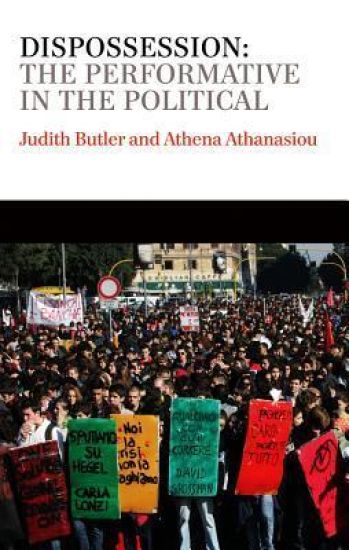
Dispossession describes the condition of those who have lost land, citizenship, property, and a broader belonging to the world. This thought-provoking book seeks to elaborate our understanding of dispossession outside of the conventional logic of possession, a hallmark of capitalism, liberalism, and humanism. Can dispossession simultaneously characterize political responses and opposition to the disenfranchisement associated with unjust dispossession of land, economic and political power, and basic conditions for living? In the context of neoliberal expropriation of labor and livelihood, dispossession opens up a performative condition of being both affected by injustice and prompted to act. From the uprisings in the Middle East and North Africa to the anti-neoliberal gatherings at Puerta del Sol, Syntagma and Zucchotti Park, an alternative political and affective economy of bodies in public is being formed. Bodies on the street are precarious - exposed to police force, they are also standing for, and opposing, their dispossession. These bodies insist upon their collective standing, organize themselves without and against hierarchy, and refuse to become disposable: they demand regard. This book interrogates the agonistic and open-ended corporeality and conviviality of the crowd as it assembles in cities to protest political and economic dispossession through a performative dispossession of the sovereign subject and its propriety.
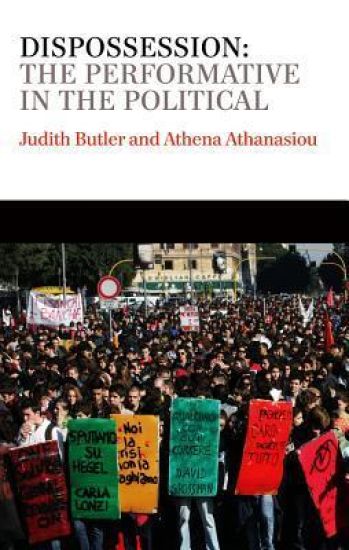
Dispossession describes the condition of those who have lost land, citizenship, property, and a broader belonging to the world. This thought-provoking book seeks to elaborate our understanding of dispossession outside of the conventional logic of possession, a hallmark of capitalism, liberalism, and humanism. Can dispossession simultaneously characterize political responses and opposition to the disenfranchisement associated with unjust dispossession of land, economic and political power, and basic conditions for living? In the context of neoliberal expropriation of labor and livelihood, dispossession opens up a performative condition of being both affected by injustice and prompted to act. From the uprisings in the Middle East and North Africa to the anti-neoliberal gatherings at Puerta del Sol, Syntagma and Zucchotti Park, an alternative political and affective economy of bodies in public is being formed. Bodies on the street are precarious - exposed to police force, they are also standing for, and opposing, their dispossession. These bodies insist upon their collective standing, organize themselves without and against hierarchy, and refuse to become disposable: they demand regard. This book interrogates the agonistic and open-ended corporeality and conviviality of the crowd as it assembles in cities to protest political and economic dispossession through a performative dispossession of the sovereign subject and its propriety.
Judith Butler follows Edward Said's late suggestion that through a consideration of Palestinian dispossession in relation to Jewish diasporic traditions a new ethos can be forged for a one-state solution. Butler engages Jewish philosophical positions to articulate a critique of political Zionism and its practices of illegitimate state violence, nationalism, and state-sponsored racism. At the same time, she moves beyond communitarian frameworks, including Jewish ones, that fail to arrive at a radical democratic notion of political cohabitation. Butler engages thinkers such as Edward Said, Emmanuel Levinas, Hannah Arendt, Primo Levi, Martin Buber, Walter Benjamin, and Mahmoud Darwish as she articulates a new political ethic. In her view, it is as important to dispute Israel's claim to represent the Jewish people as it is to show that a narrowly Jewish framework cannot suffice as a basis for an ultimate critique of Zionism. She promotes an ethical position in which the obligations of cohabitation do not derive from cultural sameness but from the unchosen character of social plurality. Recovering the arguments of Jewish thinkers who offered criticisms of Zionism or whose work could be used for such a purpose, Butler disputes the specific charge of anti-Semitic self-hatred often leveled against Jewish critiques of Israel. Her political ethic relies on a vision of cohabitation that thinks anew about binationalism and exposes the limits of a communitarian framework to overcome the colonial legacy of Zionism. Her own engagements with Edward Said and Mahmoud Darwish form an important point of departure and conclusion for her engagement with some key forms of thought derived in part from Jewish resources, but always in relation to the non-Jew. Butler considers the rights of the dispossessed, the necessity of plural cohabitation, and the dangers of arbitrary state violence, showing how they can be extended to a critique of Zionism, even when that is not their explicit aim. She revisits and affirms Edward Said's late proposals for a one-state solution within the ethos of binationalism. Butler's startling suggestion: Jewish ethics not only demand a critique of Zionism, but must transcend its exclusive Jewishness in order to realize the ethical and political ideals of living together in radical democracy.
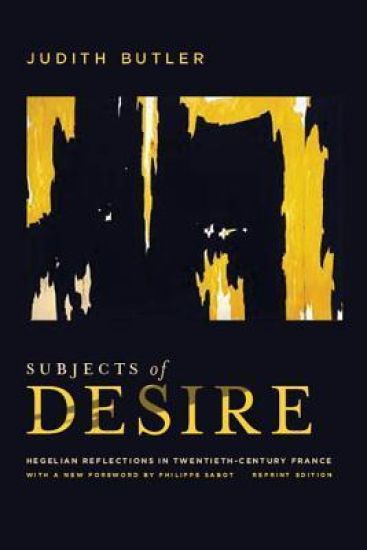
This classic work by one of the most important philosophers and critics of our time charts the genesis and trajectory of the desiring subject from Hegel's formulation in Phenomenology of Spirit to its appropriation by Kojeve, Hyppolite, Sartre, Lacan, Deleuze, and Foucault. Judith Butler plots the French reception of Hegel and the successive challenges waged against his metaphysics and view of the subject, all while revealing ambiguities within his position. The result is a sophisticated reconsideration of the post-Hegelian tradition that has predominated in modern French thought, and her study remains a provocative and timely intervention in contemporary debates over the unconscious, the powers of subjection, and the subject.
This classic work by one of the most important philosophers and critics of our time charts the genesis and trajectory of the desiring subject from Hegel's formulation in Phenomenology of Spirit to its appropriation by Kojeve, Hyppolite, Sartre, Lacan, Deleuze, and Foucault. Judith Butler plots the French reception of Hegel and the successive challenges waged against his metaphysics and view of the subject, all while revealing ambiguities within his position. The result is a sophisticated reconsideration of the post-Hegelian tradition that has predominated in modern French thought, and her study remains a provocative and timely intervention in contemporary debates over the unconscious, the powers of subjection, and the subject.
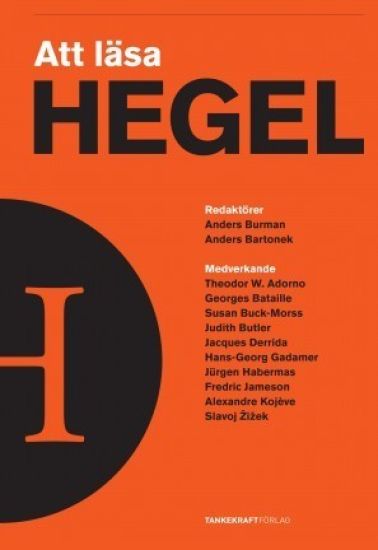
Georg Wilhelm Friedrich Hegel utgör på många sätt portalfiguren för de senaste två århundradenas filosofi och politiska teori. Såväl marxismen som existentialismen, fenomenologin och den kritiska teorin, ja även den moderna analytiska filosofin, uppstod till stor del som reaktioner på hans tänkande och den hegelianism som utvecklades efter hans död. Föreliggande antologi samlar tio tongivande läsningar av Hegel, skrivna av några av den så kallade kontinentalfilosofiska traditionens mest betydelsefulla företrädare. På olika sätt fokuserar samtliga texter på Hegels politiska tänkande. Särskilt uppmärksammas den berömda utläggningen i Andens fenomenologi om begäret, kampen om erkännandet och den dialektiska relationen mellan herren och slaven, men även Hegels idé om det borgerliga samhället och hans syn på staten diskuteras i flera av bidragen. Sammantaget visar texterna att det finns goda skäl att betrakta Hegel som den förste moderne filosofen. Bokens redaktörer, idéhistorikern Anders Burman och filosofen Anders Bartonek, är verksamma vid Södertörns högskola.
In the early 20th century, Marxist theory was enriched and rejuvenated by adopting the concept of reification, introduced by the Hungarian theorist Georg Lukács to identify and denounce the transformation of historical processes into ahistorical entities, human actions into things that seemed part of an immutable "second nature." For a variety of reasons, both theoretical and practical, the hopes placed in de-reification as a tool of revolutionary emancipation proved vain. In these original and imaginative essays, delivered as the Tanner Lectures at the University of California, Berkeley in 2005, the distinguished third-generation Frankfurt School philosopher Axel Honneth attempts to rescue the concept of reification by recasting it in terms of the philosophy of recognition he has been developing over the past two decades. Three distinguished political and social theorists: Judith Butler, Raymond Geuss, and Jonathan Lear, respond with hard questions about the central anthropological premise of his argument, the assumption that prior to cognition there is a fundamental experience of intersubjective recognition that can provide a normative standard by which current social relations can be judged wanted. Honneth listens carefully to their criticism and provides a powerful defense of his position.
I sin mest personliga bok hittills samlar Judith Butler fem tematiskt sammanhängande essäer som alla är skrivna i kölvattnet efter händelserna den 11 september 2001. Osäkra liv behandlar det globala krig mot terrorismen som sedan dess utspelar sig, och i vars namn internationella åtaganden och konstitutionella garantier upphävs. Butler analyserar hur krigets diskurs begränsar vår förståelse av det mänskliga genom att framställa vissa liv som osörjbara, som mindre än mänskliga, vilket gör att de kan dödas utan konsekvenser eller protester. I kontrast till dessa avhumaniserande praktiker föresätter sig Butler att söka efter en ny global politisk gemenskap grundad på insikten om alla människors sårbarhet och utsatthet för andras våld. Judith Butler är en av dagens mest namnkunniga politiska teoretiker. Osäkra liv bildar tillsammans med boken Krigets ramar stommen i hennes senare produktion, som behandlar krigets politiska och etiska konsekvenser.
In Bodies That Matter, renowned theorist and philosopher Judith Butler argues that theories of gender need to return to the most material dimension of sex and sexuality: the body. Butler offers a brilliant reworking of the body, examining how the power of heterosexual hegemony forms the "matter" of bodies, sex, and gender. Butler argues that power operates to constrain sex from the start, delimiting what counts as a viable sex. She clarifies the notion of "performativity" introduced in Gender Trouble and via bold readings of Plato, Irigaray, Lacan, and Freud explores the meaning of a citational politics. She also draws on documentary and literature with compelling interpretations of the film Paris is Burning, Nella Larsen's Passing, and short stories by Willa Cather.
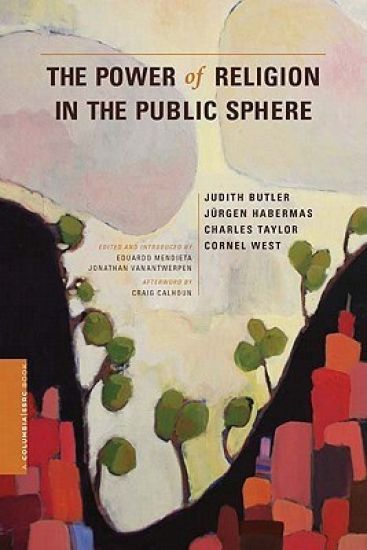
The Power of Religion in the Public Sphere represents a rare opportunity to experience a diverse group of preeminent philosophers confronting one pervasive contemporary concern: what role does--or should--religion play in our public lives? Reflecting on her recent work concerning state violence in Israel-Palestine, Judith Butler explores the potential of religious perspectives for renewing cultural and political criticism, while Jurgen Habermas, best known for his seminal conception of the public sphere, thinks through the ambiguous legacy of the concept of "the political" in contemporary theory. Charles Taylor argues for a radical redefinition of secularism, and Cornel West defends civil disobedience and emancipatory theology. Eduardo Mendieta and Jonathan VanAntwerpen detail the immense contribution of these philosophers to contemporary social and political theory, and an afterword by Craig Calhoun places these attempts to reconceive the significance of both religion and the secular in the context of contemporary national and international politics.
The Power of Religion in the Public Sphere represents a rare opportunity to experience a diverse group of preeminent philosophers confronting one pervasive contemporary concern: what role does--or should--religion play in our public lives? Reflecting on her recent work concerning state violence in Israel-Palestine, Judith Butler explores the potential of religious perspectives for renewing cultural and political criticism, while Jurgen Habermas, best known for his seminal conception of the public sphere, thinks through the ambiguous legacy of the concept of "the political" in contemporary theory. Charles Taylor argues for a radical redefinition of secularism, and Cornel West defends civil disobedience and emancipatory theology. Eduardo Mendieta and Jonathan VanAntwerpen detail the immense contribution of these philosophers to contemporary social and political theory, and an afterword by Craig Calhoun places these attempts to reconceive the significance of both religion and the secular in the context of contemporary national and international politics.