

Kirjailija
Judy Willis
Kirjat ja teokset yhdessä paikassa: 6 kirjaa, julkaisuja vuosilta 2008–2023, suosituimpiin kuuluu Research-Based Strategies to Ignite Student Learning. Vertaile teosten hintoja ja tarkista saatavuus suomalaisista kirjakaupoista.
6 kirjaa
Kirjojen julkaisuvuodet: 2008–2023.
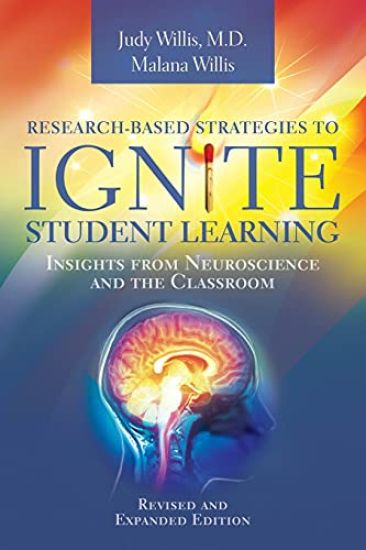
Research-Based Strategies to Ignite Student Learning
Judy Willis; Malana Willis
Association for Supervision Curriculum Development
2020
nidottu
Thanks to unprecedented advances in brain science, we know more about the brain today than ever before. But what does that science tell us about how we learn? How can we capture the power of neuroscience research so that it benefits our students? Judy Willis and Malana Willis answer these questions with clarity and insight, translating recent research on the brain and learning into understandable concepts and practical strategies to use across the curriculum, spanning all grade levels from preK through postsecondary. In this revised and expanded edition of the bestselling Research-Based Strategies to Ignite Student Learning, readers will learn how to:Arouse students' curiosity and interest in pursuing wide-ranging topics, including those they might typically find boring. Counteract the negative effects of stress, boredom, and frustration on memory. Defuse undesirable behaviors that are the result of the brain's natural ""fight/flight/freeze"" response. Incorporate the motivating characteristics of video gaming—including clear goals, achievable challenges, predictions, and continual feedback—into classroom learning. Break through stereotypes that deter students from reaching their full potential. Use the power of neuroscience research to develop students' executive function skills, such as focus, prioritization, organization, collaboration, critical analysis, and innovation. Willis and Willis describe how the brain converts a vast amount of sensory input into long-term memory and durable understanding, and how educators can use this knowledge to guide students to more successful experiences in school and beyond.
All teens today, born after 2000, were thrust into a world with challenges and opportunities non-existent for previous generations. The compelling natures of the internet and social media, combined with the accelerated accumulation of information and changing facts, place exceedingly high demands on their brains' still developing critical control centers. Without guided opportunities, though, their brains will not achieve adequate capability to develop these control centers until their late twenties or beyond. While this book is for teens, it is parents, dedicated to their children's success, who will guide them to the book's resources so they can develop the brain circuits they need now, instead delaying a further ten years. Teens will enjoy learning about the neuroscience describing how their brains learn best and then choosing the activities they like, to activate their brain's neuroplasticity to build their essential control networks now. Through the activities and keys in this book, they will assume the drivers' seats as they boost their focus, organization, planning, motivated effort, thoughtful decision making, emotional self-regulation, and memory construction. As teens build the brains they want by using the guided skills they choose, they will embark on the path to achieving their highest potentials, effectively and joyfully.
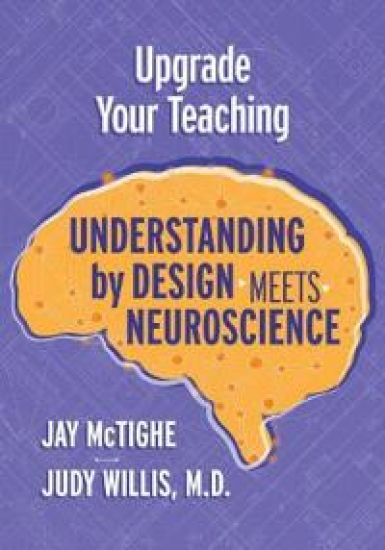
Upgrade Your Teaching
Jay McTighe; Judy Willis
Association for Supervision Curriculum Development
2019
nidottu
How can educators leverage neuroscience research about how the human brain learns? How can we use this information to improve curriculum, instruction, and assessment so our students achieve deep learning and understanding in all subject areas? Upgrade Your Teaching: Understanding by Design Meets Neuroscience answers these questions by merging insights from neuroscience with Understanding by Design (UbD), the framework used by thousands of educators to craft units of instruction and authentic assessments that emphasize understanding rather than recall. Readers will learn:How the brain processes incoming information and determines what is (or is not) retained as long-term memory. How brain science reveals factors that influence student motivation and willingness to put forth effort. How to fully engage all students through relevance and achievable challenge. How key components of UbD, including backward design, essential questions, and transfer tasks, are supported by research in neuroscience. Why specific kinds of teaching and assessment strategies are effective in helping students gain the knowledge, skills, and deep understanding they need to succeed in school and beyond. How to create a brain-friendly classroom climate that supports lasting learning. Authors Jay McTighe and Judy Willis translate research findings into practical information for everyday use in schools, at all grade levels and in all subject areas. With their guidance, educators at all levels can learn how to design and implement units that empower teachers and students alike to capitalize on the brain's tremendous capacity for learning.
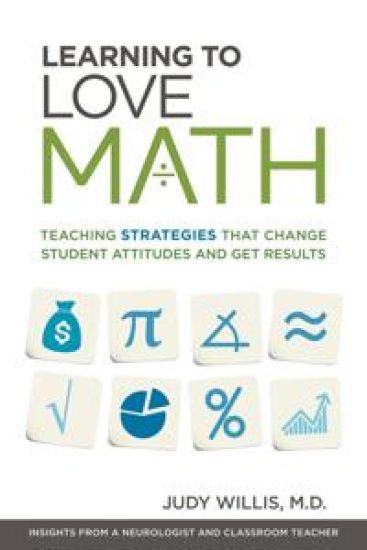
Is there a way to get students to love math? Dr. Judy Willis responds with an emphatic yes in this informative guide to getting better results in math class. Tapping into abundant research on how the brain works, Willis presents a practical approach for how we can improve academic results by demonstrating certain behaviors and teaching students in a way that minimizes negativity. With a straightforward and accessible style, Willis shares the knowledge and experience she has gained through her dual careers as a math teacher and a neurologist. In addition to learning basic brain anatomy and function, readers will learn how to:Improve deep-seated negative attitudes toward math. Plan lessons with the goal of ""achievable challenge"" in mind. Reduce mistake anxiety with techniques such as errorless math and estimation. Teach to different individual learning strengths and skill levels. Spark motivation. Relate math to students' personal interests and goals. Support students in setting short-term and long-term goals. Convince students that they can change their intelligence. With dozens of strategies teachers can use right now, Learning to Love Math puts the power of research directly into the hands of educators. A Brain Owner's Manual, which dives deeper into the structure and function of the brain, is also included—providing a clear explanation of how memories are formed and how skills are learned. With informed teachers guiding them, students will discover that they can build a better brain . . . and learn to love math!
Teaching the Brain to Read
Judy Willis
Association for Supervision Curriculum Development
2008
nidottu