

Kirjailija
Juergen Teller
Kirjat ja teokset yhdessä paikassa: 13 kirjaa, julkaisuja vuosilta 2006–2025, suosituimpiin kuuluu Araki Teller, Teller Araki. Vertaile teosten hintoja ja tarkista saatavuus suomalaisista kirjakaupoista.
13 kirjaa
Kirjojen julkaisuvuodet: 2006–2025.


Juergen Teller: The Master V
Juergen Teller; Dovile Drizyte
STEIDL PUBLISHERS
2023
lehtivihko, moniste

Juergen Teller, Dovile Drizyte: Auguri
Juergen Teller; Dovile Drizyte
STEIDL PUBLISHERS
2022
sidottu

One of the most influential photographers working today, Juergen Teller creates images that are instantly recognisable. Raw, often overexposed and displaying a spontaneity and candour, Teller s visual language reflects a measured yet uncompromising sense of rebellion. This book includes landmark editorials with nearly every important fashion label of the era and celebrities from Kate Moss to Charlotte Rampling and Kurt Cobain to Yves Saint Laurent. Outtakes of iconic shoots (including infamous ones with Courtney Love, Cindy Sherman, Marc Jacobs, Victoria Beckham, and Bjork) that have never been published will be included in this volume. Teller first broke into fashion in 1996 with a magazine cover of a naked Kristen McMenamy with the word Versace scrawled across her chest. Since then, his fashion photography has been featured in all the international Vogues, AnOther Magazine, Index, Self-Service, W, Details, Purple, i-D, and 032c, among others. A highly sought-after cult hero and the author of many iconic campaigns, Teller has collaborated with the likes of Helmut Lang, Raf Simons, Hedi Slimane, Nicolas Ghesquiere, Phoebe Philo, Vivienne Westwood, Miuccia Prada, and Isabel Marant, and shot every season of Marc Jacobs s ready-to-wear collections from 1998 to 2014.

Henry Leutwyler, Timm Rautert, Juergen Teller: Process – People – Product
Henry Leutwyler; Timm Rautert; Juergen Teller; Sibylle Anderl
Steidl Verlag
2021
sidottu
A tripartite photo-portrait of a leading German tech companyIn this documentation of German technology company Sartorius, Rautert looks at their laboratories; Teller creates portraits of the staff; and Leutwyler photographs machines from their archives.

Reminiscent of his earlier monograph More, Juergen Teller's new photographic series, Zimmermann, documents supermodel Raquel Zimmermann participating in family events and interacting with Teller's native environment in Bubenreuth, Southern Germany. Holding true to his signature snapshot aesthetic while nonetheless managing to construct what he describes as a "surreal fairy tale," the German-born photographer captures Zimmermann--in a state of seeming abandon, in the woods or lying semi-nude on the family table, as though a sacrificial offering as part of some Bavarian feast. A narrative akin in style to a gothic and dramatic Grimm's fairy tale, this story explores the themes of suppressed youth and teenage longing. Teller, one of the most influential fashion photographers working today, shoots in a deliberately overexposed style that endows this project with his characteristic raw look.

For a German soccer enthusiast like Juergen Teller (born 1964), Summer 2014 couldn't have been any better. The German national team won the World Cup in Brazil, and Teller was passionately present every step of the way. This new volume, Siegerflieger (literally "the victors' plane," the affectionate name given to the German team's customized jumbo) unfolds in typical diary-like Teller fashion. Yet Teller's obsession with soccer remains center stage, whether he's watching the final live on TV or welcoming home the triumphant team at the Brandenburg Gate.


Unlike many photographers who maintain a strict divide between their commercial and private work, Teller has always combined the two. Indeed this merging is one reason for Teller’s progressive edge. The Keys to the House contains recent photographs of Teller’s life at and around his house in Suffolk: landscapes, portraits of family and friends. But of course Teller’s vision would not be complete without the occasional fashion figure who was entered his personal world – be it Lily Cole floating like Ophelia, or Vivienne Westwood leaning on a red Mercedes Benz. Born in 1964 in Erlangen, Germany, Juergen Teller has lived in London since 1986. His influential fashion photography has been published extensively, and solo exhibitions of his work have been held at the Fondation Cartier pour l’art contemporain in Paris and the Kunsthalle Wien among other institutions. Teller’s books with Steidl include Louis XV (2005), Marc Jacobs Advertising 1998–2009 (2010) and Zimmermann (2010).
For over a year Juergen Teller contributed a column to the magazine of "Die Zeit", Germanys most respected news paper. Given free creative rein, Teller presented a new image each week with an accompanying text he had written. Combining pictures and words in this way was new for Teller, and has since intensified the autobiographical element of his work. Like his images the texts are blunt, often controversial and irresistibly Telleresque. From the very beginning the column was greeted with enthusiasm but also elicited outcry the magazine received piles of letters each week, most of them complaining that such poor photo graphs were being published in such a respected magazine. Book two Literature contains the best of these letters. Born in 1964 in Erlangen, Germany, Juergen Teller has lived in London since 1986. His influential fashion photography has been published extensively, and solo exhibitions of his work have been held at the Fondation Cartier pour lart contemporain in Paris and the Kunsthalle Wien among other institutions. Tellers books with Steidl include "Louis XV" (2005), "Marc Jacobs Advertising 1998-2009" (2010) and "Zimmermann" (2010).
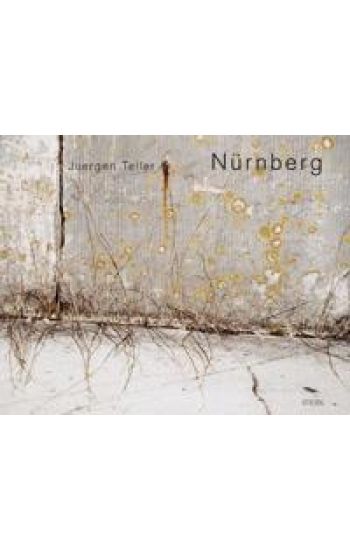
Juergen Teller has spent the last year carrying out a study of the "Reichsparteitagsgelande", the site of the Nurnberg Rallies, and a place he used to visit in his youth. The results are a series of images of stone and flora, photographed over the four seasons of a year, in seed, bloom, demise and finally dormant in the snow. It amounts to a study of mortality, the process of birth, growth and death. The book combines these works with self-portraits and family photographs through the same period, adding the perspective of the personal and quotidian life cycle.